
lovethailand home >Central Travel Attractions >Phranakhon Si Ayutthaya Travel Attractions >Phranakhon Si Ayutthaya >Hua Ro > Chantharakasem National Museum
TL;DR: Chantharakasem National Museum is located at U-Thong Road, Hua Ro Subdistrict, Phra Nakhon Si Ayutthaya District, Phra Nakhon Si Ayutthaya 13000, Thailand, open Wednesday – Sunday (Closed Monday – Tuesday), hours 09:00 – 16:00.
Chantharakasem National Museum
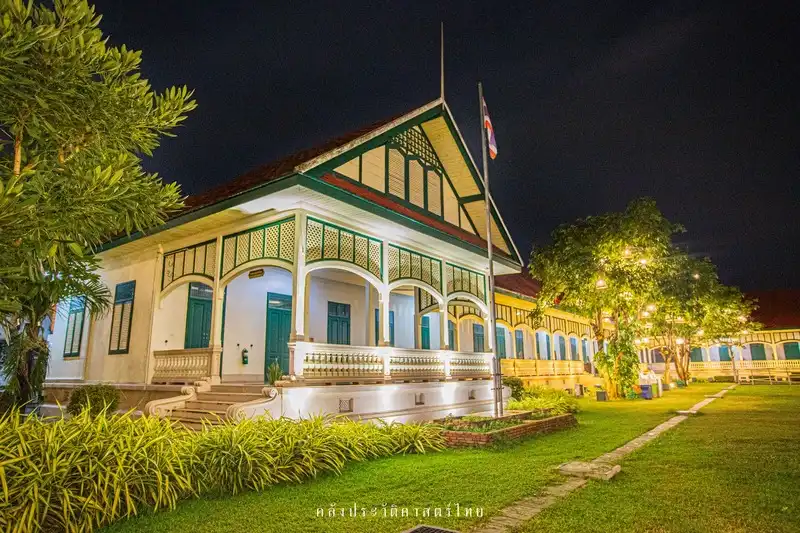
Open Days: Wednesday – Sunday (Closed Monday – Tuesday)
Opening Hours: 09:00 – 16:00
Chantharakasem National Museum (Chantharakasem Palace / Wang Na) If you’re looking for an Ayutthaya trip that gives you real history, old-town atmosphere, and royal-court stories without needing to imagine too hard, Chantharakasem National Museum is an easy top pick. This isn’t just a museum — it sits within what many locals still call the “Wang Na” (Front Palace) or “Chantharakasem Palace,” on the northeastern side of Ayutthaya Island along the Pa Sak River, close to Hua Ro Market. It’s convenient to reach, and it pairs smoothly with nearby temples and other museums inside the island area without wasting travel time.
The term “Wang Na” in Ayutthaya isn’t merely a pretty nickname. It represents the kingdom’s power structure and governance. The Front Palace is closely tied to the Maha Uparat (or key royal figures with major authority in succession and administration), which gives this place a deeper historical weight than a typical secondary residence. As you pass the palace walls, gates, pavilions, and building clusters, you’re not just walking through exhibitions — you’re walking across traces of politics, warfare, and royal life that once shaped Ayutthaya’s rhythm.
According to chronicle-based accounts, Chantharakasem Palace is often described as being established around the reign of King Maha Thammaracha (commonly referenced around 2120 BE) with the intention of serving as a residence for King Naresuan the Great. Over time, it is recorded as a residence for crown princes and several monarchs, including King Ekathotsarot, Prince Sutthat, King Narai the Great, and King Borommakot. That continuity matters — it shows Wang Na wasn’t a stopover, but a living space that reflected Ayutthaya’s long arc of change.
A major turning point came after the fall of Ayutthaya in 2310 BE. The palace suffered severe damage from burning and was left abandoned for a period. What you see today is therefore a blend of surviving original remnants and later restorations/reconstructions, especially during the Rattanakosin era when key buildings were revived for use again. That layering gives the site its unique depth — you can feel time embedded in the architecture and the way the space is laid out.
To explore efficiently, start by treating the “palace walls and gates” as your opening chapter. The walls visible today are brick walls with bai sema markers, with one gate on each side — four in total — and some accounts note that several parts were newly built during King Rama IV’s period. The original palace boundary was once much wider than what appears today. Archaeological finds of foundations and brick remains in surrounding areas reinforce that earlier scale. Once you realize the palace used to be larger, the visit becomes more engaging — you naturally start searching for clues about what stood where, and what has disappeared.
One highlight many visitors remember is the “Chaturamuk Pavilion.” This wooden pavilion sits near the palace gate on the eastern side, with three front porches and three at the rear. Historically it functioned as a throne hall for royal audiences and administration. Later, it served as an exhibition space associated with the early “Ayutthaya Museum” concept, and it underwent a major restoration in the reign of King Rama VII, including changes to decorative elements. Today, its mood feels both ceremonial and calm — a strong place to begin understanding that the Front Palace was not only a residence, but also a state space for governance and formal functions.
Next comes the core complex around “Phiman Ratthaya Hall,” a central cluster of multiple buildings, often described as including the right and left wings, Phiman Ratthaya Hall itself, and the ceremonial pavilion for royal items. What makes this section especially rewarding is the exhibition experience — real objects that pull you backward through time. Visitors typically encounter stone sculptures and deity images, naga-protected Buddha images (often associated with Lopburi-era artistic influence), bronze Buddha images from the Ayutthaya period, votive tablets from various periods, and wood carvings by craftsmen from late Ayutthaya through the Rattanakosin era.
What sets this place apart from temple-hopping is how closely you can examine craftsmanship and meaning. You get to read about materials, techniques, and beliefs behind sacred objects and artisan work. As you move through the displays, a clearer picture forms: Ayutthaya wasn’t powerful simply because it had many temples — it thrived as a center where trade networks, technical skills, and artistic tastes constantly circulated.
Another spot many people enjoy is “Phisai Sanyalak Hall,” often referred to as the “observatory tower” or “star-gazing tower.” It is described as a four-story tower, first built during King Narai the Great’s reign, later collapsing around the second fall of Ayutthaya. The structure seen today was rebuilt during King Rama IV’s period on the original foundations, and stories connect it to stargazing and observing the skies. This detail often surprises visitors in a good way — it hints that the Ayutthaya world wasn’t sealed off from science and observation, but had curiosity and knowledge woven into royal life.
Within the same grounds, you’ll also notice later-era buildings that reflect Thailand’s modern transitions, such as the Wild Tiger Corps clubhouse (associated with King Vajiravudh / Rama VI), the royal stables building, and the administrative building constructed during the time of Phraya Boran Rachathanin. These are tied to the period when the site functioned as offices for Monthon Krung Kao and other government units, before coming under Fine Arts Department care and being developed as a national museum. Their presence alongside older structures makes the point clear: historic spaces don’t freeze in time — they get reused, reinterpreted, and reshaped by each era.
If you want a relaxed visit that still feels thorough, plan at least 1–2 hours to walk the historic structures and read the exhibition explanations. The details make the “Ayutthaya picture” in your head sharper. You won’t leave feeling like you only checked in for photos — it feels more like you pieced together one connected story, from power structures and court culture to artisan skill and artistic influence that still echoes today.
Getting There From Bangkok to Ayutthaya city: after crossing the King Naresuan the Great Bridge, turn left and continue straight to a three-way intersection, turn left again, then go straight for about 2 km. You will pass Chao Phrom Market, and the museum will appear on your left. If you arrive by train or minivan into the city, you can easily continue by local transport or tuk-tuk/for-hire rides toward Hua Ro Market and U-Thong Road, since the museum sits close to the community area and the main tourist routes around Ayutthaya Island.
A small local-style tip to round out the day: after the museum, continue to one of the major temples on the island, or hop over to a cafe or dessert spot along U-Thong Road and the Pratu Chai area. It keeps the pacing light while maintaining the theme of “Ayutthaya with a story” all day. It also works well for families, because the walk can be broken into comfortable segments, with both open-air spaces and indoor galleries to escape the heat.
In the end, what makes Chantharakasem National Museum truly worth your time is how it combines the feel of a palace with the clarity of a museum. You see architecture, follow traces of major historical events, and understand that these artworks aren’t just beautiful objects — they are evidence of ideas, beliefs, and capabilities from an era when Ayutthaya was genuinely a regional powerhouse.
| Place Name | Chantharakasem National Museum (Chantharakasem Palace / Wang Na) |
| Summary | A national museum and historic site within Ayutthaya’s “Front Palace” grounds, presenting antiquities, art, and royal-court history alongside key buildings from multiple periods inside the palace compound. |
| Address | U-Thong Road, Hua Ro Subdistrict, Phra Nakhon Si Ayutthaya District, Phra Nakhon Si Ayutthaya 13000, Thailand |
| Highlights | Front Palace atmosphere along the Pa Sak River; key structures (palace walls and gates, Chaturamuk Pavilion, Phiman Ratthaya Hall complex, observatory tower); multi-period art displays; and in-depth Ayutthaya royal history narratives. |
| Open Days & Opening Hours | Wednesday – Sunday 09:00 – 16:00 (Closed Monday – Tuesday) |
| Admission Fee | Thai nationals 20 THB, foreigners 100 THB (some exemptions may apply; please confirm on-site) |
| Current Status | Open to visitors during the operating days and hours listed above |
| Contact Number | 035-251-586 |
| Nearby Attractions (Approx. Road Distance) | Ayutthaya Historical Park (Office/Info) ~2.5 km Tel 0-3524-2525 Chao Sam Phraya National Museum ~2.7 km Tel 035-241-587 Ayutthaya Historical Study Centre ~3.0 km Tel 035-245-123 Wat Yai Chai Mongkhon Worawihan ~6.5 km Tel 035-242-640 Ayothaya Floating Market ~7.5 km Tel 035-881-733 |
| Nearby Restaurants (Approx. Road Distance) | Kuay Teow Je Mui (Yai Yai Original) ~0.8 km Tel 081-780-8549 Baan Kao Nhom ~1.5 km Tel 097-921-9465 PRANG VIEW Cafe ~2.8 km Tel 089-801-0138 Boat Noodles (Pa Lek Original) ~3.2 km Tel 089-804-7418 The Summer House Ayutthaya ~3.5 km Tel 094-224-2223 |
| Nearby Accommodations (Approx. Road Distance) | iuDia on the River ~3.6 km Tel 086-080-1888 Classic Kameo Hotel & Serviced Apartments, Ayutthaya ~7.5 km Tel 035-212-535 |
Frequently Asked Questions (FAQ)
Q: Is Chantharakasem National Museum the same place as Chantharakasem Palace or Wang Na?
A: Yes. The museum is located within the Chantharakasem Palace grounds, widely known as Ayutthaya’s “Wang Na” (Front Palace).
Q: Is this place still enjoyable if I’m not deeply into history?
A: Yes. You can enjoy the palace atmosphere, photogenic architecture, and well-presented displays that make Ayutthaya easier to understand even without background knowledge.
Q: How long should I plan for the visit?
A: Plan about 1–2 hours for a comfortable visit. If you like reading labels and studying objects closely, allow more time.
Q: What are the must-see highlights inside?
A: Many visitors focus on the Chaturamuk Pavilion, the Phiman Ratthaya Hall complex, and the observatory tower for their architecture, atmosphere, and story value.
Q: Is it easy to get here from Bangkok?
A: Yes. You can reach Ayutthaya by car, train, or minivan, then continue by local transport or tuk-tuk into the Hua Ro / U-Thong Road area where the museum is located.
Q: What time of day feels most comfortable to visit?
A: Mornings are usually cooler and less crowded, which makes it easier to walk the grounds and enjoy the displays at an unhurried pace.
Tel : 035251586, 035252795
 Tel : 035251586, 035252795
Fax : 035251586
 Fax : 035251586
 Category: ●Art, Culture and Heritage
 Group: ●Museums
Last Update : 9 MonthAgo
 Last Update : 9 MonthAgo
 Click to Access the Navigation Map GPS
Chantharakasem National Museum Map
Recommend

 Historical Sites and Monuments(7)
 Landmarks and Memorials(6)
 Royal Palace(4)
 Art, Craft Centres, Tradition(6)
Museums(9)
Art, Craft Centres, Tradition(6)
Museums(9)
 Educational Places
 Museum for Study(1)
 Educational Gardens, Farm(2)
 Training Center(1)
 Places of Worship
 Temple(133)
 Church(2)
 Mosque(2)
 Other Sacred Sites(15)
 Research and Development
 Royal Project(4)
 Suburban Living
 Village, Community(10)
 Local Market(7)
 Floating Market(3)
 Nature and Wildlife
 Dam, Reservoir, Lake(1)
 River, Canal(3)
 Islands(2)
 Other natural attractions(1)
 Entertainment and Agricultural
 Animal camps and shows(2)
 Farms, Parks and Ecotourism(4)
 Waterpark(1)
 Travel Articles, Recipes
 Travel Review, Food Review(2)


