

 Home
Home Chiang Mai(




Khok Phutthra Local Wisdom Museum
Rating: 4.5/5 (4 votes)
 Search By
  Map
Map 
 Have Map
  No Map
Ang Thong attractions
Attractions in Thailand
Open Days: Please Contact In Advance
Opening Hours: Please Contact In Advance
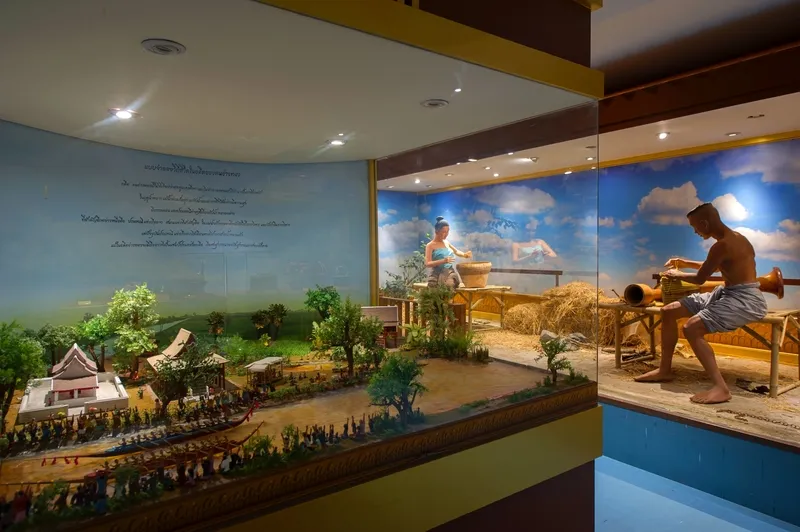
Khok Phutthra Local Wisdom Museum is a community museum located within Wat Khok Phutthra in Pho Thong District, Ang Thong Province. It brings together “real everyday objects” and livelihood tools used by people in Khok Phutthra Subdistrict from the past to the present, organized into easy-to-follow categories. It is ideal for cultural travelers who want both learning and an authentic Central Thailand countryside atmosphere. After visiting the museum, you can continue to the natural pond area in Moo 3 to experience local fishing life and the beauty of the surrounding landscape in a single trip.
Khok Phutthra Local Wisdom Museum is a strong example of a learning space created by true local energy. Its foundation did not begin with the idea of “building something just to display,” but from the community’s intention to preserve traditional ways of life that have gradually faded with social and economic change. Ang Thong has deep Central Thailand cultural roots, and Khok Phutthra Subdistrict once carried clear images of rice fields, local crafts, and fishing around natural waterways. As work patterns shifted, with more wage labor and factories becoming part of everyday life, many traditional tools were simply stored away or left to disappear. Establishing a community museum became a way to “set an anchor” so younger generations could still see the real traces of the life that shaped the community.
What makes this place especially appealing for cultural travelers is the way it tells stories through objects rather than relying only on information boards. Many artifacts have their own “language,” allowing visitors to imagine immediately what they were used for, when they were used, who used them together, and how they related to seasonal rhythms in Central Thailand’s rural life. Tools connected with rice farming, hand-milling, measuring and trading, cooking, weaving and making household items, and fishing traditions all appear here. This turns a walk through the museum into more than viewing old objects—it becomes a reading of Khok Phutthra’s “everyday life” through tangible evidence.
Regarding its establishment, available information indicates the museum began in 1997 and is located within the grounds of Wat Khok Phutthra. This reflects the traditional Central Thailand pattern where temples have long served as community hubs for learning and public activities. The early process started from a local group producing hand-pounded rice and using traditional milling methods. When some tools deteriorated over time, villagers felt these items should not be discarded because they were pieces of knowledge that younger people deserved to see. Discussions with local administrative organizations followed, leading to the creation of a community museum. Over time, it expanded through donations from local residents, artifact registration, and the gradual development of displays that communicate the subdistrict’s story more clearly.
From the visitor’s perspective, the museum’s strength is the sincerity of its content. The displayed items were not newly made to look attractive; they are objects that were genuinely used by working hands. Many show the wear of real use, and some are tools that city visitors may have never seen or even known by name. Yet when you look closely, you can understand the “system of thinking” people once applied to solve practical daily problems—from measuring, storing, transporting, and repairing, to using local natural materials as efficiently as possible. This is the charm of local wisdom: it is not necessarily luxurious, but it is effective and deeply aligned with the local way of life.
The museum’s structure makes the visit feel organized because it uses “everyday life” as the main theme, then branches into categories such as livelihood tools, household items, bamboo and rattan weaving, pottery, local musical instruments, and measuring tools or items connected to processing agricultural products. What is worth noticing is that these categories are not separate worlds. They connect into a full life cycle of traditional Central Thailand rural communities—from producing food and preserving it, to cooking, craft work, social activities, and local entertainment.
If you want to start by “finding the core” of the story, begin with the livelihood tools section because it most clearly explains the subdistrict’s traditional economic structure. A rice-farming community in Central Thailand is not only about buffalo and plows. There are many small details that make farming possible, including tools for land preparation, harvesting, transporting, and processing rice after harvest. When you see these objects in sequence, you understand that rice farming is a complete system, not a single activity, and each tool reflects knowledge accumulated through generations of experience.
In the section of household tools and measuring equipment, you will see how important “accuracy” was in community life—whether for dividing rice, trading, or storing harvest. Notable items referenced in available descriptions include a water-scooping container, a wooden rice-measuring bucket, coconut-shell measuring cups, canned measuring containers, a rice grinder, and parts of a plow. These artifacts reveal how rural Central Thailand communities created practical tools using locally available materials, and how shared standards of use developed within the community. In simple terms, it is knowledge that is both “practically useful” and “socially communicable” in a world that did not depend on modern instruments.
Basketry and pottery are another section that demonstrates efficient use of resources. Many woven items were not made purely for decoration; they were essential household tools such as containers for storing, carrying, sorting, or supporting kitchen work. Pottery reflects how people stored water and food, and how they understood cooling, moisture control, and basic food preservation. This section suits visitors interested in handicrafts because you can see both the marks of workmanship and the functional reasoning embedded in the shape of each object.
For local musical instruments and community-culture items, the key point is that “a community is not only about work.” There is also space for joy, rest, and gathering. Much of local culture grows out of shared activities—temple fairs, merit-making events, seasonal celebrations, and community festivities. Traditional instruments therefore function as both entertainment and a social connector. Seeing them in the museum makes it easy to imagine that music and rhythm once served as a “shared language” that helped people of different ages live together warmly.
Visiting Khok Phutthra Local Wisdom Museum often feels like stepping into a “house of shared memories,” because each object is tied to real lives, not just written explanations. If you have time, it helps to walk slowly and choose 5–10 objects that catch your eye, then ask yourself: “Why was it designed this way?” “How was it used?” and “What skills were needed to make it work?” This approach makes the visit more meaningful and helps you understand “local wisdom” in a truly tangible way.
Another reason this destination works well for family travel is that adults often recognize familiar objects or stories they once heard from elders, while children see items that rarely exist in modern daily life. This naturally creates family conversations—for example, a child may ask why rice was measured with a coconut shell, why rice had to be ground, why wooden measuring buckets existed, or why some tools were made of wood rather than metal. These questions open the door to learning because they connect &ldquo>real objects” with “family stories” in a natural way.
After completing the museum visit, you can continue to Moo 3 to see the natural pond area as the community suggests. The pond’s atmosphere takes you from the exhibition world into real nature, where you can observe fishing life that still exists in the area and the daily rhythm shaped by seasons and time of day. A natural pond like this is a simple but distinctive Ang Thong charm, with many details to notice—types of fishing tools, the use of small boats, the best timing for fishing, and the calm way people live alongside nature without rushing.
Getting There From Ang Thong city, you can drive toward Pho Thong District along the main provincial route. The distance from Ang Thong city to Pho Thong District is approximately 9 km, then continue about 3 km from the district area to Wat Khok Phutthra. The temple is on the right-hand side and sits along the main road, making it easy to notice. You can use navigation apps by searching “Wat Khok Phutthra” or “Khok Phutthra Local Wisdom Museum.” It is recommended to contact the caretaker in advance because visitor information indicates you should make an appointment before entering. With timing arranged, you can plan the trip to flow naturally from the museum to nearby nature spots without long detours.
Because the museum is within a temple area, respectful dress and behavior are important. Wear modest clothing, stay calm and quiet within sacred zones, and respect shared community space. If you would like to take photos, it is best to ask first, especially in certain display areas or around items that may require special care. Traveling with respect not only improves your experience, but also supports the long-term sustainability of this community museum as a welcoming learning destination.
Overall, Khok Phutthra Local Wisdom Museum suits travelers who want to know Ang Thong beyond a quick stop for photos. This place is a compact lesson on Central Thailand rural life, told through authentic evidence that shows how earlier generations worked, used resources, and kept the community moving forward. If you are looking for an Ang Thong attraction that is calm, informative, and easy to connect with community routes, this museum is a worthwhile starting point.
| Place Name | Khok Phutthra Local Wisdom Museum (Located Within Wat Khok Phutthra) |
| Address | Wat Khok Phutthra, Moo 1, Khok Phutthra Subdistrict, Pho Thong District, Ang Thong 14120, Thailand |
| Coordinates | 14.69019444, 100.38147222 |
| Place Summary | A community museum that collects local artifacts and livelihood tools from Khok Phutthra Subdistrict, organized into categories for learning and cultural tourism. |
| Highlights | Authentic everyday tools reflecting Central Thailand rural life, easy-to-follow categorized displays, and the option to continue to the natural pond area in Moo 3. |
| Brief History | Established in 1997 through cooperation between the community and local organizations to preserve traditional livelihood tools and serve as a learning resource for future generations. |
| Open Days | Please Contact In Advance |
| Opening Hours | Please Contact In Advance |
| Abbot / Caretaker (Latest) | Phra Athikan Thanaphon (Kantawiro) – Abbot Of Wat Khok Phutthra (Updated 2025-10-19) |
| Contact Number | Museum / Coordinator: 086-607-9834 (Khun Suntharee) / Wat Khok Phutthra: 035-691-197 |
| Getting There | From Ang Thong city to Pho Thong District about 9 km, then to Wat Khok Phutthra about 3 km. The temple is along the main road. Appointment recommended before visiting the museum. |
| Current Status | Operating (Contact Recommended Before Visiting) |
| Nearby Tourist Attractions With Distance | 1) Wat Khun Inthapramun (Open-Air Reclining Buddha) – 10 km 2) Wat Muang (Giant Buddha) – 22 km 3) Wat Chaiyo Worawihan – 28 km 4) Ang Thong National Museum – 18 km 5) Museum Of Ang Thong Legend – 18 km |
| Popular Restaurants Nearby | 1) Krua Roi Kratha Cafe (Khok Phutthra) – 3 km – 080-928-2859 2) Krua Napa (Ang Thong) – 7 km – 084-311-3392 3) Pha Kaew Pla Phao – 11 km – 083-825-3980 4) Krua Hansa (Pho Thong) – 9 km – 089-820-8562 5) 4ForJuneCoffee – 9 km – 065-952-2477 |
| Popular Accommodations Nearby | 1) Centerplace Angthong (Pho Thong) – 8 km – 092-691-3355 2) HomeStay 99 – 14 km – 095-794-6860 3) Ploy Resort (Pho Thong) – 10 km – 089-807-6222 4) Ang Thong Happy Room Hotel – 18 km – 083-109-4724 5) Bualuang Boutique Resort Ang Thong – 18 km – 081-495-8884 |
| Facilities | Temple Parking Area, Basic Visitor Facilities Within A Temple And Community Context, Walkable Learning Space |
| Fees | No Admission Fee (Donations Welcome) |
Frequently Asked Questions (FAQ)
Q: Where is Khok Phutthra Local Wisdom Museum located?
A: It is located within Wat Khok Phutthra in Khok Phutthra Subdistrict, Pho Thong District, Ang Thong Province. You can search the museum name or the temple name on maps.
Q: Do I need to make an appointment before visiting?
A: Yes. It is recommended to contact the caretaker in advance because visitor information indicates you should arrange a visit beforehand.
Q: What are the main exhibits at the museum?
A: The museum focuses on community artifacts such as livelihood tools, household items, basketry, pottery, and objects reflecting Central Thailand rural life from the past to the present.
Q: Why is this museum suitable for children and families?
A: Children can see real tools used by earlier generations and learn about rice farming, measuring, rice processing, and practical wisdom in using natural materials, while adults can share family stories and context.
Q: Where can I go after visiting the museum?
A: You can continue to Moo 3 to visit the natural pond area and observe local fishing life, or plan a day trip route to Wat Khun Inthapramun or Wat Muang afterward.
Q: What should I wear when visiting a museum located inside a temple?
A: Dress modestly and behave respectfully. Avoid loud noise in sacred areas and respect shared community space.
 Khok Phutthra Local Wisdom Museum Map
 Category:
  Group:
  Tag: ●Khok Phutthra Local Wisdom Museum●local wisdom museum ang thong ●khok phutthra local museum ●community museum thailand ●things to do in ang thong ●pho thong ang thong attractions ●wat khok phutthra ●thai rural life museum ●central thailand culture trip ●ang thong cultural tourism ●thai farming tools museum Last Update: 2 DayAgo
Comment
 Nearby Attractions
| Keyword (Advance) |
 Region
|
 Muang Ang Thong(
 Copyright 2012,