
 Home
Home North(
 Chiang Mai(


Wat Cha Prong
Rating: 2.4/5 (29 votes)
 Search By
  Map
Map 
 Have Map
  No Map
Phetchaburi attractions
Attractions in Thailand
Open Days: Daily
Opening Hours: 08:00 – 17:00
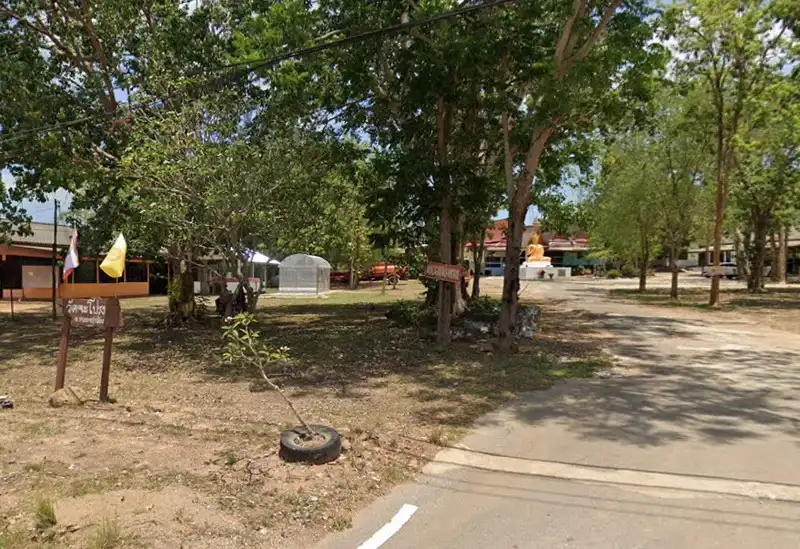
Wat Cha Prong is located at 138 Cha Prong Village, Moo 5, Nong Ya Plong Subdistrict, Nong Ya Plong District, Phetchaburi. This is a community temple under the Mahanikai order, formed not as a commercial tourist landmark but as a practical spiritual center that local people rely on in everyday life. In rural Phetchaburi, a temple like this anchors the village’s rhythm: merit-making on Buddhist holy days, ordinations, annual ceremonies, and funerary rites that require a shared public space where everyone knows their role and helps each other without being asked twice.
The temple land totals 28 rai 1 ngan 72 square wah. Its northern and western boundaries adjoin private land, while the southern and eastern sides meet public roads. That layout matters in real use: the temple is easy to access for villagers, and during major merit-making events such as Kathina and Pha Pa, the flow of people, food preparation, and communal set-up works smoothly because the temple is physically woven into the village rather than separated from it.
Wat Cha Prong was officially established on 23 December 1982. Local records credit Mr. Phong Nanthakit as the founder, while Mr. Pui Muengkliao donated the land for temple construction. This kind of origin story is a clear portrait of Thai community temples: the temple begins with the most valuable resource a village can give—land—and continues with collective labor, shared responsibility, and sustained faith. As the temple stabilizes, it expands its functions beyond ritual into education and community development.
The first abbot was Phra Baitika Noi Silatecho, who helped establish the early administrative and religious framework of the temple. Over time, the temple received formal recognition that strengthened its status and ability to conduct key monastic rites. Wat Cha Prong later received Wisungkhamasima (official consecrated boundary for ordination) on 25 September 2009, with a boundary area measured at 20 meters wide and 40 meters long. For a community temple, this is more than a legal formality: it confirms long-term religious continuity and signals that the temple has become an enduring institution the community can depend on.
The temple’s buildings reflect gradual development based on practical needs. A chanting hall (wooden structure) measures 4 meters wide and 22 meters long (constructed in 1980). There are three monks’ quarters (two wooden buildings and one concrete building), and a small wooden vihara measuring 4 by 6 meters that provides a quieter devotional space separate from larger communal activity. A major functional centerpiece is the multipurpose pavilion: 25 meters wide and 36 meters long, built in 1999 as a concrete structure. In everyday village reality, this is the building that makes large ceremonies possible—hosting communal meals for monks, village meetings, youth activities, and the logistics that turn religious events into well-run collective practice.
Wat Cha Prong also has a clear educational dimension. The temple has a Dhamma Studies division (Phra Pariyatti Dhamma School) that opened in 1981. In a rural setting, such a school strengthens the temple’s role as a place where faith is paired with structured learning, supporting monks and novices while reinforcing the community’s confidence that religious knowledge is taught systematically, not left to vague tradition.
For visitors, Wat Cha Prong is best experienced at an unhurried pace. The value here is not grandeur but the living reality of a village temple: wooden structures maintained for real daily use, a large multipurpose pavilion that carries the weight of community events, and an environment where local etiquette still matters. Dress respectfully, keep noise low, and avoid disrupting monastic routines—especially in the morning when the temple is most active with daily duties. If you plan to make offerings, practical items are the most useful in a community context: daily necessities, basic household supplies, or cleaning items that can be put to use immediately.
Seasonal and annual religious activities typically intensify during Kathina and Pha Pa periods, as well as major Buddhist holy days. In districts like Nong Ya Plong, these events are not only religious observances but also the village’s strongest social glue: families return, older and younger generations work side by side, and the temple becomes the village’s shared calendar in action.
Getting There If you are driving, set your map pin to “Wat Cha Prong, Nong Ya Plong, Phetchaburi” and follow the main route into Nong Ya Plong District, then continue on local roads to Cha Prong Village (Moo 5). The temple borders public roads on the south and east sides, so access is straightforward. Allow extra time for rural junctions and local traffic patterns, especially agricultural vehicles.
A practical way to plan the day is to begin with a calm temple visit in the morning, then continue to nearby cafes or local restaurants, and finish the day at a nature-oriented accommodation in the broader Nong Ya Plong–Kaeng Krachan zone. This pacing keeps the trip balanced: cultural grounding first, comfort and scenery afterward, without unnecessary backtracking.
Wat Cha Prong is therefore a meaningful stop for travelers who want to understand Phetchaburi beyond city-center highlights. It shows how faith, education, and collective village life still operate in a tangible way—through buildings that are used, ceremonies that are shared, and a calm rural atmosphere that naturally slows the pace of the day.
| Place Summary | A Mahanikai community temple in Cha Prong Village serving as a practical religious and social center, with key functional buildings and a long-running Dhamma Studies program; officially granted Wisungkhamasima. |
| Name | Wat Cha Prong |
| Address | 138 Cha Prong Village, Moo 5, Nong Ya Plong Subdistrict, Nong Ya Plong District, Phetchaburi 76160 |
| Abbot (Latest) | Phra Athikan Saichon Khawesako |
| Key Highlights | Community-based temple foundation, large multipurpose pavilion supporting major ceremonies, established Dhamma Studies program, and officially recognized Wisungkhamasima boundary. |
| Period | Established on 23 December 1982 |
| Key Evidence | Temple land: 28 rai 1 ngan 72 sq. wah; chanting hall (1980); multipurpose pavilion (1999); Wisungkhamasima granted on 25 September 2009 (20 m x 40 m). |
| Facilities | Chanting Hall, Vihara, Monks’ Quarters, Large Multipurpose Pavilion for ceremonies and community activities |
| Fees | No admission fee (donations welcome) |
| Contact Number | 084-074-2967 |
| Nearby Tourist Attractions (Approx. Distance) | 1) Wat Wang Phu Thai – approx. 3.5 km 2) Khao Krathing – approx. 4.6 km 3) Wat Nong Ya Plong – approx. 4.3 km 4) Nong Ya Plong City Pillar Shrine – approx. 4.3 km 5) Wat Huai Suea – approx. 3.2 km |
| Popular Restaurants Nearby (Approx. Distance + Phone) | 1) Krua Kluay Hom (Kaeng Krachan) – approx. 12 km – 092-642-8889 2) Little Forest Coffee House (Kaeng Krachan) – approx. 12 km – 062-339-8678 3) Nabi Cafe (Kaeng Krachan) – approx. 28 km – 086-335-6771 4) Kissa Cafe (Kaeng Krachan) – approx. 30 km – 082-236-2298 5) Kenaray’s Kitchen (Kaeng Krachan) – approx. 25 km – 094-979-5665 |
| Popular Accommodations Nearby (Approx. Distance + Phone) | 1) Leaves Valley Resort (Kaeng Krachan) – approx. 10 km – 032-494-202 2) Montoro Resort (Nong Ya Plong) – approx. 7 km – 032-473-533 3) Trin Wellness Phetchaburi – approx. 7 km – 082-515-4888 4) River Tales (Kaeng Krachan) – approx. 28 km – 062-318-6886 5) Baan Pool La Tharn (Kaeng Krachan) – approx. 25 km – 099-764-1302 |
| Current Status | Open for worship and merit-making |
Frequently Asked Questions (FAQ)
Q: Where is Wat Cha Prong located?
A: It is located at 138 Cha Prong Village, Moo 5, Nong Ya Plong Subdistrict, Nong Ya Plong District, Phetchaburi.
Q: When was Wat Cha Prong established?
A: The temple was established on 23 December 1982, based on community initiative and land donation by local residents.
Q: What is Wisungkhamasima and when did the temple receive it?
A: Wisungkhamasima is the officially consecrated boundary used for key monastic rites such as ordination. Wat Cha Prong received Wisungkhamasima on 25 September 2009.
Q: What are the main buildings inside the temple?
A: The temple includes a chanting hall, a vihara, monks’ quarters, and a large multipurpose pavilion that supports ceremonies and community activities.
Q: Does Wat Cha Prong have a Dhamma Studies school?
A: Yes. The temple has a Dhamma Studies division (Phra Pariyatti Dhamma School) that opened in 1981.
Q: What is the best way to plan a visit to Wat Cha Prong?
A: Visit in the morning for a calm merit-making experience, then continue to nearby cafes or restaurants, and end the day at a nature-oriented accommodation in the broader Nong Ya Plong–Kaeng Krachan area.
 Wat Cha Prong Map
 Category:
  Group:
  Tag: ●Wat Cha Prong●wat cha prong ●nong ya plong temple ●phetchaburi temple ●buddhist temple phetchaburi ●thailand local temple ●nong ya plong travel ●kaeng krachan nearby ●temple visit etiquette ●phetchaburi attractions ●where to stay kaeng krachan
Last Update: 1 MonthAgo
Tag: ●Wat Cha Prong●wat cha prong ●nong ya plong temple ●phetchaburi temple ●buddhist temple phetchaburi ●thailand local temple ●nong ya plong travel ●kaeng krachan nearby ●temple visit etiquette ●phetchaburi attractions ●where to stay kaeng krachan
Last Update: 1 MonthAgo
Comment
 Nearby Attractions
| Keyword (Advance) |
 Region
|
 Muang Phetchaburi(
 Copyright 2012,