
 Home
Home Chiang Mai(









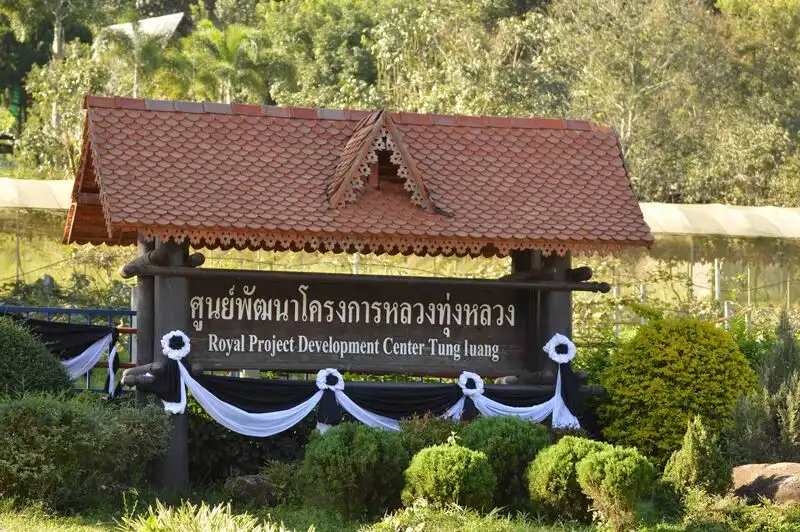
Tung Luang Royal Project Development Center
Rating: 3.5/5 (4 votes)
 Search By
  Map
Map 
 Have Map
  No Map
Chiang Mai attractions
Attractions in Thailand
Open Days: Daily (recommended to contact/arrange in advance because this is an active work area and field operations run in some periods)
Opening Hours: Recommended 08.00–17.00 (hours may change depending on on-site missions; please confirm before visiting)
Tung Luang Royal Project Development Center is a good fit for anyone who wants a “Chiang Mai getaway” with real meaning. This isn’t just a viewpoint or a casual walking spot—it’s a working Royal Project area built to improve livelihoods in the highlands while protecting forests and natural resources for the long term. If you like travel that gives you fresh mountain air, quiet moments, and a clear look at how highland agriculture is actually managed (in a way that’s serious but still visitor-friendly), Tung Luang shows what “development” looks like when it stands on the foundation of community life.
The center was established in 1979 (B.E. 2522) under the royal initiative of His Majesty the King, who recognized the hardship faced by highland communities—limited basic livelihood factors and the absence of strong support systems, especially practical knowledge and guidance in agriculture. The goal here was never only “higher yields.” It was to build livelihoods suited to the terrain, create stable income, reduce pressure on forests, curb shifting cultivation, and stop opium cultivation in the past—major challenges for highland areas in that era.
The center sits in a valley, so the landscape feels open and naturally beautiful. The basin and flatter pockets are suitable for rice and food crops, while the lower slopes are better for fruit trees and field crops. The area stands at roughly 980 meters above sea level. The climate shifts clearly by season and can feel quite extreme at times. Local information notes a minimum temperature of around 7°C, a maximum of around 37°C, and average annual rainfall of about 1,330 mm. These conditions affect both cultivation and travel, especially during the rainy season when mountain roads become winding and demand more careful driving.
One of Tung Luang’s strengths is the “whole-system picture.” The center covers a wide responsibility area and works with many communities. Available information states the responsibility area spans 11 villages with 609 households, and the population includes Karen and Hmong groups, with both Buddhist and Christian faith communities. For visitors, this means Tung Luang isn’t only about walking through farm plots—it also carries layers of culture, everyday life, and local traditions that still move to a real community rhythm.
Many visits begin with agro-tourism. You can see demonstration plots of seasonal vegetables and temperate fruits such as plum, avocado, persimmon, plum varieties, pear, and strawberry, along with vegetable plots like lettuce, cabbage, and carrots. In some periods there may also be demonstrations related to livestock, such as deer, Meishan pigs, ostriches, or other learning-focused husbandry (details depend on the center’s schedule and how the area is managed at that time). Another signature image is terraced rice farming shaped to match mountain slopes—an easy, vivid way to understand highland water and soil management.
If you’re drawn to culture, Tung Luang can feel “deeper” because you may encounter demonstrations and aspects of Karen and Hmong life such as weaving, plus key traditions that communities still value together. Information found for the area highlights notable events such as Hmong New Year (roughly December–January), Karen (Pga K’nyau) New Year (roughly December–January), the Karen wrist-tying ceremony (roughly April), and the Karen rice-harvest tradition known as “E-Kwae” (roughly November). If you’re planning your trip around culture, it helps to align your timing with these windows and ask in advance for the most accurate schedule for that year.
The surrounding nature also gives you places that “continue the story,” such as Wat Phra That Sri Phutthi Wong, a quiet temple set among green forested hills. It has a viewpoint where you may see a sea of mist on some days. Nearby, there are important waterfalls: Huai Krasae Waterfall, about 5 km from the center (per local information), with tiered cascades amid pine and diverse forest plants; Pong Samit Waterfall, about 4 km away (per local information), typically most active in the rainy season; and Huai Yen Waterfall around Ban Huai Yen, which is generally known to have water throughout the year (it’s still recommended to check real conditions before going in during heavy rains).
For accommodation, the center has around 4 guesthouses with capacity for roughly 40 people, plus camping areas and, in some arrangements, tent rental with sleeping bags (availability, terms, and fees may change by period). For food, available information notes there is no permanent on-site restaurant, but meals can be pre-ordered before your stay. The simplest way to keep your trip smooth is to “call first”—about lodging, group size, and what activities or areas are open that day—because this is a real working area, not a staged attraction with fixed routinesabatRikabz W;TuX\;g ok
Getting There From Chiang Mai city, a common route is Highway 108 (Chiang Mai–Hot), passing San Pa Tong, then turning right toward Tambon Ban Kad, continuing through Mae Wang and the Mae Win area toward Wat Phra That Sri Phutthi Wong. The center is about 500 meters from the temple. Local information states the distance from the San Pa Tong junction area to the center is about 48 km. The road is paved and passable year-round, and any type of car can be used, but drive carefully because the mountain route is winding and steep. It’s also recommended not to overload the vehicle, following local travel guidance.
| Name | Tung Luang Royal Project Development Center |
| Location | Mae Win Subdistrict, Mae Wang District, Chiang Mai |
| Highlights | Highland agriculture livelihood development under the Royal Project approach, supporting stable community income while reducing forest encroachment and shifting cultivation (with seasonal vegetable–temperate fruit demonstration plots and terraced rice landscapes) |
| Period | Established in 1979 (B.E. 2522) |
| Key Information | Valley landscape suitable for rice and highland crops; available information notes a responsibility area spanning 11 villages and 609 households, with agro-tourism, culture, and nature experiences in the Mae Win area |
| Terrain / Elevation | Valley setting; approximately 980 meters above sea level |
| Climate | Clear seasonal shifts (local info notes min around 7°C, max around 37°C, and average rainfall about 1,330 mm/year) |
| Open Days | Daily (recommended to call/arrange in advance) |
| Opening Hours | Recommended 08.00–17.00 (please confirm before visiting) |
| Getting There | Chiang Mai → Hwy 108 (Chiang Mai–Hot) → pass San Pa Tong → turn right toward Ban Kad → through Mae Wang–Mae Win → Wat Phra That Sri Phutthi Wong zone (the center is about 500 m from the temple) / local info notes about 48 km from the San Pa Tong junction area to the center |
| Current Status | Open for visits and learning (recommended to contact before traveling because field operations vary by period) |
| Contact | 053-248-061, 098-278-9061 |
| Facilities | On-site guesthouses (around 4 units, capacity roughly 40 people), camping area and possible tent rental (terms may vary), farm demonstration walk routes, seasonal produce and community handicrafts (availability depends on selling cycles) |
| Local Traditions / Community Events | Hmong New Year (approx. Dec–Jan), Karen (Pga K’nyau) New Year (approx. Dec–Jan), Karen wrist-tying ceremony (approx. Apr), Karen rice harvest tradition “E-Kwae” (approx. Nov) |
| Nearby Attractions with Distance | Wat Phra That Sri Phutthi Wong — approx. 0.5 km Pong Samit Waterfall — approx. 4 km Huai Krasae Waterfall — approx. 5 km |
Frequently Asked Questions (FAQ)
Q: Who is Tung Luang Royal Project Development Center best for?
A: It’s ideal for travelers who want a calm mountain atmosphere and a real look at how highland agricultural livelihoods are developed with communities, especially if you enjoy agro-tourism and terraced rice landscapes.
Q: When is the best time to visit for the atmosphere?
A: For cool weather and comfortable walking, late rainy season into winter is usually great. If you want living agricultural scenes and terraced rice context, the harvest-season period (often around November) can be especially vivid. It’s best to call ahead to confirm local conditions and any community activities for that year.
Q: Are there any notable cultural traditions or community events here?
A: The area is known for traditions among Karen and Hmong communities, such as Hmong New Year and Karen New Year (often around December to January), the Karen wrist-tying ceremony (often around April), and the Karen rice-harvest tradition “E-Kwae” (often around November). Dates can shift by year and context, so checking in advance is recommended.
Q: How do I stay overnight or camp?
A: Contact the center in advance to ask about guesthouse availability, camping areas, tent rental conditions, and capacity for your dates, especially during popular seasons.
Q: Any travel tips for the road?
A: The road is paved and passable year-round with any car type, but it’s winding and steep. Drive carefully, allow extra time, avoid overloading the vehicle, and check weather/road conditions beforehand, particularly in the rainy season.
 Tel: 053318306
 Mobile: 0884053432, 0849483546
 Tung Luang Royal Project Development Center Map
 Category:
  Group:
  Tag: ●Tung Luang Royal Project Development Center●tung luang royal project ●tung luang royal project development center ●chiang mai highland agriculture ●chiang mai agro tourism ●mae wang chiang mai ●mae win chiang mai ●terraced rice fields chiang mai ●royal project thailand ●wat phra that sri phutthi wong ●huai krasae waterfall Last Update: 3 MonthAgo
Comment
 Nearby Attractions
| Keyword (Advance) |
 Region
|
 Muang Chiang Mai(
 Copyright 2012,