
lovethailand home >South Travel Attractions >Surat Thani Travel Attractions >Kan Chana Dit >Tha Thong > Tha Thong Historical Museum (Wat Khao Phra Nim)
TL;DR: Tha Thong Historical Museum (Wat Khao Phra Nim) is located at Within Wat Khao Phra Nim area, Kanchanadit District, Surat Thani Province, open Saturdays, Sundays And Public Holidays, hours 08.30 – 16.30.
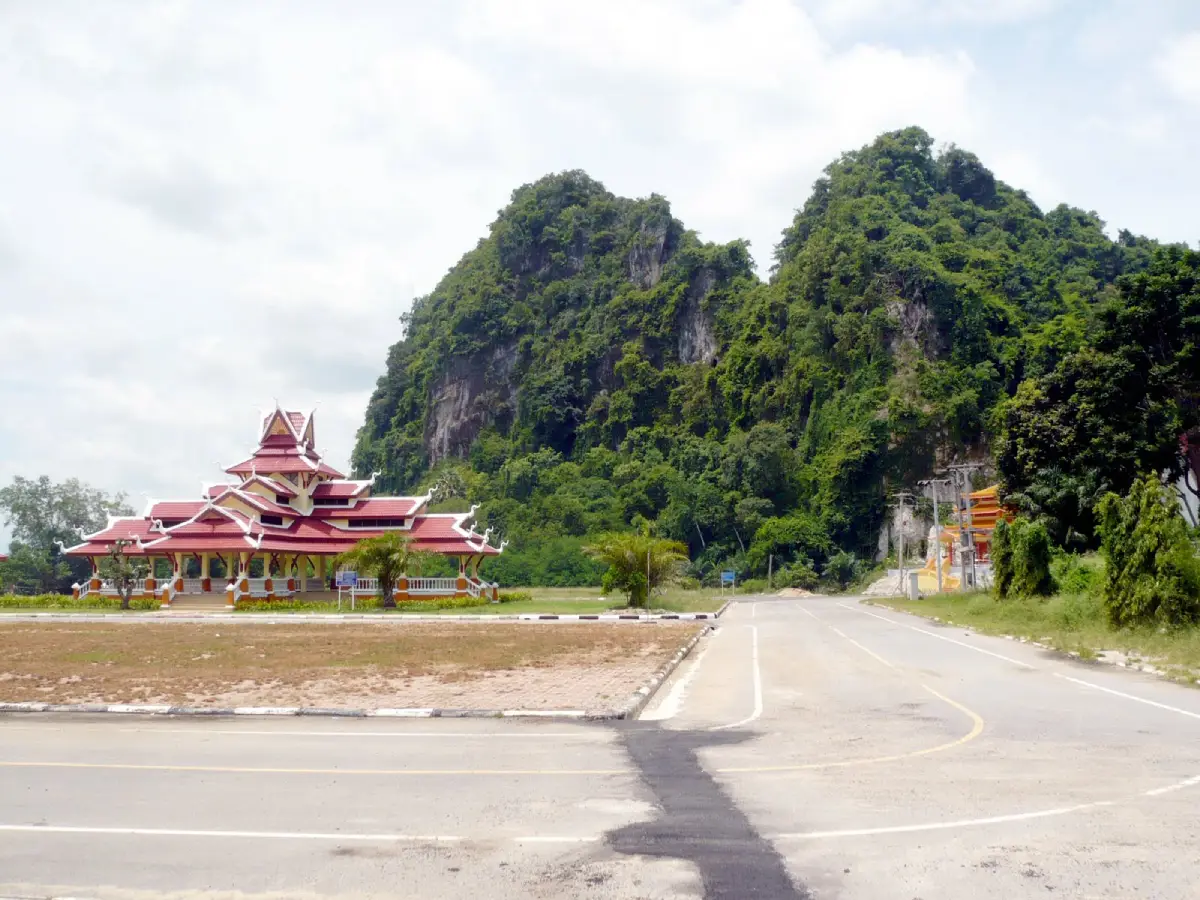
Tha Thong Historical Museum (Wat Khao Phra Nim)
Open Days: Saturdays, Sundays And Public Holidays
Opening Hours: 08.30 – 16.30
Tha Thong Historical Museum in Surat Thani is a community-based historical learning site located within the area of Wat Khao Phra Nim in Kanchanadit District. It preserves and presents the story of the ancient Tha Thong settlement, a historically important community connected with the Tha Thong River basin, Ban Don Bay, Srivijaya cultural influence, Buddhist heritage, local waterways, and the living identity of the surrounding community. This is not only a museum building with historical objects; it is a gateway to understanding one of the old cultural landscapes of Surat Thani.
Tha Thong was an ancient settlement with evidence of human occupation before the formal historical period. The river basin and coastal areas around Ban Don Bay were once home to early local populations, including Semang and Malay groups who settled along waterways and the coast. This area was important because it linked mountains, canals, agricultural land, coastal resources, and maritime routes. Tha Thong was therefore more than a small riverside village; it was part of a wider historical network of early communities associated with Chaiya, Wiang Sa, Tha Khanon or Khiri Rat, and Phunphin, all of which contributed to the ancestry and cultural formation of present-day Surat Thani.
The connection between Tha Thong and Chaiya is especially important. Communities in the Tha Thong basin absorbed Srivijaya artistic and religious culture from Chaiya, which was located across the bay. This influence helped shape local religious life and led to the creation of important Buddhist sites, including the sacred area associated with Khao Phra Thong or Tham Phra Thong. According to local tradition, residents of the Tha Thong basin contributed labor and resources to create a principal reclining Buddha image covered in gold, known as Phra Thong. The hill and cave area therefore became associated with the name Khao Phra Thong or Tham Phra Thong, linking local geography with faith, memory, and identity.
From the Buddhist site at Khao Phra Thong, a road was later built down to the canal landing so that people traveling by boat could stop, disembark, and walk conveniently to the sacred site. The landing connected to this route became known as Tha Khao Phra Thong. Over time, the name evolved into Ban Tha Phra Thong and was later shortened to Ban Tha Thong. The name Tha Thong therefore reflects more than geography. It preserves the relationship between the canal, the landing, Buddhist devotion, travel, and the growth of the community.
The Buddhist site at Khao Phra Thong attracted people from the Tha Thong basin and nearby areas who came regularly to pay respect to Phra Thong. This helped the settlement grow in importance. Around 797 CE, or approximately Buddhist Era 1340, Ban Tha Thong was elevated to town status to govern the Tha Thong basin and nearby areas under the Srivijaya center at Chaiya. Later, when the Srivijaya political center shifted to Nakhon Si Thammarat around 807 CE, or Buddhist Era 1350, Tha Thong came under the authority of Nakhon Si Thammarat. This historical sequence places Tha Thong within the wider coastal political and cultural network of Southern Thailand.
Another important archaeological indicator from the Tha Thong basin is the discovery of unbaked clay votive tablets at Tham Khao Lik in the Thung Khen area. Together with Buddhist sites, Buddha images, sacred caves, and local oral history, these finds suggest that the Tha Thong basin was a culturally developed settlement from the Srivijaya period onward. The museum helps visitors connect these pieces of evidence into a wider picture of religion, settlement, river travel, and community formation.
Wat Khao Phra Nim, the temple associated with the museum area, is a local Buddhist temple in Tha Thong Subdistrict, Kanchanadit District. The temple was established in 1804 and is located on a small limestone hill near Tha Thong Canal. Inside the cave are several stucco Buddha images, including reclining Buddha images, a Buddha in the Palilayaka posture, and seated Buddha images in the Mara Vijaya posture. The temple is therefore both a religious site and a historical site. The name Khao Phra Nim comes from a local belief that the Buddha images inside the cave once felt soft to the touch, leading villagers to refer to them as Phra Nim, or soft Buddha images.
The cave at Wat Khao Phra Nim is an important part of the cultural landscape. Its entrance faces east, and the interior contains sacred spaces where Buddha images were created by local craftsmen. The reclining Buddha images, seated Buddha images, and decorated bases reflect local devotional craftsmanship. A visit to this area is not only a temple visit; it is also an opportunity to observe how terrain, limestone caves, faith, and community effort shaped Buddhist heritage in the Tha Thong basin.
Tha Thong Historical Museum was established because local leaders recognized the importance of the town’s history and ancient objects. Songwut Noppakhun, a former member of the Surat Thani Provincial Administrative Organization representing Kanchanadit District, proposed the project to the provincial administration during the tenure of Thani Thaugsuban as chief executive of the Surat Thani Provincial Administrative Organization. The project received support and was developed as a community learning center, with early support from the telecommunications sector to apply communication technology to historical learning.
The core idea behind Tha Thong Historical Museum is that it should function as a living museum. It is not simply a place where old objects are stored in display cases. Instead, it connects people with their past through local narratives, ancient objects, community memory, waterways, temples, sacred caves, and educational activities. Its objectives include gathering the history of Tha Thong and nearby communities, supporting the preservation of local antiques and tools, serving as a lifelong learning center, providing knowledge related to information and communication technology, and presenting local arts, customs, traditions, and wisdom.
One of the museum’s strengths is its ability to show that Tha Thong has many historical layers. These layers include early settlement, river and coastal life, Srivijaya influence, Buddhist sacred sites, the growth of a canal-side community, the role of Tha Thong as an old town of Surat Thani, and its present role as a community learning destination. When viewed together with Wat Khao Phra Nim, Tha Thong Canal, Tha Thong Old Town Market, and Pak Nam Tha Thong community, the museum becomes a central point for reading the whole cultural landscape.
The area around the museum is also connected with Tha Thong Old Town Market, a community market located around the museum area inside Wat Khao Phra Nim. The market was developed through local cooperation to support tourism, local food, seafood, traditional sweets, local vegetables, OTOP products, and community-based income. Its attraction lies not only in shopping, but also in the way it brings together history, local food, fisheries, mangrove ecology, canal scenery, and community identity.
A visit to Tha Thong works best when experienced as a connected cultural route. Visitors can begin at the museum to understand the history of the ancient town, continue to Wat Khao Phra Nim to pay respect and see the cave, and then visit Tha Thong Old Town Market when it is open. Some travelers may also explore the canal area, local aquaculture, mangrove landscapes, and the fishing life of the Ban Don Bay coast. This route allows the visitor to understand history, religion, ecology, food, and local economy in one journey.
Tha Thong Canal is central to the story of the community. In the past, waterways functioned as the main routes for people, goods, faith, and cultural exchange. The fact that a landing was created to serve pilgrims going to the sacred site at Khao Phra Thong shows the importance of the canal in both transportation and religious life. Today, Tha Thong Canal still reflects local fisheries, aquaculture, mangrove ecosystems, and the coastal economy of Ban Don Bay. This makes the area suitable for visitors interested in both history and nature.
Tha Thong is also part of the wider history of old towns in Surat Thani. In the past, important old towns in the province included Chaiya, Tha Thong, Khiri Rat, and Wiang Sa. Tha Thong is therefore one of the historical keys to understanding settlement, governance, and cultural development in this region. Learning about Tha Thong adds another dimension to Surat Thani, a province often known mainly for islands, sea routes, and gateway travel to Samui, Phangan, and Tao.
For visitors interested in local archaeology, the museum is a useful starting point. Evidence such as clay votive tablets, Buddha images, cave shrines, and the story of Phra Thong helps show that religion was central to the community. Sacred sites, river access, and local craftsmanship were closely connected. By placing these stories in a museum context, visitors can see that ancient objects were not isolated artifacts; they were part of the lived history of the Tha Thong people.
For families and students, Tha Thong Historical Museum is a meaningful place for learning local history through real sites. Young visitors can see that history does not exist only in textbooks. It exists in temples, canals, roads, village names, sacred caves, and objects preserved by local people. Learning in the actual landscape helps explain concepts such as ancient town, river basin community, Srivijaya culture, and local wisdom in a more direct and memorable way.
For cultural travelers, this museum offers a deeper Surat Thani experience beyond mainstream routes. It is not a luxury attraction and does not rely on modern spectacle. Its value lies in authenticity: an old community, a temple cave, a historical river system, a local market, and stories preserved by people who still live in the area. Travelers who enjoy history, local culture, Buddhist sites, riverside communities, and slow exploration will find Tha Thong especially rewarding.
The museum also has strong potential for conservation-based tourism. Earlier development concepts mentioned riverside walkways, a multipurpose pavilion or pier, boat trips along Tha Thong Canal, aquaculture sites, and links to coastal resources in Kanchanadit District. This direction shows that the museum is not separate from its environment. It can function as a gateway to understanding both the history and the coastal ecology of the Tha Thong area.
Visitors should plan the trip according to opening days and local activities. The museum is listed as open on Saturdays, Sundays, and public holidays from 08.30 to 16.30 with no admission fee. Tha Thong Old Town Market is associated with Sunday evening activity. A good itinerary is to visit the museum and Wat Khao Phra Nim during the day, then continue to the market in the evening when it is operating. This allows visitors to experience history, religion, local food, and community life in one connected route.
Getting There from Surat Thani city is most convenient by private car or rental car. Take Highway 401 toward Kanchanadit District. After passing Kanchanadit Market for about 2.5 km, turn right onto Route 4177 and continue for about 8 km. After crossing the bridge over Tha Thong Canal, turn right toward Wat Khao Phra Nim. The museum is located within this area. The route is suitable for a day trip and can be combined with Tha Thong Old Town Market, Tha Thong Canal, Pak Nam Tha Thong community, and nearby attractions in Kanchanadit.
Because the museum is located in a temple area and near historic religious remains, visitors should dress politely and behave respectfully. When walking around the cave and temple area, watch for uneven surfaces and avoid touching, climbing, scratching, or damaging Buddha images and old structures. Photography is possible, but should be done with respect. Visitors should bring drinking water, a hat or umbrella, and comfortable shoes, especially if walking around the temple, market, and canal-side areas.
What makes Tha Thong Historical Museum different from many general museums is its complete surrounding context. Visitors do not learn only from labels and displays. They can step outside and see the canal connected with the name Tha Thong, the temple and cave linked with Phra Thong and Phra Nim, the market where local people continue to gather, and the coastal environment that still shapes local livelihoods. Every element makes the museum a center for understanding the old town as a living place.
For anyone looking for a historical attraction in Surat Thani, Tha Thong Historical Museum deserves a place on the itinerary. It helps complete the image of the province, showing Surat Thani not only as a gateway to islands and beaches, but also as a land of ancient towns, Buddhist heritage, river communities, and Srivijaya cultural memory. Visiting this museum is therefore not just a short stop; it is a way to understand the deeper roots of Tha Thong and the people of Surat Thani.
| Name | Tha Thong Historical Museum |
| Location | Within Wat Khao Phra Nim area, Kanchanadit District, Surat Thani Province |
| Address | Moo 1, Tha Thong Subdistrict, Kanchanadit District, Surat Thani 84160, Thailand |
| Highlights | Historical learning site for Tha Thong ancient town, Tha Thong River basin, Srivijaya cultural influence, Wat Khao Phra Nim, Tham Phra Nim, and the local canal-side community |
| History | Connected with prehistoric settlement, Srivijaya influence, Chaiya, Wiang Sa, Tha Khanon, Phunphin, and the historical development of old Surat Thani communities |
| Name Origin | The name developed from a canal landing connected with Khao Phra Thong, from Tha Khao Phra Thong to Ban Tha Phra Thong and later Ban Tha Thong |
| Distinctive Features | A living museum connected with the museum building, Wat Khao Phra Nim, Tham Phra Nim, Tha Thong Canal, Tha Thong Old Town Market, and Pak Nam Tha Thong community |
| Main Areas / Zones | Historical museum building, Wat Khao Phra Nim, Tham Phra Nim cave area, Buddha images inside the cave, temple grounds, community space, and canal-side connection |
| Travel Information | From Surat Thani city, take Highway 401 toward Kanchanadit, pass Kanchanadit Market for about 2.5 km, turn right onto Route 4177 for about 8 km, cross Tha Thong Canal bridge, then turn right toward Wat Khao Phra Nim |
| Current Status | Open as a historical learning center presenting the history and identity of the Tha Thong community |
| Open Days | Saturdays, Sundays and public holidays |
| Opening Hours | 08.30 – 16.30 |
| Fees | No admission fee |
| Caretaker / Responsible Agency | Surat Thani Provincial Administrative Organization |
| Abbot Of Wat Khao Phra Nim | Phra Thakrit Wichayo |
| Facilities | Temple parking area, Buddhist worship area, community learning building, and connection with Tha Thong Old Town Market during market activity days |
| Nearby Tourist Attractions | 1. Wat Khao Phra Nim / Tham Phra Nim, about 0 km 2. Tha Thong Old Town Market, about 0 km 3. Tha Thong Canal And Pak Nam Tha Thong Community, about 1 km 4. Wat Don Yang, Tha Thong Subdistrict, about 8 km 5. Tha Thong Mangrove And Coastal Community Route, about 8 km |
| Nearby Restaurants | 1. Jungle Cafe Tha Thong Surat Thani, about 12 km, Tel. 093-668-9605 2. Five Star Sahathai Tha Thong, about 12 km, Tel. 064-030-3036 3. Chao Golf Ahan Tam Sang 1, about 12 km, Tel. 098-115-8099 4. Khanom Chin Pa Daeng Tha Thong Mai, about 12 km, Tel. 083-646-2445 5. Roti Bang Lo, about 12 km, Tel. 098-684-2245 |
| Nearby Accommodations | 1. Tongmai Resort, about 12 km, Tel. 077-452-556, 093-561-9628 2. Dark Sugar Resort, about 12 km 3. Pruksa Riverside Resort, about 25 km 4. Ban Phak Nap Resort, about 25 km, Tel. 081-477-4112 5. Jantara Resort And Restaurant, about 30 km |
Frequently Asked Questions (FAQ)
Q: Where is Tha Thong Historical Museum located?
A: Tha Thong Historical Museum is located within the Wat Khao Phra Nim area in Moo 1, Tha Thong Subdistrict, Kanchanadit District, Surat Thani Province.
Q: When is Tha Thong Historical Museum open?
A: The museum is open on Saturdays, Sundays, and public holidays from 08.30 to 16.30, with no admission fee.
Q: Why is Tha Thong historically important?
A: Tha Thong was an ancient river-basin settlement linked with early communities, Srivijaya cultural influence from Chaiya, Buddhist sacred sites, and the development of old towns in Surat Thani.
Q: How is Wat Khao Phra Nim connected to the museum?
A: The museum is located in the Wat Khao Phra Nim area. The temple and its cave contain important Buddha images and form a key part of the historical and religious landscape of Tha Thong.
Q: What can visitors see near the museum?
A: Visitors can see Wat Khao Phra Nim, Tham Phra Nim, Tha Thong Old Town Market, Tha Thong Canal, Pak Nam Tha Thong community, Wat Don Yang, and nearby mangrove community routes.
Q: Is Tha Thong Old Town Market close to the museum?
A: Yes. Tha Thong Old Town Market is located around the museum area inside Wat Khao Phra Nim, making it easy to combine the museum, temple, and local market in one trip.
Q: How do visitors travel from Surat Thani city to the museum?
A: Take Highway 401 toward Kanchanadit, pass Kanchanadit Market for about 2.5 km, turn right onto Route 4177 for about 8 km, cross Tha Thong Canal bridge, then turn right toward Wat Khao Phra Nim.
 Category: ●Art, Culture and Heritage
 Group: ●Museums
Last Update : 2 MonthAgo
 Last Update : 2 MonthAgo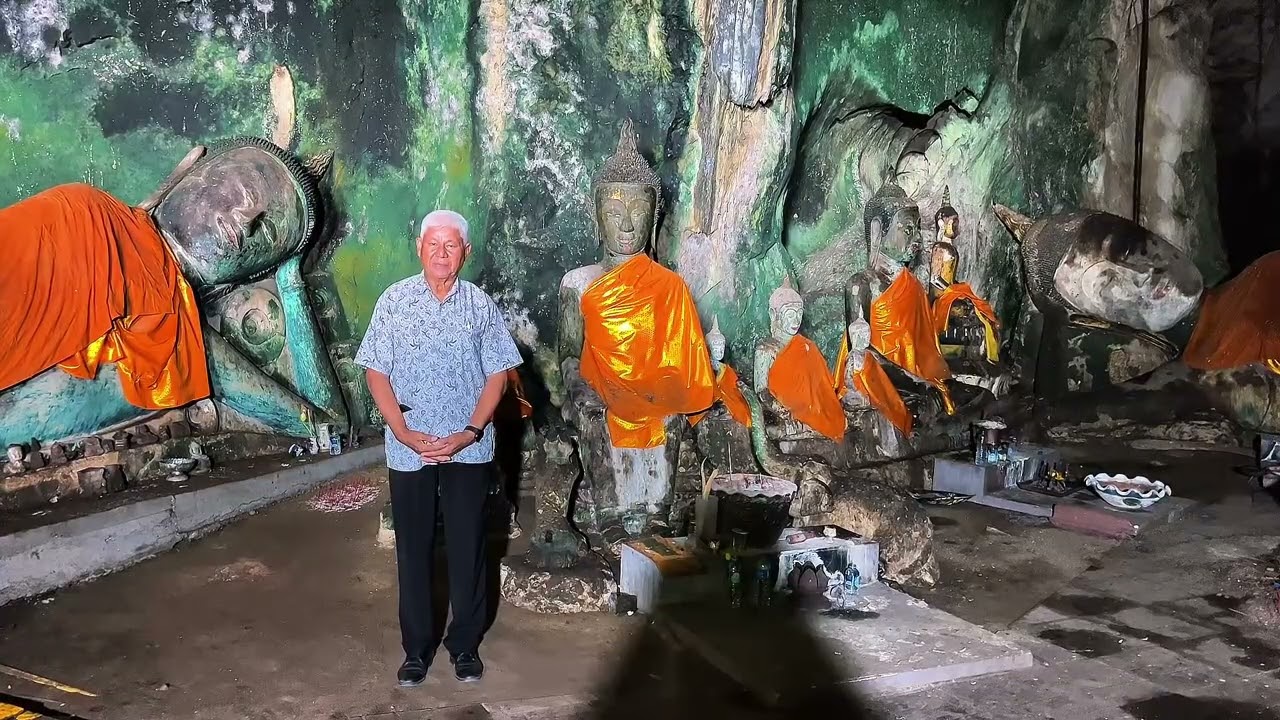
 Click to Access the Navigation Map GPS
Tha Thong Historical Museum (Wat Khao Phra Nim) Map
Recommend

 Landmarks and Memorials(1)
 Art, Craft Centres, Tradition(8)
Museums(5)
Art, Craft Centres, Tradition(8)
Museums(5)
 Educational Places
 Educational Gardens, Farm(1)
 Places of Worship
 Temple(32)
 Other Sacred Sites(8)
 Research and Development
 Royal Project(1)
 Suburban Living
 Village, Community(6)
 Local Market(1)
 Nature and Wildlife
 National Parks and Marine Reserves(8)
 Mountain (Doi)(2)
 Dam, Reservoir, Lake(8)
 Waterfalls(34)
 Hot Springs(7)
 Caves(18)
 River, Canal(11)
 Bays and Beaches(30)
 Islands(16)
 Other natural attractions(10)
 Entertainment and Agricultural
 Animal camps and shows(6)
 Farms, Parks and Ecotourism(7)
 Outdoor and Adventure Activities(2)
 Shopping
 Shopping and Night Market(1)
 Travel Articles, Recipes
 Travel Review, Food Review(1)
 Southern Food Menu, Southern Food Recipes(1)


