
lovethailand home >South Travel Attractions >Surat Thani Travel Attractions >Koh Samui >Ma Ret > Hin Ta Hin Yai
TL;DR: Hin Ta Hin Yai is located at Lamai Bay / Southern End Of Lamai Beach, Maret Subdistrict, Ko Samui District, Surat Thani Province, open Daily, hours The Natural Rock Area Is Accessible 24 Hours.
Hin Ta Hin Yai
Open Days: Daily
Opening Hours: The Natural Rock Area Is Accessible 24 Hours
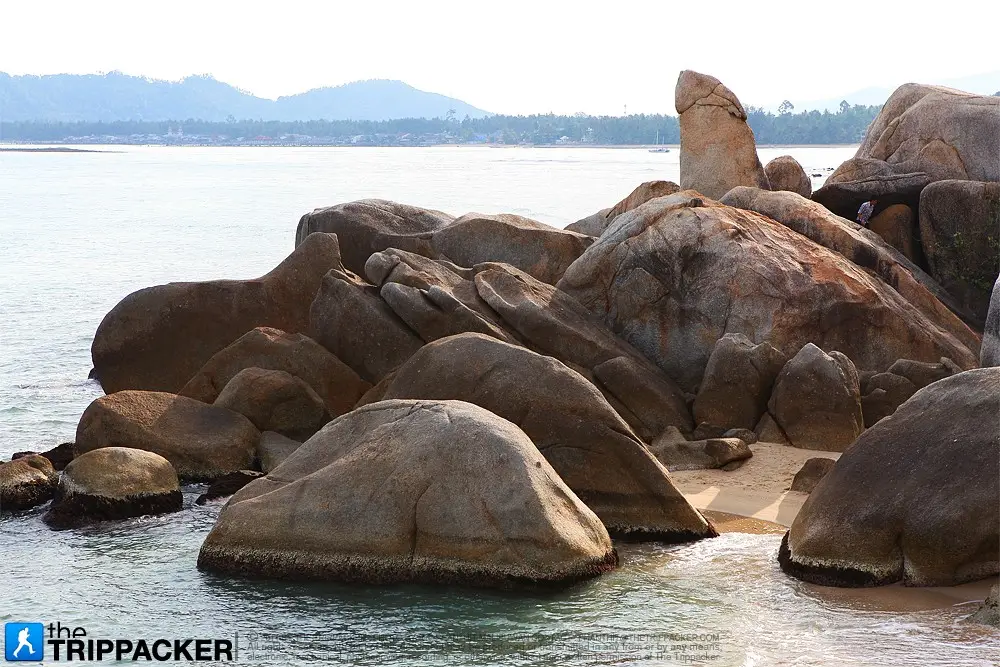
Hin Ta Hin Yai, also known as the Grandfather and Grandmother Rocks, is one of the most recognizable natural landmarks on Koh Samui in Surat Thani Province. Located near Lamai Bay in Maret Subdistrict, Ko Samui District, the site is famous for its unusual granite rock formations created by long-term coastal erosion. Waves, wind, sunlight, salt spray, and tropical weather have shaped the granite into distinctive forms that local people interpret as male and female symbols, making the site one of the most photographed places on the island.
Hin Ta Hin Yai is more than a photo stop. It combines coastal geology, sea views, local folklore, community culture, and traditional Samui snacks in one compact area. Visitors can walk across the broad granite rocks, look out over Lamai Bay, watch the waves strike the shoreline, and see how the natural stone surface has been sculpted over time. The site is easy to include in a Lamai itinerary because it sits close to hotels, restaurants, souvenir shops, beach areas, and several other attractions in the Maret area.
The rocks are located at the southern end of Lamai Beach, one of Koh Samui’s major beach districts. Lamai is known for its clear water, long sandy coastline, restaurants, cafés, night market, and relaxed resort atmosphere. A visit to Hin Ta Hin Yai can be combined with a meal in Lamai, a walk along the beach, shopping for local sweets, or a short drive to viewpoints, temples, and cultural sites nearby.
The distinctive shape of Hin Ta comes from a granite outcrop that has been weathered by waves, wind, and heat until it resembles a male symbol. Hin Yai is a coastal rock hollow created by erosion and wave action near the sea level. Together, the rocks demonstrate how natural coastal processes can create unusual shapes that become part of local imagination and identity. These forms were not carved by humans; they are the result of long-term geological change.
From a geological perspective, Hin Ta Hin Yai shows how even hard granite can be changed by the coastal environment. Saltwater, heat, moisture, wind, and repeated wave action gradually create cracks, curves, smooth surfaces, grooves, and hollows. Over many years, these processes shape rock into forms that people recognize and remember. This is why the site is important not only as a tourist attraction but also as an accessible example of natural coastal erosion on Koh Samui.
Hin Ta Hin Yai is also closely linked to the local legend of Ta Kreng and Yai Riam. According to Koh Samui folklore, Ta Kreng and Yai Riam were an elderly couple from Pak Phanang in Nakhon Si Thammarat Province. They sailed to Prachuap Khiri Khan to ask for the daughter of Ta Mong Lai to marry their son Khong. Their son’s friend, Nai Prab, was the boatman. When the boat reached the Lamai headland, a powerful storm struck, the boat capsized, and the dowry was lost in the sea.
The legend continues that many relatives and companions who traveled with them drowned and became small islands around Koh Samui and the Ang Thong archipelago. Khong was swept toward Choeng Mon and became Koh Kong. Nai Prab drifted toward Ban Don Bay, where his boat sank and became Koh Nok Phao, while he became Koh Prab. Only Ta Kreng and Yai Riam were washed ashore at Lamai Beach.
After reaching Lamai, Ta Kreng and Yai Riam were deeply distressed because they feared Ta Mong Lai would think they had broken their promise. To prove their sincerity, they prayed to become lasting symbols of their honest intention. They died and became the two rocks now known as Hin Ta and Hin Yai. This story gives the site a cultural meaning beyond its physical appearance, linking the rocks with ideas of promise, family duty, sincerity, and local memory.
Although the shape of the rocks is the reason for their fame, visitors should approach the site respectfully. Local people regard Hin Ta Hin Yai not only as an amusing natural formation but also as a landmark tied to Samui folklore. Photography should be done politely. Visitors should avoid unsafe poses, inappropriate behavior, loud noise, or climbing onto risky sections of the rocks, especially when families and older travelers are nearby.
The site has several key areas. The entrance path passes through souvenir stalls and shops selling local products, especially Samui kalamae, a traditional sticky coconut sweet. Beyond the shops, visitors reach the open granite rock platform by the sea. The main viewpoints are the Hin Ta formation, the Hin Yai rock hollow, and the sea-facing rock area overlooking Lamai Bay. Some surfaces are uneven, sloping, or slippery when wet, so visitors should walk carefully.
Samui kalamae is strongly associated with Hin Ta Hin Yai. Shops near the entrance sell this traditional sweet made from coconut milk, sugar, and local ingredients. The sticky, chewy texture and sweet coconut aroma make it a popular souvenir from Koh Samui. Its connection with coconut also reflects the island’s long history as a coconut-growing area, where coconut is used widely in local food, desserts, and daily life.
A typical visit to Hin Ta Hin Yai takes about 30 minutes to 1 hour if travelers only want to photograph the rocks and enjoy the sea view. Those who want to shop for souvenirs, taste kalamae, or eat nearby should allow 1 to 2 hours. Morning and late afternoon are the best times for photography because the light is softer and the weather is less intense. Midday can be very hot, and the granite surface may absorb heat, so sun protection and drinking water are recommended.
The natural rock area is accessible 24 hours, but daytime or early evening visits are strongly recommended for practical safety. Most shops and souvenir stalls operate during the daytime to evening. Visiting at night is not ideal because the rocks are uneven, the area is darker, and it is harder to see wet or slippery surfaces near the sea.
There is no admission fee to visit the Hin Ta Hin Yai rock formations. However, some services in privately managed areas may charge small fees, such as parking, toilets, or access to certain viewpoint areas. Visitors should carry small cash for these services. Food, drinks, souvenirs, and restaurant meals are paid separately.
Getting There is easiest by private car, rental car, rental motorbike, or local taxi. From Nathon Pier, follow Koh Samui’s main ring road toward Lamai Beach for about 17 to 18 km, then turn into the Hin Ta-Hin Yai access road in Maret Subdistrict. Travelers starting from Chaweng, Bo Phut, or Samui Airport can also follow the ring road toward Lamai and Maret. The road is straightforward, but drivers should be careful on curves, slopes, and busy tourist sections.
If driving independently, navigate directly to Hin Ta Hin Yai or Soi Hin Ta-Hin Yai in Maret. Parking areas are located near the entrance. From the parking area, visitors walk through shops and souvenir stalls before reaching the seafront rocks. Comfortable shoes with good grip are recommended. High heels and slippery sandals are not suitable for the rock area.
Travelers using local taxis or songthaews should agree on the fare and return arrangement before starting the trip, especially in the evening when local transport may be less frequent. Those staying in Lamai can reach Hin Ta Hin Yai more easily because it is close to the main accommodation and dining areas. Travelers staying in Chaweng or Bo Phut should allow more time for the island road journey.
Safety is important because the main attraction is a natural rock surface by the sea. The rocks are not smooth paved walkways. Some areas slope toward the water, while others become slippery after rain or sea spray. Visitors should walk slowly, avoid jumping over gaps, stay away from wave-exposed edges, and keep children close at all times.
On days with strong waves or rain, visitors should avoid standing near the sea-facing edge. Wet granite can be extremely slippery, and a sudden wave can make footing unstable. Photography should be done from safe, dry areas. A wide-angle photo from the upper rock platform is often safer than climbing down near the waterline.
Hin Ta Hin Yai is easy to combine with nearby attractions in the Lamai and Maret area. Popular nearby stops include Lamai Beach, Lamai Viewpoint and Heart Stone, Wat Phra That Sila Ngu, Guan Yu Shrine, Overlap Stone, and Hua Thanon Fishing Village. A practical half-day plan is to visit Hin Ta Hin Yai in the morning, buy local kalamae, have lunch near Lamai, then continue to a viewpoint or temple in the afternoon.
Seafood lovers will find several restaurants near Hin Ta Hin Yai. Sabienglae Samui is one of the best-known restaurants close to the entrance and is popular for seafood and southern Thai dishes. Other local restaurants and cafés around Lamai make it easy to turn a short sightseeing visit into a relaxed meal stop. Combining the rocks with food and local sweets gives visitors a fuller sense of Koh Samui’s coastal culture.
Accommodation near Hin Ta Hin Yai ranges from beachfront bungalows and mid-range resorts to Lamai hotels and villas. Travelers who want a quieter stay can choose the southern end of Lamai or Maret, while those who prefer restaurants, nightlife, and the night market may prefer central Lamai. Because Lamai Beach is long, travelers should check the actual distance from their hotel to Hin Ta Hin Yai rather than relying only on the general area name.
Hin Ta Hin Yai can also be used as a simple outdoor learning site. Families and teachers can explain how granite changes through erosion, how coastal landforms develop, and how local communities turn natural features into stories. The rocks show how nature, language, imagination, and folklore come together to create a meaningful place.
Culturally, Hin Ta Hin Yai is an example of how a natural formation becomes a landmark through storytelling. Without the legend, it would still be a beautiful rocky shoreline. With the story of Ta Kreng and Yai Riam, it becomes a symbol of sincerity, family commitment, and local identity. This combination is the reason the site remains one of Koh Samui’s most memorable attractions.
In summary, Hin Ta Hin Yai is an essential stop for travelers interested in Koh Samui’s natural coastline, photography, folklore, and local products. The site is compact but rich in meaning, combining granite formations, Lamai Bay views, the legend of Ta Kreng and Yai Riam, Samui kalamae, and easy access to nearby Lamai attractions. With careful walking, respectful behavior, and a daytime visit, it offers one of the most distinctive experiences on Koh Samui.
| Name | Hin Ta Hin Yai |
| Location | Lamai Bay / Southern End Of Lamai Beach, Maret Subdistrict, Ko Samui District, Surat Thani Province |
| Address | Moo 3, Maret Subdistrict, Ko Samui District, Surat Thani 84310 |
| Coordinates | 9°27'07.8"N 100°02'22.4"E |
| Highlights | Distinctive granite rock formations, Lamai Bay views, Koh Samui folklore, photo viewpoints, and local Samui kalamae shops |
| Distinctive Features | Hin Ta is a granite outcrop shaped by waves, wind, and sunlight into a form resembling a male symbol, while Hin Yai is a coastal rock hollow shaped by erosion and wave action |
| History / Legend | Local legend tells of Ta Kreng and Yai Riam from Pak Phanang in Nakhon Si Thammarat. They sailed to ask for Ta Mong Lai’s daughter in Prachuap Khiri Khan to marry their son, but a storm wrecked the boat near Lamai. They died and became Hin Ta and Hin Yai |
| Importance | A natural and cultural landmark of Koh Samui, combining coastal geology with local folklore and community identity |
| Main Areas / Zones | Entrance Walkway Souvenir And Samui Kalamae Shops Granite Rock Platform Hin Ta Viewpoint Hin Yai Viewpoint Lamai Bay Sea View Area |
| Recommended Activities | Photograph the rock formations and sea view, walk carefully across the granite platform, taste and buy Samui kalamae, explore Lamai Beach, and combine the visit with Lamai Viewpoint, Wat Phra That Sila Ngu, or Guan Yu Shrine |
| Travel Information | From Nathon Pier, follow Koh Samui’s main ring road toward Lamai Beach for about 17-18 km, then turn into Soi Hin Ta-Hin Yai in Maret. Private car, rental motorbike, and local taxi are practical options |
| Current Status | Open as a natural attraction and major landmark of Koh Samui |
| Open Days | Daily |
| Opening Hours | The natural rock area is accessible 24 hours. Shops and souvenir stalls generally operate from daytime to evening |
| Fees | No admission fee for the rock formations. Some privately managed services may charge for parking, toilets, or certain viewpoint areas |
| Facilities | Private parking areas, souvenir shops, Samui kalamae stalls, nearby restaurants, privately managed toilets, and walking access to the coastal rocks |
| Local Information Contact | Koh Samui City Municipality, Tel. 077-421421-2 |
| Nearby Tourist Attractions | 1. Lamai Beach, about 1 km 2. Lamai Viewpoint / Heart Stone, about 1 km 3. Wat Phra That Sila Ngu, about 2 km 4. Guan Yu Shrine Koh Samui, about 3 km 5. Overlap Stone, about 4 km 6. Hua Thanon Fishing Village, about 4 km |
| Nearby Restaurants | 1. Sabienglae Samui, about 0.1 km, Tel. 077-332-651 2. Kalamae Mae Boonpa Samui, about 0.1 km, Tel. 098-993-4246 3. Baan Suan Lung Khai, about 3 km 4. Kob Thai Restaurant, about 3 km, Tel. 082-534-9325 5. The Cliff Bar & Grill, about 7 km |
| Nearby Accommodations | 1. Sunrise Bungalow, about 0.1 km, Tel. 077-424433 2. White Sand Samui Resort, about 0.8 km 3. Samui Garden Home, about 2 km 4. Lamai Coconut Beach Resort, about 2 km, Tel. 077-332-589 5. Thai House Beach Resort, about 2 km, Tel. 061-818-2988 |
Frequently Asked Questions (FAQ)
Q: Where is Hin Ta Hin Yai located?
A: Hin Ta Hin Yai is located at the southern end of Lamai Beach in Maret Subdistrict, Ko Samui District, Surat Thani Province.
Q: How were Hin Ta and Hin Yai formed?
A: The rocks were naturally formed from granite shaped by long-term coastal erosion, including waves, wind, sunlight, saltwater, and tropical weather.
Q: What is the legend of Hin Ta Hin Yai?
A: The legend tells of Ta Kreng and Yai Riam, who sailed from Pak Phanang to arrange a marriage for their son but were caught in a storm near Lamai. They died and became the rocks known today as Hin Ta and Hin Yai.
Q: Is there an admission fee for Hin Ta Hin Yai?
A: There is no admission fee for the rock formations. Small fees may apply for privately managed parking, toilets, or certain viewpoint areas.
Q: What is the best time to visit Hin Ta Hin Yai?
A: Morning and late afternoon are the best times because the light is pleasant for photography and the weather is less hot than midday.
Q: Is Hin Ta Hin Yai suitable for families?
A: Yes, but children should be supervised closely because the main area consists of natural rocks that can be uneven, sloping, or slippery when wet.
Q: How do travelers get to Hin Ta Hin Yai?
A: Travelers can go by private car, rental motorbike, or local taxi via Koh Samui’s main ring road toward Lamai Beach and Maret Subdistrict.
Q: What should visitors buy near Hin Ta Hin Yai?
A: Samui kalamae is the most popular local souvenir near the entrance. It is a traditional sticky coconut sweet closely associated with Koh Samui.
 Category: ●Nature and Wildlife
 Group: ●Other natural attractions
Last Update : 1 MonthAgo
 Last Update : 1 MonthAgo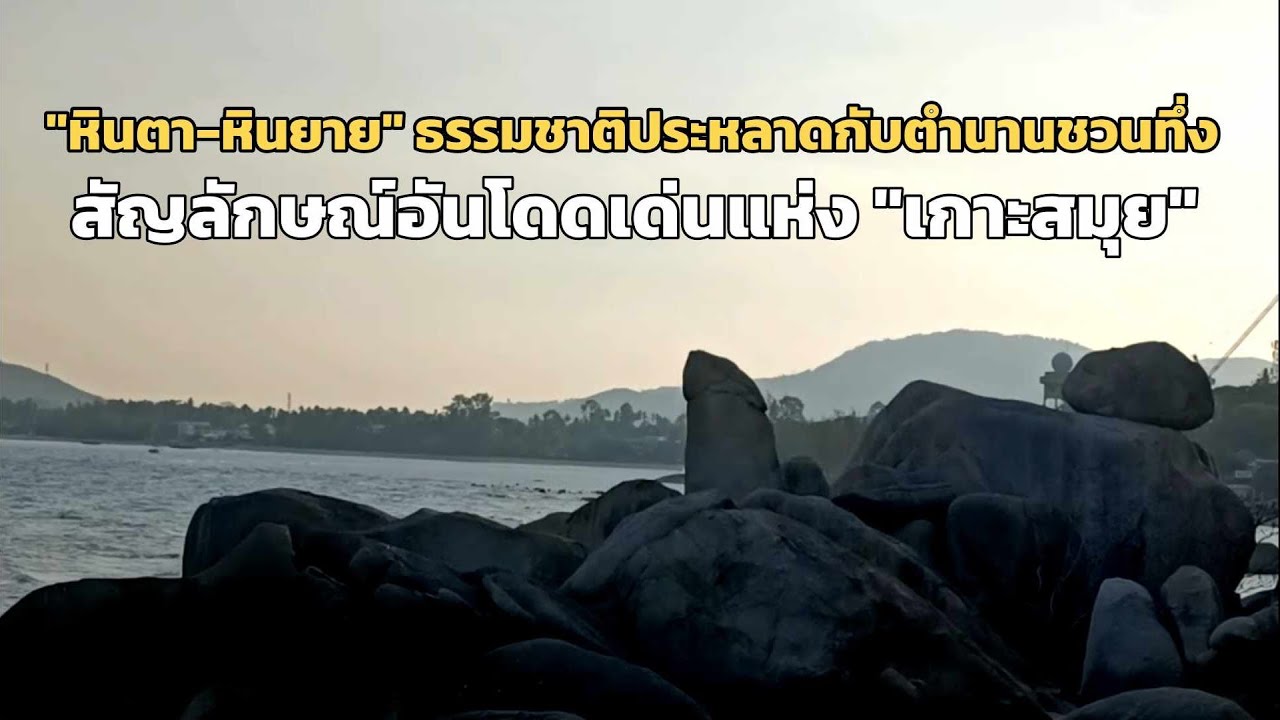
 Click to Access the Navigation Map GPS
Hin Ta Hin Yai Map
Recommend

 Art, Culture and Heritage
 Landmarks and Memorials(1)
 Art, Craft Centres, Tradition(8)
 Museums(5)
 Educational Places
 Educational Gardens, Farm(1)
 Places of Worship
 Temple(32)
 Other Sacred Sites(8)
 Research and Development
 Royal Project(1)
 Suburban Living
 Village, Community(6)
 Local Market(1)
 National Parks and Marine Reserves(8)
 Mountain (Doi)(2)
 Dam, Reservoir, Lake(8)
 Waterfalls(34)
 Hot Springs(7)
 Caves(18)
 River, Canal(11)
 Bays and Beaches(30)
 Islands(16)
Other natural attractions(10)
Islands(16)
Other natural attractions(10)
 Entertainment and Agricultural
 Animal camps and shows(6)
 Farms, Parks and Ecotourism(7)
 Outdoor and Adventure Activities(2)
 Shopping
 Shopping and Night Market(1)
 Travel Articles, Recipes
 Southern Food Menu, Southern Food Recipes(1)


