
lovethailand home >South Travel Attractions >Ranong Travel Attractions >La Un >Nai Wong Tai > Tham Nam Lot
TL;DR: Tham Nam Lot, Ranong attractions : Nature and Wildlife, Caves.

Tham Nam Lot
Open Days: Contact Local Officers Or Ban Noen Thong Community Before Traveling
Opening Hours: Daytime Visits Are Recommended, Only When Cave Stream Conditions Are Safe
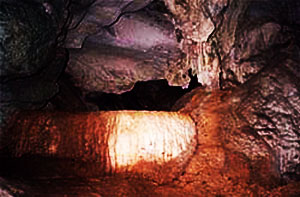
Tham Nam Lot is a natural cave and important archaeological site in Ranong Province, located in the Ban Noen Thong area, Moo 2, Nai Wong Tai Subdistrict, La-un District. The cave is not large, but it has strong natural and cultural value because water passes through the lower part of the cave, while the interior contains stalactites, stalagmites, dripping water, and limestone formations shaped by long-term natural processes. Tham Nam Lot is therefore more than a scenic cave; it is a place where geology, water, forest, local settlement, and evidence of past human activity meet in one landscape.
The key feature of Tham Nam Lot is its combination of cave chambers and an underground stream. Older tourism descriptions mention two small caves, while travel references describe the cave as having two levels. The upper section contains scenic stalactites and stalagmites, and the lower section has a stream running through it. This creates a cooler and more humid environment than a dry cave. The sound and movement of water give the cave its distinctive character, but they also make safety especially important, particularly during the rainy season or after heavy rainfall.
Nai Wong Tai and Nai Wong Nuea in La-un District are part of a limestone mountain landscape with many caves and rock shelters. The Fine Arts Department records several archaeological caves in this area, including Tham Khlum Mo Lam, Tham Suea, Tham Prakai Phet, Tham Nat Dai, and Tham Nam Lot. This concentration of caves shows that the limestone hills of La-un are important not only as natural landforms but also as places where humans used cave environments in the past.
The Fine Arts Department surveyed Tham Nam Lot in 2015 and found pottery fragments and animal bone fragments. In 2018, Tham Nam Lot was included among the officially announced archaeological monuments in Ranong Province within La-un District. This makes the cave significant for understanding prehistoric and early historic human activity in Ranong. Visitors should therefore treat the cave as both a natural attraction and a protected cultural site.
The landscape of Nai Wong Tai and Nai Wong Nuea is defined by mountains, valleys, and limestone hills. Some areas are enclosed by surrounding mountains, which gives rise to the local name Nai Wong, meaning an area within a ring-like landscape. Limestone in this region forms steep walls, sharp ridges, caves, shelters, and underground water passages. Over long periods, rainwater and stream water move through cracks in the rock, gradually dissolving limestone and forming the cave chambers, stalactites, stalagmites, and water passages seen today.
The name Tham Nam Lot describes the place directly. Tham means cave, Nam means water, and Lot means passing through or flowing through. Together, the name indicates a cave where water passes through the lower section. It is a simple local name, but it accurately reflects the cave’s defining feature. Water is not just a background element here; it is the force that gives the cave its form, atmosphere, and identity.
Inside the cave, stalactites and stalagmites form through mineral-rich water dripping from the limestone ceiling and accumulating on the cave floor. This process takes a very long time. Touching, breaking, climbing, or scratching these formations causes damage that cannot be repaired quickly. Visitors should view the formations with care, take photographs only from safe positions, and avoid altering the cave environment in any way.
The stream running through the lower cave is the most important safety factor. A water cave should not be entered during heavy rain, continuous rainfall, or when the stream is muddy and fast. Water levels can rise quickly, rock surfaces can become slippery, and passage depth can be difficult to judge in low light. Visiting Tham Nam Lot requires attention to real conditions on the day, not just a pre-planned itinerary.
Tham Nam Lot is best suited for travelers interested in caves, limestone formations, quiet nature, archaeological context, and local geography. It is not suitable for careless sightseeing or loud group activity. The cave environment includes darkness, humidity, uneven ground, wet rock, and water channels. Visitors should go in a small group, bring proper lighting, wear shoes with good grip, and avoid entering deeper sections without local guidance.
Travel to Tham Nam Lot should be planned through La-un District and Nai Wong Tai Subdistrict, using Ban Noen Thong as the main local reference point. The cave is located in an inland limestone and community landscape rather than directly beside a major tourist road. A private car, rental car, or hired vehicle familiar with the local route is the most practical option. Final directions should be confirmed with local residents or officers before entering the last section of the route.
The distance from Ranong town to La-un is manageable by the main highway, but the final approach into Nai Wong Tai becomes more local and rural. Visitors should allow enough time for route confirmation, walking, cave entry, and return travel. Tham Nam Lot should not be treated as a short late-afternoon stop because cave visits require careful preparation, lighting, and attention to weather and water conditions.
The best time to visit is from morning to early afternoon on a clear day with no heavy rain. Daylight helps visitors see the approach route, cave entrance, and surrounding terrain more safely. Inside the cave, visitors still need a flashlight or headlamp because natural light is limited. Photography should be done carefully without blocking narrow passages, disturbing others, or shining strong light directly at cave-dwelling animals.
The rainy season makes La-un’s forest and stream landscapes fresh and green, but it also increases risk in caves with flowing water. Heavy rain can change the stream level quickly, make cave floors slippery, and reduce visibility on access routes. If rain warnings, flash-flood concerns, or unstable weather are present, visitors should avoid entering the cave and choose safer open-air attractions instead.
Because Tham Nam Lot is an archaeological site, visitors must not dig, move, collect, or touch any objects found inside the cave. Pottery fragments, bone fragments, stones, or unusual objects may be important evidence. Removing them destroys their context and reduces the value of the site for research. If visitors notice anything unusual, they should leave it in place and inform local authorities or community contacts.
Good cave etiquette is essential. Visitors should keep noise low, avoid writing on cave walls, avoid smoking, avoid lighting fires, avoid leaving food waste, and take all rubbish back out. Caves have sensitive internal environments, and small careless actions can affect the cave’s natural and cultural value. Low-impact use is the correct way to visit Tham Nam Lot.
Useful items include a flashlight or headlamp with spare batteries, non-slip shoes, drinking water, a waterproof phone pouch, comfortable clothing, and a rubbish bag. Large bags should be avoided because they make movement difficult and may hit cave formations. Families with children, elderly visitors, or people uncomfortable in dark and wet spaces should stay near safe areas and avoid narrow or lower sections.
Tham Nam Lot can be combined with other caves and historical sites in La-un, including Tham Prakai Phet, Tham Nat Dai, Tham Suea, Tham Khlum Mo Lam, Khao Fa Chi Viewpoint, the Old Railway Cemetery, Japanese Troops’ Tunnel, and the La-un canal route. These places help visitors understand La-un as a district with multiple layers of history: prehistoric cave use, limestone geography, World War II traces, river landscapes, and local community life.
Tham Prakai Phet is one of the most important archaeological caves in the area. Pottery fragments and animal bones found there have been associated with human activity dating back roughly 4,000 to 2,000 years. When considered together with Tham Nam Lot, the cave group in Nai Wong and nearby areas helps explain how prehistoric communities used limestone shelters and cave environments in Ranong.
Tham Nat Dai is another nearby cave associated with La-un’s cave landscape. It is known for stalactites, stalagmites, dripping water, an internal stream, and forest surroundings. Visiting Tham Nam Lot together with Tham Nat Dai helps travelers see how each cave has a different character: some are valued more for formations, some for water passages, and some for archaeological evidence.
Khao Fa Chi Viewpoint adds a strong geographic and historical dimension to a La-un trip. The hill is in Bang Kaeo Subdistrict and rises about 259 m above sea level. From the viewpoint, visitors can see the Kra Buri River meeting the La-un canal before flowing toward the Andaman Sea. The area is also linked with World War II history and the Kra Isthmus-Khao Fa Chi railway route.
The Old Railway Cemetery and Japanese Troops’ Tunnel are suitable additions for visitors interested in wartime history. The La-un and Khao Fa Chi areas still preserve traces of the strategic railway and military landscape connected with World War II. Combining these sites with Tham Nam Lot gives a route that spans a long timeline, from prehistoric cave use to modern historical events.
A half-day visit should focus on Tham Nam Lot and one nearby stop such as Khao Fa Chi Viewpoint or a local food stop in La-un. A full-day plan can begin in Ranong town, continue into La-un and Nai Wong Tai in the morning, visit Tham Nam Lot and nearby cave sites during daylight, and end at Khao Fa Chi in the evening. The cave portion of the trip should always be scheduled before late afternoon.
For photography, Tham Nam Lot is best for cave entrances, rock shadows, stalactites, stalagmites, dripping water, the lower stream, and light entering from cave openings. Safety should come before composition. Visitors should not step backward without looking, climb wet rock, place tripods in narrow paths, or touch cave walls for support unless necessary for safety.
Tham Nam Lot is ideal for travelers who want to learn rather than simply pass through. It is suitable for small groups interested in caves, archaeology, geology, and quiet forest landscapes. It is less suitable for visitors expecting full tourist facilities, bright lighting, wide walkways, or easy access throughout the cave. Understanding the cave’s limitations before arrival makes the visit safer and more meaningful.
Getting There should be planned from Ranong town or La-un District toward Nai Wong Tai Subdistrict, using Ban Noen Thong, Moo 2, as the main reference point. From Highway 4, travel into La-un and continue toward Nai Wong Tai. A private car, rental car, or hired local vehicle is recommended. Confirm the final approach with local residents or officers before entering the cave area. Visit during daylight, bring a flashlight and good-grip shoes, and avoid entering the cave during heavy rain or strong water flow.
In summary, Tham Nam Lot is a natural cave and archaeological site in La-un District, Ranong Province. It has two small cave sections or two levels, stalactites and stalagmites, and a stream passing through the lower part of the cave. Archaeological survey found pottery fragments and animal bone fragments, and the cave was later listed among Ranong’s archaeological monuments. Its value lies in the combination of limestone geology, water flow, forest setting, local community context, and evidence of past human activity. Visitors should prioritize safety, avoid rainy periods, bring proper lighting, respect archaeological evidence, and leave the cave environment undisturbed.
| Name | Tham Nam Lot |
| Thai Name | ถ้ำน้ำลอด |
| Location | Ban Noen Thong Area, Moo 2, Nai Wong Tai Subdistrict, La-un District, Ranong Province |
| Address | Ban Noen Thong, Moo 2, Nai Wong Tai Subdistrict, La-un District, Ranong Province 85130 |
| Reference Coordinates For Ban Noen Thong Area | 10.02891, 98.87476 |
| Highlights | Natural cave with stalactites, stalagmites, dripping water, and a stream passing through the lower section |
| Significance | Archaeological site in La-un District where pottery fragments and animal bone fragments were found; later listed among archaeological monuments in Ranong Province |
| Distinctive Features | Two small cave sections or two levels, limestone formations, dripping water, and a stream running through the lower part of the cave |
| Area Context | Located in the limestone mountain landscape of Nai Wong Tai and Nai Wong Nuea, where several caves and archaeological sites are found |
| Travel Information | From Ranong town or Highway 4, travel toward La-un District and continue into Nai Wong Tai Subdistrict, using Ban Noen Thong, Moo 2, as the main reference point. Private car, rental car, or hired local vehicle is recommended, with local directions for the final approach |
| Current Status | Still listed in tourism information and archaeological records for Ranong Province. Weather and stream conditions should be checked before entering |
| Open Days | Contact local officers or Ban Noen Thong community before traveling |
| Opening Hours | Daytime visits are recommended, only when cave stream conditions are safe |
| Facilities | Natural community area. Visitors should bring a flashlight, good-grip shoes, drinking water, waterproof pouch, and personal essentials |
| Main Areas / Zones | 1. Route To Ban Noen Thong 2. Cave Entrance Area 3. Upper Cave Chamber 4. Stalactite And Stalagmite Area 5. Dripping-Water And Limestone Wall Area 6. Lower Cave Section With Stream Passage 7. Surrounding Limestone Hill And Natural Area |
| Caretaker | Fine Arts Department As An Archaeological Site, Together With Local Agencies In La-un District And Ban Noen Thong Community |
| Main Contact Number | La-un District Office, Tel. 077-899-086 |
| Nearby Tourist Attractions | 1. Ban Noen Thong, About 2 km 2. Tham Prakai Phet, About 12 km 3. Tham Nat Dai, About 13 km 4. Tham Suea / La-un Archaeological Cave Group, About 15 km 5. Khao Fa Chi Viewpoint, About 28 km 6. Old Railway Cemetery And Japanese Troops’ Tunnel, About 30 km 7. La-un Canal And Km.30 Viewpoint, About 30 km |
| Nearby Restaurants | 1. Je Na Km.30, About 30 km, Tel. 090-245-6926 2. Baan Rim Khlong @ La-un Ranong, About 32 km, Tel. 088-591-2304 3. Krateng Talay Khao Fa Chi, About 32 km, Tel. 084-745-7527 4. Khun Lin Restaurant Ranong, About 45 km, Tel. 077-822-863, 081-892-3455 5. Khao Hom Ranong, About 46 km, Tel. 080-097-3482, 062-928-2924 6. J&T Restaurant Ranong, About 46 km, Tel. 081-891-5990 |
| Nearby Accommodations | 1. Baan Rak Resort Ranong, About 35 km, Tel. 082-529-9194 2. Phutara Resort Ranong, About 38 km, Tel. 091-654-5409 3. Rimtara Resort Ranong, About 40 km 4. Daranee Resort, About 42 km 5. The Boat House Ranong, About 45 km, Tel. 077-880-666, 093-584-6366 6. The Hidden Resort And Restaurant, About 46 km, Tel. 077-821-900 7. FarmHouse Hotel Ranong, About 47 km, Tel. 087-278-4224 |
Frequently Asked Questions (FAQ)
Q: Where Is Tham Nam Lot Located?
A: Tham Nam Lot is located in the Ban Noen Thong area, Moo 2, Nai Wong Tai Subdistrict, La-un District, Ranong Province, within La-un’s limestone cave landscape.
Q: What Is Special About Tham Nam Lot?
A: The cave has two small cave sections or two levels, stalactites, stalagmites, dripping water, and a stream passing through the lower part of the cave.
Q: Why Is Tham Nam Lot Important Archaeologically?
A: Archaeological survey found pottery fragments and animal bone fragments at Tham Nam Lot, and the cave was later listed among archaeological monuments in Ranong Province.
Q: What Is The Best Time To Visit Tham Nam Lot?
A: Daytime, especially morning to early afternoon, is best. Visitors should avoid entering during heavy rain or when water inside the cave is strong or unsafe.
Q: What Should Visitors Bring To Tham Nam Lot?
A: Bring a flashlight or headlamp, non-slip shoes, drinking water, a waterproof phone pouch, comfortable clothing, and a rubbish bag.
Q: Is Tham Nam Lot Suitable For Children Or Elderly Visitors?
A: It is suitable only for safe entrance-area viewing with close supervision because the cave is dark, humid, slippery in some areas, and has a stream in the lower section.
Q: Can Visitors Enter Tham Nam Lot During Rain?
A: Visitors should not enter during heavy rain or after continuous rainfall because the stream level may rise, rocks may become slippery, and cave passages may become unsafe.
Q: What Nearby Places Can Be Combined With Tham Nam Lot?
A: Nearby places include Tham Prakai Phet, Tham Nat Dai, Tham Suea, Khao Fa Chi Viewpoint, the Old Railway Cemetery, Japanese Troops’ Tunnel, and La-un Canal.
 Category: ●Nature and Wildlife
 Group: ●Caves
Last Update : 4 WeekAgo
 Last Update : 4 WeekAgo
 Click to Access the Navigation Map GPS
 Art, Culture and Heritage
 Historical Sites and Monuments(4)
 Landmarks and Memorials(1)
 Royal Palace(1)
 Art, Craft Centres, Tradition(4)
 Educational Places
 Educational Gardens, Farm(1)
 Places of Worship
 Temple(12)
 Other Sacred Sites(2)
 Suburban Living
 Village, Community(2)
 National Parks and Marine Reserves(6)
 Mountain (Doi)(4)
 Waterfalls(15)
 Hot Springs(3)
Caves(4)
Hot Springs(3)
Caves(4)
 River, Canal(2)
 Bays and Beaches(10)
 Islands(8)
 Other natural attractions(3)


