
lovethailand home >Eastern Travel Attractions >Trat Travel Attractions >Muang Trat >Huang Nam Khao > Huai Nam Khao Agro Tourism
TL;DR: Huai Nam Khao Agro Tourism is located at Ban Pred Nai, Moo 2, Huai Nam Khao Subdistrict, Mueang Trat District, Trat Province, open Advance Booking Recommended, hours Advance Booking Recommended.
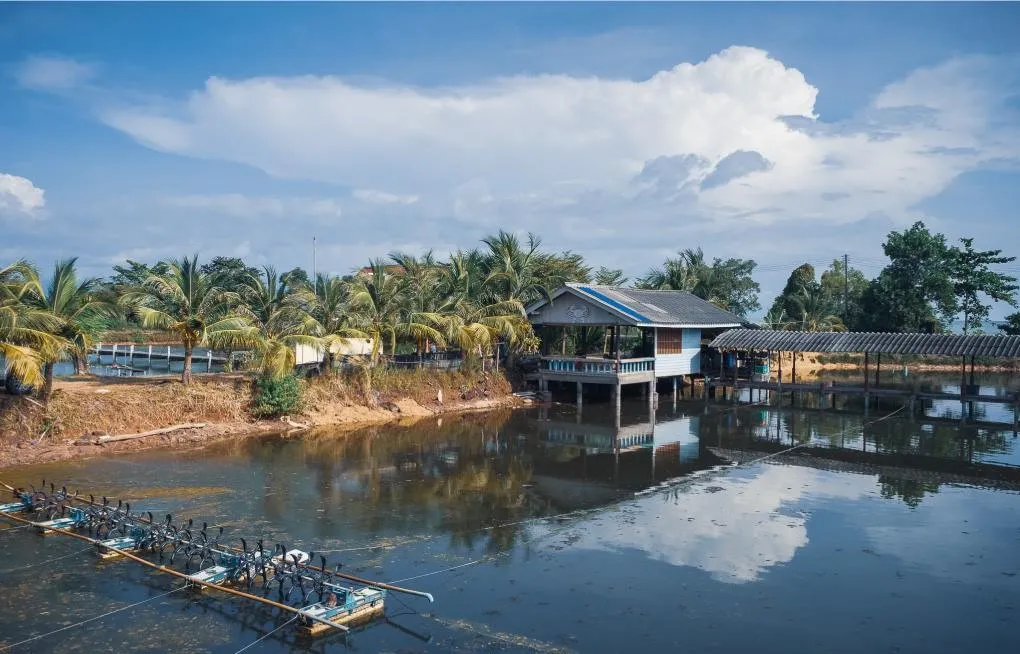
Huai Nam Khao Agro Tourism
Open Days: Advance Booking Recommended
Opening Hours: Advance Booking Recommended
Huai Nam Khao Agro Tourism in Trat Province offers one of the most meaningful community-based travel experiences on Thailand’s eastern coast. Centered around Ban Pred Nai and nearby coastal communities in Huai Nam Khao Subdistrict, Mueang Trat District, this route combines soft-shell crab farming, mudflat ecology, mangrove conservation, traditional fishing, seasonal fruit orchards, local food products, and community knowledge into a single learning journey. Travelers can observe how soft-shell crabs are raised, learn why timing is essential before the crab shell hardens again, explore mud crab areas, try catching small coastal crabs, collect shellfish during low tide, walk through mangrove nature trails, watch fireflies at night, take a boat trip along the coastal waters, and visit fruit orchards during the tropical fruit season.
What makes Huai Nam Khao especially valuable is that it is not a staged attraction created only for sightseeing. It is a living coastal landscape where agriculture, fisheries, forests, canals, tides, and local livelihoods are closely connected. The mangrove forest protects the coastline, nurtures young aquatic life, supports local fisheries, stores carbon, and helps maintain moisture for agricultural areas. For visitors, this makes the trip more than a casual nature walk. It becomes an opportunity to understand how a coastal community survives, adapts, and builds a sustainable relationship with the environment.
Ban Pred Nai is one of the most important community learning centers in the Huai Nam Khao area. Located in Moo 2, Huai Nam Khao Subdistrict, Mueang Trat District, Trat Province, the village has a long relationship with mangrove forests and coastal resources. The community once faced serious environmental degradation caused by mangrove concessions and the expansion of shrimp farming. In response, local people worked together to restore the mangrove ecosystem, establish community rules, protect coastal resources, and develop the area into a learning center for mangrove conservation, water management, and traditional coastal livelihoods. This history gives the destination a depth that many ordinary tourist attractions do not have.
One of the signature activities is observing soft-shell crab farming. A soft-shell crab is a crab that has just molted, leaving its shell temporarily soft before it hardens again. Producing high-quality soft-shell crab requires close knowledge of the crab’s life cycle, careful selection of crabs ready to molt, separation during the right stage, frequent monitoring, and proper handling immediately after molting. Visitors can see how much attention is needed behind a seafood dish that many people enjoy without realizing the complexity of its production.
The technique of keeping soft-shell crab from hardening is an important part of this local knowledge. Once a crab molts, time becomes the most critical factor. The shell will gradually harden again, so the farmer must identify the right moment to remove the crab from the system and preserve it properly. Clean handling, temperature control, timing, and experience all influence the final quality. This activity is especially interesting for travelers who want to understand the connection between seafood, local science, and coastal livelihoods.
The mudflat crab area, often described locally as a place to see and catch small coastal crabs, is another activity that adds energy and fun to the trip. When the tide goes down, the mudflats reveal signs of life that are normally hidden beneath the water. Visitors may see crab holes, trails, small shellfish, mudskippers, and other organisms that depend on the rhythm of the tide. Under local guidance, travelers can learn how villagers read the landscape and how they collect resources without damaging the habitat.
Collecting shellfish during low tide is not only enjoyable but also educational. The activity teaches visitors that coastal food resources are shaped by seasons, tides, habitat conditions, and responsible harvesting. The goal is not to collect as much as possible, but to learn how to identify suitable shellfish, understand the right size, avoid damaging the habitat, and respect community rules. This makes the experience useful for families, students, and travelers who want a hands-on understanding of coastal ecology.
The mangrove nature trail is the ecological heart of the trip. Along the route, visitors can observe mangrove trees, complex root systems, mudflat animals, fiddler crabs, sesarmid crabs, mudskippers, shellfish, and occasionally coastal birds. Mangrove forests are not simply scenic greenery. They are living systems that protect the coast, absorb wave energy, provide nursery grounds for marine life, and support the food security of local communities. Walking through the mangrove trail helps travelers understand why Ban Pred Nai has become an important example of community-based conservation.
At night, the atmosphere changes completely. Firefly watching along the waterways offers a quiet and delicate experience that depends on darkness, stillness, and environmental balance. Visitors should keep noise and artificial light to a minimum and follow local instructions carefully. Fireflies are sensitive to changes in their habitat, so seeing them along the mangrove edges is not only beautiful but also a sign of a living ecosystem that still retains natural qualities.
In October, the learning activity related to egg-carrying sesarmid crabs is one of the most meaningful seasonal experiences in the area. These small mangrove crabs play an important role in the coastal ecosystem. During the reproductive season, the community emphasizes conservation rules and responsible harvesting so that the crab population can remain healthy. This activity helps travelers see how conservation is not separate from local life. It is a practical system that protects food sources, livelihoods, and the future of the community.
A boat trip along the coastal waters expands the experience beyond the village and forest trail. From the water, travelers can see canals, mangrove edges, fishing areas, and the coastal landscape that links Ban Pred Nai to the wider marine environment of Trat Province. Boat activities should be arranged in advance because they depend on weather, tide levels, boat availability, group size, and local safety conditions.
For travelers interested in fishing, October to May is the recommended period for sea fishing activities in this community tourism route. The experience is not designed as a competitive sport but as a way to understand the patience, timing, tools, and environmental awareness required in traditional coastal fishing. Advance coordination is important to confirm sea conditions and the availability of local boats.
Huai Nam Khao is also connected to the fruit-growing identity of Trat Province. From April to July, visitors can experience tropical fruit orchards featuring salak, rambutan, mangosteen, and durian, depending on the season and orchard readiness. This side of the journey shows that Trat is not only a province of islands and beaches. It is also a fertile agricultural region where orchards, water systems, coastal humidity, and local labor all shape the landscape.
Community-made products are another important part of the experience. Three-flavored sesarmid crab and dried rambutan from the local women’s agricultural group reflect how local resources are transformed into value-added products. The crab product is linked to the mangrove ecosystem and coastal taste, while dried rambutan reflects the fruit-growing landscape of Trat. Buying these products supports local households directly and makes tourism more beneficial to the community economy.
The whale skeleton displayed in the area adds a natural history dimension to the journey. It connects the small-scale world of crabs, shellfish, mudflats, and mangroves to the larger marine environment of the eastern Gulf coast. For students and nature-focused travelers, this makes the trip more complete because it links coastal ecology with marine biodiversity on a broader scale.
Huai Nam Khao Agro Tourism is particularly suitable for educational groups and study visits. The destination offers lessons in mangrove restoration, community water management, freshwater and saltwater balance, coastal resource rules, local fisheries, women’s group products, agricultural livelihoods, and community-based tourism management. The value of the place lies in the fact that local people did not simply preserve nature as a display. They restored it, depended on it, governed it, and turned it into a shared learning resource.
Culturally, Ban Pred Nai and the Huai Nam Khao area also reflect the social life of a Thai coastal community with Thai-Chinese influences. Local temples, family networks, ancestral rituals, Chinese New Year, Chinese Sart traditions, and community merit-making remain part of local identity. This means that the route is not only about agriculture and ecology, but also about families, beliefs, food, memory, and community relationships.
Getting There is most convenient by private car or rental car from Trat town. Travelers should head toward Huai Nam Khao Subdistrict in Mueang Trat District and use Ban Pred Nai as the main destination. The route is suitable for a half-day trip, a full-day trip, or a structured educational visit. Since many activities depend on seasons, tide levels, weather, boat availability, and local coordination, advance booking is strongly recommended before traveling.
The best time to visit depends on the activity. April to July is suitable for tropical fruit orchards. October is important for learning about egg-carrying sesarmid crabs. October to May is suitable for sea fishing programs. Mangrove walks, community products, and general coastal learning can be arranged according to local availability. Planning ahead will result in a much richer and more organized experience than arriving without prior contact.
Visitors should prepare for outdoor and coastal conditions. Comfortable clothes, a hat, drinking water, mosquito repellent, footwear that can get muddy, and waterproof protection for phones or cameras are recommended. During firefly watching, travelers should avoid loud noise and bright lights. During mudflat or mangrove activities, they should follow community rules carefully and avoid collecting wildlife without permission.
Huai Nam Khao Agro Tourism in Trat Province is therefore an excellent route for travelers who want to experience Trat beyond beaches and islands. It brings together soft-shell crab farming, mudflat crabs, shellfish, mangrove forests, fireflies, community boats, fruit orchards, women’s group products, and the history of community-led environmental recovery. The result is a travel experience that is educational, practical, flavorful, and deeply connected to local life.
| Name | Huai Nam Khao Agro Tourism / Ban Pred Nai, Trat Province |
| Location | Ban Pred Nai, Moo 2, Huai Nam Khao Subdistrict, Mueang Trat District, Trat Province |
| Address | Moo 2, Huai Nam Khao Subdistrict, Mueang Trat District, Trat Province 23000, Thailand |
| Coordinates | 12.1497239, 102.5519811 |
| Highlights | Soft-shell crab farming, mudflat crab activities, shellfish collecting during low tide, mangrove nature trail, firefly watching, coastal boat trip, seasonal fruit orchards, and community-made food products |
| History | Ban Pred Nai is a coastal community known for restoring degraded mangrove areas and developing community-based learning around mangrove conservation, water management, and traditional livelihoods. |
| Name Origin | The name “Pred” is explained locally as relating to a passage or shortcut, while another local story connects it to the word “duck” and a village legend about Nong Ped. |
| Distinctive Features | A coastal community learning route combining orchards, mangrove forests, small-scale fisheries, local food processing, and community-led conservation. |
| Travel Information | Accessible by private car or rental car from Trat town to Huai Nam Khao Subdistrict. Suitable for half-day trips, full-day trips, and educational group visits. |
| Current Status | Community learning destination and agro-ecotourism area; advance booking is recommended before visiting. |
| Open Days | Advance Booking Recommended |
| Opening Hours | Advance Booking Recommended |
| Main Areas / Zones | 1. Soft-Shell Crab Farming Area 2. Mudflat Crab And Shellfish Area 3. Mangrove Nature Trail 4. Coastal Boat Trip Area 5. Firefly Watching Area 6. Egg-Carrying Sesarmid Crab Learning Area In October 7. Seasonal Fruit Orchards 8. Community Product Learning Area |
| Facilities | Community learning center, mangrove nature trail, local boat activities, community products, and learning spaces for study groups. |
| Caretaker | Ban Pred Nai Community, Huai Nam Khao Subdistrict Administrative Organization, and local agricultural offices. |
| Main Contact Number | Agro Tourism Service Center Tel. 089-542-8925, 081-704-1407 Mueang Trat District Agricultural Office Tel. 039-512-322 Trat Provincial Agricultural Office Tel. 039-520-249, 039-511-008 Huai Nam Khao Subdistrict Administrative Organization Tel. 039-510-903 |
| Nearby Tourist Attractions | 1. Ban Pred Nai Mangrove Forest, about 0 km 2. Wat Huai Nam Khao, about 5 km 3. Ban Nam Chiao Community, about 16 km 4. Trat City Museum, about 14 km 5. Wat Buppharam Trat, about 15 km 6. Trat City Pillar Shrine, about 14 km 7. Laem Sok Pier, about 24 km |
| Nearby Restaurants | 1. Cherry Ann Seafood, Huai Nam Khao Subdistrict, about 8 km, Tel. 089-886-3630 2. Chompoo Farm And Cafe, Nong Khan Song Subdistrict, about 9 km, Tel. 092-450-7566 3. Khiang Khlong Eatery, Noen Sai Subdistrict, about 16 km, Tel. 082-391-6166 4. Tid Nua Trat, Nong Samet Subdistrict, about 16 km, Tel. 080-501-6772 5. Krua Ban Mae, Wang Krachae Subdistrict, about 17 km, Tel. 097-826-6655 6. Lung Boon Rim Lay Seafood & Homestay, Ao Yai Subdistrict, about 26 km, Tel. 089-831-9397 |
| Nearby Accommodations | 1. Baan Poo Resort, about 5 km 2. Wat Bang Kung Homestay, about 8 km 3. Baan Hotelier Resort, about 9 km 4. Toscana Trat Hotel, about 10 km 5. Trat 101 Hotel, about 11 km 6. Trattara Boutique Hotel, about 12 km 7. Trat City Hotel, about 13 km |
Frequently Asked Questions (FAQ)
Q: Who is Huai Nam Khao Agro Tourism suitable for?
A: It is suitable for nature travelers, families, students, educational groups, and visitors who want to learn about agriculture, traditional fisheries, mangrove conservation, and community-based resource management.
Q: What are the main activities in Huai Nam Khao Agro Tourism?
A: Main activities include soft-shell crab farming, learning how soft-shell crabs are preserved before the shell hardens, exploring mudflat crab areas, collecting shellfish during low tide, walking the mangrove nature trail, watching fireflies, taking a coastal boat trip, sea fishing, and tasting seasonal fruits.
Q: When is the best time to visit fruit orchards in Huai Nam Khao?
A: April to July is the best period for seasonal fruits such as salak, rambutan, mangosteen, and durian. Visitors should contact the community in advance to confirm fruit availability.
Q: When can visitors learn about egg-carrying sesarmid crabs?
A: October is the key period for learning about egg-carrying sesarmid crabs and the community’s conservation rules for coastal resources.
Q: Is advance booking necessary?
A: Yes. Advance booking is recommended because many activities depend on seasons, tide levels, weather, boat availability, and local community coordination.
Q: How do travelers get from Trat town to Huai Nam Khao?
A: Travelers can drive or rent a car from Trat town to Huai Nam Khao Subdistrict in Mueang Trat District, using Ban Pred Nai as the main destination.
Q: What local products are worth buying?
A: Recommended local products include three-flavored sesarmid crab and dried rambutan made by the local women’s agricultural group.
Q: What should visitors prepare before joining mangrove and coastal activities?
A: Visitors should wear suitable outdoor clothing, bring footwear that can get muddy, a hat, drinking water, mosquito repellent, waterproof protection for devices, and follow local community guidelines carefully.
 Category: ●Nature and Wildlife
 Group: ●Other natural attractions
Last Update : 4 MonthAgo
 Last Update : 4 MonthAgo
 Click to Access the Navigation Map GPS
Huai Nam Khao Agro Tourism Map
Recommend

 Art, Culture and Heritage
 Historical Sites and Monuments(1)
 Landmarks and Memorials(1)
 Art, Craft Centres, Tradition(3)
 Museums(2)
 Educational Places
 Museum for Study(1)
 Educational Gardens, Farm(2)
 Places of Worship
 Temple(11)
 Mosque(2)
 Other Sacred Sites(2)
 Suburban Living
 Village, Community(6)
 Local Market(2)
 National Parks and Marine Reserves(2)
 Mountain (Doi)(1)
 Dam, Reservoir, Lake(3)
 Waterfalls(15)
 River, Canal(1)
 Bays and Beaches(21)
 Islands(19)
Other natural attractions(12)
Islands(19)
Other natural attractions(12)
 Entertainment and Agricultural
 Outdoor and Adventure Activities(1)
 Shopping
 Shopping and Night Market(1)


