
lovethailand home >North Travel Attractions >Nan Travel Attractions >Wiang Sa >Mae Khaning > Tong Lueang Tribe
TL;DR: Tong Lueang Tribe, open Community visits depend on local arrangements and cultural learning schedules, hours Visitors should contact local organizations or community coordinators in advance.
Tong Lueang Tribe
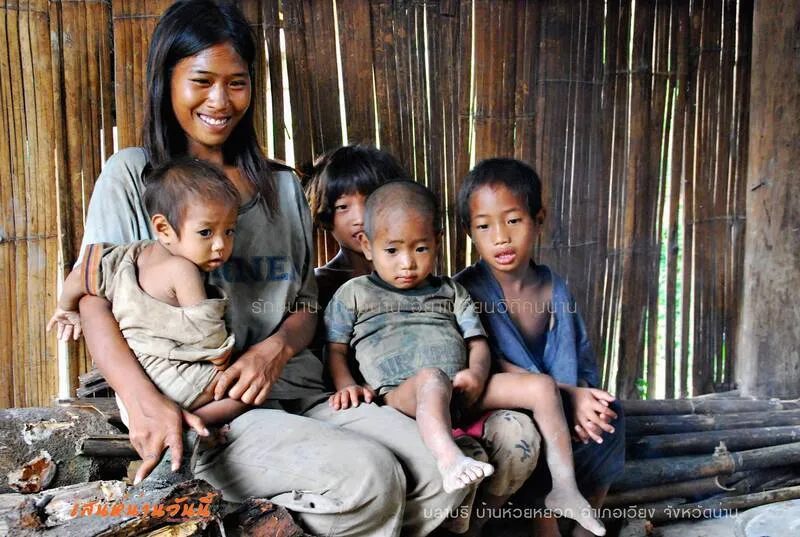
Open Days: Community visits depend on local arrangements and cultural learning schedules
Opening Hours: Visitors should contact local organizations or community coordinators in advance
The Mlabri or Blabri, often referred to by outsiders in the past as “Tong Lueang,” are one of the most culturally distinctive ethnic groups in northern Thailand. Their traditional way of life was deeply connected to forests, natural resources, and movement between food sources. For generations, the Mlabri lived in close relationship with nature, relying on hunting, gathering, and forest knowledge rather than permanent agriculture.
The name “Tong Lueang” was not the group’s own name. It came from the observations of neighboring communities who noticed that the Mlabri built temporary shelters using banana leaves and forest materials. After staying in one place for a period of time, the leaves would dry and turn yellow. When food resources became scarce, the group would move to another area. Because of this, outsiders began referring to them as “Tong Lueang,” meaning “yellow leaves.”
Today, the names “Mlabri” or “Blabri” are considered more respectful and appropriate because they reflect the identity of the ethnic group itself rather than an outside description. The meaning of the name is often associated with “forest people” or “people of the forest,” emphasizing the close relationship between the community and the natural environment.
Traditionally, the Mlabri lived a mobile or semi-nomadic lifestyle. They moved through forested areas according to the availability of food and natural resources. Hunting wild animals, gathering edible plants, collecting roots, fruits, honey, and forest products formed the basis of daily life. Their survival depended on detailed environmental knowledge passed from one generation to another.
Their understanding of nature was highly sophisticated. The Mlabri knew where water sources could be found, which plants were safe to eat, which herbs could be used as medicine, and how to navigate forests during different seasons. This knowledge was not written in books but transmitted through observation, experience, storytelling, and practical daily life.
Temporary shelters were an important part of traditional Mlabri life. These shelters were simple structures made from branches, leaves, and forest materials. They were designed for flexibility rather than permanence. Once food resources in an area became insufficient, the group would move to another forest location and build new shelters there. This movement helped reduce pressure on natural resources and reflected a lifestyle adapted to the rhythm of the forest.
Although outsiders sometimes misunderstood the Mlabri lifestyle as primitive or isolated, anthropologists and researchers later recognized the complexity of their environmental adaptation. The Mlabri developed ways of living that were closely balanced with the ecosystems around them. Their lifestyle represented a different relationship between humans and nature compared with settled agricultural societies.
Most Mlabri communities in Thailand have historically been associated with the mountainous forests of Nan, Phrae, and Uttaradit provinces. These forested regions provided the natural environment necessary for traditional Mlabri life. In Nan Province especially, the mountainous terrain and dense forests of the north became important areas connected with Mlabri history and migration.
Over time, Mlabri communities experienced significant social change. Government development programs, education systems, healthcare access, and interactions with surrounding communities gradually encouraged more permanent settlement patterns. Many Mlabri families today live in settled villages rather than maintaining a fully nomadic lifestyle.
Even though lifestyles have changed, forest knowledge remains an important part of Mlabri identity. Elders in the community continue to hold knowledge about edible plants, medicinal herbs, hunting traditions, and the use of natural materials. This cultural memory represents a valuable part of Thailand’s ethnic and ecological heritage.
Social relationships within Mlabri communities traditionally emphasized cooperation and sharing. Food gathering and hunting often involved collective work, and resources were shared among group members. Survival in forest environments depended on strong cooperation, mutual trust, and close family relationships.
The Mlabri language belongs to the Austroasiatic language family. Much of the vocabulary relates directly to forests, animals, plants, weather, and natural landscapes. Language therefore functions not only as communication but also as a repository of ecological knowledge and cultural memory.
Today, some Mlabri communities participate in cultural learning and community-based tourism activities. Visitors interested in ethnic studies, anthropology, and local culture can learn about traditional forest lifestyles, oral history, and indigenous environmental knowledge through carefully managed cultural exchanges. Such tourism should always be approached respectfully and responsibly.
Understanding the Mlabri requires avoiding stereotypes or exoticized portrayals. The Mlabri are not symbols of a “lost world,” but a living ethnic community that has adapted continuously to historical, environmental, and social change. Respectful representation is therefore essential when discussing their culture and history.
The older term “Phi Tong Lueang,” once commonly used by outsiders, is now considered inappropriate because it can carry negative or dehumanizing implications. Using the names “Mlabri” or “Blabri” is preferred because these names respect the identity and dignity of the ethnic group.
From a broader perspective, the history of the Mlabri helps demonstrate the cultural diversity of Southeast Asia. Human societies have developed many different ways of living according to geography, climate, and environment. The Mlabri experience represents one of the clearest examples of a forest-based adaptation in mainland Southeast Asia.
The environmental knowledge of the Mlabri is especially important today as discussions about sustainability and ecological conservation become increasingly significant worldwide. Their understanding of resource balance, movement patterns, and non-destructive interaction with forests offers valuable perspectives on human relationships with nature.
Travelers interested in learning more about Mlabri culture can explore areas of Nan Province and nearby northern provinces where ethnic studies, cultural museums, and local learning centers provide information about indigenous communities and forest-based traditions. Such experiences are most meaningful when approached with humility, curiosity, and respect for cultural diversity.
Getting There to areas historically associated with Mlabri communities usually involves traveling through the mountainous regions of Nan, Phrae, or Uttaradit provinces. In Nan Province, travelers often use routes through Pua District, Bo Kluea District, or areas near Doi Phu Kha National Park, which are connected to historical forest regions associated with Mlabri cultural studies.
| Ethnic Group | Mlabri / Blabri |
| Outside Names | Tong Lueang, Phi Tong Lueang |
| Associated Areas | Nan, Phrae, and Uttaradit provinces, Thailand |
| Traditional Lifestyle | Hunting, gathering forest products, and moving according to food availability |
| Name Origin | The outside name “Tong Lueang” came from banana-leaf shelters that turned yellow before relocation |
| Cultural Importance | Represents forest knowledge, environmental adaptation, and ethnic diversity in Thailand |
| Organizations Involved | Princess Maha Chakri Sirindhorn Anthropology Centre, local organizations, and Mlabri communities |
| Nearby Tourist Attractions | 1. Doi Phu Kha National Park, about 15 km 2. Pua Sky Road, about 20 km 3. Ban Tai Lue Nong Bua, about 22 km 4. Wat Phuket in Pua District, about 18 km 5. Doi Samer Dao, about 90 km |
| Nearby Restaurants | 1. Cocoa Valley Resort Restaurant, about 18 km, Tel. 093-242-2914 2. Huanam Mushroom Farm, about 17 km, Tel. 081-960-7334 3. Huan Hom Pua, about 18 km 4. Ban Tai Lue Coffee Shop, about 22 km 5. Pua View Restaurant, about 20 km |
| Nearby Accommodations | 1. Cocoa Valley Resort, about 18 km, Tel. 093-242-2914 2. Pua De View Boutique Resort, about 19 km, Tel. 054-718-411 3. Doi Phu Kha Resort, about 25 km 4. Homu Villa, about 20 km, Tel. 088-961-9759 5. Pua Panorama Resort, about 21 km, Tel. 081-530-3433 |
Frequently Asked Questions (FAQ)
Q: Who are the Mlabri people?
A: The Mlabri or Blabri are an ethnic group in northern Thailand traditionally associated with forests and hunting-gathering lifestyles.
Q: Why were they called Tong Lueang?
A: Outsiders gave them this name because their banana-leaf shelters turned yellow before they moved to another location.
Q: What was the traditional Mlabri lifestyle?
A: Traditionally, they hunted animals, gathered forest products, and moved according to natural food availability.
Q: Do the Mlabri still live nomadic lives today?
A: Many communities now live in more permanent settlements and have access to education and healthcare.
Q: What name should be used respectfully?
A: The names Mlabri or Blabri are more respectful and culturally appropriate.
Q: Where can travelers learn more about Mlabri culture?
A: Visitors can learn more through cultural centers, local museums, and community-based learning areas in northern Thailand, especially in Nan Province.
 Category: ●Suburban Living
 Group: ●Village, Community
Last Update : 4 MonthAgo
 Last Update : 4 MonthAgo
 Click to Access the Navigation Map GPS
 Art, Culture and Heritage
 Landmarks and Memorials(6)
 Art, Craft Centres, Tradition(6)
 Museums(4)
 Historic Homes and Cities(1)
 Art Gallery(1)
 Educational Places
 Educational Gardens, Farm(1)
 Places of Worship
 Temple(68)
 Church(1)
 Other Sacred Sites(18)
 Research and Development
 Royal Project(2)
Village, Community(13)
Royal Project(2)
Village, Community(13)
 Local Market(1)
 Nature and Wildlife
 National Parks and Marine Reserves(9)
 Mountain (Doi)(6)
 Dam, Reservoir, Lake(16)
 Waterfalls(28)
 Hot Springs(1)
 Caves(11)
 River, Canal(5)
 Other natural attractions(10)
 Entertainment and Agricultural
 Farms, Parks and Ecotourism(4)
 Outdoor and Adventure Activities(2)


