
lovethailand home >North Travel Attractions >Nan Travel Attractions >Na Noi >Chiang Khong > Sao Din Na Noi (Hom Chom) and Kok Suea
TL;DR: Sao Din Na Noi (Hom Chom) and Kok Suea is located at Chiang Khong Subdistrict, Na Noi District, Nan Province, open Daily, hours 08.30 AM–4.30 PM.
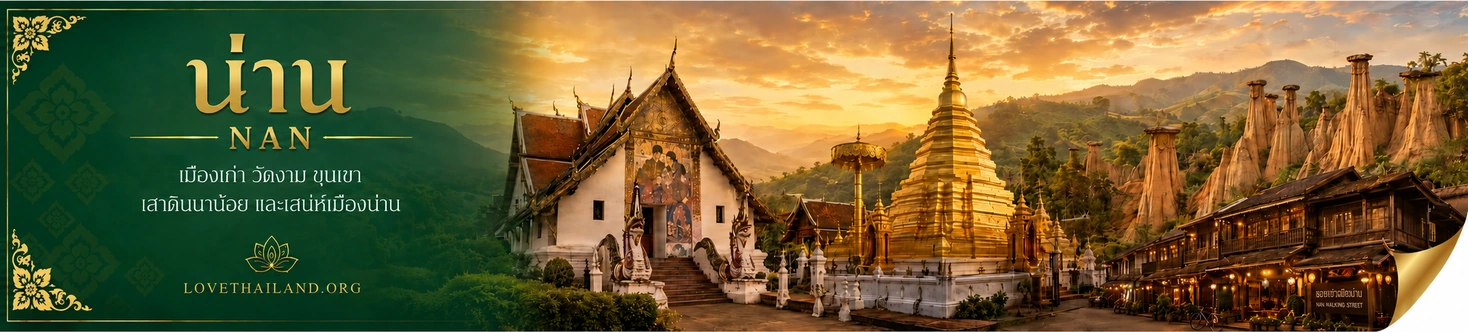
Sao Din Na Noi (Hom Chom) and Kok Suea
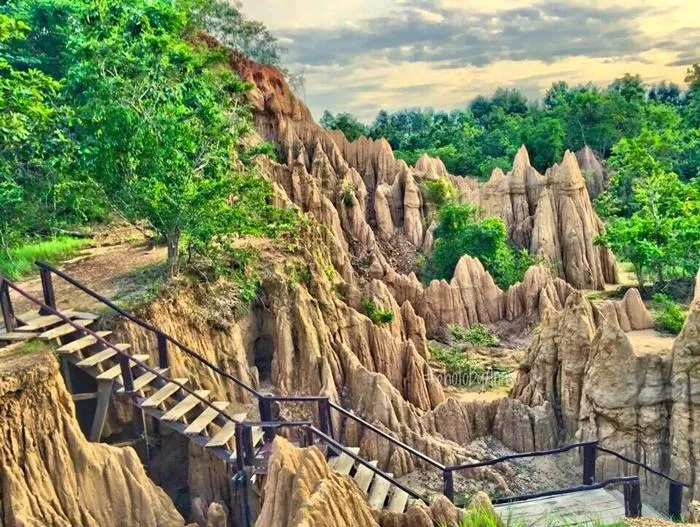
Open Days: Daily
Opening Hours: 08.30 AM–4.30 PM
Sao Din Na Noi (Hom Chom) and Kok Suea is one of the most remarkable geological attractions in Na Noi District, Nan Province. Located in Chiang Khong Subdistrict, about 60 km from Nan city, this natural site lies within the area of Sri Nan National Park. Its main highlight is a striking landscape of soil pillars, eroded earth cliffs, narrow gullies, open clay fields, and naturally sculpted formations shaped by water, wind, and time. Many visitors compare Sao Din Na Noi with Phae Mueang Phi in Phrae Province because both sites feature unusual earth pillars created by natural erosion, yet Sao Din Na Noi has its own distinctive atmosphere: open, dry, quiet, and strongly connected with the natural landscape of southern Nan.
This site is ideal for travelers who want to experience a different side of Nan. Instead of lush forests, waterfalls, or green rice fields, Sao Din Na Noi presents the beauty of earth layers, dry terrain, erosion marks, and landforms that reveal the long history of the ground itself. The area shows how nature slowly transforms a landscape over thousands of years. Soil that may seem fragile at first glance has been shaped into ridges, cliffs, pillars, and narrow passages through repeated rainfall, runoff, wind, and surface erosion. Walking through this area feels like reading a natural record written in soil and sediment.
Geologically, Sao Din Na Noi was formed by earth crust movement during the Late Tertiary period, combined with natural erosion by water and wind. Geologists estimate that the formations are about 10,000–30,000 years old, and the area was once part of an ancient seabed. Over time, accumulated sediment layers were uplifted and gradually eroded. Softer layers were worn away more quickly, while harder layers remained, creating the soil pillars and eroded formations seen today. This makes the site a valuable outdoor classroom for understanding landform evolution, sedimentary layers, and erosion processes.
One of the most impressive qualities of Sao Din Na Noi is that visitors can clearly see geological processes with their own eyes. The layered soil, deep channels, narrow gullies, and freestanding earth pillars are visible without needing complex explanation. Some formations resemble small walls, others look like natural towers, while some sections form narrow corridors shaped by flowing water. These features make the area especially meaningful for students, photographers, nature lovers, and travelers interested in geological landscapes.
The local name “Hom Chom” adds cultural character to the place. It reflects the appearance of the land, where hollows, channels, and pillar-like formations rise in clusters. Rather than being only a scientific geological site, Sao Din Na Noi is also a landscape named and understood through local observation. The nearby area known as “Kok Suea” is associated with natural earth formations that resemble an enclosure or passage. These names reveal how local people interpreted the landscape and connected it with memory, language, and imagination.
Kok Suea should be visited together with Sao Din Na Noi because the two areas complement each other. While Sao Din Na Noi presents open fields of soil pillars and eroded cliffs, Kok Suea gives visitors another perspective through enclosed channels, gullies, and earth walls. Visiting both sites in one trip provides a fuller understanding of how erosion has shaped the landscape. The forms are different, but both reveal the same slow natural process that has carved the earth into unusual shapes over a long period of time.
Beyond geology, Sao Din Na Noi also has archaeological significance. Stone bracelets and ancient stone axes were discovered in the area and are now preserved at Nan National Museum. These objects suggest that the area may have been connected with human activity in prehistoric times. This makes Sao Din Na Noi more than a scenic natural attraction. It is also a place where the story of the land intersects with the story of early human presence, resource use, and settlement in the Nan region.
The discovery of stone tools and ornaments adds depth to the site. Stone axes were important tools in prehistoric daily life, while stone bracelets reflect material culture and the ability of early communities to craft objects from natural resources. The fact that these artifacts are preserved at Nan National Museum links Sao Din Na Noi with the broader historical and archaeological narrative of Nan Province. Visitors who want to understand the site more deeply can combine a visit here with Nan National Museum in the city.
Sao Din Na Noi also helps visitors understand environmental change. The idea that this dry earth-pillar landscape was once part of an ancient seabed reveals how dramatically the earth can transform over time. The present-day landform is the result of sedimentation, uplift, erosion, rainfall, wind, and continuous surface change. For travelers, this makes geology feel less abstract and more immediate. The landscape becomes evidence of time, pressure, movement, and natural forces.
Sao Din Na Noi is recognized as a natural site worthy of conservation because of its rare landforms and educational value. Although the soil pillars may appear strong from a distance, they are fragile. Climbing, scratching, stepping on unstable areas, or touching delicate formations can damage features that took thousands of years to form. Visitors should walk only on designated paths, follow warning signs, avoid collecting soil or stones, and help protect the site for future generations.
The atmosphere of Sao Din Na Noi is open and sun-exposed. Midday can be hot, especially in the dry season and during summer months. Visitors should prepare a hat, umbrella, sunglasses, drinking water, and comfortable walking shoes. The best time to visit is early morning or late afternoon, when the weather is more comfortable and the light gives the soil formations clearer shadows and depth. These times are also ideal for photography.
For photographers, Sao Din Na Noi offers many visual possibilities. Close-up shots reveal the texture and layered surface of the soil. Wide-angle views show the scale of the landscape. Portraits with the earth pillars can express the contrast between humans and ancient landforms. Lines created by gullies and erosion channels naturally guide the eye through the frame. The warm earth tones also contrast beautifully with blue sky, especially in the morning and late afternoon.
A meaningful visit should not be rushed. Although the area is not extremely large, travelers who want to see Sao Din Na Noi, Hom Chom, and Kok Suea properly should allow at least 1–2 hours. Moving too quickly may cause visitors to miss details such as soil layers, erosion patterns, shadows, and differences between each formation. Taking time to observe the land carefully makes the visit more rewarding and helps visitors appreciate the site as a natural learning area, not just a photo stop.
Getting There from Nan city is straightforward by road. Travel toward Na Noi District, about 60 km from Nan city. From Na Noi town, take the turn onto Route 1083 for about 6 km to reach the area. Private cars, rental cars, or local tour vehicles are the most practical options. Travelers who plan to continue to Sri Nan National Park, Doi Samer Dao, Pha Hua Sing, or Kaeng Luang can include Sao Din Na Noi in the same day trip, but it is best to start early and allow enough travel time.
The route from Nan city to Na Noi gradually changes from urban and village areas into quieter rural landscapes and open natural terrain. This southern Nan route feels different from the more commonly visited Pua or Bo Kluea routes. It is quieter, less crowded, and well suited to travelers who enjoy self-drive trips. As the road approaches Sao Din Na Noi, the scenery becomes drier and more open, creating the feeling of entering a unique geological zone.
Many travelers combine Sao Din Na Noi with Doi Samer Dao and Sri Nan National Park. A practical itinerary is to visit Sao Din Na Noi and Kok Suea first, then continue toward Doi Samer Dao, Pha Hua Sing, or nearby viewpoints. This allows visitors to experience a dramatic shift in scenery within one trip: from dry eroded soil pillars to mountain viewpoints and wide skies. It is one of the best ways to understand the natural diversity of Na Noi District.
Nature-focused travelers should connect Sao Din Na Noi with Sri Nan National Park because the two areas tell different stories of the same province. Sao Din Na Noi represents soil, sediment, erosion, and ancient landforms. Doi Samer Dao, Pha Hua Sing, and Pha Chu represent mountains, forest, skies, and scenic viewpoints. With 2 days and 1 night, travelers can stay near Na Noi or Sri Nan National Park, visit the soil pillars in the afternoon, then continue to see stars, sunrise, or misty mountain views the next morning.
Safety is important while walking around Sao Din Na Noi. Some areas may have loose soil, uneven ground, deep channels, or dusty paths. Visitors should wear proper shoes with good grip and avoid slippery footwear or high heels. During the rainy season, the ground can become slippery and the formations more fragile. Travelers should check local conditions before visiting and avoid walking into unsafe or restricted areas.
For families with children, Sao Din Na Noi can be an excellent outdoor learning experience. Children can see how soil, water, wind, and time can shape the land. Parents can explain that the pillars were not built by people but formed gradually through natural erosion. However, children should be supervised closely because the ground can be uneven and some formations are fragile. Running, climbing, or entering unstable areas should be avoided.
For older travelers, the best time to visit is when the weather is mild. Morning or late afternoon is more comfortable than midday. Visitors should bring drinking water, a hat, and sun protection. Those who prefer an easier visit can focus on the main viewpoints and take short walks rather than trying to cover every corner. The site is best enjoyed slowly and calmly.
Sao Din Na Noi also broadens the image of Nan Province. Many travelers know Nan for Wat Phumin, the Pu Man Ya Man mural, Doi Samer Dao, Bo Kluea, or Pua District. Sao Din Na Noi adds another layer: geology and ancient landforms. Including it in a Nan itinerary makes the trip more varied, combining culture, old-town heritage, mountain scenery, and the deep natural history of the land.
Food and accommodation options near Sao Din Na Noi are mostly found in Na Noi District and along the route to Doi Samer Dao. Travelers can stop for local meals, Thai dishes, noodles, coffee, or simple roadside food before or after visiting the site. Those staying overnight can choose accommodation in Na Noi town for convenience or near Doi Samer Dao for stargazing and sunrise views. During the cool season and long weekends, advance booking is strongly recommended.
The site is managed by Sri Nan National Park under the Department of National Parks, Wildlife and Plant Conservation. Because it is within a conservation area, responsible travel is essential. Visitors should not leave trash, remove natural materials, damage soil formations, or disturb the site. The landscape is both beautiful and vulnerable, and careful visitor behavior is necessary to preserve it.
A good way to experience Sao Din Na Noi is to slow down and observe. Look at the shape of each pillar, the direction of erosion channels, the layers in the soil, and the relationship between the landform and surrounding terrain. Even a short visit can become meaningful when travelers pay attention to these details. The site rewards observation more than speed.
In educational terms, Sao Din Na Noi connects several fields: geology, geography, archaeology, local history, and environmental conservation. Teachers and youth activity organizers can use the site as an outdoor classroom for erosion, landform change, prehistoric evidence, and conservation awareness. For deeper travelers, it offers a way to understand that Nan’s history is not only found in temples and old towns, but also in the soil beneath the landscape.
The power of Sao Din Na Noi lies in its simplicity. There are no grand buildings, no elaborate decoration, and no need for exaggerated description. Its beauty comes from time, erosion, and natural form. Standing among the soil pillars makes visitors aware of how small human time is when compared with the age of the land. This quiet sense of scale is what makes the place memorable.
For travelers who enjoy unusual landscapes, Sao Din Na Noi is one of the most worthwhile places to include in a Nan itinerary. It contrasts strongly with the province’s temples, forests, and mountain viewpoints, yet it belongs naturally within the same travel story. A trip that includes Nan old town, Sri Nan National Park, Doi Samer Dao, and Sao Din Na Noi gives a fuller view of the province’s cultural and natural diversity.
Season also affects the experience. In the cool season, the weather is more comfortable for walking and for continuing to Doi Samer Dao. In the rainy season, the surrounding landscape may feel fresher, but paths can be slippery and soil formations more vulnerable. In the dry season, the sky is often clear and the earth tones stand out strongly, though visitors should be prepared for heat. The best season depends on the style of travel, but morning and late afternoon remain the best times of day in most conditions.
A full-day itinerary from Nan city can begin with an early departure, a morning visit to Sao Din Na Noi and Kok Suea, lunch in Na Noi District, and an afternoon drive to Sri Nan National Park, Doi Samer Dao, or Pha Hua Sing. Travelers staying overnight near Doi Samer Dao can enjoy sunset, stargazing, and sunrise views the next morning. This itinerary is best for visitors with private or rented vehicles and enough time to enjoy Na Noi’s natural attractions properly.
Travelers with only half a day can still visit Sao Din Na Noi and Kok Suea before returning to Nan city. In that case, it is best to start in the morning to avoid strong afternoon sun. The half-day route is suitable for those who want to experience a key geological attraction without continuing to the national park. Checking the route in advance helps avoid losing time at turnoffs and local roads.
Overall, Sao Din Na Noi (Hom Chom) and Kok Suea is a place where Nan’s natural diversity becomes clearly visible. It is not only a scenic attraction, but also a learning site about the earth, time, erosion, prehistoric evidence, and conservation. Its unusual soil pillars and eroded forms make the landscape visually striking, while its geological and archaeological background gives the place deeper meaning. For travelers heading to Na Noi District or Sri Nan National Park, a respectful visit to Sao Din Na Noi adds depth, variety, and lasting memory to a Nan journey.
| Name | Sao Din Na Noi (Hom Chom) And Kok Suea |
| Location | Chiang Khong Subdistrict, Na Noi District, Nan Province |
| Address | Chiang Khong Subdistrict, Na Noi District, Nan Province 55150 |
| Highlights | A striking natural soil-pillar landscape similar to Phae Mueang Phi in Phrae Province, formed by natural erosion from water and wind, ideal for photography and geological learning |
| History | Formed by earth crust movement during the Late Tertiary period and natural erosion. Geologists estimate the site to be about 10,000–30,000 years old, and the area was once an ancient seabed. |
| Key Evidence | Stone bracelets and ancient stone axes were discovered in the area and are now preserved at Nan National Museum. |
| Name Origin | Hom Chom is a local name referring to hollows, channels, and earth pillars rising in clusters, while Kok Suea refers to an earth formation resembling a natural enclosure created by erosion. |
| Distinctive Features | A landscape of soil pillars, eroded cliffs, gullies, and natural earth passages, suitable for photography, geology learning, and onward travel to Sri Nan National Park |
| Travel Information | From Nan city, travel about 60 km to Na Noi District, then take Route 1083 for about 6 km. Private cars, rental cars, or local tour vehicles are recommended. |
| Current Status | A conserved natural attraction within the area of Sri Nan National Park |
| Open Days | Daily |
| Opening Hours | 08.30 AM–4.30 PM |
| Caretaker | Sri Nan National Park, Department of National Parks, Wildlife and Plant Conservation |
| Main Contact Number | 054-701106, 098-685-3293 |
| Main Areas / Zones | Sao Din Na Noi, Hom Chom, Kok Suea, soil-pillar field, soil-layer viewpoints, and erosion gullies |
| Nearby Tourist Attractions | 1. Kok Suea, about 1 km 2. Sri Nan National Park, about 24 km 3. Doi Samer Dao, about 30 km 4. Pha Hua Sing, about 30 km 5. Pha Chu, about 31 km 6. Kaeng Luang, about 35 km 7. Nan City, about 60 km |
| Nearby Restaurants | 1. Huen Fai Mae Jampee, Na Noi District, about 7 km, Tel. 054-789330, 085-100-1807 2. Suan Ahan Nam Haeng, Na Noi District, about 9 km, Tel. 089-950-6816 3. Na Noi Cafe, Na Noi District, about 8 km, Tel. 088-029-6161 4. Krua Sao Din, Chiang Khong Subdistrict, about 1 km, Tel. 087-660-7481 5. Jaew Jaew Hon, Na Noi District, about 7 km, Tel. 081-783-7641 6. Lao Na Noi Restaurant, Na Noi District, about 7 km, Tel. 064-002-6549 |
| Nearby Accommodations | 1. Huen Fai Mae Jampee, Na Noi District, about 7 km, Tel. 054-789330, 085-100-1807 2. Na Noi Resort, Nan Province, about 8 km, Tel. 085-716-2369, 054-789586, 054-789587 3. Ruen Mai Resort Na Noi, about 9 km, Tel. 092-268-2944 4. Chai Thung Resort, Na Noi District, about 10 km, Tel. 094-792-6514 5. Nana Resort & Cafe Doi Samer Dao, about 18 km, Tel. 089-850-6159 6. Sai Nan Resort, about 15 km, Tel. 082-823-7799 7. Huen Kham Kaew Resort, about 15 km, Tel. 086-188-0243 |
Frequently Asked Questions (FAQ)
Q: Where is Sao Din Na Noi located?
A: Sao Din Na Noi is located in Chiang Khong Subdistrict, Na Noi District, Nan Province, about 60 km from Nan city, within the area of Sri Nan National Park.
Q: How was Sao Din Na Noi formed?
A: It was formed by earth crust movement during the Late Tertiary period and natural erosion by water and wind, creating soil pillars, eroded cliffs, and unusual gullies.
Q: How old is Sao Din Na Noi?
A: Geologists estimate the formations to be about 10,000–30,000 years old, and the area was once an ancient seabed.
Q: Is Sao Din Na Noi similar to Phae Mueang Phi?
A: Yes. It has a similar soil-pillar landscape created by natural erosion, but Sao Din Na Noi has its own atmosphere, shapes, and landscape context in Na Noi District.
Q: Is Kok Suea far from Sao Din Na Noi?
A: No. Kok Suea is close to Sao Din Na Noi and can be visited in the same trip. Travelers should allow at least 1–2 hours to explore the area comfortably.
Q: What is the best time to visit Sao Din Na Noi?
A: Morning or late afternoon is best because the weather is cooler and the light is ideal for photographing the soil pillars. Visitors should bring sun protection and drinking water.
Q: Who is Sao Din Na Noi suitable for?
A: It is suitable for travelers interested in nature, geology, photography, unusual landscapes, family learning trips, and those continuing to Doi Samer Dao or Sri Nan National Park.
Q: What should visitors be careful about at Sao Din Na Noi?
A: Visitors should stay on designated paths, avoid climbing or scratching the soil formations, avoid collecting soil or stones, and be careful of loose or slippery ground, especially after rain.
Tel : 054521118
 Tel : 054521118
 Category: ●Art, Culture and Heritage
 Group: ●Landmarks and Memorials
Last Update : 6 MonthAgo
 Last Update : 6 MonthAgo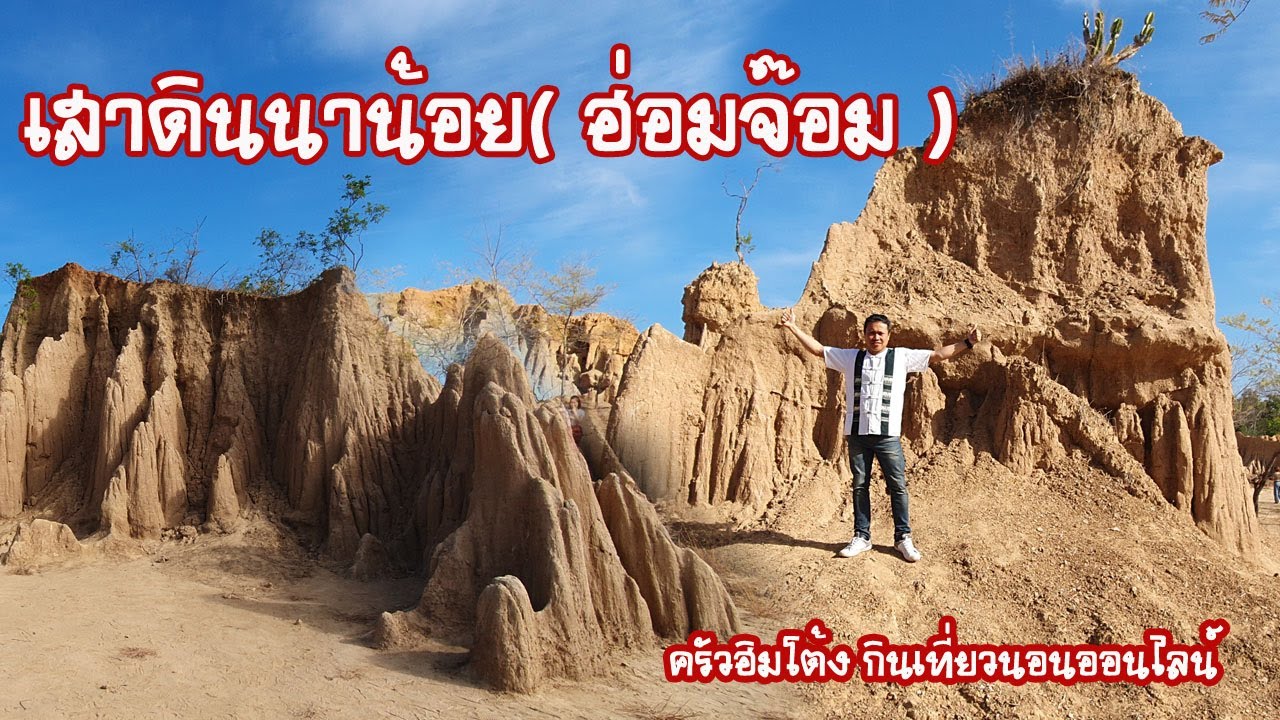
 Click to Access the Navigation Map GPS
Sao Din Na Noi (Hom Chom) and Kok Suea Map
Recommend
 Landmarks and Memorials(6)
 Art, Craft Centres, Tradition(6)
 Museums(4)
 Historic Homes and Cities(1)
 Art Gallery(1)
 Educational Places
 Educational Gardens, Farm(1)
 Places of Worship
 Temple(68)
 Church(1)
 Other Sacred Sites(19)
 Research and Development
 Royal Project(2)
 Suburban Living
 Village, Community(13)
 Local Market(1)
 Nature and Wildlife
 National Parks and Marine Reserves(9)
 Mountain (Doi)(6)
 Dam, Reservoir, Lake(16)
 Waterfalls(28)
 Hot Springs(1)
 Caves(11)
 River, Canal(5)
 Other natural attractions(10)
 Entertainment and Agricultural
 Farms, Parks and Ecotourism(4)
 Outdoor and Adventure Activities(2)
 Travel Articles, Recipes
 Travel Review, Food Review(1)


