

 Home
Home Chiang Mai(




Ban Nayao Royal Project
Rating: 3.8/5 (6 votes)
 Search By
  Map
Map 
 Have Map
  No Map
Chachoengsao attractions
Attractions in Thailand
Open Days: Recommended to contact in advance (community area/schools and vocational groups may have different reception conditions depending on activities)
Opening Hours: Recommended to contact in advance during official working hours (for group visits/study tours)
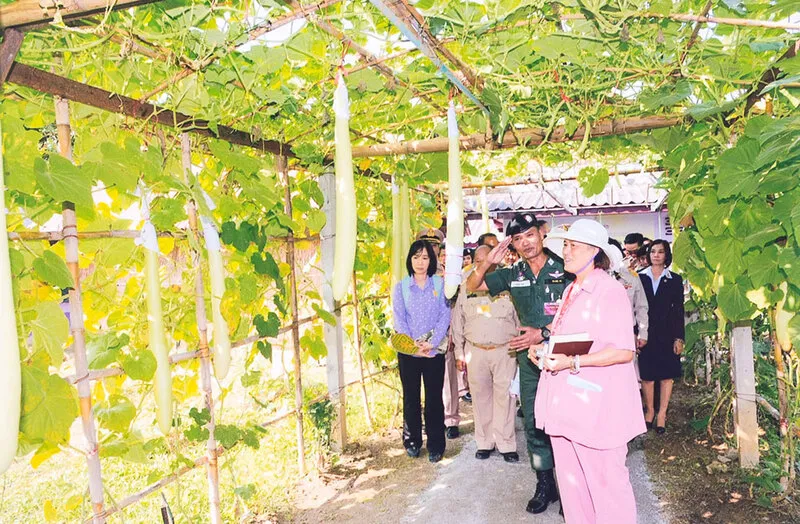
Ban Nayao Royal Project in Sanam Chai Khet District, Chachoengsao Province, is a tangible example of community development that starts with “education” and expands into “livelihood skills and self-reliance” through local schools and community vocational groups in a systematic way. It suits travelers who want a meaningful Chachoengsao trip, allowing them to see how a rural community gradually grows through knowledge, skills, and shared resource management. It is especially suitable for families or groups who want to understand royal development principles through a real community setting.
Ban Nayao Royal Project (Chachoengsao) represents a form of rural development that does not begin with “large-scale construction,” but with creating opportunities for people to gain skills, knowledge, and practical tools to stand on their own over the long term. The project is rooted in the royal initiatives of Her Royal Highness Princess Maha Chakri Sirindhorn, who has emphasized improving quality of life in remote areas through education, vocational skill development, and value-added production. These outcomes are concrete for Ban Nayao because when children have access to schooling, adults gain workable skills, and the community has channels to produce and sell collectively, income starts circulating locally and household risks decline in measurable ways.
Ban Nayao is located in Tha Kradan Subdistrict, Sanam Chai Khet District, Chachoengsao Province. This area retains a rural rhythm of life shaped by agricultural communities, which makes a detailed, people-centered “royal development project” especially meaningful. The challenge for rural communities is not only income today, but building a foundation to withstand volatility in crop prices, production costs, drought, flooding, or labor changes. By developing around education and livelihoods, the community does not receive only short-term support; it gains “capability” that can be used throughout life, which is the core of sustainability in its true sense.
If you are looking for “Chachoengsao attractions” beyond photos and check-ins, Ban Nayao offers a different angle from mainstream tourist spots. Visiting this area means seeing how a community gradually builds opportunities from what it already has. You will see that education does not end in the classroom but is designed to connect to real-life livelihoods. You will also see that agriculture and community production do not stop at selling fresh produce; there is collective organization, processing, quality upgrading, and skill development—becoming supplementary occupations that strengthen household stability. Most importantly, you will see that when “people” become stronger, the community becomes stronger too, which is the clearest result of effective development.
Overall, the Ban Nayao Royal Project has two key components that reinforce each other. The first is “education,” which functions as the foundation of change. Remote areas often face limitations in continuing education opportunities and access to learning resources. As a result, local schools do not only teach academic subjects; they also cultivate life skills and vocational skills so children can see clearer pathways from an early age. When children learn planting, care, teamwork, and self-reliant thinking, they grow into skilled individuals who understand their own land and community, and they do not always need to leave home simply because they “have no choice.”
The second component is “community vocational groups and value-added production,” which acts like an engine that turns knowledge into real household income. Royal development initiatives of this type often emphasize collective work because working alone in rural settings comes with limitations in capital, knowledge, tools, and market access. By organizing as groups, communities can divide tasks, maintain consistent craftsmanship, build product standards, and negotiate markets more effectively. Processing produce—such as fruits, vegetables, or local foods—extends shelf life, reduces losses, and increases profit per unit. Meanwhile, sewing groups or handicraft groups create additional income opportunities, especially during off-season periods, helping households maintain cash flow year-round and reducing the risks of relying on a single income source.
When viewed from the perspective of “history and development,” the most important point is not only a project start year, but the continuity of ideas and operations that grow alongside the community. Ban Nayao is referenced as a community in Tha Kradan Subdistrict, Sanam Chai Khet District—one of Chachoengsao’s rural areas. Its selection as a royal development area reflects challenges related to education access and livelihood development in remote settings. In many places across Thailand, Princess Sirindhorn’s initiatives typically follow the same principle: enabling communities to “learn” and “do” in ways that are practical, do not overburden local capacity, and do not erode the community’s existing strengths.
What makes Ban Nayao compelling for readers deciding whether to visit is that this type of community development was not created primarily as a tourist attraction. Over time, however, community strength becomes a natural draw for people who want to “see the real thing.” Travelers who like learning-based trips gain a new perspective that rural communities are not inherently behind. On the contrary, communities with strong learning systems and well-organized vocational groups are often highly creative, skilled, and adaptable to rapid economic change. Visiting Ban Nayao is therefore not just about seeing a place, but witnessing the “process” that helps a community move forward under its own power.
For trip planning, if you want your Ban Nayao visit to feel worthwhile, the most suitable mindset is to treat it as a trip to “read the community” rather than a trip to “check in.” Spend time observing how the community manages resources, what children learn from their own environment, how adults develop skills and add value to outputs, and how collective organization builds income. These details are what distinguish Ban Nayao from typical tourist sites, and they are also why long, in-depth articles often rank well for royal development project keywords: people are not only looking for an address, but for “understanding” and “reasons to go” at the same time.
Although Ban Nayao is rural, a day trip in the Sanam Chai Khet area can be planned efficiently with a good route. You might start in the morning with a local café or restaurant to recharge, then enter the community area according to appropriate prior coordination, and finish by driving onward to nature sites or learning points within the same district or nearby areas, such as forest-edge zones. This approach gives a single day both learning value and relaxation without needing to drive far outside the province, and it also helps readers who intend to go plan more easily.
One important point to align on beforehand is that Ban Nayao is a “community area,” where schools and residents’ activities are central. A good visit should therefore follow community etiquette: respect children’s learning spaces, do not disrupt teachers’ and students’ activities, do not photograph individuals without permission, and if you intend a study tour or deeper learning visit, coordinate in advance so the community and local units can prepare appropriately. When visits are organized, both visitors and the community benefit, and this is the core of sustainable learning-based travel because it does not impose unnecessary burdens on the host area.
Getting There For travel to Ban Nayao, driving is recommended. Set your navigation to “Ban Nayao, Tha Kradan Subdistrict, Sanam Chai Khet District, Chachoengsao” as the starting point. If you need to coordinate with education-related activities in the area, an important reference point is the local school network around Ban Nayao/Sanam Chai Khet, which provides clear contact channels. One coordination contact is Nayao Royal Award Secondary School at 038-502-220, which is suitable for asking about the correct local coordination approach—especially if you plan a group study tour or activities connected to learning and community engagement.
Once you arrive in the Sanam Chai Khet area, local travel typically uses smaller roads linking villages, so allowing extra time for point-to-point driving is more accurate. This is especially relevant if you plan to continue to nature sites or other district attractions. Starting early and buffering travel time helps the trip flow smoothly without rushing, because the charm of community travel is in pacing: observing, listening, and understanding, rather than trying to collect many locations quickly. When you do not rush, you notice the details that make Ban Nayao feel “real,” rather than just a name on a map.
In closing, if we summarize the value of the Ban Nayao Royal Project as a Chachoengsao travel experience, it shows that community development is not distant or abstract and does not have to begin with the biggest structures. It can begin by ensuring people have knowledge, skills, and a supportive system that helps life become more stable in practical ways. When education moves together with livelihoods, when collective organization moves together with value creation, and when a community gains the capacity for self-reliance, sustainability stops being a slogan and becomes a skill that can be passed on across generations. This is the true meaning of visiting Ban Nayao as a learning-based community space shaped by royal initiative principles.
| Place Name | Ban Nayao Royal Project (community area, Ban Nayao, Tha Kradan Subdistrict, Sanam Chai Khet District, Chachoengsao) |
| Address | Ban Nayao, Village No. 15, Tha Kradan Subdistrict, Sanam Chai Khet District, Chachoengsao 24160 |
| Place Summary | A rural community area guided by royal initiative principles focused on education and livelihoods to improve quality of life, supporting vocational skill groups and value-added production for sustainable self-reliance |
| Key Highlights | A clear view of community development through “education + livelihoods + group organization,” learning-based travel in a real community setting, and easy linkage to nature/learning sites around Sanam Chai Khet |
| Period / Background | Community development guided by royal initiative principles (referencing the area’s development through local schools and vocational groups) |
| Key Evidence | Ban Nayao is located in Tha Kradan Subdistrict, Sanam Chai Khet District (community mapping sources); Nayao Royal Award Secondary School provides clear official contact channels, and local royal-initiative vocational groups have coordinators with published contact numbers |
| Name Origin | Derived from the community name “Ban Nayao” in Tha Kradan Subdistrict, Sanam Chai Khet District |
| Travel | Driving is recommended; set your navigation to “Ban Nayao, Tha Kradan Subdistrict, Sanam Chai Khet District,” and contact in advance for structured study tours |
| Current Status | An active community area with ongoing education and livelihood activities (advance coordination recommended for school-related or group-based activities) |
| Contact (Local Coordination) | Nayao Royal Award Secondary School: 038-502-220 | Royal-initiative sewing group (Khun Wasana): 064-636-2565 | Royal-initiative processing group (Khun Phayung): 080-384-5425 |
| Nearby Tourist Attractions (Approx. Distance) | 1) Suan Phetra (Lat Krathing) – approx. 25 km 2) Khao Ang Rue Nai Wildlife Sanctuary – approx. 45 km 3) Lat Krathing Reservoir (Sanam Chai Khet area) – approx. 30 km 4) Khao Hin Sorn Royal Development Study Center – approx. 65 km 5) Bang Khla Floating Market – approx. 95 km |
| Popular Restaurants Nearby (Approx. Distance + Phone) | 1) Weekends Coffee&Space (Tha Kradan) – approx. 18 km – 097-986-5450 2) Jungle Cafe (Sanam Chai Khet) – approx. 28 km – 094-980-5048 3) Krua Takhrai (Sanam Chai Khet) – approx. 30 km – 090-958-9691 4) Krua Ton Nam (Sanam Chai Khet) – approx. 32 km – 094-789-3484 5) Tha Na Restaurant (Sanam Chai Khet) – approx. 22 km – 082-194-2511 |
| Popular Accommodations Nearby (Approx. Distance + Phone) | 1) Two Resort (Sanam Chai Khet) – approx. 30 km – 085-085-1199 2) Rim Mueang Resort Sanam Chai Khet – approx. 28 km – 098-545-4688 3) The Bed Resort Sanam Chai Khet – approx. 29 km – 090-912-8827 4) Ban Yai Homestay Sanam Chai Khet – approx. 35 km – 086-299-5697 5) Inside Resort Sanam Chai Khet – approx. 30 km – 096-906-4696 |
Frequently Asked Questions (FAQ)
Q: What is the Ban Nayao Royal Project?
A: It is a community development approach in Ban Nayao centered on “education and livelihoods,” helping people in remote areas gain skills and opportunities for sustainable self-reliance.
Q: Where is Ban Nayao located in Chachoengsao?
A: Ban Nayao is in Tha Kradan Subdistrict, Sanam Chai Khet District, Chachoengsao. It is a rural community area that can be paired with nearby nature-based attractions for a learning-focused trip.
Q: Who is Ban Nayao suitable for as a travel destination?
A: It suits travelers seeking meaningful learning-based experiences, families who want children to learn from real settings, and groups interested in community self-reliance and royal development principles.
Q: If I want a study tour or deeper learning visit, what should I do?
A: Coordinate in advance so local units or vocational groups can prepare an appropriate reception. Use the contact channels listed in the summary table as a starting point.
Q: Why can projects like this help communities become truly sustainable?
A: Because the focus is on building “capability” through education and vocational skills, giving households more income options, reducing reliance on a single income stream, and enabling value-added production.
Q: If I plan a one-day trip, where can I go next nearby?
A: You can continue to nearby nature sites and attractions around Sanam Chai Khet, such as forest-edge zones or Khao Ang Rue Nai, or connect to other agricultural learning centers in Chachoengsao for a balanced learning-and-relaxation itinerary.
 Ban Nayao Royal Project Map
 Category:
  Group:
  Tag: ●Ban Nayao Royal Project●ban nayao royal project ●ban nayao sanam chai khet ●chachoengsao attractions ●rural community development thailand ●princess sirindhorn royal initiative ●community vocational group ●local product processing ●sanam chai khet travel ●thai royal development projects ●ban nayao community Last Update: 18 HourAgo
Comment
 Nearby Attractions
| Keyword (Advance) |
 Facebook Fanpage
 Region
 Art, Culture and Heritage
 Historical Sites and Monuments(
 Landmarks and Memorials(
 Royal Palace(
 Art, Craft Centres, Tradition(
 Museums(
 Historical Houses and The Ancient City(
 Educational Places
 Museum for Study(
 Library(
 Educational Gardens, Farm(
 University
 Places of Worship
 Temple(
 Mosque(
 Other religious and spiritural sites(
 Suburban Living
 Village, Community(
 Local Market(
 Floating Market(
 Nature and Wildlife
 National Parks and Marine Reserves(
 Mountain (Doi)(
 Dam, Reservoir, Lake(
 Waterfalls(
 Caves(
 River, Canal(
 Bays and Beaches(
 Islands(
 Other natural attractions(
 Entertainment and Agricultural
 Zoos and Aquariums(
 Animal camps and shows(
 Farm, Parks, Gardens and Ecotourism(
 Spas and Wellness
 Spas and Wellness(
 Travel Articles, Recipes
 Travel Review, Food Review(
 Copyright 2012,