
lovethailand home >Central Travel Attractions >Chachoengsao Travel Attractions >Ban Pho >Bang Krut > Wat Phanitaram
TL;DR: Wat Phanitaram is located at 68 Moo 2, Bang Krut Subdistrict, Ban Pho District, Chachoengsao 24140, Thailand, open Daily, hours Open 24 hours.
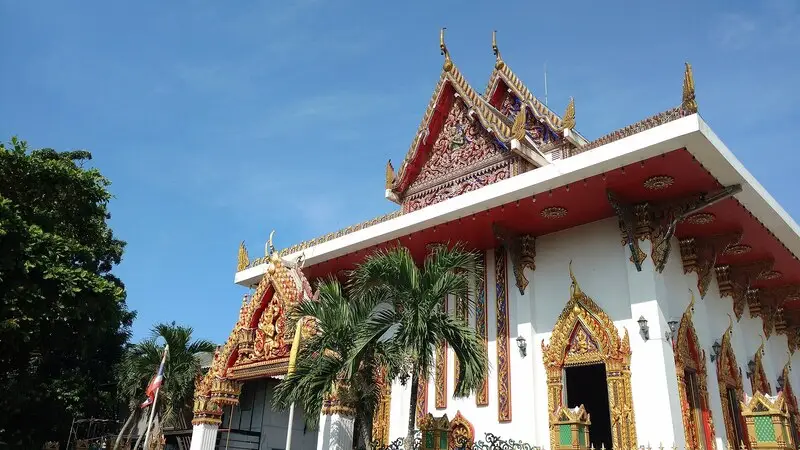
Wat Phanitaram
Open Days: Daily
Opening Hours: Open 24 hours
Wat Phanitaram is a local Buddhist temple under the Mahanikaya order. It is located on the right bank of the Bang Pakong River in Bang Krut Subdistrict, Ban Pho District, Chachoengsao Province. The temple is known for the tranquil river-bend atmosphere, its century-old teakwood sermon hall, and its strong role in meditation practice as a Royal Commemoration Mind Development Center and the 5th Provincial Meditation Practice Center of Chachoengsao. If you are looking to study Dhamma, cultivate mindfulness, or bring your family for a calm, unhurried merit-making visit, this is a destination that offers both serenity and spiritual meaning in a single trip.
Wat Phanitaram sits beside the Bang Pakong River along a gentle bend that naturally softens the mood of the surroundings. As you enter the temple grounds, the first thing you notice is a riverside quietness that needs no deliberate effort to create. The river, the breeze, and the shade of trees slow your emotions down almost automatically. This calm is exactly why Wat Phanitaram is often spoken of as a “place to rest the mind” for people in the Ban Pho area, as well as travelers from Bangkok who want an easy day trip to a peaceful corner of Chachoengsao.
Seen through the lens of local history, Wat Phanitaram has clear roots and a long-standing bond with its community. The temple was founded in 1904 (B.E. 2447) on land that originally belonged to local residents. It stands on the right bank of the Bang Pakong River at a river bend. In the past, this area was known as “Ban Bang Fuea.” The temple’s establishment was not an accident; it grew from the community’s intention to create a religious center for merit-making, learning, and mutual support at important moments in life. Once the temple was founded, its relationship with the community developed alongside it—both as a place for Buddhist rites and as a continuing focal point of shared faith in Ban Pho.
The story of Wat Phanitaram’s early beginnings reflects a Thai way of thinking in which building a temple means creating a “public space of merit” for the whole community to rely on. The land originally belonged to Mr. Suea and Mrs. Pin (surname not recorded). Key initiators included Mrs. Phueng Wattanasing and Ms. Phum Phumtrakul, who negotiated to purchase 5 rai 99 square wah of land to build the temple. The owners agreed to sell the land, and the account has been passed down together with the shared intention to take part in charitable merit. This illustrates how a “wat” in Thai society is not merely a structure—it is the result of faith, cooperation, and a collective hope to create a place where people can find spiritual support.
As the temple became more established over time, Wat Phanitaram received royal permission for a consecrated boundary (Wisungkhamsima) on 26 April 1980 (B.E. 2523). This milestone officially confirms the temple’s religious status. It is a local temple under the Mahanikaya order and is clearly located in Bang Krut Subdistrict, Ban Pho District, Chachoengsao Province. Beyond reflecting the temple’s growth, the Wisungkhamsima also signifies that the temple can properly host important monastic ceremonies—especially ordinations and other rites that require a formally designated sacred boundary.
The charm of Wat Phanitaram lies not only in its history but also in what still remains for later generations to see. Inside the temple is a sermon hall (sala kan parian) built from teakwood and more than 100 years old. This building gives the temple a distinct character, because old teak architecture feels warm, solid, and simply beautiful in the way traditional community temples often are. As such a wooden structure passes through time, it becomes more than architecture; it becomes “traces of lived life”—a place that has hosted merit-making events, chanting, Dhamma talks, and countless stories of people who have come to the temple at different stages of their lives.
Nearby is a wooden bell tower, an element that completes the image of a riverside temple. In Thai Buddhist culture, a bell is often more than a time signal; it marks the rhythm of community life, invites people back to the present moment, and gives a religious space its own quiet “breath.” Wat Phanitaram today therefore remains strongly rooted as a community temple—both through its structures and through the unhurried atmosphere of its Bang Pakong riverside setting.
Another dimension that makes Wat Phanitaram stand out in Chachoengsao is its role in mind development. The temple serves as a Royal Commemoration Mind Development Center and the 5th Provincial Meditation Practice Center of Chachoengsao. For this reason, it is not only a place to stop by for worship, but also a space that supports mindfulness training, meditation, and Vipassana practice in a structured way. Its status as a “provincial meditation practice center” means the temple has an organized framework to welcome the general public, youth groups, schools, and government agencies seeking a suitable venue for serious mind-training programs.
The temple’s meditation practice is framed in a way that is approachable and practical for everyday life. Wat Phanitaram regularly offers Vipassana training and provides programs for different groups throughout the year, including introductory courses for beginners, youth programs, and sessions arranged for schools and organizations. The central objective is to cultivate wisdom and inner peace by training participants to return to themselves with mindfulness, recognize thoughts and emotions as they arise, and gradually develop mental steadiness—so they can see the truth of daily experience more clearly.
With this role, Wat Phanitaram functions like a “school of the heart,” teaching not only through texts but through disciplined practice, a peaceful environment, and the shared intention of those who come to improve their minds. The temple has also been recognized as an exemplary development temple, indicating that its growth is not limited to buildings or site management, but extends to public service, training readiness, and its capacity to serve as a communal space for seminars and activities when appropriate.
If you prefer a quiet merit-making visit, Wat Phanitaram offers an experience that requires little effort. Simply arriving allows you to feel the cool calm of the Bang Pakong riverside—a kind of peacefulness that many large-city temples cannot easily provide. A slow walk around the grounds reveals both the age and character of the old teak sermon hall and the living nature of the temple as an actively functioning religious space. This is not just a photo spot or a landmark; it is a working temple where monastic routines continue and where people regularly come to worship, make merit, and join religious activities according to the temple’s calendar.
From a visitor’s perspective, the most important step is to adjust your rhythm to the place. Wat Phanitaram suits gentle movement and quiet voices, together with cultural respect—such as dressing modestly, avoiding loud sounds within sacred areas, and honoring spaces reserved for monks or meditation practice. This is especially important during Vipassana training periods, when visitors should help maintain quiet so as not to disturb practitioners. This is how cultural tourism can “coexist” respectfully with meditation practice in a balanced and appropriate way.
Another aspect that reflects Wat Phanitaram’s identity as a community temple is its annual festival, held every year. In Thai context, a temple fair is more than entertainment; it is a gathering space where community members meet again, make merit together, and continue the culture of “joining hands and hearts” through sponsorship, stalls, activities, and welcoming visitors. While the exact details of the annual festival may vary depending on each year’s circumstances, its spirit remains the same: reinforcing the temple as a center of unity and reminding everyone that faith continues to live within the everyday life of people along the Bang Pakong River.
For those who come specifically to practice meditation, Wat Phanitaram presents itself clearly as a place that supports serious training. Meditation is not distant or unreachable, and it does not always require starting with the most difficult methods. The essential beginning is simple: observe the breath, observe the mind, and gradually build the discipline of returning to awareness. In a place that naturally encourages calm—like Wat Phanitaram—the “friction” that often makes mindfulness difficult in daily life is reduced. When the environment is quiet and the pace is slower, the mind learns more quickly that peace is not created by escaping problems, but by seeing oneself truthfully and directly.
If you plan a one-day trip, Wat Phanitaram works well as the opening point of a calm, reflective Chachoengsao itinerary. The temple is in Ban Pho District, not far from main routes, and it is convenient to continue to other attractions in the province—such as major temples, old markets, or other Bang Pakong riverside locations with different moods. Starting the day at the temple and then moving on to a riverside café or a restaurant with river views helps the trip keep a consistent tone: “slower and deeper,” rather than rushing through a long checklist of photo stops.
Getting There If you travel by private car, set your destination to Wat Phanitaram in Bang Krut Subdistrict, Ban Pho District, Chachoengsao Province. The main routes connect from Chachoengsao city and Bang Pakong District into Ban Pho, then continue into Bang Krut. Because the temple lies beside the Bang Pakong River, you can recognize the area by its riverside scenery and the distinctive river bend. Upon arrival, you can park in the areas arranged by the temple and walk into the main religious zone easily. If you travel by public transport, it is recommended to reach Chachoengsao town or a transfer point in Ban Pho first, then use local services such as hired cars, local taxis, or local shared vehicles to reach the temple. Contacting the temple in advance can help you plan transfers more accurately, especially if you intend to join activities or a formal meditation course.
Ultimately, Wat Phanitaram is a strong example of a temple with both “roots” and a “path forward.” Its roots are its founding in 1904 (B.E. 2447), its identity as a riverside community temple, and its valuable heritage wooden structures. Its path forward is its role in mind development, its standing as a provincial meditation practice center, and its openness to welcoming people of different ages to learn and practice Dhamma in ways that fit real life. If you are looking for a temple in Chachoengsao that offers both calmness and substance, Wat Phanitaram is a destination where you can “reset your inner foundation” before continuing your journey with greater mindfulness.
| Name | Wat Phanitaram (wat phanitaram) |
| Address | 68 Moo 2, Bang Krut Subdistrict, Ban Pho District, Chachoengsao 24140, Thailand |
| Open Days | Daily |
| Opening Hours | Open 24 hours |
| Quick Summary | A tranquil Bang Pakong riverside temple known for its heritage teak sermon hall and its role as a provincial meditation practice center in Chachoengsao. |
| Highlights | Century-old teakwood sermon hall, wooden bell tower, peaceful river-bend setting, Royal Commemoration Mind Development Center, Chachoengsao Provincial Meditation Practice Center No. 5. |
| Type / Affiliation | Local Temple (Wat Ratsadon), Mahanikaya Order |
| Founded | 1904 (B.E. 2447) |
| Wisungkhamsima | 26 April 1980 (B.E. 2523) |
| Temple Land Area | 5 rai 99 square wah |
| Contact Number | 038-515-012 |
| Abbot / Current Caretaker | Phra Khru Thammāprayut (Uthen Samoeton) — Abbot of Wat Phanitaram |
| Fees | Free entry (donations welcome) |
| Facilities | Parking area, sermon hall, activity/training spaces (subject to temple permission) |
| Nearby Attractions (Approx. Distance) | 1) Wat Sothon Wararam Worawihan (Luang Pho Sothon) — approx. 25 km 2) Wat Saman Rattanaram — approx. 45 km 3) Khlong Suan 100-Year Market — approx. 40 km 4) Bang Khla Floating Market — approx. 30 km 5) Murrah Farm (murrah farm) — approx. 45 km |
| Nearby Restaurants (Approx. Distance + Phone) | 1) Ban Pho Riverside — approx. 10 km — 062-782-2854 2) Phae Man U Fishing — approx. 12 km — 089-988-2049 3) NAVA HOUSE CAFÉ — approx. 6 km — 098-908-7895 4) Pu Kae (Ban Pho Branch 2) — approx. 7 km — 038-596-774 5) Barameeofart Cafe — approx. 5 km — 082-203-1899 6) RiverBreeze Cafe — approx. 20 km — 081-687-3119 |
| Nearby Accommodations (Approx. Distance + Phone) | 1) JK Living Hotel & Service Apartment — approx. 25 km — 092-742-9929 2) Heaven Hotel Chachoengsao — approx. 25 km — 038-511-150 3) Sunee View — approx. 25 km — 033-590-443 4) TT Residence Chachoengsao — approx. 30 km — 092-428-8624 5) Baan Mai Hotel — approx. 25 km — 038-513-347 6) Tree House Chachoengsao — approx. 25 km — 098-253-7460 |
Frequently Asked Questions (FAQ)
Q: Where is Wat Phanitaram located?
A: The temple is located at 68 Moo 2, Bang Krut Subdistrict, Ban Pho District, Chachoengsao Province, on the Bang Pakong River near a river bend.
Q: What are the open days and opening hours?
A: Wat Phanitaram is open daily and is generally accessible 24 hours a day for worship and merit-making, depending on temple activities and appropriate conduct on site.
Q: What is Wat Phanitaram best known for?
A: It is best known for its peaceful Bang Pakong riverside setting, its century-old teak sermon hall, and its role as a mind development and provincial meditation practice center in Chachoengsao.
Q: How can I join a meditation course at the temple?
A: Contact the temple directly by phone to ask about course schedules, requirements, and practice guidelines before you visit.
Q: What should I wear when visiting the temple or joining activities?
A: Dress modestly and respectfully. Avoid overly short or tight clothing, and help maintain a quiet atmosphere, especially during meditation practice periods.
Q: What else can I visit after Wat Phanitaram?
A: You can continue to major temples, traditional markets, and other Bang Pakong riverside attractions in Chachoengsao, choosing routes that match your time and travel style.
 Category: ●Places of Worship
 Group: ●Temple
Last Update : 6 MonthAgo
 Last Update : 6 MonthAgo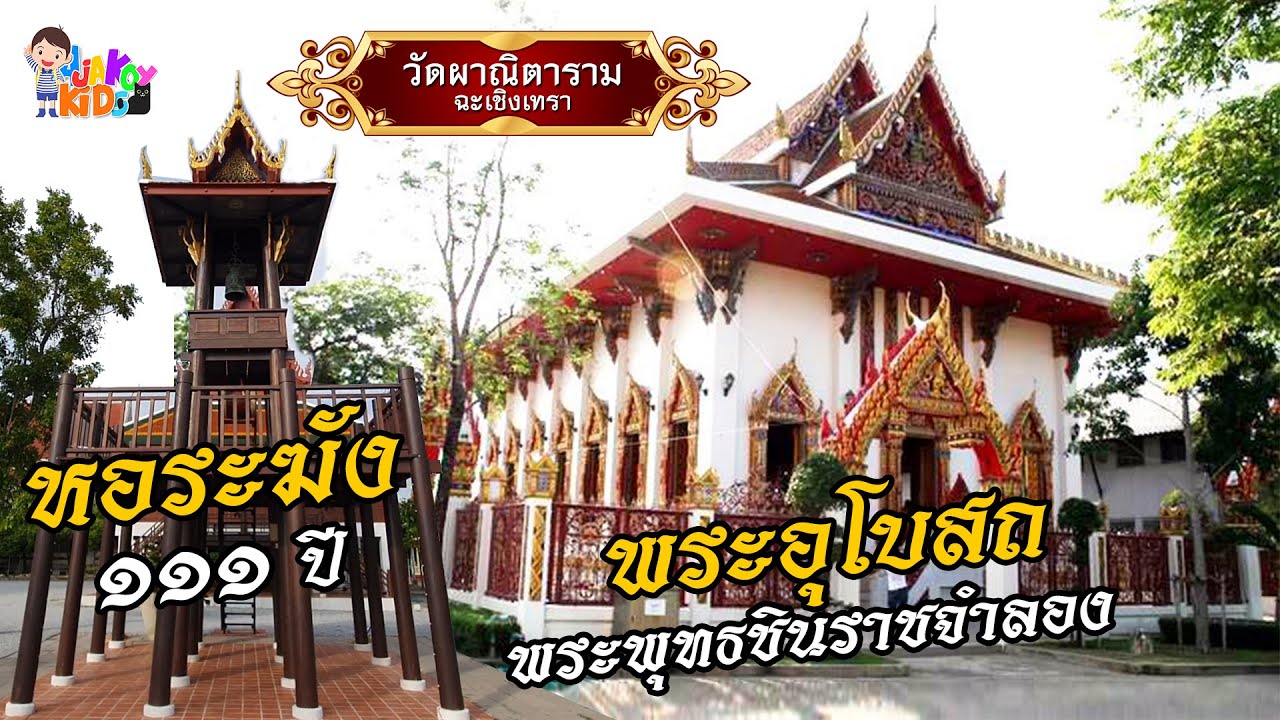
 Click to Access the Navigation Map GPS
Wat Phanitaram Map
Recommend

 Art, Culture and Heritage
 Historical Sites and Monuments(3)
 Landmarks and Memorials(4)
 Royal Palace(1)
 Art, Craft Centres, Tradition(10)
 Museums(2)
 Historic Homes and Cities(1)
 Educational Places
 Museum for Study(1)
 Library(1)
 Educational Gardens, Farm(2)
Temple(50)
Educational Gardens, Farm(2)
Temple(50)
 Mosque(2)
 Other Sacred Sites(7)
 Research and Development
 Royal Project(4)
 Suburban Living
 Village, Community(5)
 Local Market(4)
 Floating Market(1)
 Nature and Wildlife
 National Parks and Marine Reserves(2)
 Mountain (Doi)(1)
 Dam, Reservoir, Lake(6)
 Waterfalls(1)
 Caves(1)
 River, Canal(2)
 Bays and Beaches(1)
 Islands(2)
 Other natural attractions(2)
 Entertainment and Agricultural
 Zoos and Aquariums(1)
 Animal camps and shows(1)
 Farms, Parks and Ecotourism(6)
 Spas and Wellness
 Spas and Wellness(1)
 Travel Articles, Recipes
 Travel Review, Food Review(3)


