
lovethailand home >Central Travel Attractions >Chachoengsao Travel Attractions >Ban Pho >Nong Bua > Wat Don Sinon
TL;DR: Wat Don Sinon is located at Moo 3, Nong Bua Subdistrict, Ban Pho District, Chachoengsao 24140, open Daily, hours 06:00 – 18:00.
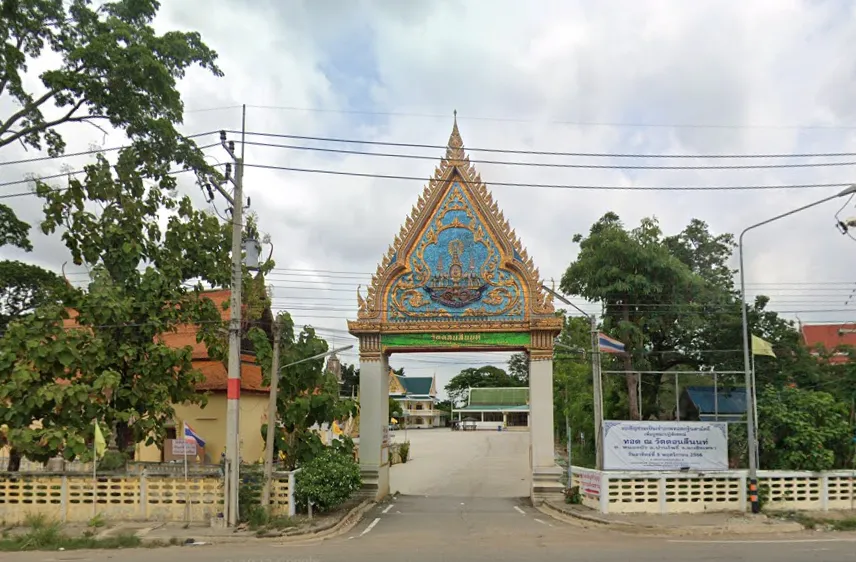
Wat Don Sinon
Open Days: Daily
Opening Hours: 06:00 – 18:00
Wat Don Sinon in Nong Bua Subdistrict, Ban Pho District, Chachoengsao, is a local Maha Nikaya temple best known for its traditional Thai architecture, especially the ubosot supported by wooden pillars with brick-and-mortar walls. The temple also preserves artistic details that are increasingly rare to encounter today, such as intricately carved wooden gables (including well-preserved teakwork) and old sema stones in front of the ubosot that lend a classic, reverent atmosphere of a traditional community temple. Its strongest appeal lies in its calm simplicity and craftsmanship value, making it suitable for worshippers, photographers, and anyone who wants to appreciate Thai woodwork up close in the Ban Pho area
This temple sits within a community setting in Nong Bua, so a visit feels natural and unhurried, allowing you to experience a genuine “village temple” that still retains local architectural character and everyday faith practices. The overall impression encourages you to focus on fine architectural details rather than grandeur. Instead of relying on size or spectacle, the visitor experience is shaped by “craftsmanship details” and a “peaceful atmosphere” — a key reason why Wat Don Sinon feels distinct from more mainstream tourist temples in the same province
In terms of status, Wat Don Sinon is a local (community) temple under the Maha Nikaya order, and there is verified information that it received Wisungkhamsima (royal boundary consecration for formal monastic rites) on 22 January 2007. This milestone reflects the readiness of the designated sacred area for official sangha ceremonies and the formal organization of the temple’s religious space. In practice, it means the temple has an established boundary for important rites such as ordination and other Buddhist ceremonies that require a recognized sima boundary as part of the ritual foundation
The temple’s “founding year” appears in two complementary versions that can be narrated consistently without contradiction. One source states the temple was built in 1938, while another set of references in arts-heritage and encyclopedic contexts indicates that the temple was established or existed in the area as early as 1899. In the natural development pattern of Thai community temples, it is common for a temple to be “established/first formed” in one period and later to undergo a significant construction phase — such as building the principal ubosot that becomes the site’s highlight — in another period. Telling the story as a timeline therefore becomes sharper and more credible: the temple has roots dating back to around 1899, and key construction or major development took place around 1938, consistent with the fact that many wooden buildings and traditional craftsmanship features in Thai temples were built or heavily restored during the early-to-mid 20th century
For architecture lovers, the best place to begin is the “ubosot,” because its components clearly reflect both local building wisdom and Thai aesthetic sensibilities. Wat Don Sinon’s ubosot follows an old-style Thai form, using wooden pillars as the primary structure, brick-and-mortar walls, and a colored tile roof. This combination is often found in community temples that prioritize durability and long-term maintenance. Wooden pillars and timber structure carry a “language of time” — a warmth and gravity that new concrete cannot easily replicate. In particular, when the structure meets natural light in the morning or late afternoon, the lines and textures of the wood become more pronounced, and walking around the ubosot can feel like reading a three-dimensional artwork, section by section
The ubosot gable is another core highlight of Wat Don Sinon. It is clearly described as carved woodwork, including teak gable carving that remains in excellent condition. In terms of value, the “excellent condition” does not mean it looks new; rather, it refers to the sharpness of the carving, the clarity of composition, and the integrity of the wooden structure that still holds its original form. Such preservation reflects both the skill of the original craftsmen and the ongoing care by the temple and community over time. The gable is also described as combining carved wood patterns with colored glass decoration, which adds depth when light hits the surface — a distinctly Thai kind of beauty that is refined without depending on modern materials to make an impression
Another feature that strengthens the site’s artistic interest is the “sema” stones in front of the ubosot, described as old sema stones or ancient-era sculpture. In Thai temple context, sema stones are not merely decorative markers; they are ritual symbols connected to the sima boundary and formal sangha rites. When sema stones are older, they add historical weight to the ubosot frontage because they indicate that this exact area has been used for ritual purposes over a long period. Taking time to observe them closely helps you “read the temple” more deeply — not only seeing beauty, but also recognizing a tangible part of the belief system and ceremonial order that enables a temple to function as a true community center
The bell tower at Wat Don Sinon also stands out in form: it is described as a wooden, elevated structure with an open undercroft and a crown-shaped roof. This architectural language is commonly found in Thai craftsmanship that aims for airy structure, good ventilation, and elevation above ground moisture in the central plains climate. The “raised, open undercroft” form also reflects practical local thinking that integrates function with beauty: a bell tower needs openness for sound to carry and height for sound to clear obstacles within the temple grounds. Combined with the ceremonial quality of a crown-shaped roof, the bell tower becomes both a functional building and an artistic symbol in the same space
The entrance gate, described as built in 1991 and featuring an emblem associated with King Rama IX during the 50th anniversary of his reign, adds another layer of narrative linking the temple with shared national memory. In other words, the temple is not only about older buildings; it also contains “traces of modern-era development” created collectively by the community. This becomes evidence that faith does not remain only in the past — new additions are made in step with society over time. For cultural travel writing, details like this add depth, keeping the story from being purely architectural and instead connecting to the relationship between the temple and the community across different periods
In terms of significant figures, the information provided mentions Luang Pu Yen Naratho (Phra Khru Anuthai Thananukun) as an important monk of the temple, credited with developing the temple’s permanent structures into what can be seen today, and leading the temple from 1950 onward. This type of narrative has social value because it reflects a “development era” in which many Thai temples expanded their role from a center of faith into a hub of community activities as well. Beyond maintaining monastic discipline, a temple must often manage utilities, restore buildings, and organize spaces to serve local needs. When Luang Pu Yen’s story is woven into the temple’s development, Wat Don Sinon can be presented as a living place shaped by the devotion of multiple generations rather than a static site
For visitors who come primarily to make merit, Wat Don Sinon suits the core experiences of a Thai temple visit: paying respects, chanting, offering alms or donation sets, and walking through the religious buildings with composure. Because the atmosphere is calm, it is ideal for “resting the mind” more than rushing in for a quick check-in. If time allows, it is worth slowing down to study the carved gables and architectural elements around the ubosot, because the beauty here is in fine details that reveal themselves only with attention — the rhythm of carved patterns, the proportions of the gable, the natural tone of aged wood, and the interplay of light and shadow that makes Thai motifs feel alive
Getting There The most convenient way to reach Wat Don Sinon is by private car. From central Chachoengsao or the Wat Sothon (Luang Pho Sothon) area, drive toward Ban Pho District and continue to Nong Bua Subdistrict where the temple is located. The route typically uses main district roads connected to local roads into the village area. Once near the site, the temple buildings and the entrance gate provide clear visual cues. For precise navigation, use the Thai name “วัดดอนสีนนท์” or the English name “Wat Don Sinon” as your map pin, which are commonly used for address references
The best time to visit is in the morning, when natural light helps highlight woodwork and carved details clearly and the weather is less hot. If you want a quieter atmosphere, avoid major merit-making events or long holiday periods. However, if your goal is to experience local community life, temple events offer another perspective that deepens understanding of the temple’s role in the Ban Pho area
For international visitors, Wat Don Sinon is a good example of a “Thai community temple” that is not staged for tourism yet offers an authentic, simple experience. Prepare by dressing modestly (avoid sleeveless tops and shorts above the knee) and follow basic temple etiquette: keep your voice low, do not climb on structures, avoid touching carved woodwork unnecessarily, and if you wish to photograph inside the ubosot, observe posted rules or ask temple staff or monks first
If you plan a one-day itinerary, Wat Don Sinon works well as a peaceful morning stop before continuing to cultural and community attractions in Chachoengsao, such as riverside areas along the Bang Pakong River or historic market neighborhoods. You can end the day with a relaxed riverside meal — one of the province’s pleasures — especially at restaurants with Bang Pakong views that encourage lingering, unhurried conversation
| Place Name | Wat Don Sinon |
| Address | Moo 3, Nong Bua Subdistrict, Ban Pho District, Chachoengsao 24140 |
| Place Summary | A local Maha Nikaya temple in Ban Pho noted for an old-style Thai ubosot, carved wooden gables, and a quiet community-temple atmosphere |
| Highlights | Old-style Thai ubosot with wooden pillars and brick walls, carved wooden and well-preserved teak gables, old sema stones in front of the ubosot, raised wooden bell tower with a crown-shaped roof |
| Abbot / Temple Caretaker (Latest) | Phra Athikan Thiam Chotithatto |
| Phone Number | 038-587-274 |
| Current Status | Open for worship and visits |
| Facilities | On-site parking area, merit-making/donation areas, worship and architecture-viewing points |
| Nearby Tourist Attractions (Driving Distance) | 1) Wat Sothon Wararam Worawihan (Luang Pho Sothon) – 25 km 2) Ban Mai 100-Year Market – 27 km 3) Khlong Suan 100-Year Market – 32 km 4) Bang Khla Floating Market – 35 km 5) Firefly Boat Ride (Bang Khla / Bang Pakong Area) – 35 km |
| Nearby Restaurants (Driving Distance) | 1) Ban Pho Riverside – 12 km – 062-782-2854 2) Krua Mae Som Kliang (Bang Pakong Riverside) – 25 km – 094-681-6636 3) The River Barn – 27 km – 038-515-892 4) Chuanma – 27 km – 082-171-5531 5) Mathuros Ruen Pae – 27 km – 038-511-958 |
| Nearby Accommodations (Driving Distance) | 1) A10resort 24Hr Ban Pho – 12 km – 097-001-1010 2) Na Ban Pho Hotel – 12 km – 094-438-3833 3) Ban Pho Resort – 15 km – 038-086-392-123 4) Ratthara Resort (Bang Pakong) – 28 km – 099-962-8052 5) Ban Nai Thuek Hotel (Bang Pakong Riverside) – 30 km – 094-864-0999 |
Frequently Asked Questions (FAQ)
Q: Where is Wat Don Sinon located?
A: The temple is located at Moo 3, Nong Bua Subdistrict, Ban Pho District, Chachoengsao 24140.
Q: What are the main highlights to see at the temple?
A: The must-see points include the old-style Thai ubosot, the carved wooden/teak gable details, the old sema stones in front of the ubosot, and the raised wooden bell tower with a crown-shaped roof.
Q: What time of day is best for visiting?
A: Morning is ideal for viewing the woodwork and carved details clearly in natural light, and the atmosphere tends to be especially quiet.
Q: How should visitors dress when entering the temple?
A: Dress modestly. Avoid sleeveless tops and shorts/skirts above the knee, and follow temple etiquette such as keeping your voice low, not climbing on structures, and not touching artwork unnecessarily.
Q: How long does a typical visit take?
A: Most visitors spend around 30–90 minutes, depending on how closely they want to explore the architecture and woodwork or whether they plan additional worship activities.
Q: What is the temple’s contact phone number?
A: The verified contact number is 038-587-274.
 Category: ●Places of Worship
 Group: ●Temple
Last Update : 6 MonthAgo
 Last Update : 6 MonthAgo
 Click to Access the Navigation Map GPS
 Art, Culture and Heritage
 Historical Sites and Monuments(3)
 Landmarks and Memorials(4)
 Royal Palace(1)
 Art, Craft Centres, Tradition(10)
 Museums(2)
 Historic Homes and Cities(1)
 Educational Places
 Museum for Study(1)
 Library(1)
 Educational Gardens, Farm(2)
Temple(50)
Educational Gardens, Farm(2)
Temple(50)
 Mosque(2)
 Other Sacred Sites(7)
 Research and Development
 Royal Project(4)
 Suburban Living
 Village, Community(5)
 Local Market(4)
 Floating Market(1)
 Nature and Wildlife
 National Parks and Marine Reserves(2)
 Mountain (Doi)(1)
 Dam, Reservoir, Lake(6)
 Waterfalls(1)
 Caves(1)
 River, Canal(2)
 Bays and Beaches(1)
 Islands(2)
 Other natural attractions(2)
 Entertainment and Agricultural
 Zoos and Aquariums(1)
 Animal camps and shows(1)
 Farms, Parks and Ecotourism(6)
 Spas and Wellness
 Spas and Wellness(1)
 Travel Articles, Recipes
 Travel Review, Food Review(3)


