
lovethailand home >Central Travel Attractions >Chachoengsao Travel Attractions >Ban Pho >Khlong Banpho > Wat Khlong Ton Man
TL;DR: Wat Khlong Ton Man is located at 93/4 Moo 3, Bang Son Subdistrict, Ban Pho District, Chachoengsao 24140, Thailand, open Daily, hours 08:00 – 17:00.
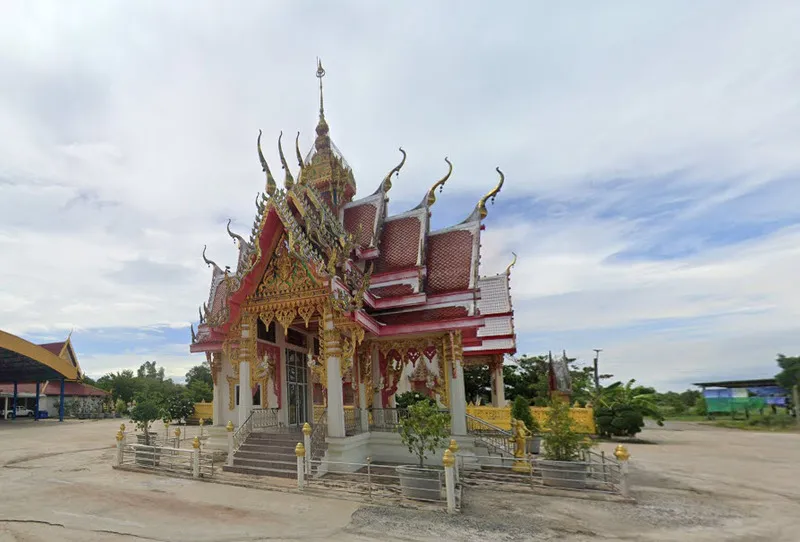
Wat Khlong Ton Man
Open Days: Daily
Opening Hours: 08:00 – 17:00
Wat Lat Nam Khem (Wat Khlong Ton Man) in Ban Pho District is a riverside community temple along the Bang Pakong River, where local history, landscape, and living culture intersect. The temple is closely tied to the name “Khlong Ton Man,” reflecting the historical presence of Ton Man trees once abundant in the area and associated with traditional boatbuilding knowledge in riverine communities. Today, the temple continues to play an active role through the “Lan Boon, Lan Panya” initiative, transforming its grounds into a cultural courtyard for religious activities, Thai arts, traditional performances, and the transmission of local wisdom. It is well suited for a quiet merit-making visit near Bangkok, with a calm riverside atmosphere that naturally slows the pace of mind and body.
Located in Chachoengsao Province, Wat Lat Nam Khem embodies the character of a genuine local temple—unpretentious in appearance yet deeply meaningful to the surrounding community. Ban Pho District, shaped by the Bang Pakong River, has long relied on waterways for transportation, trade, and agriculture. In this context, a temple is more than a religious structure; it is a social anchor. Seasonal merit-making ceremonies, traditional festivals, and communal gatherings all revolve around the temple grounds. Visitors driving through Ban Pho and observing the river flowing past homes and orchards can immediately sense how temples here form part of a living river culture rather than standing apart from it.
The alternative name “Wat Khlong Ton Man” offers insight into the area’s environmental and cultural past. The community historically known as Ban Ton Man was named after the Ton Man tree, a hardwood species valued in earlier generations. In river-based societies such as those along the Bang Pakong, durable timber was essential for boat construction and water-related structures. Boats were not merely vehicles; they were lifelines connecting families to markets, temples, and neighboring settlements. When the words “Ton Man” and “Khlong” (canal) appear together, they evoke a concrete image of a waterside settlement shaped by its natural resources. The temple’s name therefore functions as a cultural map, preserving memory of the landscape that gave birth to the community.
Within Thai cultural belief systems, certain trees are regarded as auspicious because of their practical and symbolic roles. Timber used for boatbuilding in particular carries associations of resilience and continuity, reflecting the survival of river communities. For Ban Ton Man, the tree was both material resource and identity marker. As the temple developed near Wat Ban Pho in the same district, the local designation “Wat Khlong Ton Man” helped distinguish it while reinforcing its connection to the Ton Man community. The official name, Wat Lat Nam Khem, coexists with this local memory, illustrating how formal and vernacular histories often overlap in Thai rural temples.
A significant institutional milestone in the temple’s history occurred in 1949, when it received royal permission to establish a visungkhamsima, the consecrated boundary required for formal monastic ordination ceremonies. In the Thai monastic system, this recognition marks the temple’s full status within the Sangha, enabling official ecclesiastical functions within the ordained boundary of the ordination hall. While this detail may appear administrative, it represents a structural affirmation of the temple’s permanence and legitimacy in the eyes of both the religious hierarchy and the local community.
Upon arrival, visitors often notice the quiet rhythm characteristic of riverside temples. The Bang Pakong River contributes subtle ambient sound—wind, water, distant activity—that softens the atmosphere. Elderly residents may stop briefly to offer prayers; families may come for seasonal merit-making; travelers from Bangkok may pause for a short reflective visit. Unlike large pilgrimage complexes, Wat Lat Nam Khem invites slow movement rather than spectacle. The setting encourages observation of ordinary devotional life rather than staged tourism.
The temple’s contemporary relevance is reinforced by the “Lan Boon, Lan Panya” project, established in 2010. Conceived as a cultural courtyard, this initiative positions the temple as both sacred space and educational venue. Activities include religious ceremonies, traditional Thai performances, local games, demonstrations of handicrafts, and community-based vocational promotion. From a cultural tourism perspective, such initiatives demonstrate how temples can function as platforms for intergenerational knowledge transfer. Rather than serving solely as ritual venues, they become dynamic social institutions where younger generations encounter living traditions.
The phrase “Lan Boon” (courtyard of merit) refers to the collective creation of merit through shared effort—annual festivals, Kathina ceremonies, robe-offering events, ordinations, and seasonal observances. “Lan Panya” (courtyard of wisdom) expands the concept beyond ritual to learning and reflection. In practice, this means that religious gatherings often intertwine with cultural instruction and social cohesion. For visitors who arrive during community events, the temple reveals a different dimension: not only tranquility, but also vibrant communal participation.
Experiencing the temple meaningfully does not depend on the number of photographic angles but on the quality of time spent. Begin with a respectful act of merit-making according to personal belief, then walk slowly through the grounds, observing the simplicity of structures and the relationship between built space and river landscape. Find a shaded area near the water to sit quietly. Even a one-hour visit can yield a sense of mental clarity if approached without haste.
Morning hours are generally comfortable, especially for elderly visitors, as temperatures remain moderate and light conditions are gentle. Late afternoon also offers softer light and cooler breezes from the river. Visitors are advised to dress modestly, speak softly, and avoid interrupting ongoing monastic or communal activities. Photography is acceptable when conducted respectfully and without disrupting worshippers.
Temples along the Bang Pakong historically reflect settlement patterns that followed waterways. Rivers functioned as economic arteries, and temples emerged as nodes where social life organized itself. Wat Lat Nam Khem, affiliated with the Mahanikaya order, continues this pattern as a community temple sustained by collective faith and cooperation. Its identity is inseparable from the broader riverine culture of Chachoengsao.
Getting There From Bang Pakong–Chachoengsao Road (Highway 314), turn toward Ban Pho intersection and cross the Bang Pakong River bridge. Continue past Wat Sanam Chan. Upon reaching the vicinity of Wittayaratrungsan School, turn right toward Ban Pho Police Station and follow the local road for approximately 5.5 kilometers to reach the temple grounds.
Allocate approximately 1–2 hours for a balanced visit that includes merit-making, quiet reflection, and riverside relaxation. If visiting during a cultural event under the Lan Boon, Lan Panya program, consider extending your stay to observe activities more fully. The temple’s enduring appeal lies in understated details: river breeze, shaded courtyards, and the measured cadence of local devotion.
| Place Name | Wat Lat Nam Khem (Wat Khlong Ton Man) |
| Address | 93/4 Moo 3, Bang Son Subdistrict, Ban Pho District, Chachoengsao 24140, Thailand |
| Overview | Riverside community temple along the Bang Pakong River, known for its historical connection to Ban Ton Man and its Lan Boon, Lan Panya cultural initiative. |
| Highlights | Bang Pakong riverside setting, historical name “Khlong Ton Man,” royal consecrated boundary (1949), community cultural activities (since 2010). |
| Telephone | No verified public telephone number available |
| Current Abbot | Phra Khru Sangharak Chanwit Akkacitto |
| Open Days | Daily |
| Opening Hours | 08:00 – 17:00 |
| Admission Fee | Free admission (donations welcome) |
| Facilities | Parking area, temple courtyard, riverside seating areas (availability may vary during events) |
| Status | Open for merit-making and community activities |
Frequently Asked Questions (FAQ)
Q: Are Wat Lat Nam Khem and Wat Khlong Ton Man the same temple?
A: Yes. “Wat Khlong Ton Man” is the local name referring to the Ban Ton Man community, while “Wat Lat Nam Khem” is the official name.
Q: What is the temple best known for?
A: It is known for its peaceful Bang Pakong riverside setting, its historical connection to Ton Man trees, and its Lan Boon, Lan Panya cultural program.
Q: What is the Lan Boon, Lan Panya project?
A: It is a community initiative established in 2010 that uses the temple grounds as a cultural courtyard for religious, artistic, and educational activities.
Q: When did the temple receive its consecrated boundary?
A: The temple received royal permission to establish a visungkhamsima in 1949, enabling formal monastic ceremonies.
Q: How long should visitors plan to stay?
A: Approximately 1–2 hours is sufficient for merit-making, reflection, and enjoying the riverside atmosphere.
Q: What is appropriate attire when visiting?
A: Visitors should dress modestly, maintain a respectful tone, and avoid disturbing religious activities.
 Category: ●Places of Worship
 Group: ●Temple
Last Update : 6 MonthAgo
 Last Update : 6 MonthAgo
 Click to Access the Navigation Map GPS
 Art, Culture and Heritage
 Historical Sites and Monuments(3)
 Landmarks and Memorials(4)
 Royal Palace(1)
 Art, Craft Centres, Tradition(10)
 Museums(2)
 Historic Homes and Cities(1)
 Educational Places
 Museum for Study(1)
 Library(1)
 Educational Gardens, Farm(2)
Temple(50)
Educational Gardens, Farm(2)
Temple(50)
 Mosque(2)
 Other Sacred Sites(7)
 Research and Development
 Royal Project(4)
 Suburban Living
 Village, Community(5)
 Local Market(4)
 Floating Market(1)
 Nature and Wildlife
 National Parks and Marine Reserves(2)
 Mountain (Doi)(1)
 Dam, Reservoir, Lake(6)
 Waterfalls(1)
 Caves(1)
 River, Canal(2)
 Bays and Beaches(1)
 Islands(2)
 Other natural attractions(2)
 Entertainment and Agricultural
 Zoos and Aquariums(1)
 Animal camps and shows(1)
 Farms, Parks and Ecotourism(6)
 Spas and Wellness
 Spas and Wellness(1)
 Travel Articles, Recipes
 Travel Review, Food Review(3)


