
 Home
Home North(
 Chiang Mai(


Wat Hua Sai (Wat Piamnikrotharam)
Rating: 3/5 (23 votes)
 Search By
  Map
Map
 Have Map
  No Map
Chachoengsao attractions
Attractions in Thailand
Open Days: Open daily
Opening Hours: 07:00 – 17:00
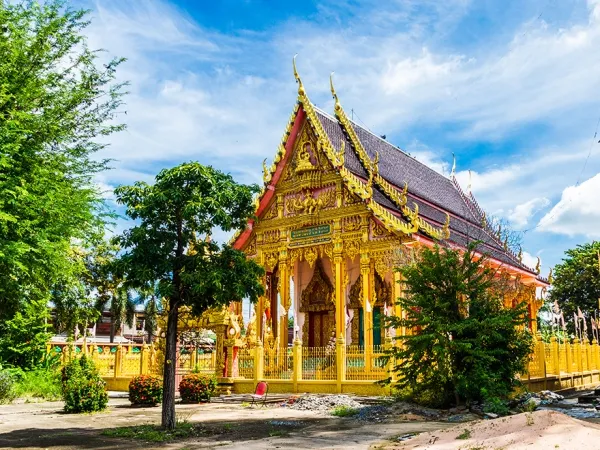
Wat Hua Sai (Wat Piamnikrotharam) in Hua Sai Subdistrict, Bang Khla District, Chachoengsao is a Mahā Nikāya Buddhist temple on the Bang Pakong River. The temple was established in 2428 BE (1885 CE). A major milestone in its history is the Luk Nimit cutting ceremony on 14 March 2514 BE (1971 CE), presided over by King Bhumibol Adulyadej (Rama IX) and Queen Sirikit. Today, the abbot is Phra Khru Phiphat Worakon. With its calm riverside atmosphere, strong local-history identity, and its role in Buddhist education (Pali/Dhamma studies), the temple suits a one-day Bang Khla itinerary that pairs merit-making with Bang Khla Floating Market, famous river prawn restaurants, and nearby riverside stays.
Wat Hua Sai (Wat Piamnikrotharam) is located in Hua Sai Subdistrict, Bang Khla District, Chachoengsao Province. It is a Mahā Nikāya (Mahanikai) community temple with a long-standing relationship to the Bang Pakong River basin. Rather than being just a place for religious rites, the temple has served for generations as a cultural and social anchor for the Hua Sai community and neighboring areas. From a cultural-travel perspective, Wat Hua Sai represents a “true community temple” — one that grew from local faith, land donations, and sustained participation by villagers from the earliest days.
The temple land covers approximately 15 rai 3 ngan 42 square wah, and it also has two plots of temple estate (monastic land) totaling about 31 rai 2 ngan 30 square wah. Its proximity to the Bang Pakong River brings a calm, breezy environment aligned with Bang Khla’s historic river-based way of life — transportation, farming, and everyday routines all depended on the waterway. Here, the relationship between the temple and the river is not only geographical; it is foundational to how the community formed and continued to thrive.
Historically, the temple was established in 2428 BE (1885 CE). The area once had a large banyan tree (ton sai) along the Bang Pakong River, and devout donors — Nang Han and Nang Sonsri Phumsoi — donated land for the temple’s construction. The name “Wat Hua Sai” reflects both the village name and the banyan tree as a local landmark. In local context, “Hua Sai” conveys settlement patterns closely tied to nature; over time the temple became the community’s spiritual center, rooted in the shared memory of a great riverside tree — an image that remains part of local storytelling today.
The temple received its Wisungkhamsima (royal consecration boundary for ordinations) on 14 March 2504 BE (1961 CE), with the boundary set at 40 meters wide and 80 meters long. This status is a crucial milestone because it formally defines the sacred boundary used for Sangha rites, enabling the temple to conduct ordinations and other key ceremonies in full accordance with ecclesiastical regulations. With Wisungkhamsima, Wat Hua Sai gained a stable standing within the Thai monastic administration and strengthened its role as a reliable spiritual center for all generations in the community.
A highlight that elevates Wat Hua Sai in modern local history is the Luk Nimit cutting ceremony on 14 March 2514 BE (1971 CE), presided over by His Majesty King Bhumibol Adulyadej the Great (Rama IX) and Her Majesty Queen Sirikit, the Queen Mother. For residents of Hua Sai, this event is a point of deep pride and a lasting collective memory. A royal presence at the ceremony underscores the temple’s significance in the intertwined context of religion and local community life.
In education, the temple opened a Dhamma Studies school (Phra Pariyattitham, Dhamma division) in 2475 BE (1932 CE), reflecting its role as a learning hub for Buddhist teachings. Phra Pariyattitham emphasizes systematic study of doctrine and monastic discipline, so the temple functions not only as a ritual space but also as a place to cultivate knowledge and religious literacy for monks and interested learners. This educational continuity contributes to Wat Hua Sai’s enduring identity and credibility as a community institution.
Key buildings within the temple include an ordination hall (ubosot) built in 2514 BE (1971 CE), a sermon hall (sala kan parian) built in 2515 BE (1972 CE), six monastic residences (kuti), and an alms pavilion. Together, these structures portray a community temple that developed step by step through accumulated local faith, prioritizing practical use and suitability to the area rather than grandiosity. Walking through the grounds, visitors typically sense a simple, peaceful atmosphere consistent with Bang Khla’s everyday rhythms.
Today, Wat Hua Sai is led by Phra Khru Phiphat Worakon as abbot, overseeing religious affairs and ongoing community activities. The temple continues to host merit-making events and Thai Buddhist traditions such as Kathin and Pha Pa ceremonies, ordinations, and observances on important Buddhist holy days. These living practices keep the temple at the heart of community life and maintain the social bonds that community temples naturally support.
For travelers, Wat Hua Sai works best as a slow, unhurried visit: enjoy the riverside air, pay respects in the ordination hall, and absorb the calm of a Bang Pakong riverside community temple. A balanced “merit-making – food – rest” itinerary can start here in the morning and continue to Bang Khla Floating Market, well-known river prawn restaurants, and a nearby riverside accommodation for an easy overnight stay.
Getting There Wat Hua Sai is in Hua Sai Subdistrict, Bang Khla District, Chachoengsao. Driving a private car is the most convenient option: head into Bang Khla and pin “Wat Hua Sai Bang Khla” on your map. The temple has space for visitor parking. If traveling by public transport, it is usually easiest to reach Bang Khla town first and then take a local taxi or hired vehicle directly to the temple.
| Place Name | Wat Hua Sai (Wat Piamnikrotharam) |
| Location | Hua Sai Subdistrict, Bang Khla District, Chachoengsao |
| Summary | A Mahā Nikāya riverside temple on the Bang Pakong River, established in 2428 BE (1885 CE), known for the 2514 BE (1971 CE) Luk Nimit ceremony and its role in Dhamma studies education. |
| Highlights | Bang Pakong riverside atmosphere, community-history identity, Luk Nimit ceremony associated with Rama IX, calm and simple temple grounds. |
| Abbot (Current) | Phra Khru Phiphat Worakon |
| Phone Number | 038-541-320 |
| Nearby Attractions (By Road Distance) | 1) Bang Khla Floating Market – 8 km 2) Wat Pho Bang Khla – 10 km 3) Wat Pak Nam Jolo – 18 km 4) Wat Saman Rattanaram – 25 km 5) Ban Mai 100-Year Market – 28 km |
| Popular Restaurants Nearby (By Road Distance + Phone) | 1) Kor Kung Phao – 8 km. Tel. 081-861-1655 2) Je Tem Kung Yang Pla Phao – 8 km. Tel. 063-209-0258 3) Pae Kung Samerng – 12 km. Tel. 081-410-2498 4) Thao Kae Chue – 9 km. Tel. 038-541-020 5) P&P Kung Phao Bang Khla – 11 km. Tel. 098-553-9299 |
| Popular Accommodations Nearby (By Road Distance + Phone) | 1) Bang Khla Resort – 14 km. Tel. 085-224-4139 2) Tamarind@Bangkhla – 15 km. Tel. 065-563-2392 3) Little Bangkhla – 14 km. Tel. 062-492-4953 4) Blue Ozone Resort & Spa – 20 km. Tel. 081-611-1144 5) Tala Bangkla Riviera – 16 km. Tel. 062-323-7424 |
Frequently Asked Questions (FAQ)
Q: When was Wat Hua Sai established?
A: The temple was established in 2428 BE (1885 CE) and is a Mahā Nikāya community temple in Bang Khla District.
Q: When did the temple receive Wisungkhamsima?
A: Wat Hua Sai received Wisungkhamsima on 14 March 2504 BE (1961 CE).
Q: What is the most important historical event associated with this temple?
A: The Luk Nimit cutting ceremony on 14 March 2514 BE (1971 CE), presided over by King Bhumibol Adulyadej (Rama IX) and Queen Sirikit.
Q: Who is the current abbot?
A: The current abbot is Phra Khru Phiphat Worakon.
Q: Who is this temple best suited for?
A: It suits visitors seeking a calm merit-making stop, a riverside temple atmosphere, and an easy one-day itinerary connected to Bang Khla’s food and market routes.
 Wat Hua Sai (Wat Piamnikrotharam) Map
 Category:
  Group:
  Tag: ●Wat Hua Sai (Wat Piamnikrotharam)●wat hua sai ●wat piamnikrotharam ●bang khla temple ●chachoengsao temple ●bang pakong river temple ●things to do in bang khla ●bang khla floating market ●river prawn restaurants bang khla ●accommodation in bang khla ●buddhist temple thailand Last Update: 1 MonthAgo
Comment
 Nearby Attractions
| Keyword (Advance) |
 Facebook Fanpage
 Region
 Art, Culture and Heritage
 Historical Sites and Monuments(
 Landmarks and Memorials(
 Royal Palace(
 Art, Craft Centres, Tradition(
 Museums(
 Historical Houses and The Ancient City(
 Educational Places
 Museum for Study(
 Library(
 Educational Gardens, Farm(
 University
 Mosque(
 Other religious and spiritural sites(
 Research and Development
 Royal Project(
 Suburban Living
 Village, Community(
 Local Market(
 Floating Market(
 Nature and Wildlife
 National Parks and Marine Reserves(
 Mountain (Doi)(
 Dam, Reservoir, Lake(
 Waterfalls(
 Caves(
 River, Canal(
 Bays and Beaches(
 Islands(
 Other natural attractions(
 Entertainment and Agricultural
 Zoos and Aquariums(
 Animal camps and shows(
 Farm, Parks, Gardens and Ecotourism(
 Spas and Wellness
 Spas and Wellness(
 Travel Articles, Recipes
 Travel Review, Food Review(
 Copyright 2012,