

 Home
Home Chiang Mai(




Wat Saman Rattanaram (Wat Mai Khun Saman)
Rating: 3.1/5 (17 votes)
 Search By
  Map
Map 
 Have Map
  No Map
Chachoengsao attractions
Attractions in Thailand
Open Days: Daily
Opening Hours: 08:00 – 17:00
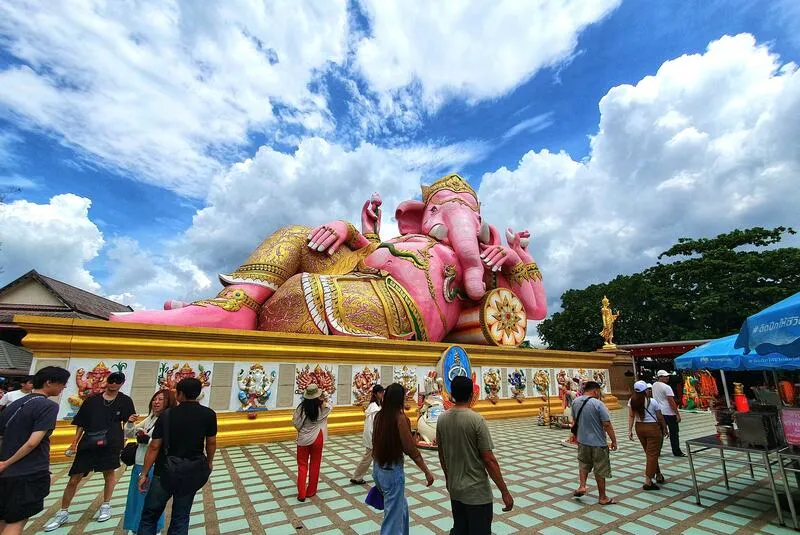
Wat Saman Rattanaram (Wat Mai Khun Saman) is one of Chachoengsao’s best-known riverside temples on the Bang Pakong River, located in Bang Kaeo Subdistrict, Mueang Chachoengsao, near the Bang Pakong Barrage project. The temple is famous for its massive reclining Ganesha in a blissful pose and the riverside display of Ganesha in 32 manifestations. It also enshrines two highly revered Buddhist images: the principal Buddha image in the ordination hall in the Mara-vijaya posture (Luang Pho To), believed to be over 120 years old, and a large walking Buddha image by the river, officially named “Phra Phuttha Mahakarunakhun Prasit”. This is an ideal stop for travelers who want both spiritual energy and a relaxing riverside atmosphere, with about 2 – 3 hours recommended if you plan to visit all key zones.
The character of Wat Saman Rattanaram begins with its setting. The temple sits beside the Bang Pakong River and is surrounded by waterways in a way that can feel almost like an island. In feng shui, many visitors describe this kind of embrace by water as a “money bag” formation—a symbolic sign of auspicious flow and prosperity. Once you arrive, the reason behind that reputation becomes easy to understand: the space feels open, airy, and comfortable to walk through. On days when a river breeze moves across the grounds, the experience is both calming and lively at the same time, shaped by a steady stream of worshippers throughout the day.
One reason the temple remains so widely talked about in Chachoengsao is how clearly the sacred areas are arranged. You can begin with the Ganesha zone, which is the main highlight for many visitors. From there, you naturally return to a distinctly Buddhist rhythm by paying respect to the principal Buddha image in the ordination hall, and then you can end the visit by walking out to the riverfront walking Buddha for a quieter, more reflective finish. This sequence makes the trip feel complete—embracing both contemporary devotional practice and the composed atmosphere of a working Thai Buddhist temple.
The first landmark most people come specifically to see is the Reclining Ganesha in a Blissful Pose, an enormous pink-toned Ganesha statue measuring 16 meters in height and 14 meters in width. The figure rests in a semi-reclining posture on a raised base, holding a broken tusk in the left hand and a lotus in the right. The overall impression is both grand and approachable. Because it is visible and unmistakable as soon as you enter, it often becomes the natural starting point for the visit—and for many visitors, it is also the easiest place to set a clear intention about what they wish to pray for.
Encircling the base, you will find Ganesha in 32 manifestations arranged along a walkable route. Many people treat the circuit as a gentle, meditative walk, pausing at the forms that feel most aligned with personal goals. Some focus on work and progress, others on business and success, and others on study or new beginnings. Moving through the area slowly helps the visit feel like more than just taking a photo with a landmark—it becomes a way to organize your thoughts and hopes in a grounded, deliberate manner.
If you want your prayers to Ganesha to feel focused rather than scattered, a simple approach is to choose only 1 – 2 priorities that truly matter. You might ask for momentum in your career, steadiness in trade or business, a new opportunity, or clarity in making a major decision. Then pray with a calm mind, reminding yourself what actions you will take afterward to support what you asked for. This kind of intention-setting gives the act of worship real weight and keeps it from becoming a long list of vague wishes.
After the Ganesha zone, a meaningful way to balance the visit and return to a Buddhist center is to enter the ordination hall and pay respect to the principal Buddha image in the Mara-vijaya posture (Luang Pho To). The image is widely regarded as a sacred protector for the local community and is believed to be more than 120 years old. Visiting Luang Pho To in the same trip as the Ganesha area often makes the experience feel more complete—as if you are grounding your hopes in a quieter Buddhist composure before returning to daily life.
Another key sacred point is the walking Buddha bestowing blessings set along the Bang Pakong River at the front of the temple. This statue bears the official name Phra Phuttha Mahakarunakhun Prasit, a name bestowed by Somdet Phra Nyanasamvara, the Supreme Patriarch. The statue is also associated with nine relics (Phra Borom Saririkathat) enshrined on the ushnisha. Compared with the energy of the Ganesha zone, this riverside area feels distinctly calmer. Many visitors simply stand quietly, offer a respectful prayer, and watch the river flow—ending the visit in a genuinely still, meaningful way.
Because the temple sits on the river, the overall walk has a special atmosphere. Sacred zones and scenic viewpoints blend naturally, so the experience shifts between lively devotion and quiet riverside space. Weekday mornings are typically more comfortable for slow walking and close observation, while weekends and holidays can be crowded. If you want to keep the mood unhurried, it helps to allow extra time and pace the route rather than rushing from one highlight to another.
For photography, Wat Saman Rattanaram works best as a place for landmark images with a story. If you want an expansive, dramatic frame, use a wide angle that includes the Reclining Ganesha with the Bang Pakong River in the background. If you prefer a calmer feeling, choose the riverside area near the walking Buddha, where the space feels more open and contemplative. In all cases, keep a respectful distance from worshippers, avoid blocking prayer points, and keep the atmosphere quiet.
Getting There Wat Saman Rattanaram is located on the Bang Pakong River in Bang Kaeo Subdistrict, Mueang Chachoengsao, near the Bang Pakong Barrage project. Driving is the most convenient option because it allows flexible timing and makes it easy to connect with other attractions in the province. From Bangkok, the trip generally takes about 1.5 – 2 hours depending on traffic. The temple area provides parking, and the internal walking route is fairly continuous, so you can visit the major zones without repeatedly backtracking. If you are not driving, you can travel into Chachoengsao town and then take local transport onward to the temple.
If you want a rewarding one-day plan, you can start the morning at Wat Saman Rattanaram to worship and make merit, then continue to Baan Mai 100-Year Market for local food and riverside old-town atmosphere, and finish by paying respect to Wat Sothon Wararam Worawihan. This route combines devotional travel, food, and classic Chachoengsao faith landmarks in a single day without needing long cross-district drives.
In the end, if you are looking for a Chachoengsao destination with a strong visual signature, uplifting energy, and an easygoing riverside walk, Wat Saman Rattanaram fits the brief. It offers a nationally recognized highlight in the Reclining Ganesha—and a distinctly Buddhist calm at the riverfront that helps the visit conclude on a quiet, meaningful note.
| Place Name | Wat Saman Rattanaram (Wat Mai Khun Saman) |
| Address | Bang Pakong River, Bang Kaeo Subdistrict, Mueang Chachoengsao District, Chachoengsao |
| Summary | A famous riverside temple near the Bang Pakong Barrage, best known for the Reclining Ganesha and a riverside display of Ganesha in 32 manifestations, plus major Buddhist images in the ordination hall and by the river. |
| Highlights | Reclining Ganesha (16 m tall, 14 m wide), Ganesha in 32 manifestations around the base, Luang Pho To (Mara-vijaya posture, believed 120+ years old), riverside walking Buddha “Phra Phuttha Mahakarunakhun Prasit”, open Bang Pakong River views. |
| Period | Contemporary (a major faith and tourism landmark of Chachoengsao) |
| Abbot / Temple Head (Latest) | Phra Ratchawachiraprachanat |
| Open Days | Daily |
| Opening Hours | 08:00 – 17:00 |
| Current Status | Open for worship and visits during operating hours |
| Fees | No admission fee (donations welcome) |
| Facilities | Parking, restrooms, multiple worship zones, souvenir/retail stalls, riverside walking areas |
| Contact Number | 081-983-0400 |
| Nearby Attractions With Distance | 1) Bang Pakong Barrage – 3 km 2) Baan Mai 100-Year Market – 20 km 3) Wat Sothon Wararam Worawihan – 25 km 4) Wat Mueang (Wat Pitulathiratcharangsarit) – 23 km 5) Wat Chin Prachasamoson (Wat Leng Hok Yi) – 24 km |
| Popular Restaurants Nearby With Distance And Phone | 1) Kung Nang – 25 km – 038-513-414 2) The River Barn – 26 km – 038-515-892 3) Kin Lom Chom Pla – 27 km – 085-328-6666 4) Sun Up Cafe – 26 km – 083-782-6656 5) Soei Tha Yai – 26 km – 081-586-1919 |
| Popular Accommodations Nearby With Distance And Phone | 1) Kantary Hotel Bangpakong – 20 km – 038-109-455 2) JK Living Hotel – 24 km – 092-742-9929 3) Tree House Chachoengsao – 24 km – 098-253-7460 4) Yenjit Resort – 26 km – 038-511-200 5) Suntara Wellness Resort & Hotel – 30 km – 038-823-317 |
Frequently Asked Questions (FAQ)
Q: Is Wat Saman Rattanaram open every day?
A: Yes. The temple is open daily for worship and visits during operating hours.
Q: What are the opening hours of Wat Saman Rattanaram?
A: The opening hours are 08:00 – 17:00.
Q: How big is the Reclining Ganesha at Wat Saman Rattanaram?
A: The statue is 16 meters tall and 14 meters wide, and it is the temple’s signature highlight.
Q: What are the most important Buddhist images at the temple?
A: Key images include Luang Pho To (the principal Buddha image in the ordination hall, believed to be over 120 years old) and the riverside walking Buddha named Phra Phuttha Mahakarunakhun Prasit.
Q: How long should I plan to spend at Wat Saman Rattanaram?
A: Plan for about 2 – 3 hours if you want to worship, walk around the 32 manifestations, and enjoy the riverside area without rushing.
Q: What is a nearby landmark to help locate the temple?
A: The temple is near the Bang Pakong Barrage project and sits directly on the Bang Pakong River in Mueang Chachoengsao.
 Wat Saman Rattanaram (Wat Mai Khun Saman) Map
 Category:
  Group:
  Tag: ●Wat Saman Rattanaram (Wat Mai Khun Saman)●wat saman rattanaram ●wat mai khun saman ●saman rattanaram temple ●reclining ganesha thailand ●ganesha 32 forms ●chachoengsao attractions ●bang pakong river temple ●wat saman ganesha ●buddhist temple chachoengsao ●day trip chachoengsao Last Update: 1 WeekAgo
Comment

Photo Gellery(3) 
 Thank you photo(3) from: Nano Out