

 Home
Home Chiang Mai(




Wat Saichon Na Rangsi (Wat Laem Bon)
Rating: 3.3/5 (12 votes)
 Search By
  Map
Map 
 Have Map
  No Map
Chachoengsao attractions
Attractions in Thailand
Open Days: Daily
Opening Hours: 07:00 – 17:00
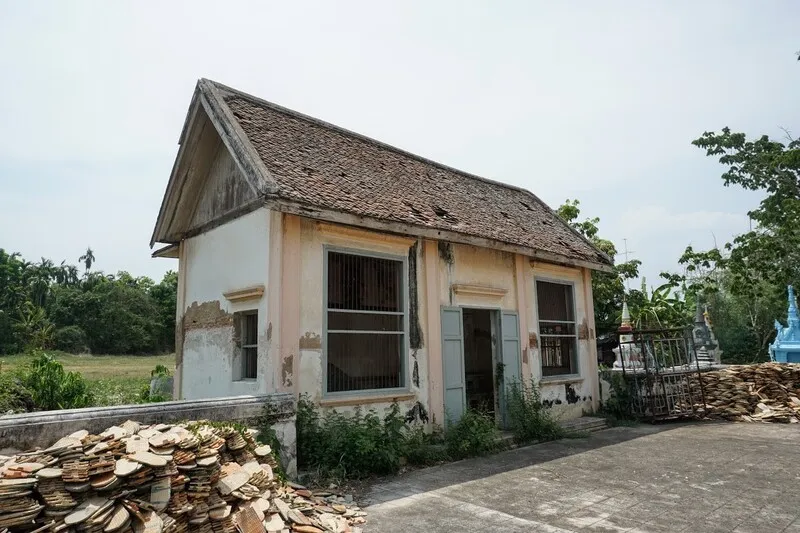
Wat Saichon Na Rangsi (Wat Laem Bon) in Chachoengsao is an old temple in Ban Mai Subdistrict, Mueang Chachoengsao District, admired for how naturally it brings together faith, fine craftsmanship, and traces of the community’s educational history in one place. The temple was established during the reign of King Nangklao (Rama III) and is said to reflect architectural influence from Wat Phra Si Rattana Satsadaram (the Temple of the Emerald Buddha). That influence gives the site an overall sense of order and quiet dignity, the kind of early Rattanakosin atmosphere that feels calm on the surface but rewards anyone willing to slow down and read the details. It suits travelers who want to explore Chachoengsao with both merit-making and cultural insight, with an average visit taking about 1.5 – 2.5 hours if you intend to take in the craftsmanship and the wooden buildings thoroughly.
What makes a visit to Wat Saichon Na Rangsi feel different from a simple stop to pay respects is that the temple stands out not only as a place of worship, but also as a space that reflects the development of the Ban Mai community. In a deeper sense, temples in Thai communities have long been more than religious sites. They serve as shared ground where people connect with learning, culture, and everyday social order. Wat Saichon Na Rangsi illustrates this clearly because wooden structures linked to the temple’s school history still remain. As a result, walking through the temple is not just a quick circuit around an ordination hall before leaving, but a walk through layers of time that are still tangible.
The temple was originally known as “Wat Laem Bon,” a name that straightforwardly reflects local geography and the character of a riverside community. Over time, it came to be known as “Wat Saichon Na Rangsi,” a name that still carries the scent of waterways and the landscape identity of Chachoengsao in its wording. Together, the old and newer names function almost like memory notes of the place, conveying both origin and mood without needing long explanations. Even hearing the name can suggest a temple that belongs to its community and to the flow of local water routes.
The temple’s architectural charm begins with the ubosot (ordination hall), described as influenced by Wat Phra Si Rattana Satsadaram, which gives the craftsmanship a disciplined, well-proportioned look and an air of refined elegance. Visitors who appreciate woodwork and traditional decorative arts often pause longest at the carved and lacquered elements, especially the pediment area as well as the chofa and bai raka finials, traditionally made from teak, lacquered, and finished with decorative tiles. Details like these may not call out to someone rushing through, but they are deeply satisfying for anyone who enjoys slowing down and reading a site through its craftsmanship, because the closer you look, the more the artisan’s intention becomes visible, and the temple’s calm presence gains depth.
Step inside the ordination hall and the atmosphere shifts into the world of mural painting, where scenes from the Buddha’s life are presented through wall art. Enjoying Buddhist murals does not require academic expertise. It begins with noticing what episode is being told, where the key figures are placed, and how the composition guides the eye from one scene to the next. Historically, mural painting served as visual teaching in periods when books were not widely accessible, so the presence of these murals is not only an aesthetic feature but also evidence that the temple once functioned as a learning space for the community.
Wat Saichon Na Rangsi does not end with the ordination hall. Another layer of interest lies in the wooden building group connected to the history of education at the temple. Many Thai temples once served as centers of learning, especially as state-supported schooling expanded into subdistrict levels. Here, a key piece of evidence is the temple school building constructed from wood in 1938 (B.E. 2481), considered the first officially established school in the area under a local “pracha-ban” style of community education. What makes school buildings of that era distinctive is their practical problem-solving. With limited budgets, the upper floor was built first while the ground level remained an open undercroft, aligned with local use patterns and the environmental conditions of community life, before later funding enabled the lower floor to be completed in 1951 (B.E. 2494). Seen this way, the building is not merely old. It is an answer from its time, showing how local people created educational opportunity with the resources available.
Beyond that school building, another structure stands out for its conservation value: the former Buddhist scripture school building, made entirely of teak. It is a two-story wooden structure with a colonial-style architectural form, and its most arresting detail for many visitors is the delicately carved wooden fretwork along the eaves. Carved woodwork of this kind demands both skill and time, because errors are costly and the pattern balance must be carefully controlled. Seeing it in person makes it immediately clear why such a building deserves attentive care: it is simultaneously craftsmanship and educational history, preserved in the same frame.
If you visit for cultural travel, it helps to move through the site slowly and in sequence. Begin by paying respects with a composed mind, then examine the exterior details of the ordination hall before entering to view the murals. After that, continue to the wooden building group and the historic school structures. This pacing prevents you from missing the heart of the place, because Wat Saichon Na Rangsi is not about monumental scale. Its strength is the relationship between structures that together tell the full community story, from art and craftsmanship to local education.
For photography, this temple is best suited to architectural lines and storytelling images rather than fashion-style shots. The ordination hall exterior works well for proportion and silhouette, while the wooden buildings offer a quietly nostalgic atmosphere. Morning light tends to be soft and revealing for wood grain and carved eave details without harsh contrast, while late afternoon adds warmth that complements colonial-style wooden architecture. The key is to shoot respectfully: avoid disturbing worshippers and avoid blocking areas used for prayer.
Because this is a living temple visited daily, basic etiquette matters. Dress modestly, avoid revealing clothing, keep your voice low within sacred areas, and remove shoes where required. If there are elderly visitors or people practicing meditation nearby, simply walking a bit more slowly can make the temple’s calmness more palpable and also shows appropriate respect for the setting.
Getting There Wat Saichon Na Rangsi is located in Ban Mai Subdistrict, Mueang Chachoengsao District. Traveling by private car is the most convenient option: set the temple name as your map pin and follow the route into Ban Mai. If arriving by train or minivan, you can get into Chachoengsao town center first and then connect onward using local transport as appropriate. On weekends and during festivals, traffic can become heavier in certain periods, so it is wise to allow extra time to keep your visit unhurried, especially if you want to explore the wooden buildings carefully.
If you want a well-balanced one-day itinerary, a practical flow is to begin your morning at Wat Saichon Na Rangsi for craftsmanship and historic wooden buildings, then continue to Ban Mai 100-Year Market to experience riverside old-town life and local food, and finish by paying respects to Luang Pho Phutthasothon at Wat Sothon Wararam Worawihan. This route keeps art, community history, food, and faith in one coherent day without feeling rushed.
In the end, Wat Saichon Na Rangsi is the kind of temple where the more you look, the more you see. Its beauty does not demand attention loudly. It is tucked into teak details, mural storytelling, and old school buildings that quietly preserve the community’s educational memory. If you enjoy temple visits that offer both merit and meaning, this is a destination that adds real weight to a Chachoengsao trip without requiring a long drive far outside town.
| Place Name | Wat Saichon Na Rangsi (Wat Laem Bon) |
| Address | 65 Moo 2, R.P.C. Chachoengsao 3139 Road, Ban Mai Subdistrict, Mueang Chachoengsao District, Chachoengsao |
| Place Summary | An old Rama III-era temple in Ban Mai community, notable for early Rattanakosin-inspired architecture linked to Wat Phra Si Rattana Satsadaram, Buddhist-life murals, and a group of historic wooden school buildings that reflect the temple’s role in community education. |
| Key Highlights | Early Rattanakosin craftsmanship, teak decorative elements (pediment details, chofa and bai raka finials), Buddhist-life mural paintings, a wooden school building dated 1938 (B.E. 2481), and a two-story colonial-style teak building with intricate carved eave fretwork. |
| Period | Rama III (Early Rattanakosin) |
| Abbot / Current Overseer | Phra Maha Winai Kittipanyo |
| Open Days | Daily |
| Opening Hours | 07:00 – 17:00 |
| Current Status | Open for worship and visits during opening hours |
| Fees | No admission fee (donations welcome) |
| Facilities | On-site parking area, restrooms, worship and walking areas within the temple grounds |
| Nearby Attractions With Distance | 1) Wat Sothon Wararam Worawihan (Luang Pho Sothon) – 4 km 2) Ban Mai 100-Year Market – 5 km 3) Wat Mueang (Wat Pitulathiratcharangsarit) – 6 km 4) Wat Chin Prachasamoson (Wat Leng Hok Yi) – 6 km 5) Bang Pakong Riverside Walkway / Clock Tower Area – 6 km |
| Popular Restaurants Nearby With Distance And Phone | 1) Kung Nang – 6 km – 038-513-414 2) The River Barn – 6 km – 038-515-892 3) Kin Lom Chom Pla – 8 km – 085-328-6666 4) Sun Up Cafe – 6 km – 083-782-6656 5) Soei Tha Yai – 6 km – 081-586-1919 |
| Popular Accommodations Nearby With Distance And Phone | 1) Heaven Hotel Chachoengsao – 6 km – 038-511-150 2) The Wish Hotel & Condo Chachoengsao – 9 km – 088-521-5234 3) Baan Bang Pakong Resort – 12 km – 081-134-3333 4) Yenjit Resort – 10 km – 038-511-200 5) Suntara Wellness Resort & Hotel – 14 km – 038-823-317 |
Frequently Asked Questions (FAQ)
Q: Is Wat Saichon Na Rangsi open every day?
A: Yes. The temple is open daily for worship and visits during its opening hours.
Q: What are the opening hours?
A: 07:00 – 17:00.
Q: What was the temple’s original name, and when was it established?
A: It was originally known as Wat Laem Bon and is described as having been established during the reign of Rama III.
Q: What should I make sure to see when visiting?
A: Key highlights include the ordination hall with Wat Phra Si Rattana Satsadaram influence, the Buddhist-life murals inside, and the historic wooden school buildings that reflect the temple’s role in community education.
Q: How much time should I plan for the visit?
A: Plan around 1.5 – 2.5 hours if you want to worship and explore the craftsmanship and wooden buildings in detail.
Q: What should I wear and how should I behave inside the ordination hall area?
A: Dress modestly, avoid revealing clothing, keep your voice low, and remove shoes where required.
 Wat Saichon Na Rangsi (Wat Laem Bon) Map
 Category:
  Group:
  Tag: ●Wat Saichon Na Rangsi (Wat Laem Bon)●wat saichon na rangsi ●wat laem bon ●temples in chachoengsao ●old temple chachoengsao ●chachoengsao one day trip ●thai temple architecture ●wooden school building thailand ●cultural travel chachoengsao ●bang pakong river attractions ●things to do in chachoengsao Last Update: 1 WeekAgo
Comment
 Nearby Attractions
| Keyword (Advance) |
 Region
|
 Muang Chachoengsao(
 Copyright 2012,