

 Home
Home Chiang Mai(




Ko Nok (Tha Kham Nature Island)
Rating: 4.5/5 (4 votes)
 Search By
  Map
Map 
 Have Map
  No Map
Chachoengsao attractions
Attractions in Thailand
Open Days: Open Daily (recommended to contact the local authority/pier before traveling)
Opening Hours: Visit anytime (morning – evening is best for birdwatching and photography)
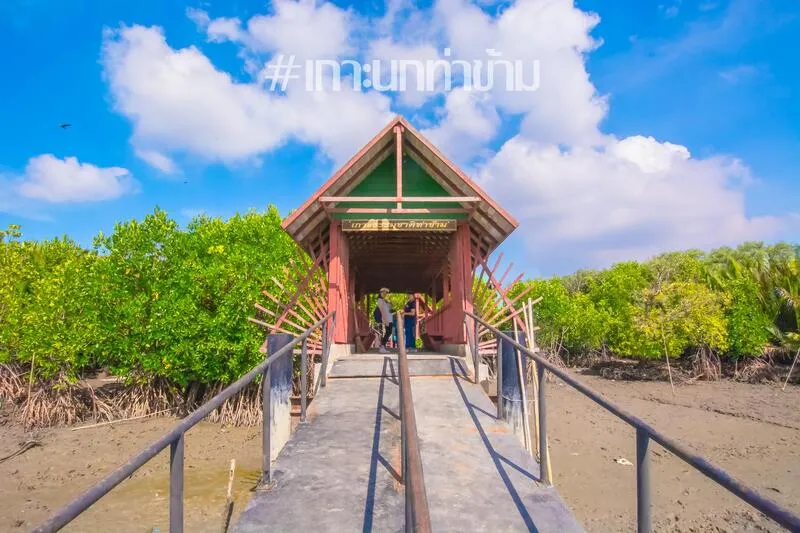
Ko Nok (Tha Kham Nature Island) is a standout ecotourism destination in Bang Pakong District, Chachoengsao — a place many visitors come to “watch birds, walk through mangroves, and experience the estuary” on an easy trip from Bangkok. What makes the island special is not a beach-resort vibe, but its role as a true mangrove island in the Bang Pakong River mouth ecosystem that still functions naturally. There are designated walking paths for observing nature, birdwatching towers that offer canopy-level views, and seasonal wildlife encounters — from waterbirds and shorebirds to coastal animals such as macaques and flying foxes. Overall, the atmosphere is “quiet – slow – intentionally observant,” ideal for anyone who wants to rest their eyes from the city and enjoy a nature experience without traveling far.
Ko Nok is located in Tha Kham Subdistrict, Bang Pakong District, near the Bang Pakong estuary — where freshwater from the Bang Pakong basin meets brackish water and the Gulf of Thailand. Being in this kind of “transition zone” makes the surrounding mangroves and wetlands highly productive, as sediment and nutrients accumulate with the rhythm of the tides. One thing visitors notice immediately is the naturally turbid water and muddy estuary flats. This is not necessarily a sign of pollution; rather, it often reflects a system rich in organic matter and foundational food sources. That is precisely why so many birds choose this landscape as both a feeding ground and a refuge.
Locals commonly call it “Ko Nok” because the most memorable image for visitors is seeing large numbers of birds gathering in the mangrove canopy — especially species frequently found around the estuary such as Asian openbills, cormorants, and egrets, along with various shorebirds and fish-eating birds that arrive seasonally. Ecologically, islands like this function like a stopover station for birds: there is abundant food (small fish, aquatic life, and mudflat fauna) and comparatively less disturbance than densely settled riverbanks. The fact that it is an “island” also creates a clear boundary, making it easier to manage visitation while still protecting space for wildlife to live naturally.
If you view Ko Nok as a living nature lesson, it is an excellent example of how mangroves support coastal ecosystem stability. Mangroves reduce wave energy, help prevent erosion, and serve as an “nursery habitat” for many juvenile aquatic species. When small marine life thrives, higher levels of the food chain — larger fish and fish-eating birds — follow. And when fish and aquatic prey become more abundant, the chances of encountering top predators in the estuary increase as part of a natural cycle. This is why many people enjoy combining a “Ko Nok + Estuary” itinerary with nature boat trips: it helps you see the ecosystem as a whole, not just birds from one viewpoint.
What makes a visit to Ko Nok more rewarding is focusing on “behavior” rather than only “species lists.” Even within the same bird groups, behavior changes with time and environmental conditions. In the morning, birds are often more active foraging; under harsh midday sun, many rest in the trees and move less. The tides also affect how fish-eating birds and mudflat feeders hunt. Visitors who give themselves time to stand and observe usually start noticing natural rhythms: circling flights before landing, clustered roosting patterns, turns taken while foraging, or using the canopy as a resting point before shifting to another feeding area as currents and prey distributions change.
Walking around Ko Nok generally offers a two-layered experience. The first is “atmosphere” — the estuary breeze and the distinctive scent of mangroves. The second is “detail” — from stilt roots and crab burrows to signs of mudflat life, plus bird calls and wind moving through the canopy. Many visitors especially enjoy sections where the boardwalk leads closer into denser mangrove stands, because it feels like entering a truly wild space. At the same time, more open viewpoints reveal the broad estuary and expansive water surface — a photo-friendly landscape that is not easy to find on a short trip from Bangkok.
For birdwatchers, Ko Nok is best enjoyed with binoculars or a zoom lens, since many birds roost high in the canopy or gather in areas where respectful distance should be maintained. Trying to get too close for the sharpest shot can disturb flocks and cause them to relocate. A better approach is to stand quietly at a chosen spot and let nature move on its own — especially near the birdwatching towers, which raise your viewpoint and help you see both canopy roosts and flight lines more clearly. Bird photography in wetlands is typically most flattering in the morning and late afternoon, when light is softer, shadows are gentler, and temperatures are more comfortable than midday.
Beyond birds, Ko Nok is also talked about for coastal wildlife such as macaques and flying foxes, which may appear depending on season and time of day. Treat sightings as a bonus rather than the main goal — nature does not run on a show schedule. Key etiquette includes not feeding animals, not making loud noises, and not approaching closely for photos in ways that cause stress. This is especially important with macaques, which may become defensive of their troop or food. When visitors keep a respectful distance and avoid provoking behavior, wildlife and tourism can coexist well, helping the island remain enjoyable in the long term.
In terms of Ko Nok’s “history and development” as a tourism site, the mangrove landscapes of the Bang Pakong estuary have long been discussed as natural learning areas where communities use resources alongside conservation. Development concepts for Ko Nok have typically emphasized “light-touch structures” that fit the environment — such as nature trails and birdwatching towers — enabling access without heavy land modification. The strength of this kind of ecotourism is that it treats nature as the core asset and values ecosystem integrity over built attractions. When managed appropriately, Ko Nok becomes a natural classroom that people can revisit many times, because each season brings different birds and behaviors.
If you plan a truly satisfying trip, Ko Nok can serve as the “centerpiece” of an estuary-focused itinerary because it is close to other ecotourism activities in Tha Kham — such as nature boat rides through the estuary, and in some seasons, additional opportunities for observing local aquatic life. A well-paced day often starts in the morning with a walk on the island for birdwatching, followed by a seafood meal in the Tha Kham area, then ends with a late-afternoon boat ride or viewpoint visit for warmer light and a cooler estuary breeze. This sequencing avoids rushing and gives you a full-day experience spanning both land and water.
From a community economy perspective, tourism around Ko Nok can distribute income locally in a straightforward way — from boat services to seafood restaurants, small cafes, and nearby riverside stays or resorts. Good ecotourism is often not measured by spectacle, but by its ability to “keep people in the area longer” and “make them want to return.” As repeat visits increase, money circulates more consistently, and incentives to protect natural resources typically strengthen. The critical condition is maintaining shared rules and cleanliness: if nature declines, bird numbers decline, and the island’s main appeal fades quickly.
To visit Ko Nok smoothly, prepare for estuary conditions: strong sun and steady wind are common. A hat, sunglasses, drinking water, and comfortable walking shoes are essentials. Insect repellent is recommended because this is a wetland environment, and clothing should allow easy movement — especially if your visit includes boat transfers. If traveling with children or older adults, set a walking distance that matches everyone’s stamina. You do not need to cover every point in one go; walking slowly and pausing to observe often creates a better experience than walking fast just to “tick off” the route, which tends to make you miss the most interesting parts — small ecosystem details and wildlife behavior.
Etiquette and responsibility are central to visiting Ko Nok because places like this depend more on “cooperation” than strict enforcement. Visitors should avoid loud noise, avoid playing music, never litter, and avoid taking living things or natural materials home — even shells or branches — because small individual actions add up to significant long-term impact. Photography should be done in a way that gives animals space: do not chase, surround, or cause wildlife to change behavior. When everyone helps protect these basics, Ko Nok remains a credible birdwatching site and a meaningful natural learning space for future generations.
For travelers seeking “a different kind of short trip from Bangkok,” Ko Nok delivers with an estuary and mangrove environment that still feels genuinely alive. The images you take are not of giant landmarks, but of living scenes: flocks flying over mangrove lines, reflections on brackish water, and the sensation of an estuary breeze along the walkway. When combined with fresh seafood in the Tha Kham or Bang Pakong area, this becomes a one-day itinerary that offers both nature and taste — a strong option for those who want to go not far, yet feel a clear change of atmosphere from the city.
Getting There From Bangkok, take the Bang Na – Trat expressway toward Bang Pakong District. After crossing the bridge over the Bang Pakong River, follow signs toward Tha Kham Subdistrict. Then contact the local pier/service point or the relevant local authority for guidance on boarding locations, water conditions, and the most suitable timing. Before you travel, it is advisable to check weather and tide conditions, as these can affect boat transfers and the ease of bird observation in the estuary area.
| Place Name | Ko Nok (Tha Kham Nature Island), Tha Kham Subdistrict, Bang Pakong District, Chachoengsao |
| Address | Tha Kham Subdistrict, Bang Pakong District, Chachoengsao (Bang Pakong estuary zone; boat transfer required to access the island) |
| Place Summary | A mangrove ecotourism island in the Bang Pakong estuary, about 125 rai in area, best known for birdwatching, nature walks, and brackish-water mangrove scenery along Chachoengsao’s coast. |
| Highlights | Productive mangrove ecosystem, strong chances to see large bird gatherings (e.g., Asian openbills, cormorants, egrets) depending on season, nature trail and observation points, ideal for birdwatching – photography – estuary ecosystem learning, close to other Bang Pakong estuary ecotourism routes. |
| Open Days | Open Daily (recommended to contact the local authority/pier before traveling) |
| Opening Hours | Visit anytime (morning – evening is best for birdwatching and photography) |
| Fees | No admission fee (boat/service fees may apply depending on local operators) |
| Facilities | Nature trail, bird observation points/viewpoints (as provided on-site), pier waiting areas and community services near boarding points (depending on the pier) |
| Nearby Tourist Attractions | 1) Bang Pakong estuary ecotourism routes / nature boat trips — 2 km 2) Tha Kham area (local fishing life – estuary viewpoints) — 3 km 3) Bang Pakong Power Plant area — 6 km 4) Wat Hong Thong (Bang Pakong) — 18 km 5) Wat Sothon Wararam Worawihan (Chachoengsao city) — 30 km |
| Nearby Restaurants | 1) Rabiang Nam (Krua Rabiang Nam) — 3 km — Tel. 038-574-318 2) MESS Bang Pakong Power Plant — 6 km — Tel. 038-573-420 3) Sebiang Restaurant (Power Plant Area) — 7 km — Tel. 089-071-3751 4) Ood Seafood — 8 km — Tel. 038-573-703 5) Krua Na Lao — 10 km — Tel. 085-089-8288 |
| Nearby Accommodations | 1) Ratathara Resort — 3 km — Tel. 061-953-9053 2) Rimbay Mangrove Resort — 4 km — Tel. 099-962-8052 3) Bang Pakong Park — 30 km — Tel. 081-4499-492 4) Heaven Hotel Chachoengsao — 32 km — Tel. 094-343-0444 5) JK Living Hotel & Service Apartment — 33 km — Tel. 092-742-9929 |
| Contact Number | Tha Kham Subdistrict Municipality, Bang Pakong, Chachoengsao — Tel. 038-573-411 ext. 123 (local information and travel inquiries) |
Frequently Asked Questions (FAQ)
Q: Where is Ko Nok in Chachoengsao located?
A: It is in Tha Kham Subdistrict, Bang Pakong District, Chachoengsao, within the Bang Pakong estuary zone, and a boat transfer is required to access the island.
Q: What is Ko Nok best known for, and why is it called “Ko Nok”?
A: It is best known for mangrove ecotourism and birdwatching, as many birds gather here seasonally — especially waterbirds and fish-eating species — which is why it is commonly called “Ko Nok” (Bird Island).
Q: What time of day is best for birdwatching at Ko Nok?
A: Morning and late afternoon are best because the weather is more comfortable and the light is softer, making it easier to observe behavior and photograph birds. Birds are also often more active than during the hottest midday hours.
Q: What should I prepare before visiting Ko Nok?
A: Bring a hat, sunglasses, drinking water, insect repellent, and comfortable walking shoes. Because this is a mangrove estuary environment with strong sun and wind, wear breathable clothing and be ready for a boat transfer.
Q: What etiquette should visitors follow to avoid disturbing wildlife?
A: Keep noise low, never feed wildlife, do not approach flocks too closely, do not litter, and photograph from a respectful distance so animals can behave naturally and the area remains healthy.
Q: Where can I go after visiting Ko Nok in one day?
A: You can connect to Bang Pakong estuary routes or other local nature boat activities in Tha Kham, enjoy seafood in the Bang Pakong area, or continue into Chachoengsao city for Wat Sothon and riverside attractions.
 Ko Nok (Tha Kham Nature Island) Map
 Category:
  Group:
  Tag: ●Ko Nok (Tha Kham Nature Island)●ko nok chachoengsao ●tha kham nature island ●bang pakong ecotourism ●birdwatching in chachoengsao ●mangrove forest bang pakong ●bang pakong estuary ●nature trail thailand ●bird watching near bangkok ●chachoengsao attractions ●mangrove island thailand Last Update: 3 DayAgo
Comment
 Nearby Attractions
| Keyword (Advance) |
 Region
|
 Muang Chachoengsao(
 Copyright 2012,