
lovethailand home >Central Travel Attractions >Chachoengsao Travel Attractions >Sanam Chai Khet >Lat Krathing > Village Social Development Study Center (Agrofores..
TL;DR: Village Social Development Study Center (Agroforestry) is located at Lat Krathing Subdistrict, Sanam Chai Khet District, Chachoengsao Province, open Daily, hours 09:00 – 16:00.
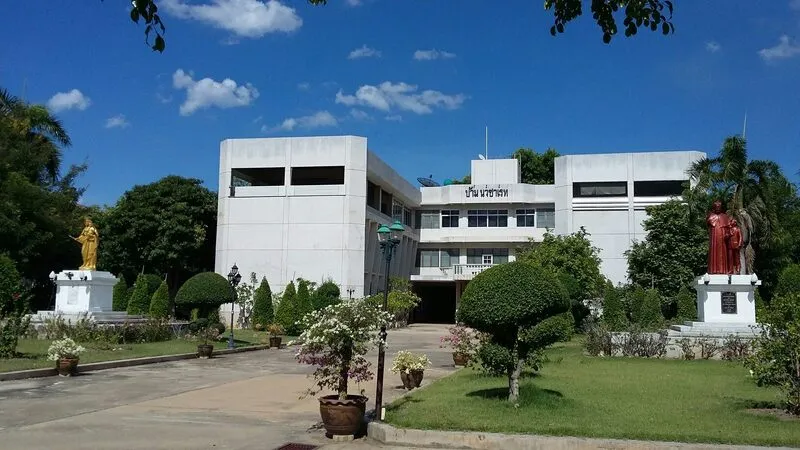
Village Social Development Study Center (Agroforestry)
Open Days: Daily
Opening Hours: 09:00 – 16:00
Village Social Development Study Center (Agroforestry), or Ban Santitham in Lat Krathing Subdistrict, Sanam Chai Khet District, Chachoengsao Province, feels more like a “home” than a typical “tourist attraction.” The core purpose of this place is to serve as a learning hub for self-reliance and a way of life that genuinely understands nature. It is not a staged spot where people simply walk around for photos and leave. Instead, it gently shows visitors how essential knowledge about food, herbal remedies, shelter, livelihood tools, and the garden ecosystem can connect into a practical, livable system. As you step into the grounds, you will notice the air feels slightly cooler under the shade of trees. The quietness makes the sounds of rustling leaves, birds, and even your own footsteps clearer. That calm atmosphere is what makes Ban Santitham ideal for anyone who wants to slow down from city life and spend a day learning without rushing
Ban Santitham covers nearly 10 rai and is known for the richness of its plant life, especially a large collection of medicinal herbs that are cultivated and gathered throughout the site. The highlight of visiting here is not to “complete the walk,” but to “see with awareness.” Each stretch of the path carries its own story—plants used for food, plants used as remedies, and tall trees that provide shade and help retain soil moisture. If you have only known Thai herbs through tea bags or capsules, Ban Santitham brings you back to the roots of that knowledge, showing that herbs are not merely “medicine,” but part of a living system tied to eating, dwelling, and caring for oneself in harmony with nature
The space is arranged to support multiple learning formats: walking tours, lectures, and group activities. One of the most memorable features is the traditional Thai wooden house roofed with “kra-bueang waaw” tiles. The house is elevated on high stilts, with the open underfloor space used for meetings and talks. This detail clearly reflects the intention of the place. The raised underfloor is not just decorative; it aligns with Thai architectural wisdom that improves ventilation, reduces heat, and creates a comfortable open area for groups. Upstairs, you will find displays of local tools, antiques, and older household items. It functions like a compact classroom, helping younger generations understand what “self-reliant living” once depended on and how people worked in rhythm with the seasons
Walking through the folk-tool exhibition reveals the strong link between households and the food system. Many items are evidence of an agricultural way of life that was inseparable from everyday living—food preparation tools, seed-storage equipment, containers for transporting produce, and objects that reflect how people used to “plan ahead” for food. These may look like relics to city visitors, but in another sense they are lessons in household food security that remain relevant, especially in an era when many people are increasingly interested in growing their own vegetables, making compost, or cooking with local ingredients. Ban Santitham makes those ideas tangible by showing real objects in their real context—why such tools existed and what problems they were created to solve
Behind the wooden house, there is a “model rice barn” along with traditional rice-threshing and rice-milling equipment. This area often becomes a main highlight for families because children tend to linger and ask questions about how many steps it takes to get a single bag of rice. For adults, seeing the rice barn and these tools feels like returning to the roots of Thailand’s staple food. “Rice” does not begin at a supermarket; it begins with labor, knowledge, and seasonal timing. If knowledge about rice has ever felt distant, Ban Santitham brings it closer through small scenes that explain how people lived with fields, harvest cycles, and the need to store rice for year-round consumption
Another section of Ban Santitham is dedicated to youth camping. There is a recreation ground and activity areas designed for group-based learning. This confirms that Ban Santitham is not just a place to stroll through; it is a space designed to be “lived in” for a period of time—whether for nature learning, community living, simple discipline through camping routines, or activities that help young people understand that food and resources do not appear automatically. Having a clearly organized camping zone also makes this place suitable for schools, youth groups, or study tours seeking a quiet and well-structured environment without traveling to crowded commercial attractions
What gives Ban Santitham its charm for those drawn to a “nature-based lifestyle” is that it does not force information into a textbook format. It allows you to learn gradually by observing how the site is put together. You will see that the Thai house is not separate from the garden; herbs are not isolated plants but connected to food and health; folk tools are not merely collectibles but reflections of real community needs. As you continue walking, you begin to distinguish which plants provide shade, which are edible, which are familiar medicinal herbs, and which are entirely new to you. This experience differs from reading or watching videos because being in the space helps knowledge “stick” naturally and makes details easier to remember
If you come here with the intention to “learn” rather than simply take photos, it is best to allocate at least half a day. A quick walk may not take long, but the value is in pausing to notice details: leaf shapes, the scent of certain plants when gently rubbed, differences between trees growing in full sun versus under shade, and how soil varies across the grounds. These are natural lessons that many city dwellers often miss, and Ban Santitham fills that gap well. The area is not so large that it becomes exhausting, yet not so small that it feels like a staged exhibition
Getting There is straightforward for those traveling by private car. Use Highway 3245 (Phanom Sarakham – Sanam Chai Khet), then turn right onto Highway 3259 (Sanam Chai Khet – Tha Takiap) and continue for about 3 kilometers. This stretch offers a rural, green landscape that suits a slow drive. During the rainy season, it is wise to allow extra time, as there may be trucks or agricultural vehicles sharing the road. If you want a relaxed visit, arriving in the morning is recommended for cooler weather and enough time to explore before the site closes in the afternoon
When visiting a learning space like this, the most important thing is the visitor’s mindset. Ban Santitham is not an amusement park and not a photo spot designed for quick loops. It is a place with many plants and a folk-tool display, so it should be treated with respect and shared responsibility. Walk carefully, do not pick leaves or take plant parts as souvenirs, do not move displayed items, and if you wish to take photos inside the house or exhibition areas, do so politely without disturbing others—especially if study groups or youth activities are taking place
If you are planning a Chachoengsao trip that goes beyond temple visits or old markets, Ban Santitham is a meaningful stop because it adds a layer of “learning” to the journey without feeling forced. You can plan a half-day in the morning at Ban Santitham and continue in the afternoon to nearby nature spots or temples. Or, if you enjoy quiet atmospheres and want time alone, you can spend the whole day here and in the surrounding greenery without rushing between multiple places. The special quality of a place like this is that the slower you move, the more you gain—calmness, knowledge, and inspiration to reorganize your life in ways that are genuinely achievable
For families with children, Ban Santitham offers a gentle way for kids to understand the real world. Children can see that household items are not only purchased but also made, repaired, and reused. They learn that rice has many steps before it reaches a plate, and they can finally see what “medicinal plants” actually look like. This kind of learning tends to stay with children longer than textbook content because it uses the senses and connects what they see to real-life stories. Ban Santitham is like a nature classroom without pressure, where children are free to ask questions openly
In a broader sense, Ban Santitham reflects a vital modern idea: sustainability and mindful self-reliance. Seeing a space planted with diverse species, learning-oriented land management, folk tools, and a model rice barn helps us realize that life’s “security” is not only money or convenience—it also includes practical knowledge for living well. When you leave, you may not carry souvenirs, but you may carry a new perspective: why it is worth growing certain plants for your own use, why you should know at least a few local herbs, or why caring for tools, repairing, and using things wisely can be more meaningful than always buying new ones
That is why Ban Santitham is a Chachoengsao destination for people who want more than superficial fun, and who want to return home with something intangible yet life-changing: a renewed understanding of nature, food, community, and what “self-reliance” can truly mean in everyday life
| Place Name | Village Social Development Study Center (Agroforestry), or Ban Santitham |
| Address | Lat Krathing Subdistrict, Sanam Chai Khet District, Chachoengsao Province |
| Place Summary | A nature-based learning center focused on self-reliance and agroforestry on nearly 10 rai, featuring extensive plant life (especially medicinal herbs), a traditional Thai house, folk-wisdom exhibits, and youth-camp activity areas |
| Key Highlights | Large herbal and plant collection, a traditional Thai stilt house with “kra-bueang waaw” roof tiles, an open underfloor lecture space, upstairs displays of folk tools and older household items, a model rice barn with rice-threshing and milling tools, plus youth camping and activity grounds |
| Open Days | Daily |
| Opening Hours | 09:00 – 16:00 |
| Fees | Free of charge |
| Getting There | Use Highway 3245 (Phanom Sarakham – Sanam Chai Khet), turn right onto Highway 3259 (Sanam Chai Khet – Tha Takiap), and continue about 3 km |
| Contact Numbers | 038-597-441, 038-597-715 |
| Nearby Tourist Attractions (Approx. Distance) | 1) Wat Phrathat Wayo (Wat Huai Nam Sap) – 12 km 2) Khao Ang Rue Nai Wildlife Sanctuary – 45 km 3) Khao Hin Son Royal Development Study Center – 55 km 4) Reservoir / nature spots in the Tha Takiap area – 35 km 5) Sanam Chai Khet town area (local market / food zone) – 15 km |
| Popular Restaurants Nearby (Approx. Distance + Phone) | 1) Khrua Suan Pa Sak – 18 km – 087-678-5735 2) Jungle Cafe (Sanam Chai Khet Branch) – 20 km – 094-546-9922 3) Libong Café – 19 km – 086-839-3565 4) Weekends Coffee&Space – 28 km – 097-986-5450 5) Khrua Je Daeng (Rim Khuen) – 34 km – 081-926-1166 |
| Popular Accommodations Nearby (Approx. Distance + Phone) | 1) Rim Mueang Resort (Sanam Chai Khet) – 18 km – 098-545-4688 2) The Bed Resort (Sanam Chai Khet Market Area) – 20 km – 091-009-7598 3) Two Resort (Sanam Chai Khet) – 22 km – 085-085-1199 4) Rai Manphakdee Resort – 33 km – 061-869-6899 5) Lap Phloen Resort (Phanom Sarakham) – 48 km – 082-558-9000 |
Frequently Asked Questions (FAQ)
Q: What is Ban Santitham, and who is it best for?
A: It is a learning center focused on self-reliance and agroforestry, ideal for nature lovers, people interested in medicinal herbs and local lifestyles, families with children who want hands-on learning, and study-tour or youth-camp groups
Q: What are the main highlights inside the site?
A: Extensive plant life (especially medicinal herbs), a traditional Thai stilt house for talks and learning, upstairs folk-tool and antique household displays, a model rice barn, and rice-threshing and milling tools
Q: How much time should I plan for the visit?
A: At least half a day is recommended, especially if you want to explore in detail or are visiting with children or a group
Q: How do I get to Ban Santitham?
A: Take Highway 3245 (Phanom Sarakham – Sanam Chai Khet), then turn right onto Highway 3259 (Sanam Chai Khet – Tha Takiap) and continue about 3 km, then follow local signs or the site’s map pin
Q: Is there an entrance fee, and what are the opening hours?
A: There is no entrance fee. The site is open daily from 09:00 – 16:00
Tel : 038597441, 038597715
 Tel : 038597441, 038597715
 Category: ●Educational Places
 Group: ●Educational Gardens, Farm
Last Update : 8 MonthAgo
 Last Update : 8 MonthAgo
 Click to Access the Navigation Map GPS
Village Social Development Study Center (Agroforestry) Map
Recommend

 Art, Culture and Heritage
 Historical Sites and Monuments(3)
 Landmarks and Memorials(4)
 Royal Palace(1)
 Art, Craft Centres, Tradition(10)
 Museums(2)
 Historic Homes and Cities(1)
 Museum for Study(1)
 Library(1)
Educational Gardens, Farm(2)
Library(1)
Educational Gardens, Farm(2)
 Places of Worship
 Temple(50)
 Mosque(2)
 Other Sacred Sites(7)
 Research and Development
 Royal Project(4)
 Suburban Living
 Village, Community(5)
 Local Market(4)
 Floating Market(1)
 Nature and Wildlife
 National Parks and Marine Reserves(2)
 Mountain (Doi)(1)
 Dam, Reservoir, Lake(6)
 Waterfalls(1)
 Caves(1)
 River, Canal(2)
 Bays and Beaches(1)
 Islands(2)
 Other natural attractions(2)
 Entertainment and Agricultural
 Zoos and Aquariums(1)
 Animal camps and shows(1)
 Farms, Parks and Ecotourism(6)
 Waterpark(1)
 Spas and Wellness
 Spas and Wellness(1)
 Travel Articles, Recipes
 Travel Review, Food Review(3)


