
lovethailand home >Central Travel Attractions >Chachoengsao Travel Attractions >Phanom Sara Kham >Khao Hin Son > Khao Hin Sorn Royal Development Study Center
TL;DR: Khao Hin Sorn Royal Development Study Center, Chachoengsao attractions : Research and Development, Royal Project.
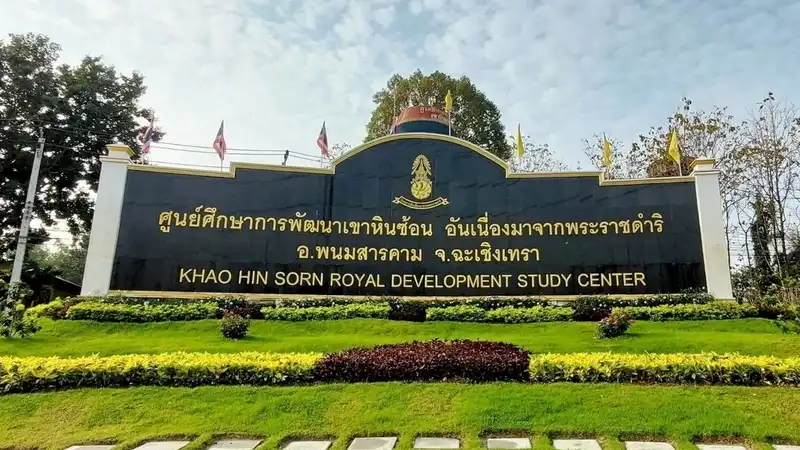
Khao Hin Sorn Royal Development Study Center
Open Days: Monday–Friday (visits/contact coordination during official business hours) and Saturday–Sunday (open for self-guided visits)
Opening Hours: Monday–Friday 08.30 – 16.30 | Saturday–Sunday 08.00 – 16.00
Khao Hin Sorn Royal Development Study Center is a national-level agricultural and environmental learning destination in Chachoengsao that turns the idea of “develop people – restore soil and water – build self-reliance” into a real place you can experience in a single day. It suits nature-minded travelers, families who want children to learn from real landscapes, and anyone interested in sustainable agriculture and the Sufficiency Economy Philosophy who wants to see a well-structured, practical model of land and resource management.
Khao Hin Sorn Royal Development Study Center is located in Khao Hin Sorn Subdistrict, Phanom Sarakham District, Chachoengsao. The site sits along Highway 304, a key route linking the Eastern region with inland Thailand, making it convenient to visit by car and ideal for a day trip. What stands out here is not a flashy check-in atmosphere, but the clarity of a “development system” that helps visitors understand how environmental restoration and community well-being can move forward together. Through site planning, water management, soil improvement, and hands-on demonstrations, the center presents knowledge at a level that can be applied in everyday life.
If you are looking for a “Chachoengsao attraction” that offers more than photos, this place delivers clearly. Walking through the center feels like moving through a continuous lesson from upstream to downstream: from the major challenges of a once-degraded landscape to solutions designed in response, and onward to livelihood pathways that strengthen household stability. The main strength is that you can see both the “reasons” and the “results” in one place—why water comes first, why soil improvement must be sustained over time, how diversified cropping reduces risk, and how multi-sector demonstrations within a single landscape help people learn faster and adapt the ideas in real life.
The center’s history helps explain the deeper “intent” behind its establishment. Khao Hin Sorn Royal Development Study Center was officially founded on 8 August 1979 as a place to study, test, research, and develop approaches suitable for real conditions in Thailand’s Eastern region—especially sandy soils, low fertility, and high erosion risk that directly affect local livelihoods. When the resource base is weak, conventional farming tends to raise costs, increase income instability, and create overlapping risks for communities. The center was therefore designed as a “model area” that demonstrates how development that begins with restoring natural resources can genuinely improve people’s lives, and how success in a challenging landscape can be adapted for other areas.
Looking back at the area’s past conditions, the starting point of development was not constructing buildings but making “soil and water work again.” Sandy soils have limited water-holding capacity and low nutrients. When it rains, water passes through quickly and topsoil erodes easily; in the dry season, water shortages become persistent. Development in this context must begin with creating water sources and designing a water system that matches the terrain, then build onward to forest restoration, expanded green cover, soil rehabilitation, and a plan for crops and livestock suited to local conditions. The goal is not simply to “grow plants,” but to “make the land support people sustainably”—restoring ecological balance so the area can produce continuously, reduce costs, and lower the risks of reliance on a single crop.
Many visitors are impressed because the phrase “a living natural museum” becomes tangible here. You are not only looking at trees or farm plots; you can see how each part of the landscape is designed as a lesson—from soil management that reduces erosion, to water management that helps the area cope better with drought, to production and processing demonstrations that show how agricultural knowledge does not end at planting, but connects to value creation and household livelihood management. The “new agriculture” approach under the Sufficiency Economy Philosophy is therefore not an abstract teaching; it is a way of thinking translated into activities and demonstration plots that most people can follow and understand within a few hours.
One reason Khao Hin Sorn Center is ideal for a visit that “truly teaches you something” is that it brings multiple development fields together in one place: land development, crop work, livestock, fisheries/aquaculture, arts and crafts for livelihoods, and a botanical/herbal garden component. Walking through the grounds can feel like reading a well-structured book chapter by chapter—except you are reading with your eyes and experiencing with your body. The variety of trial plots and demonstration zones lets specialists focus on what they care about, while general visitors can still grasp the big picture: good development is not making one point look nice, but connecting many elements so they reinforce each other. When water improves, diversified planting becomes feasible; when crop diversity increases, soils improve; when ecosystems become healthier, costs linked to pests and disease can decline; and when outputs diversify, income becomes more stable.
If you want to make the trip truly worthwhile, a simple mindset helps: today you are here to “read the system,” not just look at scenery. Start by understanding what problem the center was created to solve and what principles guide its solutions. Once the overview is clear, the details become immediately more engaging, because you will not see only plots, but the reasons behind each choice. You will not see only water, but how water management changes soil quality and livelihoods. You will not see only trees, but how green cover reduces erosion and helps regulate moisture. As you begin to connect these relationships, you will understand why “sustainability” is not a pretty word—it is a practical way to let natural systems work with people to lower costs, strengthen resilience, and build self-reliance as a learnable skill.
For families, the center is an excellent outdoor classroom. Children can see the food cycle from the beginning and understand that fruits and vegetables do not start on store shelves, but with soil, water, seeds, and consistent care. They can also learn that “being eco-friendly” is not only about reducing waste, but also about using resources wisely and protecting the natural foundation of a place. For adults, the visit clarifies that environmentally friendly agriculture is not merely idealistic; it is a long-term risk-reduction strategy. When soil improves, water becomes more reliable, and ecosystems stabilize, production can become more consistent, chemical input costs may decrease, and uncertainty can be reduced.
For those interested in formal study visits, the center has clear visitation procedures. If you are visiting as a group and require an officer/lecturer to guide the tour, you should coordinate in advance and submit an official letter addressed to the Director of the center through the channels specified, and send the documents ahead within the stated timeframe. This system keeps visits organized and helps the center manage larger groups effectively. At the same time, the center also enables general visitors to explore independently, especially on weekends when self-guided visits are open and on-duty staff may be available to answer questions on-site. This allows people who are not joining an official study tour to still access the knowledge and atmosphere of the learning landscape.
Another aspect many visitors enjoy is the center’s “herbal services” within the botanical garden area, because it adds a wellness dimension to the visit. The center notes that herbal steam/sauna and traditional Thai massage services are available on Saturdays and Sundays. If you want to use services outside those days and hours, you can contact the center for details via the phone numbers provided. This makes the visit attractive to those who want to relax in a natural setting while experiencing practical “herbal wisdom” in a real environment, not only through exhibition information.
If you want to extend your trip and stay overnight, the center also provides accommodation information for study-visit participants, with certain room-rate details published on the official website, making multi-day training or study programs more convenient. For general travelers who want to stay in the Khao Hin Sorn and Phanom Sarakham area, there are also nearby accommodation options that can serve as a base for continuing your Chachoengsao trip—temples along the Bang Pakong River, old markets, cafés, or onward travel to nearby provinces via Highway 304.
The value of visiting Khao Hin Sorn Center as a tourist destination is that you go home with “principles” more than “photos.” You see land management that begins with natural resources and ends with quality of life. You understand how restoring soil and water connects to cropping and livelihoods. You also see that self-reliance does not mean doing everything alone; it means having a system and enough knowledge to choose what fits your own context. When communities have knowledge and real examples that work, sustainability can take root at both household and landscape levels. This is why Khao Hin Sorn Center is a Chachoengsao attraction with long-term value for both visitors and the local area.
Getting There Driving is the most convenient option. Use Highway 304 as the main route and set your navigation to “Khao Hin Sorn Royal Development Study Center,” which is the most direct and accurate search term. The contact address is 7 Moo 2, Khao Hin Sorn Subdistrict, Phanom Sarakham District, Chachoengsao 24120. You can call 038-554-982 or 038-554-983 before traveling, especially if you plan to visit as a group, request an official guided tour, use study-tour transport services, or visit during holidays and want to confirm service conditions.
To make your trip smooth, plan your timing based on the style of visit you want. For a general overview and a relaxed walk, about 2–3 hours is enough. If you want deeper learning, a talk/briefing, and more complete coverage of the development learning bases, set aside at least half a day. The site holds many details and absorbing the “system” takes time—the slower you walk, the more reasons you will see, and the more you will understand why this kind of development is a worthwhile long-term investment. If you need a group visit with a lecturer or specific services, coordinate in advance under the center’s visitation procedures to ensure an organized and complete experience.
| Place Name | Khao Hin Sorn Royal Development Study Center (Khao Hin Sorn Royal Development Study Center) |
| Address | 7 Moo 2, Khao Hin Sorn Subdistrict, Phanom Sarakham District, Chachoengsao 24120, Thailand |
| Place Summary | A royal-initiative agricultural and environmental learning center focused on demonstrations, trials, research, and knowledge transfer on soil-and-water restoration, ecosystem development, and self-reliance under the Sufficiency Economy Philosophy. |
| Key Highlights | A step-by-step model for restoring degraded sandy land, multi-discipline learning bases in one site, suitable for both educational travel and formal study visits, and weekend herbal services (subject to the center’s rules/conditions). |
| Period / Establishment | Established on 8 August 1979 |
| Key Evidence | Visitation procedures describe contact methods, service times, study-tour transport services and related fees, and weekend herbal services; the official contact page provides the center’s address and phone numbers. |
| Name Origin | Named after “Khao Hin Sorn,” the subdistrict and geographic area where the center is located in Phanom Sarakham. |
| Travel | Easy to reach by car via Highway 304; use the center’s name as your navigation pin. |
| Current Status | Open for learning/study visits and general visits under the center’s procedures. |
| Contact Number | 038-554-982, 038-554-983 |
| Fees | Study-tour transport service fees apply under the center’s rules (example: 200 or 400 THB per vehicle depending on the type) | Other service fees follow the center’s announcements/conditions. |
| Facilities | Learning bases/demonstration plots/exhibition or briefing facilities, study-tour transport service, product shop (Puang Kram Shop), and accommodation for study-visit participants (by room type provided by the center). |
| Nearby Attractions (Approx. Distance) | 1) Wat Khao Hin Sorn – approx. 3 km 2) Phanom Sarakham community/town area – approx. 17 km 3) Wat Saman Rattanaram – approx. 60 km 4) Bang Khla Floating Market – approx. 55 km 5) Ban Mai 100-Year Market (Chachoengsao town) – approx. 70 km |
| Popular Restaurants Nearby (Approx. Distance + Phone) | 1) Lifehouse Cafe & Kitchen – approx. 18 km – 083-245-3646 2) Rabiang Nam Hin Sorn Restaurant – approx. 6 km – 091-728-3639 3) GRANDMA CAFE – approx. 4 km – 097-175-4457 4) Somtam Zaab Saded – approx. 5 km – 084-237-7933 5) Kaowong Cafe – approx. 8 km – 063-646-4202 |
| Popular Accommodations Nearby (Approx. Distance + Phone) | 1) Sanguanthong Resort (Khao Hin Sorn) – approx. 6 km – 081-910-1487 2) Luub Plern Resort (Phanom Sarakham) – approx. 20 km – 082-558-9000 3) Relax Resort (Phanom Sarakham) – approx. 20 km – 065-653-9696 4) Phanom City Hotel – approx. 18 km – 038-552-775 5) Chuan Chom Tawan Resort (Khao Hin Sorn) – approx. 8 km – 081-715-1253 |
Frequently Asked Questions (FAQ)
Q: What is Khao Hin Sorn Royal Development Study Center?
A: It is a royal-initiative learning center for agriculture and the environment that studies, tests, researches, and transfers practical knowledge on soil-and-water restoration and self-reliance to the public and farmers.
Q: Can I visit as a general traveler without joining a formal study group?
A: Yes. The center is open for self-guided visits, especially on Saturdays and Sundays, and you may be able to ask on-duty staff questions on-site.
Q: What should I do if I want to bring a group for a formal study visit?
A: You should coordinate in advance and submit an official letter addressed to the Director of the center under the center’s visitation procedures, then contact the center during the specified days and hours to plan the guided program.
Q: Is there a study-tour transport service?
A: Yes. The center sets transport service fees based on vehicle type and passenger capacity. Contact the center in advance to reserve and confirm details.
Q: How many hours should I plan for a worthwhile visit?
A: For a relaxed overview, about 2–3 hours is enough. If you want deeper learning and to cover more learning bases, plan at least half a day.
Q: What special services are available on weekends?
A: The center notes that Saturdays and Sundays include herbal steam/sauna and traditional Thai massage services in the botanical/herbal area. If you want services outside those times, contact the center first for details.
Tel : 038599105-6
 Tel : 038599105-6
 Category: ●Research and Development
 Group: ●Royal Project
Last Update : 7 MonthAgo
 Last Update : 7 MonthAgo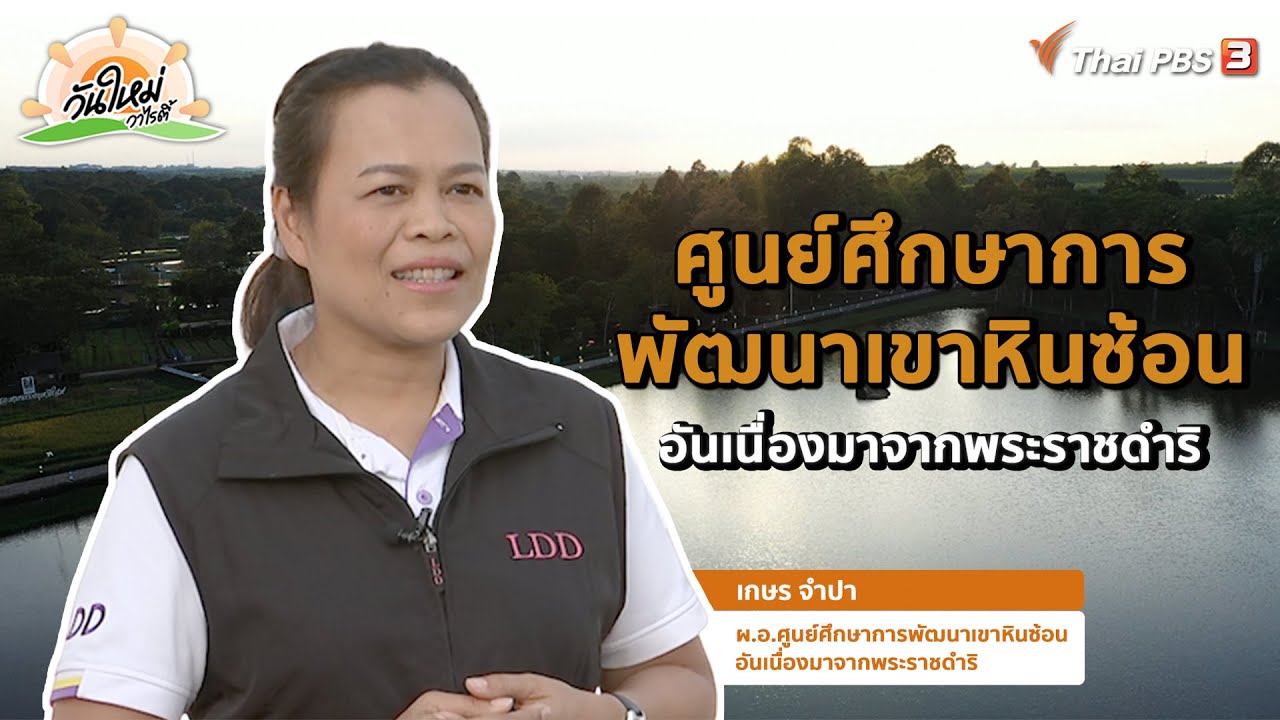
 Click to Access the Navigation Map GPS
Khao Hin Sorn Royal Development Study Center Map
Recommend

 Art, Culture and Heritage
 Historical Sites and Monuments(3)
 Landmarks and Memorials(4)
 Royal Palace(1)
 Art, Craft Centres, Tradition(10)
 Museums(2)
 Historic Homes and Cities(1)
 Educational Places
 Museum for Study(1)
 Library(1)
 Educational Gardens, Farm(2)
 Places of Worship
 Temple(50)
 Mosque(2)
 Other Sacred Sites(7)
Royal Project(4)
Other Sacred Sites(7)
Royal Project(4)
 Suburban Living
 Village, Community(5)
 Local Market(4)
 Floating Market(1)
 Nature and Wildlife
 National Parks and Marine Reserves(2)
 Mountain (Doi)(1)
 Dam, Reservoir, Lake(6)
 Waterfalls(1)
 Caves(1)
 River, Canal(2)
 Bays and Beaches(1)
 Islands(2)
 Other natural attractions(2)
 Entertainment and Agricultural
 Zoos and Aquariums(1)
 Animal camps and shows(1)
 Farms, Parks and Ecotourism(6)
 Spas and Wellness
 Spas and Wellness(1)
 Travel Articles, Recipes
 Travel Review, Food Review(3)


