

 Home
Home Chiang Mai(




Wat Sampathuan Nok
Rating: 2.8/5 (9 votes)
 Search By
  Map
Map 
 Have Map
  No Map
Chachoengsao attractions
Attractions in Thailand
Open Days: Daily
Opening Hours: 08:00 – 17:00
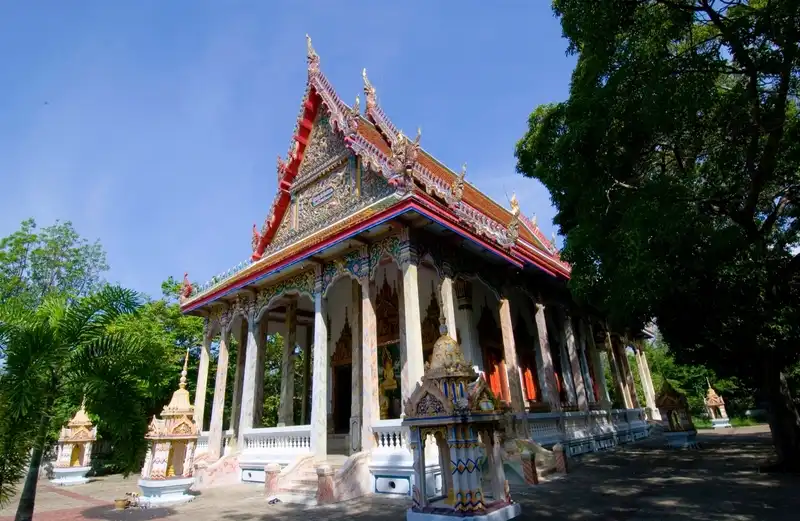
Wat Sampathuan Nok, located on Suphakit Road in Chachoengsao Province, is an old temple dating back to the late Thonburi period. It is closely connected to the legend of “Sam Phra Thuan” (the Three Upstream Buddhas) related to Luang Pho Phutthasothon, and is distinguished by its intricate stucco reliefs depicting the Vessantara Jataka along the eaves of the ordination hall. These artworks reflect both Buddhist moral teachings and the traditional way of life of the people of Paet Riu in the past. The temple is ideal for a historical and spiritual visit, requiring about 1–1.5 hours to explore, and can easily be combined with other attractions in the city.
Wat Sampathuan Nok – A Historical Attraction in Chachoengsao is situated along the Bang Pakong River on Suphakit Road. Originally known as “Wat Suan Prik (Nok),” it was established in the late Thonburi era by Phra Bhikkhu In together with local villagers. The temple later changed its name due to a legend associated with Luang Pho Phutthasothon, whose Buddha image was believed to have floated upstream past the front of the temple. The area was thus called “Sam Phra Thuan” (Three Buddhas Going Upstream), which gradually evolved in pronunciation into “Sampathuan.”
The charm of this temple does not lie in grandeur, but in the “layers of narrative” embedded within a single site. It combines Thonburi-era history, devotion to Luang Pho Phutthasothon, and stucco artistry that conveys Buddhist teachings through scenes from the Vessantara Jataka. Upon entering the temple grounds, visitors immediately sense a deeper calm compared to more commercialized temples, as the atmosphere remains that of a genuine riverside community temple.
The most significant feature, highly regarded by art historians, is the stucco relief along the eaves of the ordination hall, depicting key episodes of the Vessantara Jataka in sequence. This series was created during the tenure of Phra Phutthirangsi Muniwong (Hor Phromchoto) as abbot. It stands as important artistic evidence reflecting the local approach to communicating Buddhist teachings through visual storytelling.
The Vessantara Jataka, the final tale of the Ten Great Birth Stories (Tosachati), narrates the Bodhisattva’s ultimate perfection of generosity. The stucco panels at Wat Sampathuan Nok are not merely decorative illustrations; they are arranged systematically from the Dana Kanda and Thotsaphon episodes through to the Mahaphon forest scenes and the chapters involving Prince Jali and Princess Kanhā. Some scenes also portray the local lifestyle of Paet Riu residents, including clothing styles, agricultural activities, and riverside living, seamlessly integrating the Jataka narrative with the local cultural context.
Artistic analysis reveals that the relief style reflects a semi-folk aesthetic blended with early Rattanakosin influences. The lines are less focused on royal court realism and instead emphasize narrative clarity and emotional expression of the characters. This approach allows viewers to easily grasp the story while preserving the distinctive charm of local craftsmanship.
On the opposite side of the ordination hall, scenes portray the traditional way of life of Chachoengsao residents, including villagers rowing boats along the Bang Pakong River, rice farming, and everyday agricultural activities. These depictions hold anthropological value, offering insight into the social structure and community life of the region during the period of the temple’s restoration.
At the front of the temple stands an elegant shrine hall, and from the riverside pier visitors can see the Bang Pakong Barrage. This landscape feature enhances the temple’s unique identity. Standing by the river in the early morning or late afternoon provides a serene atmosphere, adding a contemplative dimension to the temple visit.
Getting There Visitors can search for “Wat Sampathuan Nok” on Suphakit Road, Mueang District, Chachoengsao. From Bangkok, the journey takes approximately 1–1.5 hours by car. Driving is the most convenient option and allows easy continuation to Wat Sothon Wararam Worawihan, Talat Ban Mai 100 Years Market, or Wat Chin Prachasamoson within the same day.
| Name | Wat Sampathuan Nok |
| Location | Suphakit Road, Na Mueang Subdistrict, Mueang Chachoengsao District, Chachoengsao Province |
| Overview | Late Thonburi-era temple known for the Sam Phra Thuan legend and remarkable stucco reliefs of the Vessantara Jataka |
| Highlights | Vessantara Jataka stucco art, traditional Paet Riu lifestyle scenes, elegant shrine hall, Bang Pakong riverside view |
| Current Abbot | Phra Khru Kosol Thamwiboon |
| Contact Number | 038-514-879 |
| Nearby Attractions | 1) Wat Sothon Wararam Worawihan – 3 km 2) Talat Ban Mai 100 Years Market – 2 km 3) Wat Chin Prachasamoson – 2 km 4) Chachoengsao City Pillar Shrine – 3 km 5) Somdet Phra Srinagarindra Park – 4 km |
| Nearby Restaurants | 1) Sun Up Cafe – 2 km – 083-782-6656 2) Kung Nang Restaurant – 2 km – 038-513-414 3) The River Barn – 2 km – 038-515-892 4) Kin Lom Chom Pla – 4 km – 085-328-6666 5) Saey Tha Yai – 2 km – 081-586-1919 |
| Nearby Accommodations | 1) JK Living Hotel – 3 km – 092-742-9929 2) Tree House Chachoengsao – 3 km – 098-253-7460 3) Yenjit Resort – 4 km – 038-511-200 4) Suntara Wellness Resort – 9 km – 038-823-317 5) December to Remember House – 15 km – 094-491-7791 |
Frequently Asked Questions (FAQ)
Q: When was Wat Sampathuan Nok established?
A: It was established in the late Thonburi period by Phra Bhikkhu In and local villagers.
Q: What is the temple’s most significant feature?
A: The stucco reliefs of the Vessantara Jataka along the ordination hall eaves, which are both artistically and historically valuable.
Q: What does the “Sam Phra Thuan” legend refer to?
A: It refers to the legend of Luang Pho Phutthasothon floating upstream past the temple, which inspired the temple’s name.
Q: How long should visitors spend at the temple?
A: Approximately 1–1.5 hours for sightseeing and worship.
Q: Is photography allowed?
A: Yes, but visitors should respect temple rules and avoid disturbing others.
Q: Is the temple located near the Bang Pakong River?
A: Yes, the riverside area in front of the temple offers a clear view of the Bang Pakong Barrage.
 Wat Sampathuan Nok Map
 Category:
  Group:
  Tag: ●Wat Sampathuan Nok●wat sampathuan nok ●wat suan prik nok ●chachoengsao old temple ●three buddhas upstream legend ●vessaantara jataka stucco art ●temple by bang pakong river ●historical temple chachoengsao ●buddhist temple thailand ●cultural attraction chachoengsao ●riverside temple thailand Last Update: 1 WeekAgo
Comment
 Nearby Attractions
| Keyword (Advance) |
 Facebook Fanpage
 Region
 Art, Culture and Heritage
 Historical Sites and Monuments(
 Landmarks and Memorials(
 Royal Palace(
 Art, Craft Centres, Tradition(
 Museums(
 Historical Houses and The Ancient City(
 Educational Places
 Museum for Study(
 Library(
 Educational Gardens, Farm(
 University
 Mosque(
 Other religious and spiritural sites(
 Research and Development
 Royal Project(
 Suburban Living
 Village, Community(
 Local Market(
 Floating Market(
 Nature and Wildlife
 National Parks and Marine Reserves(
 Mountain (Doi)(
 Dam, Reservoir, Lake(
 Waterfalls(
 Caves(
 River, Canal(
 Bays and Beaches(
 Islands(
 Other natural attractions(
 Entertainment and Agricultural
 Zoos and Aquariums(
 Animal camps and shows(
 Farm, Parks, Gardens and Ecotourism(
 Spas and Wellness
 Spas and Wellness(
 Travel Articles, Recipes
 Travel Review, Food Review(
 Copyright 2012,