
lovethailand home >Northeastern Travel Attractions >Si Sa Ket Travel Attractions >Uthum Phon Phisai >Sa Kam Phaeng Yai > Prasat Wat Sa Kamphaeng Yai
TL;DR: Prasat Wat Sa Kamphaeng Yai is located at Wat Sa Kamphaeng Yai, Ban Kamphaeng Yai, Sa Kamphaeng Yai Subdistrict, Uthumphon Phisai District, Si Sa Ket Province, open Daily, hours 08.30 – 16.30.
Prasat Wat Sa Kamphaeng Yai
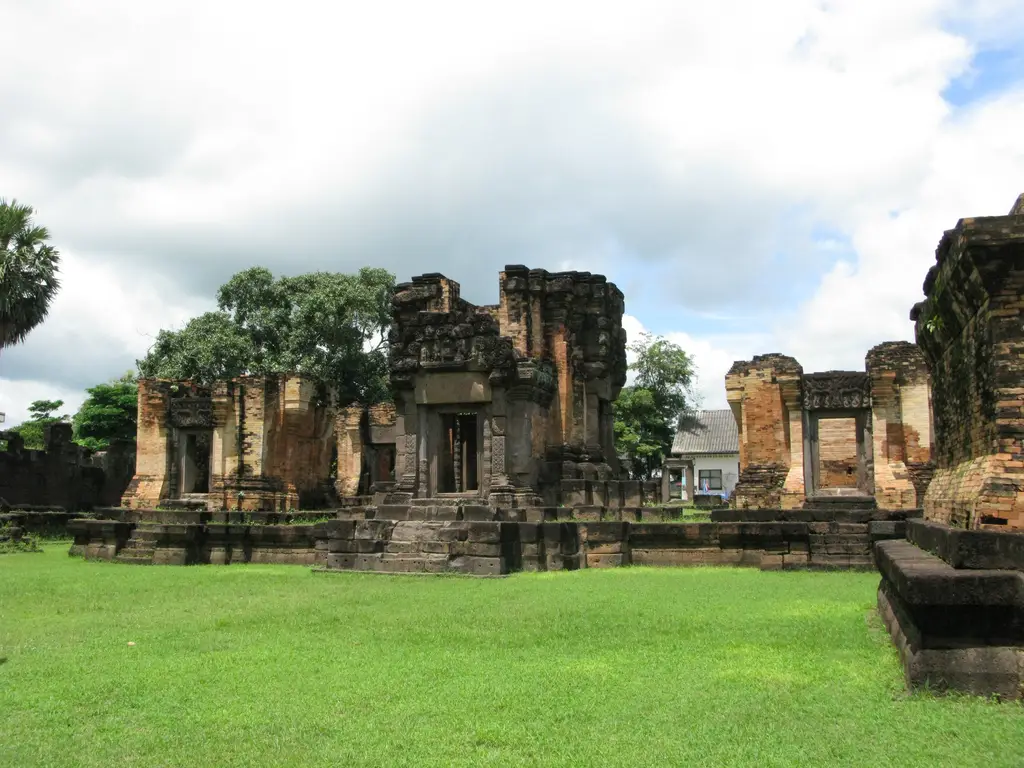
Open Days: Daily
Opening Hours: 08.30 – 16.30
Prasat Wat Sa Kamphaeng Yai in Si Sa Ket Province is one of the largest and most complete ancient Khmer sanctuaries in the province. It is located within Wat Sa Kamphaeng Yai at Ban Kamphaeng Yai, Sa Kamphaeng Yai Subdistrict, Uthumphon Phisai District. The monument is also known as Prasat Sa Kamphaeng Yai and historically as Prasat Sri Phrutthesuan. Its most distinctive feature is a group of 3 sanctuary towers standing on a shared base, arranged along a north-south axis and facing east. The central sanctuary is built mainly of sandstone with some brick additions, while the 2 flanking towers are brick sanctuaries decorated with sandstone lintels, pediments, and door frames. In front of the towers stand 2 brick vihara buildings, and the entire sacred precinct is enclosed by a gallery made of laterite and sandstone, with gopuras or gateway structures on all 4 sides.
Prasat Wat Sa Kamphaeng Yai is significant because it preserves several layers of history, religion, architecture, and local devotion in one site. Artistic evidence from its pediments, lintels, and archaeological objects indicates that the sanctuary was built around the 16th Buddhist century in the Baphuon style of Khmer art. It was originally a Hindu sanctuary dedicated to Shiva. Later, around the 18th Buddhist century, the site was transformed into a Mahayana Buddhist temple. Today, it stands within an active Thai Buddhist temple, making it a rare place where ancient Khmer sacred architecture, Buddhist worship, local community life, and modern pilgrimage coexist in the same landscape.
The name Sa Kamphaeng Yai reflects the physical character of the site, especially the large enclosure and the surrounding sacred landscape. The historical name Prasat Sri Phrutthesuan is connected with inscriptional evidence and the sanctuary’s original religious identity. These names reveal that the monument was not simply a local ruin, but an important sacred center with formal religious, social, and economic functions in the ancient Khmer world. Visitors who understand the names of the site can better appreciate how architecture, inscription, and community memory are linked.
The sanctuary is located inside Wat Sa Kamphaeng Yai, a living Buddhist temple. This gives the site a special atmosphere. Visitors can see ancient Khmer architecture, a working temple, local worship, and memorial spaces related to Luang Pu Khrueang Suphatto, the highly respected former abbot of Wat Sa Kamphaeng Yai. The site therefore appeals to several types of visitors: history lovers, archaeology students, art enthusiasts, pilgrims, photographers, and travelers who want to understand the cultural depth of Si Sa Ket beyond ordinary sightseeing.
The architectural plan is one of the most important reasons to visit. The 3 main towers stand on a shared base and face east, following the sacred orientation commonly found in Khmer religious architecture. The east is associated with sunrise, light, renewal, and ritual entrance. For this reason, visitors should begin their walk from the eastern side. Approaching the sanctuary from the east helps reveal the original ritual axis and the way the ancient builders organized sacred space.
The central tower is the dominant element of the complex. Built primarily of sandstone with some brickwork, it stands as the core of the sanctuary. Sandstone was used for important structural and decorative elements because it could be carved with detailed iconographic scenes. The flanking towers, built mainly of brick, contain sandstone decorative parts such as lintels and door frames. This combination of sandstone, brick, and laterite shows the technical sophistication of Khmer construction in Lower Northeastern Thailand.
The lintel of the central sanctuary depicts Indra riding the elephant Airavata above a kala face. This image is highly meaningful. In Hindu belief, Indra is associated with the eastern direction, rain, the sky, and royal power. Since the sanctuary faces east, the depiction of Indra reinforces the symbolic orientation of the entire monument. The kala face below the deity is also a protective motif commonly found in Khmer art, representing power, guardianship, and the swallowing of negative forces at the threshold of sacred space.
The northern brick vihara contains a lintel depicting Vishnu reclining on the serpent Ananta in the cosmic ocean. This is one of the great cosmological scenes of Hindu art. Vishnu rests upon the serpent while the universe awaits renewal. The scene expresses preservation, cosmic order, and the beginning of creation. Its presence at Prasat Wat Sa Kamphaeng Yai adds strong Vaishnavite symbolism to a site otherwise closely associated with Shiva, showing that several strands of Hindu belief were represented in the sanctuary’s artistic program.
The southern brick vihara contains a lintel showing Shiva and Uma seated on the bull Nandi, known as the Uma-Maheshvara theme. This image is central to Shaivite belief. Shiva, Uma, and Nandi together express divine power, sacred union, protection, and the presence of Shiva as the principal deity of the sanctuary. This lintel supports the interpretation that Prasat Wat Sa Kamphaeng Yai was originally a Hindu shrine dedicated to Shiva.
Other important carved elements associated with the site include Shiva Nataraja, Krishna lifting Mount Govardhana, scenes from the Ramayana, and Hanuman presenting the ring to Sita. These motifs turn the sanctuary into a visual archive of Khmer religious storytelling. For travelers interested in Khmer iconography, Prasat Wat Sa Kamphaeng Yai offers one of the richest collections of mythological imagery in Si Sa Ket Province.
The site also yielded many important archaeological objects during excavation and conservation by the Fine Arts Department. These include lintels, Buddha images, clay votive tablets, Khmer ceramics, and a large bronze standing figure. Such finds show that the sanctuary was not an isolated structure. It was an important religious center with ritual objects, artistic production, and long-term use. Some important objects from the site are now preserved in museums, while others remain connected with the temple’s living religious environment.
The bronze standing figure discovered at Prasat Sa Kamphaeng Yai is especially significant. Its size, quality, and technique place it among important Khmer-period bronze sculptures associated with Thailand. The discovery indicates that the sanctuary had high religious status and access to skilled artisans and valuable ritual objects. This makes Prasat Wat Sa Kamphaeng Yai important not only for architecture but also for the study of Khmer sculpture and ritual art.
The Wat Sa Kamphaeng Yai inscription is another key piece of evidence. Found at the gateway of the religious enclosure, the inscription dates to the 16th Buddhist century and belongs to the Khmer Angkorian period. It records donations of land, property, and temple servants to the sanctuary. Inscriptions are especially valuable because they provide direct historical evidence. They help modern visitors understand that this site once had an organized religious economy, a community of supporters, and institutional functions beyond the stone buildings that remain today.
The inscription also helps explain the historical name Prasat Sri Phrutthesuan. It reveals that the sanctuary was a structured religious institution, supported by people who dedicated resources to maintain sacred worship. When visitors see the towers and gallery today, they are looking at the architectural remains of a much larger system of belief, donation, service, and community life.
The site plan is more complex than a simple 3-tower shrine. Behind the southern tower is another brick sanctuary. In front of the main towers are 2 brick vihara buildings. Surrounding the complex is a gallery built with laterite and sandstone, and gopuras are positioned on all 4 sides. These elements show that the site was carefully planned as a sacred precinct. The gallery marks the boundary between ordinary space and sacred space, while the gopuras create formal ceremonial entrances.
The eastern gopura is the best starting point for a visit. Passing through it allows visitors to experience the sanctuary as it was intended: from the outside world into an enclosed sacred zone. The view through the gateway toward the central tower creates a layered visual sequence that expresses the Khmer concept of sacred space. The central sanctuary functions as the symbolic center, while the enclosing gallery and gateways organize movement around it.
Prasat Wat Sa Kamphaeng Yai also preserves evidence of religious transformation. Originally a Hindu sanctuary, it later became associated with Mahayana Buddhist worship. The discovery of Buddha images, clay votive tablets, and a sandstone seated Buddha under a naga canopy shows that the site was reused and reinterpreted in a Buddhist context. This transition is a key feature of many Khmer religious landscapes in Thailand, where sacred places continued to be meaningful even after religious practice changed.
The naga-protected Buddha image at Wat Sa Kamphaeng Yai is an important object of both art history and devotion. It represents the Buddha seated in meditation under the protection of the naga Mucalinda. In the context of this sanctuary, it also symbolizes the transformation of the site from Hindu worship to Buddhist meaning. For many visitors today, the Buddha image and the memorial spaces connected with Luang Pu Khrueang make the temple a living place of faith as well as an archaeological site.
Luang Pu Khrueang Suphatto, the former abbot of Wat Sa Kamphaeng Yai, is deeply respected in Si Sa Ket and across the Lower Northeast. He played an important role in developing the temple and supporting Buddhist education and local faith. Visitors often come not only to see the ancient Khmer sanctuary but also to pay respect to Luang Pu Khrueang. This combination of ancient heritage and modern Buddhist devotion gives the site a strong emotional and cultural presence.
A good walking route begins at the eastern entrance. From there, visitors should view the gopura, the enclosing gallery, and the alignment of the 3 sanctuary towers. After observing the overall layout, continue toward the central tower and study the Indra on Airavata lintel. Then walk to the northern vihara to view the Vishnu reclining scene, and to the southern vihara to examine the Shiva and Uma lintel. After that, walk around the gallery and visit the Buddhist and Luang Pu Khrueang memorial areas within the temple.
The main zones of interest include the eastern entrance, the 4 gopuras, the laterite and sandstone gallery, the central sandstone sanctuary, the northern and southern brick towers, the additional brick tower behind the southern tower, the 2 brick vihara buildings, the important lintel and pediment areas, the naga-protected Buddha image area, the Luang Pu Khrueang memorial zone, and the active temple grounds. This variety makes the site worth more than a quick stop.
For travelers interested in Khmer art, the Baphuon style is the key artistic framework. The site’s lintels and pediments show strong symmetry, detailed ornament, divine figures, kala motifs, garlands, and mythological scenes. These carvings allow visitors to read ancient religious stories through stone. Prasat Wat Sa Kamphaeng Yai is one of the best sites in Si Sa Ket for studying Khmer lintels in their architectural setting.
For travelers interested in Buddhist history, the site’s later transformation into a Mahayana Buddhist place is equally important. The Buddhist objects found at the site show that sacred spaces could be reused and reinterpreted across centuries. Rather than being abandoned when religious traditions changed, the sanctuary remained meaningful and became part of a new devotional landscape. This continuity is one of the most fascinating aspects of the site.
For photography, the site offers many strong angles. The eastern gopura can frame the central tower beautifully. The front view of the 3 towers shows the north-south alignment. Side views reveal the brickwork and sandstone details. The gallery provides textured laterite lines, while the lintels offer close-up compositions of Khmer carving. Morning and late afternoon light are especially suitable because they bring out the surface texture of brick, sandstone, and laterite.
Photography should be done respectfully. The site is both a national ancient monument and an active temple. Visitors should not climb on ancient structures, move stones, touch carved details unnecessarily, or use the sacred space in a disrespectful way. Proper dress and calm behavior are expected because monks, local worshippers, and pilgrims use the temple grounds.
Prasat Wat Sa Kamphaeng Yai is easy to reach. From Si Sa Ket city, take Highway 226 for about 26 km. From Uthumphon Phisai town, take Highway 2083 toward Surin for about 2 km and turn into Wat Sa Kamphaeng Yai. The site is also near Uthumphon Phisai Railway Station, making it accessible for travelers who use rail transport and then continue by local vehicle.
Getting There by private car or rental car is the most convenient option, especially for visitors planning a full cultural route. A trip can combine Prasat Wat Sa Kamphaeng Noi, Prasat Wat Sa Kamphaeng Yai, Si Sa Ket Aquarium, Si Sa Ket City Pillar Shrine, Wat Maha Phuttharam, and Wat Phra That Rueang Rong. Travelers using the train can get off at Uthumphon Phisai and continue to the temple by local transport.
The best time to visit is in the morning or late afternoon. Softer sunlight helps reveal the texture of the stone carvings, brick walls, and laterite gallery. Midday visits are possible, but visitors should prepare for heat by bringing water, a hat, and comfortable shoes. Some areas may have uneven ground, so careful walking is recommended.
A general visit should take at least 1–1.30 hours. Travelers who want to study the lintels, inscriptional context, gallery, gopuras, Buddhist images, and Luang Pu Khrueang memorial area should allow around 2 hours. The monument contains many details, and its value is best appreciated through slow observation rather than a quick photo stop.
The temple provides parking and walking space around the archaeological area. Visitors can also pay respect to Buddha images and Luang Pu Khrueang within the temple. Since the site is inside an active monastery, proper dress and respectful behavior are important. This is both a tourist destination and a sacred place for the local community.
Prasat Wat Sa Kamphaeng Yai pairs well with Prasat Wat Sa Kamphaeng Noi. The 2 sites are in the same district but have different identities. Sa Kamphaeng Yai is a large Hindu sanctuary with rich lintel art and a complex sacred precinct. Sa Kamphaeng Noi is closely associated with the arokayasala, or hospital chapel, tradition of King Jayavarman VII. Visiting both sites gives a wider understanding of Khmer architecture in Si Sa Ket.
Travelers can also connect the site with attractions in Si Sa Ket city. A practical one-day route can include the Si Sa Ket Aquarium, City Pillar Shrine, Wat Maha Phuttharam, Prasat Wat Sa Kamphaeng Noi, and Prasat Wat Sa Kamphaeng Yai. This route combines local culture, Buddhist faith, archaeology, and easy road access.
As an educational site, Prasat Wat Sa Kamphaeng Yai is highly valuable. It demonstrates Khmer temple planning, Baphuon-style art, Hindu iconography, inscriptions, bronze sculpture, Buddhist transformation, and the conservation of ancient monuments within a living temple. Students and cultural travelers can learn from the real site how religious spaces change across time while remaining meaningful to communities.
In the broader context of Si Sa Ket Province, Prasat Wat Sa Kamphaeng Yai is a central point in the Khmer heritage network. The province contains many ancient Khmer sites, including Prasat Wat Sa Kamphaeng Noi, Prasat Ta Leng, Prasat Prang Ku, Prasat Ban Samo, and Prasat Tamnak Sai. Among these, Sa Kamphaeng Yai stands out for its size, completeness, architectural complexity, and rich collection of carved lintels.
At the community level, Wat Sa Kamphaeng Yai remains an active religious and cultural space. Local people come to worship, make merit, participate in temple activities, and honor Luang Pu Khrueang. The ancient sanctuary is therefore not separated from daily life. It continues to serve as a cultural anchor for the community and as an important identity marker for Uthumphon Phisai District.
For travelers interested in Luang Pu Khrueang Suphatto, the temple offers an additional layer of meaning. His memory continues to attract devotees, and his role as a former abbot and temple developer remains central to the modern identity of Wat Sa Kamphaeng Yai. This makes the visit meaningful not only for archaeology but also for understanding local Buddhist faith in Si Sa Ket.
For travelers interested in Khmer iconography, this sanctuary is one of the most rewarding sites in the province. Indra on Airavata, Vishnu reclining on Ananta, Shiva and Uma on Nandi, Shiva Nataraja, Krishna lifting Mount Govardhana, and Ramayana scenes all appear in the artistic tradition associated with the site. These carved narratives allow visitors to understand how Khmer artisans expressed religion, literature, cosmology, and royal ideology through stone.
The value of Prasat Wat Sa Kamphaeng Yai lies in its completeness. It contains towers, vihara buildings, gallery, gateways, lintels, inscriptional evidence, excavated artifacts, Buddhist images, and an active temple setting. In one place, visitors can trace the history of Hindu worship in the 16th Buddhist century, Mahayana Buddhist transformation in the 18th Buddhist century, and modern Thai Buddhist devotion. This continuity makes the site one of the most important cultural destinations in Si Sa Ket.
Visiting Prasat Wat Sa Kamphaeng Yai is therefore not simply a stop at an ancient ruin. It is a journey through the layered sacred history of Lower Northeastern Thailand. The monument preserves Khmer art, Hindu mythology, Buddhist transformation, local devotion, and living community memory. For foreign travelers seeking a deeper understanding of Si Sa Ket’s Khmer heritage, this is one of the most essential sites to include in a cultural itinerary.
| Name | Prasat Wat Sa Kamphaeng Yai, also known as Prasat Sa Kamphaeng Yai / Prasat Sri Phrutthesuan |
| Location | Wat Sa Kamphaeng Yai, Ban Kamphaeng Yai, Sa Kamphaeng Yai Subdistrict, Uthumphon Phisai District, Si Sa Ket Province |
| Address | 138 Sa Kamphaeng Yai Subdistrict, Uthumphon Phisai District, Si Sa Ket 33120, Thailand |
| Coordinates | 15.091944, 104.328528 |
| Highlights | One of the largest and most complete Khmer sanctuaries in Si Sa Ket, 3 sanctuary towers on one base, Indra on Airavata lintel, Vishnu reclining lintel, Shiva and Uma lintel, enclosing gallery, 4 gopuras, naga-protected Buddha image, and Luang Pu Khrueang Suphatto memorial area |
| History | Built around the 16th Buddhist century in the Baphuon style as a Hindu sanctuary dedicated to Shiva; later transformed around the 18th Buddhist century into a Mahayana Buddhist temple and now located inside an active Thai Buddhist temple |
| Name Origin | The name Sa Kamphaeng Yai relates to the temple, enclosure, pond, and local landscape, while Prasat Sri Phrutthesuan is connected with inscriptional evidence and the sanctuary’s historical religious identity |
| Distinctive Features | Three east-facing towers on one base, central sandstone sanctuary with brick additions, brick flanking towers with sandstone details, 2 brick vihara buildings, laterite and sandstone gallery, and gopuras on all 4 sides |
| Key Evidence | Wat Sa Kamphaeng Yai inscription, Indra on Airavata lintel, Vishnu reclining on Ananta lintel, Shiva and Uma on Nandi lintel, Shiva Nataraja, Krishna lifting Mount Govardhana, Ramayana scenes, bronze sculpture, naga-protected Buddha image, seated Buddha images, clay votive tablets, and Khmer ceramics |
| Travel Information | From Si Sa Ket city, take Highway 226 for about 26 km. From Uthumphon Phisai town, take Highway 2083 toward Surin for about 2 km and turn into Wat Sa Kamphaeng Yai. |
| Current Status | Open to visitors as an archaeological site inside Wat Sa Kamphaeng Yai and as a major Khmer heritage learning destination in Si Sa Ket Province |
| Open Days | Daily |
| Opening Hours | 08.30 – 16.30 |
| Fees | Free Admission |
| Facilities | Parking inside the temple area, walking area around the archaeological site, Buddhist worship areas, Luang Pu Khrueang Suphatto memorial area, shaded temple surroundings, and convenient road access near Uthumphon Phisai District |
| Main Areas / Zones | 1. Eastern entrance area 2. Four gopuras or gateways 3. Laterite and sandstone gallery 4. Central sandstone sanctuary 5. Northern and southern brick towers 6. Additional brick tower behind the southern tower 7. Two brick vihara buildings 8. Lintel and pediment zones 9. Naga-protected Buddha image and ancient Buddha image area 10. Luang Pu Khrueang Suphatto memorial area and active temple grounds |
| Abbot / Caretaker | Wat Sa Kamphaeng Yai and the abbot of Wat Sa Kamphaeng Yai care for the temple area together with the local community. The ancient monument is under the Fine Arts Department through the 10th Regional Office of Fine Arts, Nakhon Ratchasima. |
| Local Contact | Wat Sa Kamphaeng Yai, Tel. 045-691-723 Abbot of Wat Sa Kamphaeng Yai, Tel. 096-879-9362 10th Regional Office of Fine Arts, Nakhon Ratchasima, Tel. 044-471518, 044-481024 |
| Official Website / Official Page | Sa Kamphaeng Yai Subdistrict Municipality: sakampangyai.go.th 10th Regional Office of Fine Arts, Nakhon Ratchasima: finearts.go.th/fad10 |
| Nearby Tourist Attractions | 1. Uthumphon Phisai District City Pillar Shrine, about 2 km 2. Uthumphon Phisai Railway Station, about 3 km 3. Prasat Wat Sa Kamphaeng Noi, about 20 km 4. Si Sa Ket Aquarium, about 28 km 5. Si Sa Ket City Pillar Shrine, about 28 km 6. Wat Maha Phuttharam / Luang Pho To, about 29 km 7. Wat Phra That Rueang Rong, about 31 km |
| Nearby Restaurants | 1. Duang Dee Restaurant, about 4 km, Tel. 045-691-399 2. Coffee House Ban Kafe, about 5 km, Tel. 095-621-4246 3. Jungle Cafe Uthumphon Phisai Branch, about 5 km, Tel. 063-751-1771 4. PunThai Coffee Uthumphon Phisai, about 3 km, Tel. 092-275-2811 5. Ban Kafe Tho Fan, about 6 km, Tel. 081-965-0590 |
| Nearby Accommodations | 1. Onanong Resort, Uthumphon Phisai District, about 8 km, Tel. 089-012-7059 2. U-Siket Resort, Mueang Si Sa Ket District, about 26 km, Tel. 045-814-767 3. Kaewkwan Resort, Mueang Si Sa Ket District, about 27 km, Tel. 086-450-1859 4. Tree House Hotel Si Sa Ket, about 28 km, Tel. 045-611-563, 080-477-7854 5. First Garden Home Resort, about 29 km, Tel. 081-876-5145 |
Frequently Asked Questions (FAQ)
Q: Where is Prasat Wat Sa Kamphaeng Yai located?
A: Prasat Wat Sa Kamphaeng Yai is located inside Wat Sa Kamphaeng Yai at Ban Kamphaeng Yai, Sa Kamphaeng Yai Subdistrict, Uthumphon Phisai District, Si Sa Ket Province. It is about 26 km from Si Sa Ket city and about 2 km from Uthumphon Phisai town.
Q: What are the opening hours of Prasat Wat Sa Kamphaeng Yai?
A: The site is open daily from 08.30 to 16.30. Morning and late afternoon are the best times for walking, photography, and viewing the brick, sandstone, and laterite details.
Q: Is there an admission fee for Prasat Wat Sa Kamphaeng Yai?
A: No. Admission is free. Visitors should dress respectfully, behave calmly within the temple grounds, and avoid climbing on or touching ancient structures unnecessarily.
Q: Why is Prasat Wat Sa Kamphaeng Yai important?
A: It is one of the largest and most complete Khmer sanctuaries in Si Sa Ket Province. Built around the 16th Buddhist century in the Baphuon style, it was originally a Hindu sanctuary dedicated to Shiva and later became associated with Mahayana Buddhism.
Q: What should visitors not miss at Prasat Wat Sa Kamphaeng Yai?
A: Key highlights include the 3 sanctuary towers on one base, Indra on Airavata lintel, Vishnu reclining lintel, Shiva and Uma lintel, enclosing gallery, 4 gopuras, naga-protected Buddha image, and Luang Pu Khrueang Suphatto memorial area.
Q: How can travelers get to Prasat Wat Sa Kamphaeng Yai?
A: From Si Sa Ket city, take Highway 226 for about 26 km. From Uthumphon Phisai town, take Highway 2083 toward Surin for about 2 km and turn into Wat Sa Kamphaeng Yai.
Q: How long should travelers spend at Prasat Wat Sa Kamphaeng Yai?
A: A general visit should take around 1–1.30 hours. Travelers who want to study the lintels, inscriptional context, gallery, gopuras, Buddhist images, and Luang Pu Khrueang memorial area should allow around 2 hours.
Q: What nearby places can be visited with Prasat Wat Sa Kamphaeng Yai?
A: Nearby places include Prasat Wat Sa Kamphaeng Noi, Uthumphon Phisai District City Pillar Shrine, Si Sa Ket Aquarium, Si Sa Ket City Pillar Shrine, Wat Maha Phuttharam, and Wat Phra That Rueang Rong.
 Category: ●Art, Culture and Heritage
 Group: ●Historical Sites and Monuments
Last Update : 2 MonthAgo
 Last Update : 2 MonthAgo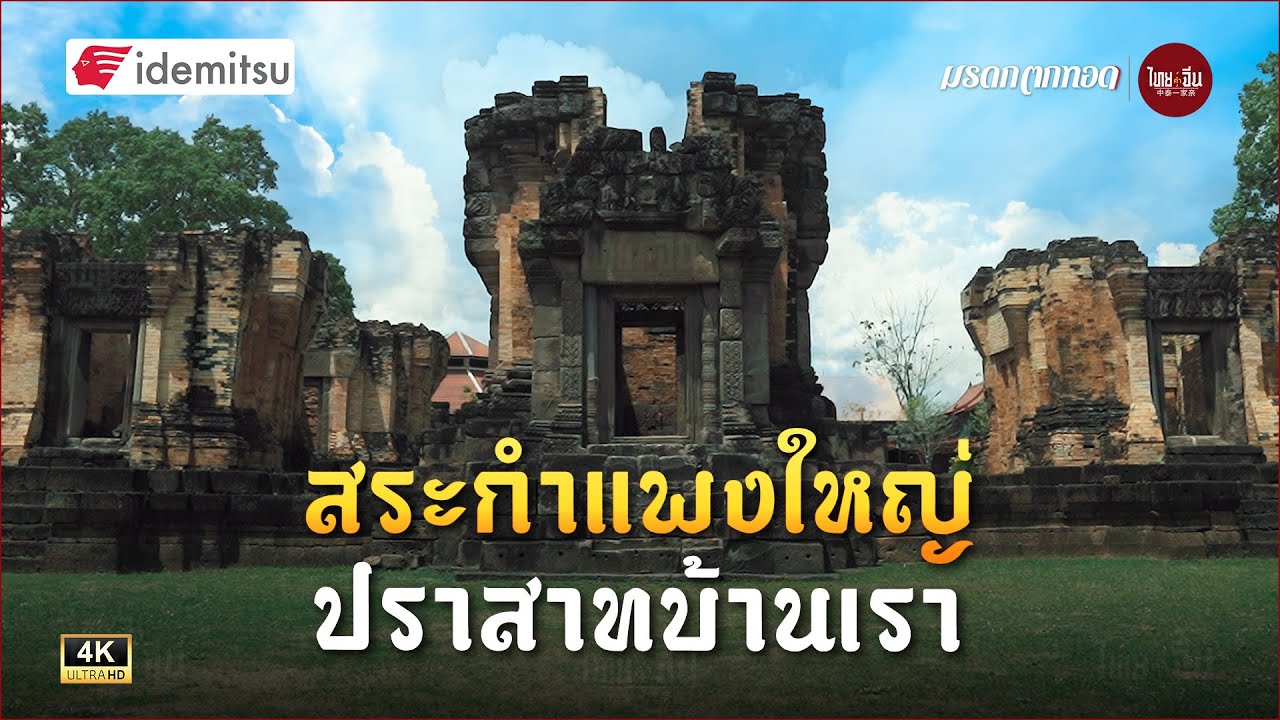
 Click to Access the Navigation Map GPS
Prasat Wat Sa Kamphaeng Yai Map
 Historical Sites and Monuments(12)
 Landmarks and Memorials(1)
 Art, Craft Centres, Tradition(8)
 Places of Worship
 Temple(13)
 Other Sacred Sites(3)
 Suburban Living
 Village, Community(2)
 Nature and Wildlife
 National Parks and Marine Reserves(2)
 Dam, Reservoir, Lake(7)
 Waterfalls(5)
 River, Canal(5)
 Bays and Beaches(2)
 Entertainment and Agricultural
 Zoos and Aquariums(1)
 Farms, Parks and Ecotourism(3)


