
lovethailand home >Northeastern Travel Attractions >Kalasin Travel Attractions >Sahasakan >Non Buri > Phu Kum Khao Dinosaur Excavation Site
TL;DR: Phu Kum Khao Dinosaur Excavation Site, Kalasin attractions : Art, Culture and Heritage, Historical Sites and Monuments.
Phu Kum Khao Dinosaur Excavation Site
Open Days: Tuesday - Sunday (Closed Every Monday, Except Public Holidays)
Opening Hours: 09.30 - 16.30
Phu Kum Khao Dinosaur Excavation Site, together with Sirindhorn Museum in Kalasin Province, is one of Thailand’s most important dinosaur fossil destinations. Located at the foot of Phu Kum Khao within the area of Wat Sakkawan in Non Buri Subdistrict, Sahatsakhan District, this site preserves the story of Thailand’s prehistoric past through real excavation evidence, fossilized dinosaur bones, scientific exhibitions, and a learning route that explains the evolution of life from the origin of the Earth to the age of dinosaurs and human history.
The site is especially significant because a large number of herbivorous dinosaur bones were found in the Sao Khua Formation, dating back around 130 million years to the Early Cretaceous period. More than 700 fossil bone pieces were discovered, and they are believed to represent parts of about 7 individual dinosaurs. For visitors, this is not simply a place to see dinosaur models. It is a rare opportunity to experience an actual fossil excavation context in Thailand and to understand how scientists study ancient life from bones, rock layers, sediments, and geological evidence.
Phu Kum Khao is located about 25-28 kilometers from Kalasin city along Highway 227, the Kalasin-Sahatsakhan route. The site lies roughly 2 kilometers before reaching Sahatsakhan town. Travelers can follow signs to Sirindhorn Museum, Phu Kum Khao, and Wat Sakkawan. The road is convenient for private cars and rental vehicles, and the destination can easily be included in a full-day trip around Sahatsakhan, together with Wat Sakkawan, Phu Sing Buddhist Site, Thepsuda Bridge, Wat Phuttha Nimit Phu Khao, Dino Road, and Lam Pao Dam.
The discovery story began in 1970, when Phra Khru Vijitsahassakhun, the abbot of Wat Sakkawan at that time, found a large bone within the temple grounds. At first, it was not yet known that the bone was a dinosaur fossil, so it was kept at the temple. In 1978, geologists from the Department of Mineral Resources visited the area for geological survey work and examined the bone. They identified it as a fossilized dinosaur bone, marking an important turning point for Phu Kum Khao as a site of scientific interest.
In 1980, a Thai-French geological survey team studied three bone fragments from the site and found that they belonged to the forelimb of a sauropod dinosaur. Sauropods were large, long-necked herbivorous dinosaurs with massive bodies, long tails, and plant-eating habits. The discovery helped reveal that northeastern Thailand, especially the Khorat Plateau, once supported ancient ecosystems where large prehistoric animals lived millions of years ago.
Systematic excavation and conservation work began in 1994, when the Department of Mineral Resources conducted more detailed study and fossil preservation at Phu Kum Khao. The excavation revealed a large concentration of dinosaur bones in the Sao Khua Formation. This geological layer has become one of the key reasons why Phu Kum Khao is widely recognized as one of Thailand’s most complete herbivorous dinosaur fossil sites. The evidence found here helps scientists study dinosaur anatomy, ancient environments, and the geological history of northeastern Thailand.
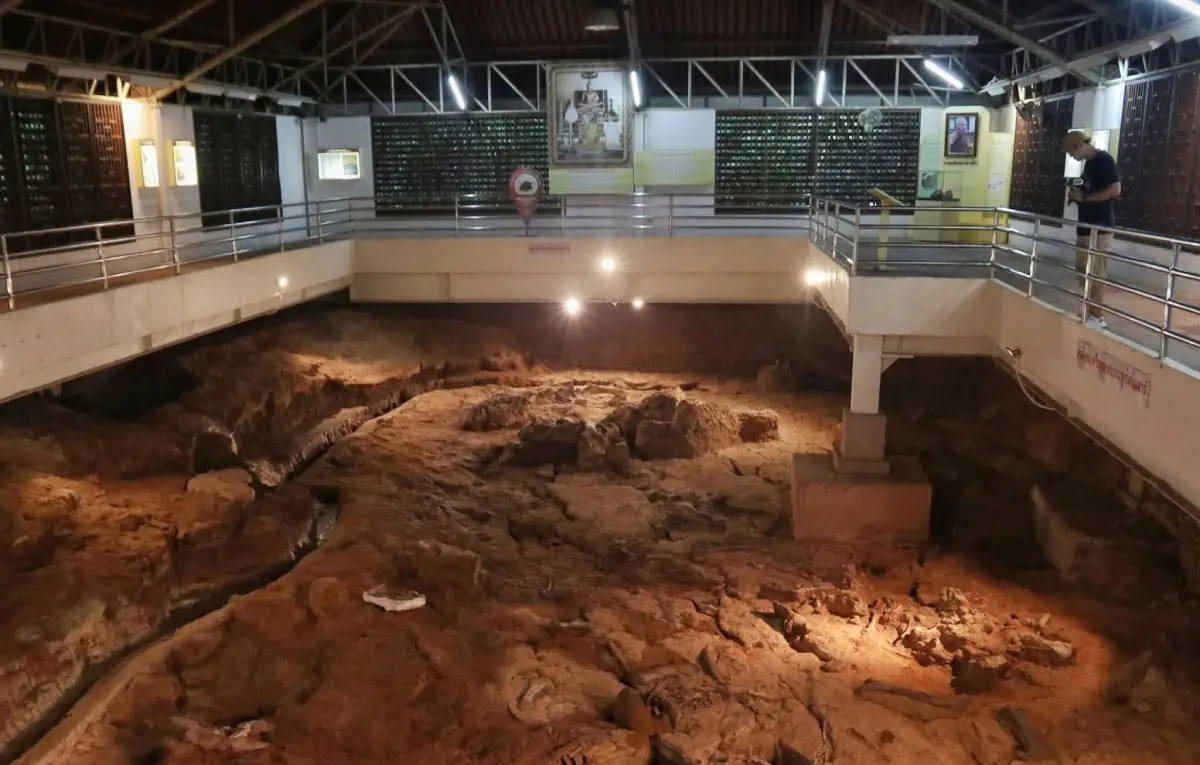
The excavation area is protected by a building that covers the fossil-bearing ground. Inside, visitors can see bones preserved close to their original excavation context. This makes the site extremely valuable as an educational experience. Instead of seeing only fossils displayed in glass cases, visitors can observe how bones were found in relation to the surrounding soil and rock layers. This helps explain how paleontologists record fossil positions, protect fragile specimens, interpret evidence, and reconstruct ancient life from scattered remains.
Phu Kum Khao is closely connected with Sirindhorn Museum, one of Thailand’s major dinosaur and fossil learning centers. The museum developed from the Phu Kum Khao Dinosaur Research Center and was later given the royal name “Sirindhorn Museum.” Today, it serves as a major public learning center for geology, fossils, dinosaurs, and the evolution of life. The museum’s exhibitions are arranged in a clear learning sequence, allowing visitors to move from the origin of the universe and Earth to early life, the Paleozoic Era, the Mesozoic Era, dinosaur life, the reconstruction of dinosaurs, the Cenozoic Era, and finally the story of human beings.
Zone 1, The Universe and the World, introduces the origin of the universe, the solar system, and Earth. Zone 2, When Life First Appeared, explains the early conditions of the planet and the beginning of primitive life. Zone 3, the Paleozoic Era, presents the development of life before dinosaurs. Zone 4, the Mesozoic Era, takes visitors into the age when dinosaurs dominated the Earth. Zone 5, Dinosaur Lifestyle, explores their behavior, food, movement, and adaptation. Zone 6, Bringing Dinosaurs Back to Life, explains how scientists reconstruct dinosaur forms from fossil evidence. Zone 7, the Cenozoic Era, presents the world after the extinction of dinosaurs, and Zone 8, The Story of Humans, connects the long history of life to human evolution.
What makes Sirindhorn Museum especially engaging is the combination of real fossils, skeletal displays, dinosaur models, diagrams, multimedia elements, and scientific storytelling. Visitors do not only see bones. They learn what each bone can reveal. A limb bone may suggest body size and movement. A vertebra can help explain body structure. Teeth can indicate diet. The location of fossil remains can help reconstruct ancient landscapes. The museum therefore turns paleontology into a clear, accessible experience for families, students, and travelers.
In addition to dinosaur fossils, the museum and the wider Kalasin fossil story also include ancient freshwater fish fossils known as Lepidotes, including Phu Nam Chan fish fossils. These fossils, with lengths of about 30-60 centimeters, help broaden the picture of ancient ecosystems in the region. Their presence suggests that parts of ancient Kalasin once contained water bodies such as ponds, wetlands, or river systems where fish and other aquatic life could live. Over time, changing environments, sediment accumulation, and mineral replacement transformed biological remains into fossils.
For travelers interested in natural history, Phu Kum Khao is one of the best places in Thailand to understand the phrase “Thai dinosaurs.” The site brings together an actual excavation location, real fossil evidence, museum interpretation, and geological background in one destination. It shows that dinosaur study is not an abstract scientific subject, but something connected to real landscapes, local communities, rock formations, rivers, sediments, and deep time.
Wat Sakkawan adds another important cultural dimension to the visit. The temple is home to Luang Pho Bandan Ritthiphon, also known locally as Luang Pho Ban Dan, a revered Buddha image in the Mara Vichai posture. Local people respect the image as an important sacred object of the community. Many visitors therefore combine the fossil experience with a respectful temple visit, making Phu Kum Khao a destination where science, faith, local memory, and community identity coexist in one area.
Another important figure associated with Wat Sakkawan and Phu Kum Khao is Luang Pu Ha Supharo, also known as Phra Thep Mongkhon Wachiramuni and widely remembered as “Luang Pu Dinosaur.” He was deeply respected by people in Kalasin, and his name remains closely linked with the identity of Wat Sakkawan and the dinosaur discovery story. Although he has passed away, his memory continues to be part of how the local community understands and presents Phu Kum Khao to visitors.
A good visit to Phu Kum Khao and Sirindhorn Museum usually takes about 2-3 hours. Travelers who want a complete experience should begin with the main museum exhibition to understand the broader story of Earth history and Thai dinosaurs. After that, they can visit the excavation building to see the fossil site in context. The visit can end at Wat Sakkawan, where travelers may pay respect to Luang Pho Bandan Ritthiphon and experience the quieter temple atmosphere around the fossil site.
For families, this destination works very well as an outdoor-and-indoor learning trip. Children can see large dinosaur models, fossil displays, skeletal reconstructions, and accessible explanations that make science easier to understand. For students, the site is valuable for geology, biology, evolution, paleontology, and natural history. For adult travelers, Phu Kum Khao offers a deeper understanding of northeastern Thailand beyond temples and local food. It shows that this region was once part of a prehistoric landscape shaped by rivers, sediments, ancient animals, and geological change.
The surrounding atmosphere is calm and local, with the site located near a hill, a temple, and the community of Non Buri. Because it is not far from the main road, travelers can easily combine the museum with other attractions in Sahatsakhan. A practical day trip can begin at Sirindhorn Museum in the morning, continue to Wat Sakkawan and the excavation site, stop for lunch in Sahatsakhan, and then visit Phu Sing Buddhist Site, Thepsuda Bridge, Lam Pao Dam, or Wat Phuttha Nimit Phu Khao in the afternoon.
Getting There is straightforward by car. From Kalasin city, take Highway 227 toward Sahatsakhan for about 25-28 kilometers. Before reaching Sahatsakhan town, follow the signs to Phu Kum Khao, Sirindhorn Museum, and Wat Sakkawan. Private cars and rental cars are the most convenient options, especially for travelers who plan to visit several nearby attractions in one day. Local transport or hired vehicles may also be arranged from Kalasin city or Sahatsakhan town.
The best time to visit is from morning to early afternoon, allowing enough time to explore the museum without rushing and continue to nearby attractions afterward. Visitors should wear comfortable walking shoes, especially if they plan to walk between the museum area, the excavation building, and the temple. For school groups, organizations, or large tour groups, advance reservation through the museum service system is recommended to ensure smoother access and better use of educational services.
Sirindhorn Museum currently operates from Tuesday to Sunday, 09.30-16.30, and closes every Monday except on public holidays. Admission fees apply for general visitors. Thai adults are charged 50 THB, foreign adults 150 THB, and foreign children 70 THB. Several visitor groups are eligible for free admission, including children under 12, senior citizens aged 60 and above, students, veterans, persons with disabilities, DMR volunteer cardholders, Buddhist monks, novices, nuns, religious persons, and visitors with official permission from the Director-General of the Department of Mineral Resources.
Facilities at the site include parking, restrooms, information services, exhibition buildings, group reception areas, museum ticket reservation services, meeting room services, and event space services. Visitors traveling in groups should contact the museum in advance, especially if they require guided learning, formal group access, or educational activities. This helps make the visit more organized and more useful for students or institutional groups.
Phu Kum Khao is much more than a dinosaur-themed attraction. It is a place where Thailand’s deep natural history can be understood through real evidence. It connects science with local identity, fossils with temple history, and prehistoric life with present-day tourism. A visit here gives travelers the chance to see traces of life from 130 million years ago, learn how scientists preserve fossils, understand why Kalasin is important to dinosaur research, and experience a distinctive destination that belongs uniquely to northeastern Thailand.
For international travelers planning a meaningful trip in Kalasin, Phu Kum Khao Dinosaur Excavation Site and Sirindhorn Museum should be one of the main stops. The destination answers key questions in a clear and memorable way: Where can visitors see Thai dinosaur fossils? Why is Kalasin important in paleontology? Where can families travel for both education and real experience? With its fossil evidence, museum displays, temple setting, and nearby attractions, Phu Kum Khao is one of the most valuable educational travel sites in the Isan region.
| Name | Phu Kum Khao Dinosaur Excavation Site / Sirindhorn Museum |
| Location | At the foot of Phu Kum Khao, within the Wat Sakkawan area, Non Buri Subdistrict, Sahatsakhan District, Kalasin Province |
| Address | No. 200 Moo 11, Non Buri Subdistrict, Sahatsakhan District, Kalasin Province 46140, Thailand |
| Coordinates | Latitude 16.6933422, Longitude 103.5219333 |
| Highlights | Real dinosaur excavation site, more than 700 herbivorous dinosaur fossil bones, Thai dinosaur exhibitions, and learning displays on Earth history and evolution |
| History / Period / Era | A large bone was found within Wat Sakkawan in 1970. It was later identified by the Department of Mineral Resources and studied by a Thai-French geological survey team. Systematic excavation began in 1994. The dinosaur fossils were found in the Sao Khua Formation, Early Cretaceous period, around 130 million years old. |
| Name Origin | Phu Kum Khao refers to the hill area in the Non Buri community of Sahatsakhan District. Sirindhorn Museum is the royal name given to the Phu Kum Khao dinosaur research and museum center. |
| Distinctive Features | One of Thailand’s most complete herbivorous dinosaur fossil sites, connected with Wat Sakkawan, a significant local religious site |
| Travel Information | From Kalasin city, take Highway 227 toward Sahatsakhan for about 25-28 km. The site is located about 2 km before Sahatsakhan town. Follow signs to Phu Kum Khao, Sirindhorn Museum, and Wat Sakkawan. |
| Current Status | Open as an important fossil learning center and dinosaur museum under the Department of Mineral Resources |
| Open Days | Tuesday - Sunday, closed every Monday except public holidays |
| Opening Hours | 09.30 - 16.30 |
| Fees | Thai adults 50 THB, foreign adults 150 THB, foreign children 70 THB; free admission for eligible groups including children under 12, senior citizens aged 60 and above, students, veterans, persons with disabilities, DMR volunteer cardholders, Buddhist monks, novices, nuns, religious persons, and visitors with official permission from the Director-General of the Department of Mineral Resources |
| Facilities | Parking, restrooms, information service, exhibition buildings, group reception areas, museum ticket reservation, meeting room services, and event space services |
| Main Areas / Zones | Zone 1 The Universe And The World Zone 2 When Life First Appeared Zone 3 Paleozoic Era Zone 4 Mesozoic Era Zone 5 Dinosaur Lifestyle Zone 6 Bringing Dinosaurs Back To Life Zone 7 Cenozoic Era Zone 8 The Story Of Humans Phu Kum Khao Dinosaur Excavation Building Wat Sakkawan And Luang Pho Bandan Ritthiphon Area |
| Caretaker | Sirindhorn Museum, Department of Mineral Resources, together with Wat Sakkawan for the temple area |
| Important Associated Figures | Phra Khru Vijitsahassakhun, who found the large bone within Wat Sakkawan, and Phra Thep Mongkhon Wachiramuni or Luang Pu Ha Supharo, the former abbot of Wat Sakkawan, widely remembered as Luang Pu Dinosaur |
| Main Contact Number | 043-871014, 043-871393-4, 043-871612-6, 081-8462371 |
| Official Website / Official Page | Sirindhorn Museum website under the Department of Mineral Resources and the official Facebook page “Sirindhorn Museum-Dinosaur museum” |
| Nearby Tourist Attractions | 1. Wat Sakkawan, about 0.3 km 2. Dino Road, about 2 km 3. Phu Sing Buddhist Site, about 3 km 4. Wat Phuttha Nimit Phu Khao Reclining Buddha, about 6 km 5. Thepsuda Bridge, about 7 km 6. Lam Pao Dam / Dok Ket Beach, about 10 km |
| Nearby Restaurants | 1. Sod Tiew Kai Mara Sahatsakhan, about 1 km 2. Mae Kong, about 1 km 3. Baan Choeng Khao Restaurant, about 2 km, Tel. 080-7348715 4. With Love Cafe Sahatsakhan, about 2 km 5. Huen Pa Khao, about 3 km |
| Nearby Accommodations | 1. Miss Love Poolvilla Sahatsakhan Kalasin, about 1 km, Tel. 086-0416065 2. Baan Suan Khwam Hug Resort, about 2 km, Tel. 082-1179083 3. Sukwan Boutique Home Resort, about 2 km 4. Iyara Resort Kalasin, about 3 km 5. Rich Lam Pao Resort, about 9 km, Tel. 091-5754507 |
Frequently Asked Questions (FAQ)
Q: Where is Phu Kum Khao Dinosaur Excavation Site located?
A: It is located at the foot of Phu Kum Khao within the Wat Sakkawan area, Non Buri Subdistrict, Sahatsakhan District, Kalasin Province, close to Sirindhorn Museum.
Q: Why is Phu Kum Khao important?
A: It is one of Thailand’s most complete herbivorous dinosaur fossil sites, with more than 700 fossil bone pieces found in the Sao Khua Formation, dating back around 130 million years.
Q: What are the opening days and hours of Sirindhorn Museum?
A: The museum is open Tuesday to Sunday from 09.30 to 16.30 and closes every Monday except on public holidays.
Q: How much is the admission fee?
A: Thai adults pay 50 THB, foreign adults pay 150 THB, and foreign children pay 70 THB. Several eligible groups, including children under 12, senior citizens, students, monks, novices, nuns, persons with disabilities, and other approved groups, receive free admission.
Q: How long should visitors spend at Phu Kum Khao and Sirindhorn Museum?
A: Plan for about 2-3 hours to explore the museum exhibitions, the excavation site, and the Wat Sakkawan area at a comfortable pace.
Q: What exhibition zones are inside the museum?
A: The museum has 8 zones: The Universe and the World, When Life First Appeared, Paleozoic Era, Mesozoic Era, Dinosaur Lifestyle, Bringing Dinosaurs Back to Life, Cenozoic Era, and The Story of Humans.
Q: What nearby attractions can be visited on the same trip?
A: Nearby attractions include Wat Sakkawan, Phu Sing Buddhist Site, Wat Phuttha Nimit Phu Khao, Thepsuda Bridge, Lam Pao Dam, Dok Ket Beach, and Dino Road.
Q: Is Phu Kum Khao suitable for children and families?
A: Yes. The site is highly suitable for families because it offers real fossils, dinosaur models, educational exhibitions, and an engaging way for children to learn science through real experience.
 Category: ●Art, Culture and Heritage
 Group: ●Historical Sites and Monuments
Last Update : 1 MonthAgo
 Last Update : 1 MonthAgo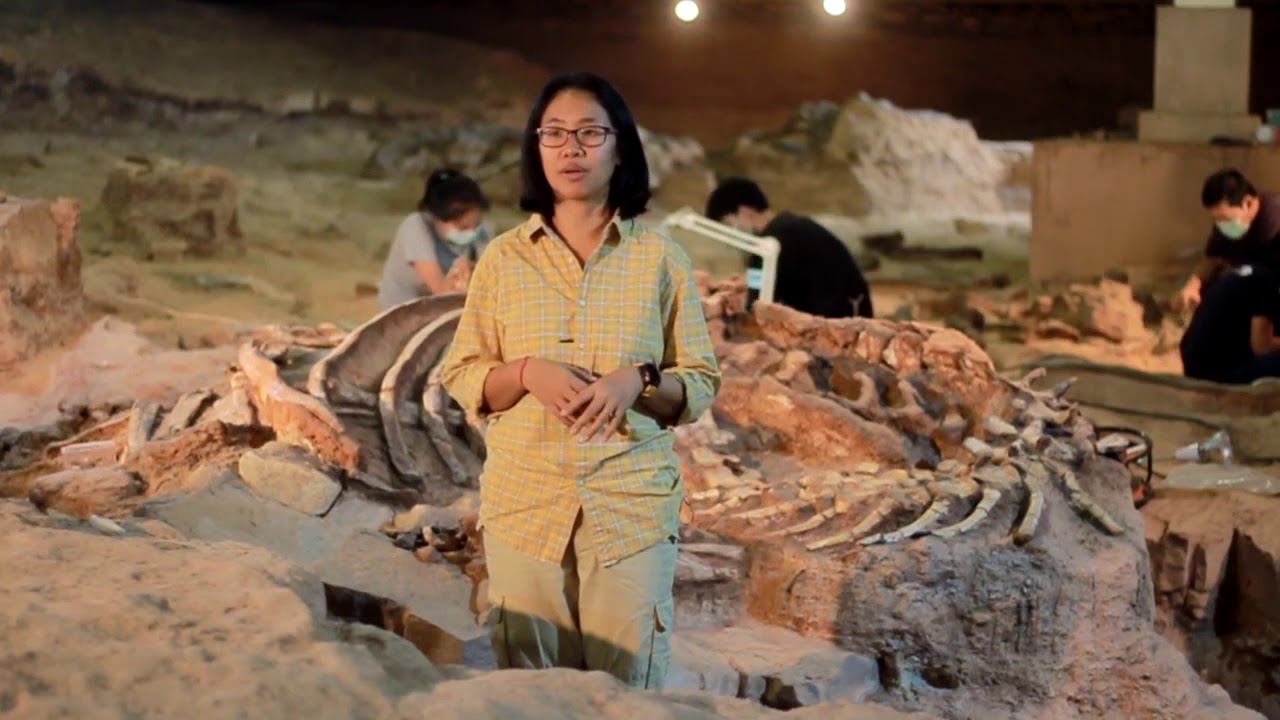
 Click to Access the Navigation Map GPS
Phu Kum Khao Dinosaur Excavation Site Map
 Historical Sites and Monuments(2)
 Landmarks and Memorials(3)
 Art, Craft Centres, Tradition(4)
 Museums(3)
 Art Gallery(1)
 Educational Places
 Educational Gardens, Farm(1)
 Places of Worship
 Temple(21)
 Other Sacred Sites(6)
 Suburban Living
 Village, Community(3)
 Nature and Wildlife
 National Parks and Marine Reserves(3)
 Mountain (Doi)(2)
 Dam, Reservoir, Lake(5)
 Waterfalls(4)
 Caves(2)
 River, Canal(3)
 Bays and Beaches(1)
 Other natural attractions(2)
 Entertainment and Agricultural
 Animal camps and shows(1)
 Farms, Parks and Ecotourism(2)


