
lovethailand home >Central Travel Attractions >Suphan Buri Travel Attractions >Muang Suphan Buri >Sala Khao > Wat Phra That (Wat Phra That Sala Khao)
TL;DR: Wat Phra That (Wat Phra That Sala Khao) is located at Sala Khao Subdistrict, Mueang Suphan Buri District, Suphan Buri Province, open Daily, hours 08.00 – 17.00.
Wat Phra That (Wat Phra That Sala Khao)
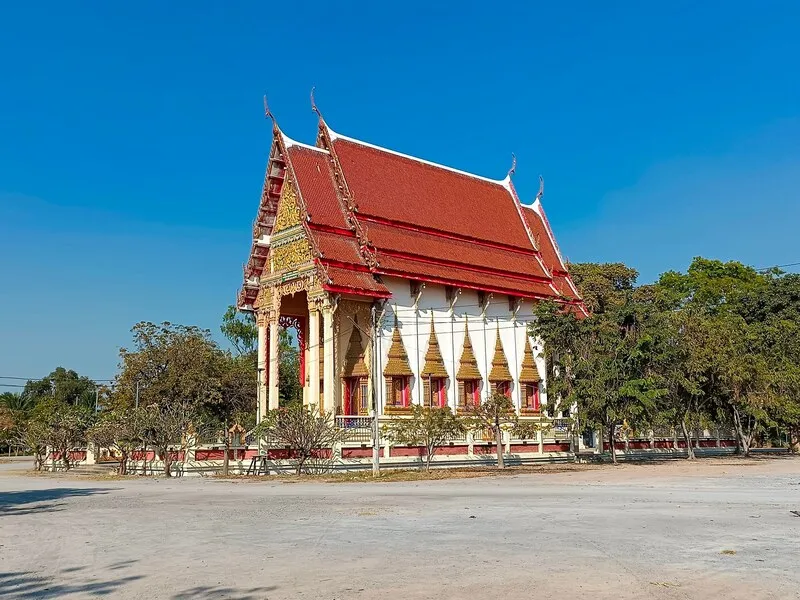
Open Days: Daily
Opening Hours: 08.00 – 17.00
Wat Phra That, also known as Wat Phra That Sala Khao in Suphan Buri Province, is an old Buddhist temple and an important archaeological site on the western side of the Suphan River. It is located in Sala Khao Subdistrict, Mueang Suphan Buri District, along Malaiman Road, or Highway 321, about 16 km from downtown Suphan Buri. The temple is best known for its single brick prang, a historic tower-like structure that resembles the prang at Wat Phra Si Rattana Mahathat but is smaller in scale. Because of this relationship, local people often call it “Wat Phra That Nok,” meaning the outer Phra That temple, in contrast to the major Phra That site within the old city area.
Wat Phra That Sala Khao is valuable not only as a place of worship but also as a historical landmark that helps visitors understand the cultural depth of Suphan Buri. The temple does not impress through grandeur or elaborate decoration. Instead, its significance lies in the surviving brick prang, the atmosphere of an old religious site, and the way the temple connects present-day Buddhist life with traces of the Ayutthaya period. For foreign travelers interested in Thai history, ancient architecture, Buddhist heritage, and quieter cultural destinations outside the usual tourist route, this temple offers a meaningful stop.
The main feature of the temple is the ancient prang, a single brick structure standing about 20–25 meters high. The remaining form shows a base, stairway, doorway niches, and the upper part of the tower. Although the structure has deteriorated over time, its proportions and construction details still reveal the skill of past craftsmen. The prang is similar in concept to the one at Wat Phra Si Rattana Mahathat in Suphan Buri, but its size is more modest and its upper form is rounder rather than sharply pointed. This gives the prang at Wat Phra That Sala Khao a distinct architectural character of its own.
The temple has been known by several names, including Wat Phra That, Wat Phra That Sala Khao, Wat Phra That Suan Taeng, Wat Phra That Suan Daeng, and Wat That Nok. The name Wat Phra That Sala Khao reflects its location in Sala Khao Subdistrict. The local name Wat Phra That Nok reflects its relationship with another important ancient temple in Suphan Buri, Wat Phra Si Rattana Mahathat. These names are not merely labels; they preserve the way local communities remember sacred places through geography, visual similarities, and cultural association.
The construction materials of the prang are also important. The brickwork consists of relatively small bricks bonded with coarse lime mortar. These physical traces are essential for understanding the technology, building methods, and craftsmanship of the period. Archaeological evidence found around the prang suggests that the temple dates to around 1424–1488 CE, corresponding approximately to B.E. 1967–2031, during the reigns of King Borommarachathirat II, also known as Chao Sam Phraya, and King Borommatrailokkanat of Ayutthaya. This dating places the temple within a period when Ayutthaya was expanding its political, religious, and cultural influence across central Thailand.
Suphan Buri was historically an important city in the Chao Phraya basin. Its role did not disappear after the rise of Ayutthaya; rather, the city continued to function as a significant cultural and strategic area. The presence of Wat Phra That Sala Khao demonstrates that communities in this region possessed the resources, religious devotion, and technical knowledge required to build substantial Buddhist monuments. The prang was more than an architectural form. It represented faith, community identity, local power, and the relationship between Suphan Buri and the broader Ayutthaya world.
In Buddhist architecture, a prang often carries symbolic meaning. It can serve as the principal sacred structure of a temple and may be associated with relics or revered objects. The name “Phra That” suggests a connection with sacred relic worship, even though the specific details of what was enshrined within the structure are no longer clearly visible today. The name, the architectural form, and the position of the prang all point to the temple’s role as a sacred center for local devotion in the past.
The temple compound contains both archaeological remains and an active religious area. This makes Wat Phra That Sala Khao different from a site that functions only as a preserved ruin. Monks and novices still reside at the temple, and the place remains part of living Buddhist practice. Visitors can therefore experience two layers of meaning at once: the ancient brick monument that speaks of Ayutthaya-period history, and the present-day temple environment where religious life continues. This continuity between past and present is one of the most meaningful aspects of the site.
When visiting the temple, travelers should take time to observe the prang carefully. The base, stairway, doorway elements, brick texture, and the remaining upper structure all reveal details that may be missed in a quick visit. Comparing this prang with the larger prang at Wat Phra Si Rattana Mahathat in the city center can help visitors understand how architectural ideas were adapted across different religious sites in Suphan Buri. The smaller scale of Wat Phra That Sala Khao does not reduce its importance. Instead, it makes the site more intimate and easier to appreciate in detail.
Other archaeological elements in the temple area are also significant. The site has been associated with archaeological excavation and conservation work involving the prang, subsidiary stupas, the old ordination hall area, boundary walls, and other structural traces that appear to belong to the same historical phase. These remains suggest that the temple was once a more complete religious complex rather than a single isolated tower. Understanding the temple as a full sacred compound allows visitors to see how Buddhist architecture, ritual space, and community life were organized in the past.
The atmosphere at Wat Phra That Sala Khao is peaceful and modest. It is not a crowded tourist attraction, which makes it suitable for travelers who prefer quiet heritage sites. A visit of about 30–60 minutes is enough for general travelers, while those interested in history or photography may want to spend more time studying the details of the brickwork and the surrounding temple area. The weather in Suphan Buri can be hot during the day, so morning visits are usually more comfortable.
Getting There is easiest by private car. From downtown Suphan Buri, take Malaiman Road, or Highway 321, toward the western side of the Suphan River. The temple is about 16 km from the city center, near kilometer marker 145, and stands opposite Wat Suan Taeng. Travelers without a private vehicle can first reach Suphan Buri town by interprovincial bus or van, then continue to Sala Khao Subdistrict by local hired transport. A private car, rental car, or hired local vehicle is the most practical option because it allows visitors to combine the temple with several nearby attractions on the same day.
Wat Phra That Sala Khao can be included in a broader cultural route around Suphan Buri. A meaningful itinerary can start with Wat Phra Si Rattana Mahathat to see the larger prang in the old city area, then continue to Wat Phra That Sala Khao to compare architectural forms. Travelers can then visit Wat Khae, Khum Khun Phaen, Wat Phra Rup, Suphan Buri National Museum, Wat Pa Lelai Worawihan, or the Dragon Descendants Museum near the City Pillar Shrine. This route presents Suphan Buri not merely as a provincial town but as a historic city with deep religious and cultural layers.
Visitors should dress respectfully, as this is an active Buddhist temple. Shoulders and knees should be covered, and behavior should remain calm and respectful. The ancient prang should not be climbed, touched unnecessarily, or used as a backdrop for inappropriate poses. Brick archaeological structures are fragile after centuries of exposure, and even small actions can contribute to damage over time. Travelers should photograph the monument from a safe distance and follow any guidance provided at the temple.
Wat Phra That Sala Khao is suitable for several types of travelers. History lovers will appreciate the connection with the Ayutthaya period. Cultural travelers will value the temple’s role as a living religious site. Photographers may enjoy the texture of old brickwork and the quiet rural atmosphere. Families and students can use the temple as an outdoor learning site for Thai history and Buddhist architecture. For those seeking a calm and authentic destination in Suphan Buri, this temple offers a rewarding experience without the crowds found at more famous landmarks.
Today, Wat Phra That Sala Khao remains open to visitors daily from 08.00 to 17.00. The ancient prang is weathered and partly deteriorated, but this condition is part of its historical character. It reminds visitors that heritage sites require care, respect, and continued conservation. A visit to this temple is not only a chance to see an old brick prang; it is also an opportunity to understand how faith, architecture, community memory, and regional history come together in one quiet corner of Suphan Buri.
| Name | Wat Phra That / Wat Phra That Sala Khao |
| Location | Sala Khao Subdistrict, Mueang Suphan Buri District, Suphan Buri Province |
| Address | Sala Khao Subdistrict, Mueang Suphan Buri District, Suphan Buri 72210, Thailand |
| Highlights | A single ancient brick prang about 20–25 meters high, similar in form to the prang at Wat Phra Si Rattana Mahathat but smaller in scale |
| History | Dated to around B.E. 1967–2031, during the reigns of King Borommarachathirat II, or Chao Sam Phraya, and King Borommatrailokkanat of Ayutthaya |
| Name Origin | Locally called “Wat Phra That Nok” because its prang resembles the one at Wat Phra Si Rattana Mahathat but is smaller and located outside the main old city area |
| Distinctive Features | A single brick prang with stairs, doorway niches, a rounder upper form, small bricks, and coarse lime mortar construction |
| Travel Information | From downtown Suphan Buri, take Malaiman Road or Highway 321 for about 16 km toward the western side of the Suphan River. The temple is near kilometer marker 145 and opposite Wat Suan Taeng. |
| Current Status | Open to visitors. The temple remains an active monastic residence, while the ancient prang is weathered and deteriorated over time. |
| Open Days | Daily |
| Opening Hours | 08.00 – 17.00 |
| Facilities | Temple grounds, small resting area near the archaeological site, and parking space inside or near the temple area |
| Main Areas / Zones | 1. Ancient brick prang 2. Present temple and ordination area 3. Archaeological traces such as subsidiary stupas, boundary wall remains, and earlier structures 4. Small garden and resting area |
| Tourism Information Contact | Tourism Authority of Thailand, Suphan Buri Office, Tel. 035-525867, 035-525880 |
| Nearby Tourist Attractions | 1. Wat Suan Taeng, about 1 km 2. Wat Phra Si Rattana Mahathat, about 15 km 3. Wat Phra Rup, about 16 km 4. Wat Khae and Khum Khun Phaen, about 17 km 5. Suphan Buri National Museum, about 18 km 6. Wat Pa Lelai Worawihan, about 20 km 7. Dragon Descendants Museum and Suphan Buri City Pillar Shrine, about 18 km |
| Nearby Restaurants | 1. Noodle Shop near Wat Suan Taeng, about 1 km 2. Local restaurants in Suan Taeng area, about 2 km 3. Local restaurants along Malaiman Road, about 5 km 4. Restaurants in downtown Suphan Buri, about 16 km 5. Restaurants around Nen Kaew Road and Suphan Buri town market, about 17 km |
| Near By Accommodations | 1. Sri U-Thong Grand Hotel, about 15 km 2. Songphanburi Hotel, about 16 km 3. DD Place, about 15 km 4. Watthanasap Mansion, about 16 km 5. Soi 4 Service Residence, about 16 km 6. Lertthanee Hotel, about 16 km 7. C Suphan Villa, about 17 km |
Frequently Asked Questions (FAQ)
Q: Where is Wat Phra That Sala Khao located?
A: Wat Phra That Sala Khao is located in Sala Khao Subdistrict, Mueang Suphan Buri District, Suphan Buri Province, about 16 km from downtown Suphan Buri along Malaiman Road, or Highway 321.
Q: What is the main highlight of Wat Phra That Sala Khao?
A: The main highlight is a single ancient brick prang about 20–25 meters high, similar in form to the prang at Wat Phra Si Rattana Mahathat but smaller in scale.
Q: Why is the temple also called Wat Phra That Nok?
A: Local people call it Wat Phra That Nok because its prang resembles the one at Wat Phra Si Rattana Mahathat but is located outside the main old city area and is smaller in size.
Q: When was Wat Phra That Sala Khao built?
A: The temple is dated to around B.E. 1967–2031, during the reigns of King Borommarachathirat II, or Chao Sam Phraya, and King Borommatrailokkanat of Ayutthaya.
Q: What are the opening hours of Wat Phra That Sala Khao?
A: The temple is open daily from 08.00 to 17.00.
Q: How can visitors get to Wat Phra That Sala Khao?
A: From downtown Suphan Buri, take Malaiman Road or Highway 321 for about 16 km toward the western side of the Suphan River. The temple is near kilometer marker 145 and opposite Wat Suan Taeng.
Q: What nearby attractions can be combined with this visit?
A: Travelers can combine the visit with Wat Suan Taeng, Wat Phra Si Rattana Mahathat, Wat Phra Rup, Wat Khae, Khum Khun Phaen, Suphan Buri National Museum, and Wat Pa Lelai Worawihan.
 Category: ●Places of Worship
 Group: ●Temple
Last Update : 4 MonthAgo
 Last Update : 4 MonthAgo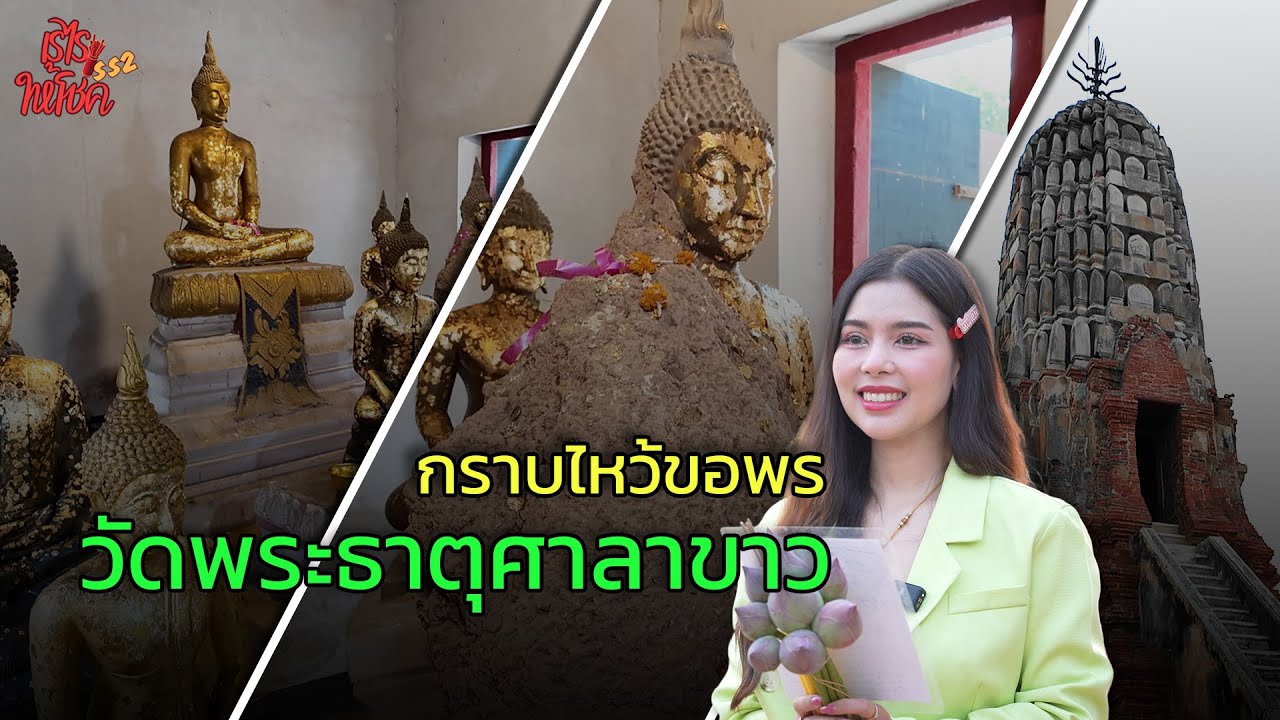
 Click to Access the Navigation Map GPS
Wat Phra That (Wat Phra That Sala Khao) Map
Recommend

 Art, Culture and Heritage
 Historical Sites and Monuments(2)
 Landmarks and Memorials(4)
 Art, Craft Centres, Tradition(2)
 Museums(5)
 Educational Places
 Educational Gardens, Farm(4)
 Training Center(2)
Temple(36)
Training Center(2)
Temple(36)
 Other Sacred Sites(4)
 Suburban Living
 Village, Community(6)
 Local Market(7)
 Floating Market(1)
 Nature and Wildlife
 National Parks and Marine Reserves(4)
 Mountain (Doi)(2)
 Dam, Reservoir, Lake(3)
 Caves(1)
 Bays and Beaches(1)
 Entertainment and Agricultural
 Farms, Parks and Ecotourism(6)
 Theater(1)


