
 Home
Home North(
 Chiang Mai(


Water-Pouring-to-Young-Women Tradition
Rating: 3.8/5 (5 votes)
 Search By
  Map
Map
 Have Map
  No Map
Samut Prakan attractions
Attractions in Thailand
Open Days: During Songkran, from April 13–15 every year
Opening Hours: Generally associated with the 3 Songkran days and the water-blessing days of local temples
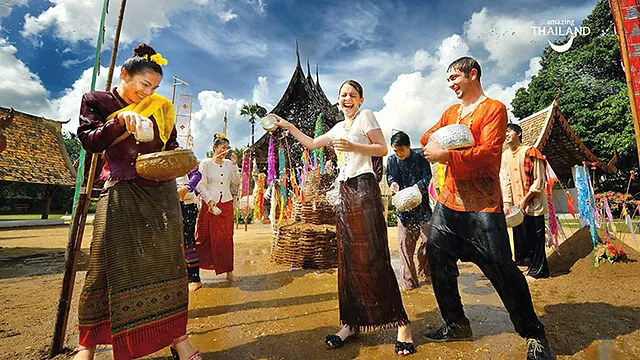
The Water-Pouring-to-Young-Women Tradition of Phra Pradaeng, Samut Prakan, is one of the most refined and distinctive Songkran customs of the local Thai-Raman community. Unlike the modern image of Songkran as a loud public water fight, this tradition was based on courtesy, restraint, and social grace. Water was not used as a weapon of play, but as a medium for polite conversation and respectful interaction between young men and young women.
Traditionally, young people in Phra Pradaeng poured water during only 2 important periods: the 3 days of Songkran itself and the temple water-blessing days connected to local ritual life. This means the custom was not random or uncontrolled. It took place within the rhythm of merit-making, temple visits, and accepted community practice.
The importance of this tradition lies in the way it reveals another dimension of Songkran in old Phra Pradaeng. It shows that Songkran was once not only festive, but also deeply structured by etiquette. Young men used the ritual as a respectful way to approach young women, begin conversation, and walk together in a socially accepted context. Water became a symbolic bridge between restraint and courtship.
The custom itself was gentle. A young man would first ask permission. If accepted, he would pour only a small amount of water onto the woman’s hand or lightly over the shoulder, then walk and talk with her for a short distance until the water in the bowl was gone. The act was deliberately delicate. It was never meant to drench the entire body or become rough or disorderly.
The water used was also carefully prepared. It had to be clean, such as rainwater scented with jasmine flowers or perfumed water. Dirty water or water mixed with anything improper was unacceptable. The container mattered as well. People typically used silver bowls, polished stone bowls, or at least proper washing bowls, never rough or careless containers. This reflected the strong emphasis on dignity and respect.
Before Songkran arrived, young men prepared themselves seriously. They polished their silver or stone bowls until they shone, and they chose their best clothes. Traditional outfits could include Chinese-style trousers, checked waist cloths, round-neck shirts with 3 buttons, or other respected attire. Wealthier young men might even wear silk cloth and fine buttons. This preparation shows that the ritual was considered meaningful, not casual.
In the early morning, they would wait near temples or along the roads used by young women carrying Songkran food offerings to the temple. But even here there were strict rules. Men were not allowed to pour water on women who had not yet delivered Songkran food to the temple. They also did not pour water on women who were simply going to the market or handling private errands. The custom was closely linked to the religious rhythm of the festival.
Another important rule was that no water pouring could take place inside the temple grounds. Local belief held that allowing water from the body of a young woman to flow into the sacred temple area was improper. Only after the women had completed their offering duties and walked outside the temple boundary could the young men respectfully ask permission to pour water.
Once permission was granted, the young men might use their hand to lightly sprinkle water, or gently pour it onto the hand or shoulder, avoiding improper physical contact. Then they would walk side by side and talk. If the conversation went well, they might continue together for a longer distance. In this way, the custom became one of the most charming and socially meaningful parts of Songkran for young people in the old community.
From a social perspective, this tradition was important because it created a structured and acceptable setting for young men and women to meet. It was playful, but never without boundaries. It was romantic in feeling, but always framed by custom, the temple, and the watchful awareness of the wider community. This is one reason it stands out as such a refined local practice.
Old memories of Phra Pradaeng describe streets filled with young men and women walking back and forth during the 3 Songkran days. The air carried the scent of jasmine and perfumed water, while conversation, laughter, and gentle festivity shaped the mood of the town. It was a lively atmosphere, yet very different from the aggressive splashing associated with many modern Songkran celebrations.
This is what makes the tradition culturally valuable today. It reminds us that Songkran once held forms of beauty based on restraint, timing, and respect. The Water-Pouring-to-Young-Women Tradition reveals how local Songkran in Phra Pradaeng preserved not only celebration, but also social etiquette, temple-centered morality, and a distinct Mon-influenced community culture.
For visitors interested in the cultural layers of Phra Pradaeng, this tradition is especially illuminating. It helps explain that behind the district’s famous Songkran celebrations lies a much richer social history. Understanding this custom allows travelers to see Phra Pradaeng not just as a place of festive water play, but as a community where old values of grace, ritual, and respectful social interaction once shaped the celebration.
Getting There if you want to explore the atmosphere linked to this tradition is easy from Bangkok. Visitors can reach Phra Pradaeng via Suk Sawat Road, the Bhumibol bridges, or ferry crossings from the Bangkok side. Important cultural reference points include Wat Songtham Worawihan, Wat Prodket Chettharam, and the old community zones of Phra Pradaeng, which still preserve the broader atmosphere of Thai-Mon Songkran heritage.
| Name | Water-Pouring-to-Young-Women Tradition |
| Main Cultural Area | Thai-Raman communities in Phra Pradaeng District, Samut Prakan |
| Festival Period | During Songkran, from April 13–15 every year, and connected with local temple water-blessing days |
| Highlights | Polite water pouring, jasmine or perfumed water, silver or stone bowls, young men and women walking together after temple offerings |
| Importance | A local Songkran custom of Phra Pradaeng in which water served as a respectful medium for conversation and social interaction within a merit-making context |
| Distinctive Features | No water chasing or drenching; only a small amount of clean water gently poured on the hand or shoulder after asking permission |
| Important Rules | No pouring inside temple grounds, no pouring before Songkran food has been delivered, and no pouring on people not involved in the ritual visit |
| Key Related Places | Wat Songtham Worawihan, Wat Prodket Chettharam, and the old community areas of Phra Pradaeng |
| Main Contact Number | Phra Pradaeng Municipality +66 2 462 5028 ext. 111, Wat Songtham Worawihan +66 2 463 5433, +66 2 464 3794 |
| Nearby Tourist Attractions | 1. Wat Songtham Worawihan 1 km 2. Wat Prodket Chettharam Royal Monastery 2 km 3. Pom Plaeng Faifa Historical Park 2 km 4. Sri Nakhon Khuean Khan Park and Botanical Garden 8 km 5. Bang Nam Phueng Floating Market 10 km |
| Nearby Restaurants | 1. Ba Zhang Aroi Tee Sud 1 km Tel. +66 2 462 6982 2. Charoen Phung (Khrua Phi Tae) Phra Pradaeng Market 1 km Tel. +66 82 939 6115 3. Sing Hai Hong Coffee & Restaurant Phra Pradaeng 2 km 4. Pobrak Na Bang Nam Phueng 9 km Tel. +66 81 847 6300 5. Bangkok Tree House Cafe & Restaurant 10 km Tel. +66 82 995 1150, +66 85 845 7666 |
| Nearby Accommodations | 1. 14 Residence 3 km Tel. +66 2 817 2277 2. Bangkok Tree House 10 km Tel. +66 82 995 1150, +66 85 845 7666 3. Coconut Lane Bangkok 10 km Tel. +66 65 641 5898 4. Baan Makham Bang Nam Phueng 11 km Tel. +66 98 828 0983 5. Phuengnang Homestay 12 km |
Frequently Asked Questions (FAQ)
Q: When is this tradition observed?
A: It takes place during Songkran from April 13–15 each year and is also linked to temple water-blessing days in the local community.
Q: How is this different from general Songkran water play?
A: It is based on polite, minimal water pouring after asking permission, not on chasing or soaking people.
Q: What kind of water is used?
A: Clean water such as jasmine-scented rainwater or perfumed water is traditionally used.
Q: Why are the bowls important?
A: The bowls reflect dignity and respect, which is why silver bowls or polished stone bowls were preferred.
Q: Why is water pouring not allowed inside the temple?
A: Because local custom considered it improper for water from the body to flow inside the sacred temple grounds.
Q: When could young men ask to pour water?
A: Only after the young women had already delivered Songkran food to the temple and walked outside the temple boundary.
Q: Can this tradition still be seen today?
A: Its original atmosphere is now rare, but it remains an important part of the cultural memory of Phra Pradaeng Songkran.
 Category:
  Group:
  Tag: ●Water-Pouring-to-Young-Women Tradition●water pouring to young women tradition ●phra pradaeng songkran tradition ●mon songkran phra pradaeng ●traditional songkran phra pradaeng ●samut prakan songkran custom ●thai raman culture phra pradaeng ●respectful songkran tradition ●old songkran custom thailand ●phra pradaeng cultural tradition ●traditional water pouring songkran Last Update: 2 DayAgo
Comment
 Nearby Attractions
| Keyword (Advance) |
 Region
|
 Muang Samut Prakan(
 Copyright 2012,