
 Home
Home North(
 Chiang Mai(


Plaeng Faifa Fort
Rating: 4.2/5 (5 votes)
 Search By
  Map
Map
 Have Map
  No Map
Samut Prakan attractions
Attractions in Thailand
Open Days: Daily
Opening Hours: 08.00–16.30
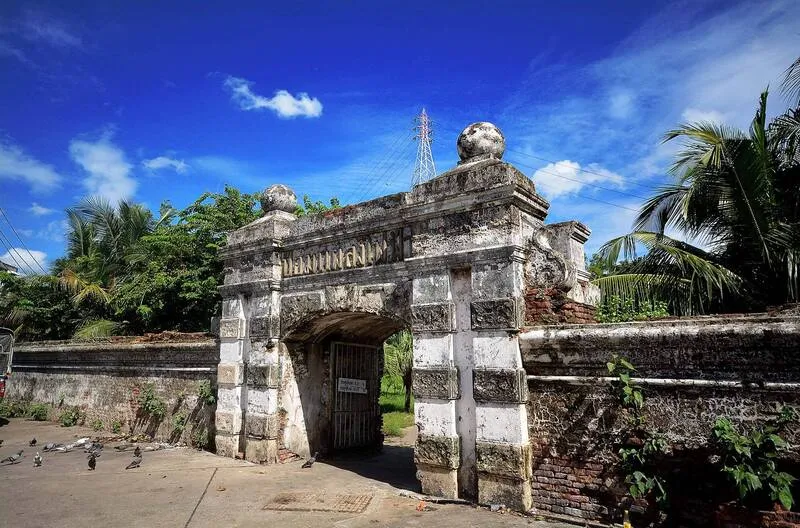
Plaeng Faifa Fort is an important historical site in Phra Pradaeng District, Samut Prakan Province. It adds depth to traveling in this area beyond simply visiting an old town. This site is not just a remaining brick structure within a community, but a clear reflection of early Rattanakosin defensive concepts. It is also a significant part of Nakhon Khuean Khan, which once served as a strategic frontier town at the mouth of the Chao Phraya River.
Plaeng Faifa Fort is located in Talat Subdistrict, Phra Pradaeng District, next to Tessaban Pom Plaeng Faifa School, within the old Phra Pradaeng market area. The surroundings still preserve the atmosphere of a traditional community with a long history, making it ideal for travelers who prefer slow exploration and want to understand how this small riverside town once played an important role in protecting the kingdom.
The significance of the fort begins with the strategic role of Phra Pradaeng in the past. Nakhon Khuean Khan was established as a defensive base near the estuary to prevent enemy forces from entering through the sea and moving along the Chao Phraya River toward the capital. Plaeng Faifa Fort was not built in isolation, but as part of a network of forts designed to protect one of Siam’s most critical waterways.
Historical records indicate that Plaeng Faifa Fort was constructed during the reign of King Rama II in 1814. It was built on the right bank of the Chao Phraya River to defend against water-based invasions. At that time, Phra Pradaeng or Nakhon Khuean Khan consisted of multiple forts forming a defensive system. Today, Plaeng Faifa Fort remains one of the few surviving forts that can still be clearly seen.
Architecturally, the fort reflects early military engineering concepts before the modern era of weaponry. The structure is made of brick and mortar, with a square layout featuring angled corners. Some sections consist of double-layered walls, with compacted earth in between to absorb the impact of cannon fire. This design made the fort particularly strong for its time and allows visitors today to appreciate the military knowledge and strategic planning behind its construction.
The fort also continued to play a role in later periods. During the reign of King Rama V, it was modified into a naval fort under the Third Naval School Division. Later, in the reign of King Rama VI, it underwent further restoration. These developments show that the fort remained relevant and actively used rather than being abandoned after its initial construction.
Today, Plaeng Faifa Fort has transformed from a military site into a public recreational area. Phra Pradaeng Municipality has restored and landscaped the area into a shaded park with trees and open spaces. Antique cannons are displayed around the upper part of the fort, creating a unique atmosphere where historical significance and community life coexist.
The charm of visiting this place lies in its simplicity. Walking through old walls, gateways, and cannon display areas allows visitors to experience a site that has not been overly commercialized. Instead of being filled with modern attractions, the fort preserves its historical essence while blending naturally with the surrounding community.
For history enthusiasts, Plaeng Faifa Fort is especially valuable because it helps illustrate how river defense systems functioned in the Chao Phraya basin. Visiting the actual location brings historical knowledge to life, making it easier to understand why Phra Pradaeng was such a critical defensive town.
Another advantage of the fort is its convenient location within a walkable area. Visitors can combine their visit with nearby landmarks such as the Phra Pradaeng City Pillar Shrine, the City Guardian Spirit Shrine, or Wat Songtham Worawihan within the same trip. This makes the visit more than a single stop and opens the way to discovering Phra Pradaeng as a genuine old town with multiple layers of heritage.
If you want to enjoy the site more fully, visiting in the morning or late afternoon is recommended because the weather is more comfortable and the natural light is better for photography. Although the fort is not large, it contains many interesting details, including its wall lines, gateways, interior paths, and antique cannon displays. A slow walk reveals much more than a quick photo stop.
For photographers, Plaeng Faifa Fort offers a very distinctive visual character. The texture of old brick and the calm greenery of the landscaped grounds create a classic and peaceful mood that differs from ordinary tourist sites. Old gateways and preserved wall sections provide especially memorable angles for photographs.
Plaeng Faifa Fort also reflects the identity of Phra Pradaeng as a town where the past and present remain closely connected. The area around the fort still retains traces of an old community, Mon cultural influence, and local ways of life. It is therefore especially suitable for travelers who prefer places with meaning and cultural depth rather than attractions valued only for appearance.
Although the fort is not a large national landmark, its strength lies in its authenticity. Visitors do not need to deal with heavy crowds and can spend time quietly experiencing the place. This is one of the reasons why traveling in Phra Pradaeng feels so different from visiting the more crowded districts of Bangkok.
The site is ideal for a one-day trip near Bangkok, for travelers interested in early Rattanakosin history, and for those who enjoy exploring old towns at their own pace. Plaeng Faifa Fort may not be a loud or highly publicized destination, but once seen in person, its value becomes much clearer and far greater than its modest size suggests.
Getting There From the Phra Pradaeng intersection on Suksawat Road, continue toward the Phra Pradaeng market area. Visitors arriving by private car can park near the Phra Pradaeng District Office and continue on foot through the same neighborhood. Those using public transport can get off near Phra Pradaeng Market, then continue walking to the City Pillar Shrine, the Guardian Spirit Shrine, and Plaeng Faifa Fort with relative ease.
Overall, Plaeng Faifa Fort is a destination for travelers who want to see Samut Prakan from a deeper perspective. It offers history, community atmosphere, and an easy-to-continue walking route within Phra Pradaeng. For anyone wishing to experience the charm of an old riverside town near Bangkok, where the traces of the kingdom’s defensive past can still be seen, Plaeng Faifa Fort is one of the places that should not be overlooked.
| Name | Plaeng Faifa Fort |
| Location | Talat Subdistrict, Phra Pradaeng District, Samut Prakan Province |
| Address | 183 Phraya Phayap Phiriyakit Road, Talat Subdistrict, Phra Pradaeng District, Samut Prakan 10130 |
| Highlights | A historic fort of Nakhon Khuean Khan with partially preserved original structure, antique cannons, and a peaceful garden atmosphere in the old quarter of Phra Pradaeng |
| History / Period | Built during the reign of King Rama II in 1814 to defend against water-based invasions; later repaired in the reign of King Rama V and restored again in the reign of King Rama VI |
| Distinctive Features | Brick-and-mortar fort with an angled square plan, double-layered walls in some sections, and compacted earth between the walls for greater strength against cannon fire |
| Travel Information | From Suksawat Road, continue to the Phra Pradaeng intersection and head toward Phra Pradaeng Market. Visitors can park near the district office and walk through the same historic area, or arrive by public transport and continue on foot from the market |
| Current Status | A historical site still open to visitors and restored as a public recreation area |
| Open Days | Daily |
| Opening Hours | 08.00–16.30 |
| Fees | Free Admission |
| Facilities | Garden area, walking space around the historical site, shade trees, and an antique cannon display zone |
| Caretaker | Phra Pradaeng Municipality |
| Main Contact Number | 02-707-6300 |
| Official Website / Official Page | https://www.samutprakan.go.th |
| Nearby Tourist Attractions | 1. Phra Pradaeng City Pillar Shrine – approx. 0.3 km 2. Phra Pradaeng City Guardian Spirit Shrine – approx. 0.4 km 3. Wat Songtham Worawihan – approx. 0.9 km 4. Thai Fighting Fish Museum – approx. 4 km 5. Si Nakhon Khuean Khan Park and Botanical Garden – approx. 8 km |
| Nearby Restaurants | 1. Nuea Tun Nai Thiu – Phra Pradaeng – approx. 0.2 km. Tel. 089-409-2501 2. Sing Hai Hong Coffee & Restaurant Phra Pradaeng – approx. 3 km 3. Nee Made-to-Order Food, Suksawat 70 beside Lotus Kru Nai – approx. 7 km. Tel. 089-023-7078 4. Oonjai Riverside – approx. 9 km. Tel. 096-979-1426, 098-800-8005 5. Pob Rak ณ Bang Nam Phueng – approx. 10 km. Tel. 081-847-6300 |
| Nearby Accommodations | 1. 14 Residence – approx. 6 km. Tel. 02-817-2277 2. Bangkok Tree House – approx. 9 km. Tel. 082-995-1150, 085-845-7666 3. Baan Klang Suan Bang Kobua – approx. 10 km. Tel. 090-986-7987 4. Coconut Lane Bangkok – approx. 10 km. Tel. 065-641-5898 5. The Bird Nest Homestay & Coffeeshop – approx. 11 km |
Frequently Asked Questions (FAQ)
Q: Where is Plaeng Faifa Fort located?
A: Plaeng Faifa Fort is located in Talat Subdistrict, Phra Pradaeng District, Samut Prakan Province, next to Tessaban Pom Plaeng Faifa School and close to the Phra Pradaeng market area.
Q: Why is Plaeng Faifa Fort important?
A: It is one of the forts of Nakhon Khuean Khan and played an important role in defending the Chao Phraya estuary against water-based invasions during the early Rattanakosin period.
Q: When was Plaeng Faifa Fort built?
A: Plaeng Faifa Fort was built during the reign of King Rama II in 1814, and later repaired in the reign of King Rama V before being restored again in the reign of King Rama VI.
Q: Is Plaeng Faifa Fort still open to visitors today?
A: Yes. The site is still open to visitors and has been restored as a public recreational area while preserving parts of the original fort structure and antique cannons.
Q: On which days is Plaeng Faifa Fort open, and is there an entrance fee?
A: The site is open daily from 08.00 to 16.30, and admission is free.
Q: How much time should I allow for visiting Plaeng Faifa Fort?
A: If you visit only the fort itself, around 30–60 minutes is usually enough. If you combine it with the old Phra Pradaeng market area, the City Pillar Shrine, and other nearby places, you should allow at least half a day.
Q: What kind of trip is Plaeng Faifa Fort best suited for?
A: It is especially suitable for historical travel, old-town exploration near Bangkok, and for visitors who want to understand Phra Pradaeng as a frontier town with layered local heritage.
 Plaeng Faifa Fort Map
 Category:
  Group:
  Tag: ●Plaeng Faifa Fort●plaeng faifa fort ●phra pradaeng attractions ●samut prakan attractions ●historical sites samut prakan ●ancient fort thailand ●nakhon khuean khan fort ●things to do phra pradaeng ●cultural attractions samut prakan ●old fort near bangkok ●chao phraya river defense fort Last Update: 10 HourAgo
Comment
 Nearby Attractions
| Keyword (Advance) |
 Region
|
 Muang Samut Prakan(
 Copyright 2012,