

 Home
Home Chiang Mai(




Wat Pak Nam
Rating: 3.8/5 (12 votes)
 Search By
  Map
Map 
 Have Map
  No Map
Sukhothai attractions
Attractions in Thailand
Opening days: Daily
Opening hours: 08.00 - 17.00
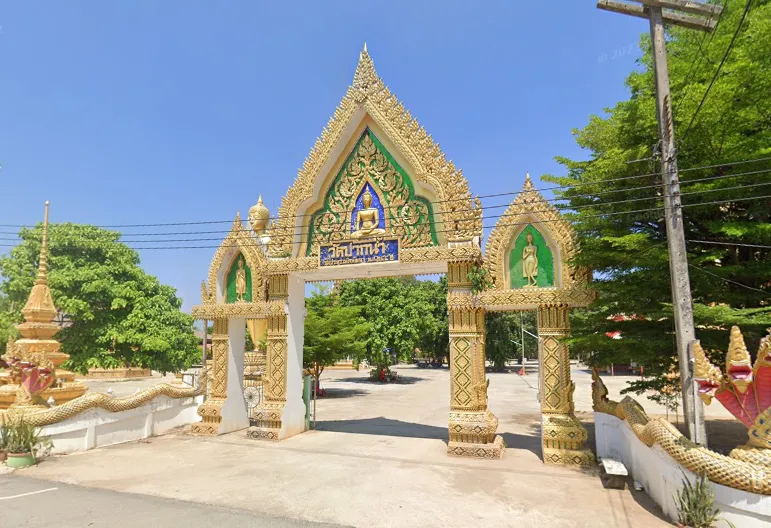
Wat Pak Nam in Sukhothai Province is one of the most ancient temples in the area, with a history spanning several centuries. It serves as a spiritual center for the local community, preserving its traditional architecture, religious significance, and the deep devotion of the people. One of the temple’s most remarkable features is its old-style ordination hall, a rare example of historical architecture that is increasingly difficult to find in the present day. This structure stands as a testament to the artistic and cultural heritage of the past.
The temple is most renowned for the Four Brothers Buddha Statues, or Luang Pho Si Phi Nong, which are bronze Buddhas created in the Sukhothai period in the Mara Vichaya posture. Each statue holds immense artistic and spiritual value, and local residents deeply revere them. Devotees regularly visit the temple to pay respects, make merit, and seek blessings for their wishes. A unique local tradition involves expressing gratitude or fulfilling vows by performing “Likay,” a traditional Thai folk drama, reflecting the intertwining of faith and cultural performance.
Currently, only two of the Four Brothers statues remain at Wat Pak Nam: the eldest, with a 42-inch wide lap, and the second brother, with a 39-inch wide lap. The third and fourth brothers are enshrined at Wat Nong Wong. Despite the reduced number, the remaining statues continue to be highly revered and are carefully protected by the community. Notably, in 1978, the two statues at Wat Pak Nam were stolen and remained missing for seven years until they were recovered in 1985. This incident deeply affected the local community, and ever since, the villagers have maintained nightly watch duties to safeguard these sacred relics.
In addition to the Four Brothers statues, the temple houses historical evidence of its antiquity, such as a plaster Buddha statue placed on the old ordination hall platform. The hall’s columns were made from laterite blocks, each with six to seven sides, measuring 14–17 inches in diameter and 5–9 inches in height, though only twelve blocks remain today. The hall’s walls have collapsed, and the roof no longer exists. Original baked bricks used in construction measure 5 × 10 × 25 inches. Initially, the plaster Buddha had no head, but it was later restored by Phor Koh Khachaphan, a Khmer-descendant artisan. The current abbot applied additional plaster over the original, making it difficult to observe the statue’s original artistic details.
Traces of the original ordination hall, where the Four Brothers were once enshrined, can still be found, although the layout is almost unrecognizable today. Elderly villagers recount that in the past, many small and medium-sized Buddha statues, ranging from the Sukhothai period to the late Rattanakosin era, were enshrined here. Today, only the two main statues remain, making them extremely precious and cherished by the local community.
Wat Pak Nam in Sukhothai Province is thus not only an ancient temple of historical and artistic value but also a spiritual center that reflects the life, faith, and traditions of the local people. The preservation of the temple and its sacred statues symbolizes the enduring cultural heritage of Sukhothai, connecting past generations with the present and continuing to inspire devotion and respect to this day.
 Wat Pak Nam Map
 Category:
  Group:
  Tag: ●Wat Pak Nam●wat pak nam ●sukhothai ●luang pho si phi nong ●sukhothai buddha statue ●ancient ubosot ●temple history ●sacred place ●likay ●old temple ●thai tradition ●sukhothai tourism ●bronze buddha ●sukhothai art Last Update: 6 MonthAgo
Comment
 Nearby Attractions
| Keyword (Advance) |
 Facebook Fanpage
 Region
 Art, Culture and Heritage
 Historical Sites and Monuments(
 Landmarks and Memorials(
 Art, Craft Centres, Tradition(
 Museums(
 University
 Other religious and spiritural sites(
 Suburban Living
 Village, Community(
 Nature and Wildlife
 National Parks and Marine Reserves(
 Mountain (Doi)(
 Dam, Reservoir, Lake(
 Waterfalls(
 Caves(
 River, Canal(
 Entertainment and Agricultural
 Farm, Parks, Gardens and Ecotourism(
 Copyright 2012,