
 Home
Home North(
 Chiang Mai(


Wat Bang Na
Rating: 3.6/5 (5 votes)
 Search By
  Map
Map
 Have Map
  No Map
Pathum Thani attractions
Attractions in Thailand
Open Days: Daily
Opening Hours: Open for worship during business hours
Wat Bang Na is a local Buddhist temple under the Maha Nikaya order, located in Bang Pho Nuea Subdistrict, Sam Khok District, Pathum Thani Province. This is one of the old Mon community temples of Sam Khok, with historical roots going back to the late Ayutthaya period. Today, it remains a meaningful place for worship, local heritage, riverside temple visits, and those who come to pay respect to Luang Pu Seng Chantharangsi, one of the temple’s most revered former abbots.
The temple stands out for its combination of Mon cultural identity, old temple atmosphere, sacred images, and long-standing local devotion. It is not only a religious site, but also a place that reflects the historical life of riverside communities in Pathum Thani. For travelers who want to explore Sam Khok beyond the better-known temple circuit, Wat Bang Na is a rewarding stop with both historical and spiritual appeal.
Wat Bang Na was established around 1767, during the late Ayutthaya period and the early Rattanakosin era. The temple was built by Mon Buddhists whose faith in Theravada Buddhism inspired them to create a religious center for the local community. Originally, the temple stood further west of the Chao Phraya River. The former site later became the location of Wat Bang Na School, while the temple itself was moved closer to the river for easier travel and communication.
The temple received its royal boundary on 2 February 1807, confirming its importance as an established center of Buddhist life in the early Rattanakosin period. Its relocation to the riverbank also reflects the practical role of waterways in local life at that time, when the Chao Phraya served as one of the main routes for movement, trade, and community connection.
One of the strongest visible markers of Wat Bang Na’s Mon heritage is its hongsa pole, a symbolic feature closely associated with Mon Buddhist culture. This single element already tells visitors that the temple is deeply connected to Mon identity. Together with the quiet riverside setting, it gives the temple a distinctive atmosphere that differs from many larger urban temples.
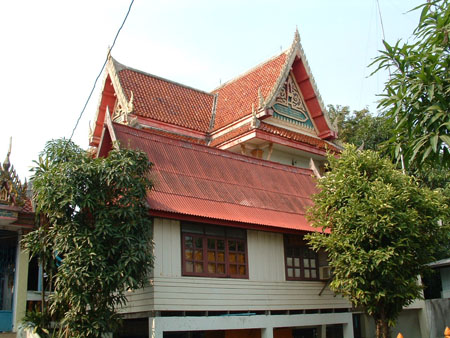
Inside the temple grounds are several important structures, including a small vihara located close to the ordination hall, two twelve-cornered chedis, a sermon hall, a prayer hall, and monks’ residences. The layout is relatively simple, but that simplicity is part of the temple’s charm. It feels like a genuine old community temple rather than a heavily commercialized attraction.
The temple’s principal sacred object is Phra Phuttha Thip Suwan Muni, a Buddha image in the Mara-Vijaya posture. The temple also preserves a brick-and-stucco Buddha image believed to date to the Ayutthaya period, along with other important images in the Pa Lelai and Mara-Vijaya postures, as well as a replica Buddha footprint kept inside the vihara. These elements make Wat Bang Na especially interesting for visitors who appreciate both religious devotion and historical Buddhist art.
In the past, Wat Bang Na was one of the most respected temples in the area, with many people coming to make merit because it was known as an old temple with monks devoted to serious study and disciplined monastic practice. This reputation helped build deep trust and lasting faith among local residents, and that sense of reverence remains part of the temple’s identity today.
The temple became especially well known through Luang Pu Seng Chantharangsi, a former abbot who was the first monk of Wat Bang Na to receive ecclesiastical rank and who helped make the temple famous through its sacred amulets and ritual objects. Because of him, the temple continues to attract visitors who come for devotion, blessing, and connection to the memory of a much-loved monk.
For travel planning, Wat Bang Na works very well as part of a one-day Sam Khok route. It can be combined with other temples such as Wat Sing, Wat Chankapho, Wat Tamnak, and Wat Thai Ko Yai, along with riverside restaurants and local accommodations. This makes it suitable for spiritual trips, heritage-focused travel, and short cultural escapes from Bangkok.
Getting There is straightforward by private car from Bangkok via the Pathum Thani–Sam Khok route, then continuing into Bang Pho Nuea Subdistrict. The temple is located near the Chao Phraya River and is easiest to access by road. A navigation app is recommended for the most accurate arrival, especially if you plan to continue on to other temples in Sam Khok on the same day.
Visitors who want to fully appreciate the temple should allow time to walk through the vihara, the chedi area, and the riverside section of the grounds. The temple offers a calm atmosphere, strong historical identity, and a sense of continuity between Mon heritage and present-day religious life, making it one of the more meaningful temple visits in Pathum Thani.
| Name | Wat Bang Na |
| Location | Bang Pho Nuea Subdistrict, Sam Khok District, Pathum Thani Province, Thailand |
| Address | 19 Moo 1, Bang Pho Nuea, Sam Khok, Pathum Thani 12160 |
| Highlights | Historic Mon temple, hongsa pole, Phra Phuttha Thip Suwan Muni, replica Buddha footprint, Luang Pu Seng Chantharangsi, Chao Phraya riverside atmosphere |
| History | Established around 1767 in the late Ayutthaya period and early Rattanakosin era by the Mon community |
| Distinctive Features | Old Mon community temple by the river with a hongsa pole, small vihara, two twelve-cornered chedis, and important historic Buddha images |
| Travel Information | Best reached by private car via the Pathum Thani–Sam Khok route into Bang Pho Nuea Subdistrict |
| Current Status | The temple remains active for worship, merit-making, and ongoing religious activities |
| Open Days | Daily |
| Opening Hours | Open for worship during business hours |
| Fees | Free Admission |
| Facilities | Temple courtyard, worship areas, parking, riverside zone, religious buildings within the compound |
| Main Areas / Zones | Ordination hall, vihara, two chedis, sermon hall, prayer hall, monks’ residences, riverside area |
| Abbot / Caretaker | Phra Athikan Samroeng Panyathipo |
| Main Contact Number | 02-581-5940 |
| Official Website / Official Page | Facebook: Wat Bang Na, Pathum Thani - Luang Pu Seng Official Temple Page |
| Nearby Tourist Attractions | 1. Wat Sing, Sam Khok – 5 km 2. Wat Chankapho – 6 km 3. Wat Tamnak – 7 km 4. Wat Thai Ko Yai – 13 km 5. Talat Ing Nam Sam Khok – 8 km |
| Nearby Restaurants | 1. Krujook Restaurant by the Chao Phraya – 7 km Tel: 083-775-5811 2. Wave Side Restaurant – 8 km Tel: 081-814-3777 3. Baan Kieng Nam – 9 km Tel: 083-806-3860, 02-147-4719 4. Je Toi Seafood Sam Khok – 9 km Tel: 02-593-1039, 088-099-2165 5. Baan 1,000 Mai Cafe & Farm – 12 km |
| Nearby Accommodations | 1. River View Pathum Hotel and Residence – 11 km Tel: 065-291-2671, 065-291-2672, 065-291-2673 2. The Pine Resort – 16 km Tel: 02-978-8851, 092-451-6546 3. IngNatee Resort – 17 km Tel: 082-796-7581 4. Pumpkin Villa Artel – 19 km Tel: 065-536-6691 5. Tinidee Hotel Bangkok Golf Club – 24 km Tel: 02-147-5858, 063-205-7034 |
Frequently Asked Questions (FAQ)
Q: Where is Wat Bang Na located?
A: It is located in Bang Pho Nuea Subdistrict, Sam Khok District, Pathum Thani Province, near the Chao Phraya River.
Q: What is Wat Bang Na known for?
A: It is known for its Mon heritage, hongsa pole, sacred Buddha images, replica Buddha footprint, and the legacy of Luang Pu Seng Chantharangsi.
Q: Is Wat Bang Na an old temple?
A: Yes. It dates back to around 1767, making it one of the older temples in Sam Khok.
Q: Is this temple good for a Sam Khok day trip?
A: Yes. It can easily be combined with other temples and riverside stops in Sam Khok.
Q: Is there an entrance fee?
A: No. Admission is free.
Q: Can visitors come to pay respect to Luang Pu Seng?
A: Yes. Many visitors still come because of the temple’s strong association with Luang Pu Seng Chantharangsi.
 Wat Bang Na Map
 Category:
  Group:
  Tag: ●Wat Bang Na●wat bang na ●wat bang na sam khok ●wat bang na pathum thani ●luang pu seng wat bang na ●mon temple sam khok ●old temple in pathum thani ●chao phraya riverside temple ●wat bang na travel ●things to do in sam khok ●pathum thani temple Last Update: 1 DayAgo
Comment
 Nearby Attractions
| Keyword (Advance) |
 Region
|
 Muang Pathum Thani(
 Copyright 2012,