
lovethailand home >North Travel Attractions >Nakhon Sawan Travel Attractions >Muang Nakhon Sawan >Takhian Luean > Wat Koh Hong
TL;DR: Wat Koh Hong is located at Ban Koh Hong, Village No. 6, Takhian Luean Subdistrict, Mueang Nakhon Sawan District, Nakhon Sawan, Thailand, open Open Daily During Office Hours, hours 08:30–16:30.
Wat Koh Hong
Open Days: Open Daily During Office Hours
Opening Hours: 08:30–16:30
Wat Koh Hong is an old riverside temple in Takhian Luean Subdistrict, Mueang Nakhon Sawan District, Nakhon Sawan Province. The temple dates back to the late Ayutthaya period and was originally known as “Wat Koh.” Around 1942, the word “Hong” was added, forming the present name “Wat Koh Hong.” Today, the temple is valued as a Buddhist site, a local art-history landmark, and an important cultural attraction for travelers interested in old temples, mural paintings, and riverside communities in Northern Thailand.
The importance of Wat Koh Hong lies not only in its age but also in the artistic evidence preserved within the temple compound. One of the most notable discoveries is a mural painting of celestial beings found beneath a layer of old plaster after part of the wall surface had peeled away. The style of the painting reflects artistic characteristics from the late Ayutthaya to early Rattanakosin period, making Wat Koh Hong an important site for studying traditional Thai mural art in Nakhon Sawan.
Wat Koh Hong was established around 1757 during the late Ayutthaya period. Its original name, Wat Koh, is believed to have come from the geography of the area, which may once have resembled an island or a landform surrounded by water during certain seasons. This connection between the temple name and the local landscape reflects how Thai communities often named temples according to their natural environment.
The temple is located in Takhian Luean, a riverside community along the Chao Phraya River. For generations, the river served as a transportation route, a livelihood resource, and a cultural connector for local communities. Wat Koh Hong therefore functioned as more than a religious site; it was also a spiritual and social center for people living along the river.
Wat Koh Hong received its later royal boundary grant on July 31, 1951, with a consecrated boundary area measuring 40 meters wide and 80 meters long. This confirms the temple’s official religious status and its role as a proper site for Buddhist monastic ceremonies. Such information also helps trace the temple’s development during the modern period of community growth in Nakhon Sawan.
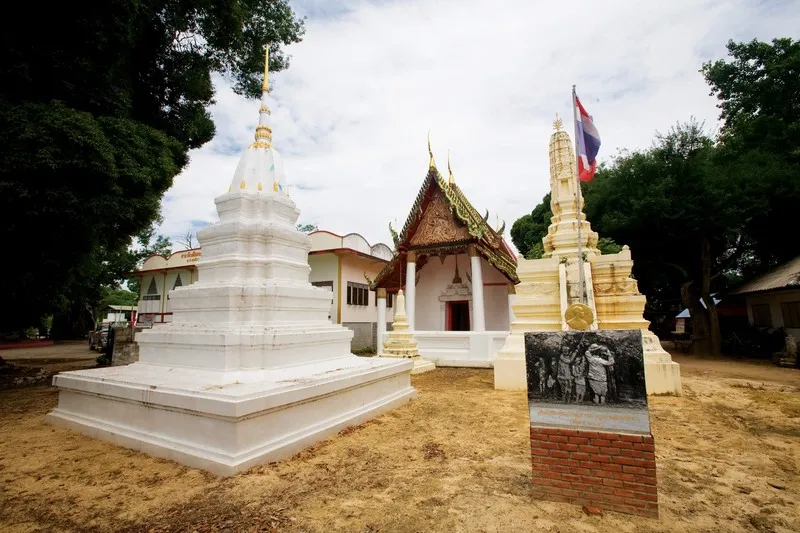
Within the temple compound are several important structures, including the ordination hall, an old viharn, a sermon hall, monks’ residences, and other functional buildings. The ordination hall is built of brick and plaster, with traditional Thai roof elements such as chofa, bai raka, hang hong, and decorative naga forms. These architectural details reflect the continuity of Thai Buddhist design from the late Ayutthaya to early Rattanakosin period.
The old viharn is especially important because of the mural painting found beneath the plaster layer. This discovery shows that earlier artwork had been covered during later renovations. When the plaster deteriorated, parts of the original painting became visible again. The image of celestial beings is valuable not only as religious art but also as evidence of the temple’s older artistic phase.
In Thai Buddhist art, celestial beings often appear as part of sacred visual narratives. They represent heavenly realms, divine presence, and reverence toward the Buddha. The remaining mural at Wat Koh Hong therefore helps visitors understand both the religious imagination and the artistic style of the period in which it was created.
Wat Koh Hong is also connected with the Mon community in Nakhon Sawan. The riverside areas along the Chao Phraya were historically home to diverse ethnic groups, including Mon communities whose Buddhist traditions, local customs, and cultural identity became part of the region’s heritage. This makes the temple meaningful not only as a Thai Buddhist site but also as part of the multicultural history of Nakhon Sawan.
The temple is associated with King Chulalongkorn’s northern royal journey. Historical travel information notes that King Rama V passed through Wat Ban Koh, or Wat Koh Hong, on August 12, 1906. This connection adds another layer of historical value, linking the temple with the modern history of the Rattanakosin period.
Today, Wat Koh Hong remains an active temple within the local community. Visitors can pay respect, observe the old religious structures, learn about mural art, and experience the calm atmosphere of a riverside temple. It is best suited for cultural travelers who prefer meaningful, low-key destinations rather than crowded tourist sites.
Getting There is most convenient by private car from Nakhon Sawan city. Travelers can head toward Takhian Luean Subdistrict and the Ban Koh Hong community. The temple is located within a local residential area, so using a map application before departure is recommended. Local hired transport from the city can also be used.
| Name | Wat Koh Hong |
| Location | Ban Koh Hong, Village No. 6, Takhian Luean Subdistrict, Mueang Nakhon Sawan District, Nakhon Sawan, Thailand |
| Highlights | Late Ayutthaya temple, celestial-being mural, old viharn, riverside community atmosphere |
| History | Founded around 1757 during the late Ayutthaya period; formerly known as Wat Koh before becoming Wat Koh Hong around 1942 |
| Name Origin | The original name Wat Koh came from the area’s island-like landscape; the word Hong was later added to form the present name |
| Distinctive Features | Old ordination hall and viharn reflecting late Ayutthaya to early Rattanakosin Buddhist architecture |
| Key Evidence | Celestial-being mural beneath old plaster, old viharn, and royal boundary grant dated July 31, 1951 |
| Abbot / Caretaker | Phra Maha Charun Jirasubho |
| Main Contact Number | +66 56 803554, +66 56 358322 |
| Travel Information | Travel from Nakhon Sawan city to Takhian Luean Subdistrict and Ban Koh Hong community by private car or local hired transport |
| Current Status | Active local temple and cultural learning site in Nakhon Sawan |
| Open Days | Open Daily During Office Hours |
| Opening Hours | 08:30–16:30 |
| Fees | Free Admission |
| Main Areas / Zones | Ordination Hall, Old Viharn, Sermon Hall, Monks’ Residences, Riverside Community Area |
| Nearby Tourist Attractions | 1. Pasan Landmark – 8 km 2. Sawan Park – 9 km 3. Wat Woranat Banphot (Khao Kob) – 10 km 4. Wat Kiriwong – 12 km 5. Bueng Boraphet – 19 km |
| Nearby Restaurants | 1. 596 Mor Tom Koh Hong – 1 km Tel. +66 61 892 2038, +66 64 284 3451, +66 82 773 0576 2. 55 Coffee – 2 km 3. Krua Takhian Luean – 4 km Tel. +66 80 242 9549 4. Ban Pa Cafe – 7 km 5. Restaurants In Nakhon Sawan City – 9 km |
| Nearby Accommodations | 1. The Tree Resort Nakhon Sawan – 3 km Tel. +66 93 190 5444 2. The Sale Hub – 5 km 3. HOP INN Nakhon Sawan – 9 km Tel. +66 2 659 2899 4. B2 Nakhon Sawan Premier Hotel – 10 km 5. 42C The Chic Hotel – 11 km |
Frequently Asked Questions (FAQ)
Q: Where Is Wat Koh Hong Located?
A: Wat Koh Hong is located in Ban Koh Hong, Village No. 6, Takhian Luean Subdistrict, Mueang Nakhon Sawan District, Nakhon Sawan Province.
Q: Why Is Wat Koh Hong Important?
A: It is an old temple from the late Ayutthaya period with important artistic evidence, including an old viharn and mural paintings of celestial beings.
Q: What Is The Main Highlight Of Wat Koh Hong?
A: The main highlight is the mural painting of celestial beings found beneath an old plaster layer, along with the temple’s old viharn and riverside atmosphere.
Q: Is Wat Koh Hong Connected To King Rama V?
A: Yes. The temple is associated with King Chulalongkorn’s northern royal journey in 1906, when he passed through Wat Ban Koh, known today as Wat Koh Hong.
Q: Is There An Entrance Fee?
A: No, admission is free.
Q: How Long Should Visitors Spend At Wat Koh Hong?
A: Around 30 minutes to 1 hour is suitable for paying respect, viewing the old viharn, and observing the mural evidence.
 Category: ●Places of Worship
 Group: ●Temple
Last Update : 5 MonthAgo
 Last Update : 5 MonthAgo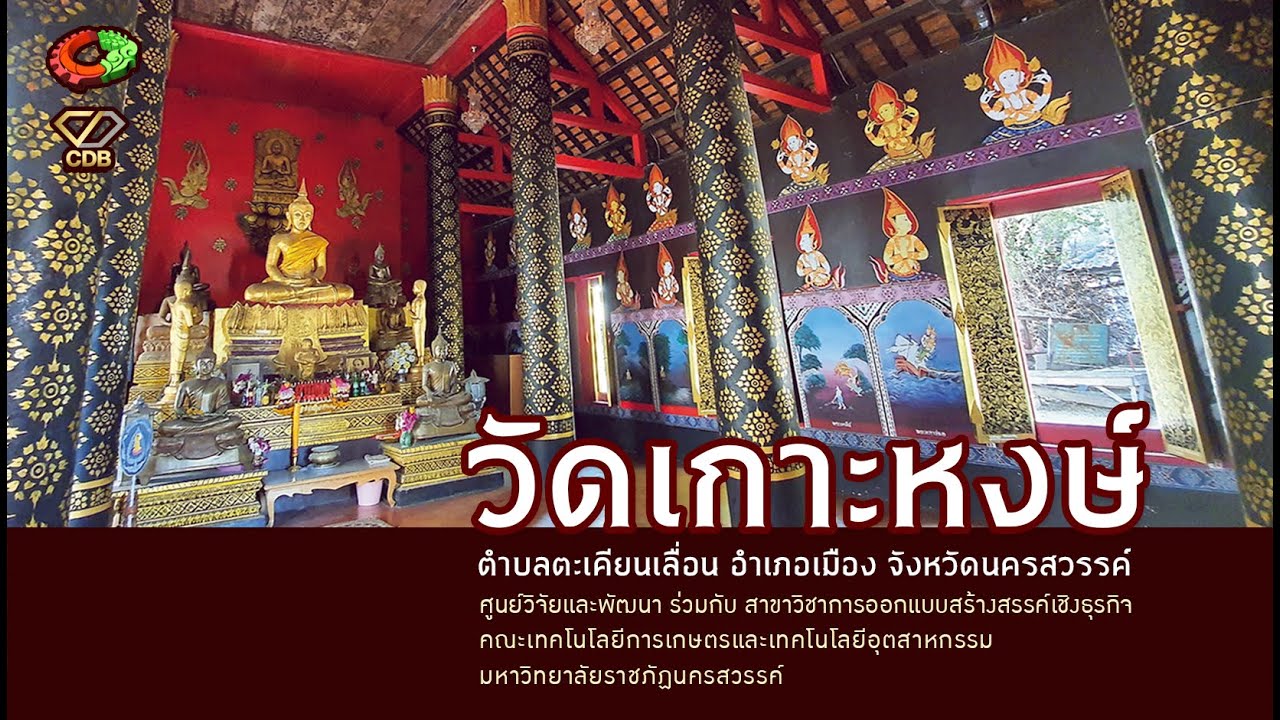
 Click to Access the Navigation Map GPS
Wat Koh Hong Map
Recommend

 Art, Culture and Heritage
 Historical Sites and Monuments(3)
 Landmarks and Memorials(4)
 Art, Craft Centres, Tradition(9)
 Museums(3)
 Educational Places
 Museum for Study(1)
Temple(34)
Museum for Study(1)
Temple(34)
 Other Sacred Sites(4)
 Research and Development
 Royal Project(1)
 Suburban Living
 Village, Community(4)
 Local Market(2)
 Floating Market(1)
 Nature and Wildlife
 National Parks and Marine Reserves(3)
 Mountain (Doi)(3)
 Dam, Reservoir, Lake(6)
 Waterfalls(3)
 Caves(8)
 River, Canal(6)
 Other natural attractions(3)
 Entertainment and Agricultural
 Zoos and Aquariums(2)
 Animal camps and shows(1)
 Farms, Parks and Ecotourism(6)
 Accommodation
 Hotel(1)
 Travel Articles, Recipes
 Travel Review, Food Review(3)


