
lovethailand home >Central Travel Attractions >Nakhon Pathom Travel Attractions >Nakhon Chai Si >Nakhon Chai Si > Wat Klang Bang Kaeo and Phra Phutthawithi Nayok Mu..
TL;DR: Wat Klang Bang Kaeo and Phra Phutthawithi Nayok Museum is located at Nakhon Chai Si Subdistrict, Nakhon Chai Si District, Nakhon Pathom Province, open The temple is open daily / The museum is open Thursday - Sunday and on public, hours Museum 09.00 - 16.00.
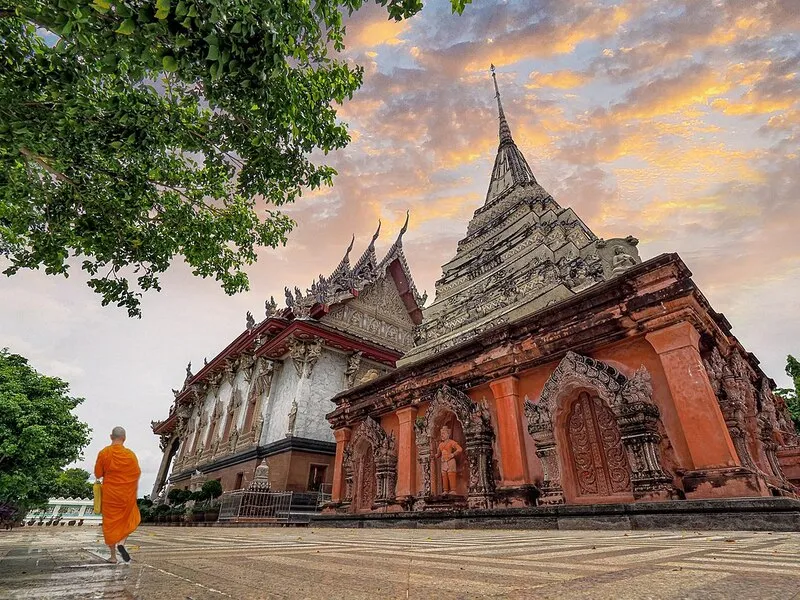
Wat Klang Bang Kaeo and Phra Phutthawithi Nayok Museum
Open Days: The temple is open daily / The museum is open Thursday - Sunday and on public holidays
Opening Hours: Museum 09.00 - 16.00
Wat Klang Bang Kaeo and the Phra Phutthawithi Nayok Museum in Nakhon Pathom is an ancient riverside temple on the Tha Chin River, valued for its historical importance, artistic heritage, and long-standing spiritual significance to the people of Nakhon Chai Si. The temple was formerly known as “Wat Kongkaram,” a name that clearly reflects its close relationship with the river. In the past, communities along the Tha Chin River depended on waterways as their main route for transportation, trade, and communication. For that reason, Wat Klang Bang Kaeo was never only a place for religious practice. It also served as a cultural and spiritual center for the surrounding community from an early period onward.
One of the temple’s main attractions is its age and architectural character. Archaeologists believe that Wat Klang Bang Kaeo dates back to the Ayutthaya period. Within the temple grounds, visitors can still see key components of an old Thai temple, including an ubosot, a viharn, and an ancient principal Buddha image that reflect the development of Thai Buddhist art over the centuries. As soon as visitors enter the temple compound, they can feel an atmosphere that differs from more commercialized temple destinations. The setting here is peaceful, shaded, and deeply connected to the quiet character of a traditional riverside temple community.
Another feature that makes Wat Klang Bang Kaeo stand out from many other historic temples is its role as a repository of religious heritage and Thai traditional knowledge associated with important monks of the temple, especially Luang Pu Boon and Luang Pu Perm. Both monks became highly respected figures in the fields of sacred amulets, Buddhist ritual objects, esoteric knowledge, traditional medicine, and other branches of old Thai wisdom. Because of this, the importance of Wat Klang Bang Kaeo is not tied only to its historic buildings. It is also closely linked to the legacy of these revered teachers who helped establish the temple’s wider reputation.
Luang Pu Boon, also known by the ecclesiastical title Phutthawithi Nayok (Boon Khanthachoti), served as abbot of Wat Klang Bang Kaeo from 1886 to 1935. This was a long and highly important period in the temple’s development. During his time, the temple became widely known as the residence of a great monk respected for sacred knowledge, traditional herbal medicine, and various branches of old learning. The ritual objects and sacred amulets associated with Luang Pu Boon remain highly regarded among collectors and devotees today, whether in the form of Buddha images, amulets, or protective charms.
Beyond his reputation for sacred objects, Luang Pu Boon was also respected for his knowledge of Thai medicine, herbal remedies, and astrology. These subjects did not survive only in stories or in the memories of disciples. They also remain visible through palm-leaf manuscripts, samut khoi folding books, medical formulas, handwritten astrological calendars, and personal belongings that have been preserved inside the temple museum. This aspect makes Wat Klang Bang Kaeo far more than simply a temple known for amulets. It is also a place that preserves Thai wisdom in a broader and more integrated way.
Later, Luang Pu Perm, who held the title Phra Phutthawithi Nayok (Perm Punyawasano), succeeded Luang Pu Boon as abbot. As a disciple of Luang Pu Boon, he played an important role in carrying on the temple’s traditions, preserving the knowledge related to sacred objects, and maintaining the faith of the local community. The identity of Wat Klang Bang Kaeo as an important temple of Nakhon Chai Si did not come from a single person alone, but from the continued inheritance of a lineage of respected teachers whose influence reached both the local area and devotees across Thailand.
Today, Wat Klang Bang Kaeo is under the care of Phra Khru Sirichai Khanarak, the ecclesiastical head of Nakhon Chai Si District and the current abbot of the temple. He has played a major role in preserving the temple’s heritage in a form that remains accessible to younger generations. One of his most important contributions is the establishment of the “Phra Phutthawithi Nayok Museum” within the temple grounds. The museum was created to systematically preserve antiquities, art objects, personal belongings, and the knowledge associated with the temple’s 2 former abbots. As a result, visitors who come here do not only pay respects and admire the temple itself, but can also learn about its history in much greater depth in one place.
The Phra Phutthawithi Nayok Museum is one of the strongest highlights of Wat Klang Bang Kaeo today because it brings the stories of Luang Pu Boon and Luang Pu Perm back to life through real objects, original documents, and personal possessions. The purpose of the museum was never simply to collect old things. Instead, it was created to preserve the memory of the temple in a concrete and meaningful way, allowing people interested in religion, history, Buddhist art, amulets, and Thai traditional knowledge to study these materials directly.
The museum is divided into 3 floors, each with a distinct theme and character. The first floor is the part that most directly introduces visitors to Luang Pu Boon and Luang Pu Perm. It displays their biographies, photographs, statues, personal belongings, sacred charms, ritual objects, and Buddha images connected to both former abbots. It also includes displays related to Thai medicine, herbal remedies, and traditional healing knowledge. This helps visitors understand that respected monks in the past were not only religious leaders, but also guardians and transmitters of practical knowledge that benefited the wider community.
On the first floor, visitors can also see palm-leaf manuscripts, samut khoi folding books, astrological texts, Thai medical treatises, and illustrated manuscripts of Phra Malai. These materials are historically valuable and vividly reflect the worldview of Thai society in earlier times. They show that the Phra Phutthawithi Nayok Museum has significance beyond that of a typical temple museum, because it connects Buddhism, belief systems, folk medicine, and traditional learning within one well-curated cultural space.
The second floor focuses on household items and decorative objects that reflect social status, craftsmanship, and taste in the past. These include ceramic ware, cut glass, brassware, and the mother-of-pearl pulpit associated with Luang Pu Boon. This pulpit is especially significant because it was presented by Prince Athit Thipphapha, who served as Regent during the reign of King Rama VIII. The objects on this floor broaden the understanding of Wat Klang Bang Kaeo’s importance, showing that its influence was not limited to the local area but also had links to elite circles and refined artistic culture in certain historical periods.
The third floor has a more solemn and contemplative atmosphere, encouraging visitors to spend time observing carefully. It displays silver-covered Buddha images, carved wooden Buddha figures, an old busabok pulpit with carved wood and gilded lacquer, and the former kuti of Luang Pu, reassembled in its original style. Within this space, a wax figure of Luang Pu has been installed so that the setting resembles the period when he was still alive. This floor allows visitors to feel closer to the past, not only by looking at old objects but also by sensing the simplicity, rhythm, and atmosphere of monastic life in earlier times.
Seen as a whole, the Phra Phutthawithi Nayok Museum is far more than a room of old artifacts. It is a place that tells the story of Wat Klang Bang Kaeo through people, possessions, and forms of knowledge that once played a living role in the community. Each object matters not just as an antique, but as a witness to its era, a record of faith, and a representative of wisdom that once served real people in everyday life.
Architecturally, Wat Klang Bang Kaeo is also highly appealing to visitors who appreciate old temples and Thai Buddhist art. The ubosot, viharn, and principal Buddha image all express the temple’s age very clearly. The overall atmosphere remains calm and shaded, with large trees and the riverside setting giving the temple a restful quality. Unlike temples that feel rushed or heavily commercialized, Wat Klang Bang Kaeo has retained a simple dignity. That simplicity is one of its strengths, because it allows visitors to feel that coming here is not only about paying respects, but also about exploring culture and finding a moment of peace.
For those interested in Thai amulets and sacred objects, Wat Klang Bang Kaeo is one of the most historically important temples in that tradition. The names of Luang Pu Boon and Luang Pu Perm continue to be widely mentioned in the world of Thai amulet study, especially in connection with ancient protective charms and sacred ritual objects. Even so, visitors do not need prior knowledge of amulets to appreciate this place. The temple offers enough historical and cultural depth through the biographies of its monks, its architecture, and the museum displays to make the visit meaningful for a general traveler as well.
In travel terms, Wat Klang Bang Kaeo is especially suitable for people interested in exploring Nakhon Chai Si through culture and local heritage. The temple is located in Nakhon Chai Si District, an area that still retains the charm of old communities, local markets, museums, and important temples within a relatively short distance of one another. Visitors can easily continue their journey to nearby places such as Talat Tha Na, Jesada Technik Museum, the Thai Human Imagery Museum, or other significant temples in the area. This makes Wat Klang Bang Kaeo suitable both as a primary destination and as part of a 1-day cultural itinerary in Nakhon Chai Si.
Travel to Wat Klang Bang Kaeo is easiest by private car. From Bangkok, visitors can take Borommaratchachonnani Road or Phet Kasem Road toward Nakhon Pathom, then continue into Nakhon Chai Si District and on to the temple, which is located within an old riverside community along the Tha Chin River. Traveling by car is the most convenient option because it also allows for easy stops at nearby attractions in Nakhon Chai Si. Those using public transportation can first travel to Nakhon Chai Si and then continue by local transport to the temple.
Anyone planning to visit the museum should note that its opening schedule differs from the temple itself. The museum is open every Thursday to Sunday and on public holidays from 09.00 to 16.00. Admission is 20 baht for adults and 10 baht for school and university students. Group visits should be arranged in advance with a formal letter addressed to the abbot of Wat Klang Bang Kaeo. This makes planning particularly important, especially for those traveling from outside the area or arranging a dedicated cultural visit.
In a contemporary sense, Wat Klang Bang Kaeo also stands as an example of how a temple can successfully combine faith with preservation. The establishment of the museum ensures that the legacy of its revered monks is not lost and helps younger generations gain access to local history in a meaningful way. The temple is therefore not only a destination for believers, but also an educational site for students, collectors, art enthusiasts, and cultural travelers.
In summary, Wat Klang Bang Kaeo and the Phra Phutthawithi Nayok Museum are among the most complete cultural destinations in Nakhon Pathom for those interested in history, religion, Buddhist art, and the legacy of revered Thai monks. Visitors gain more than a temple visit. They encounter traces of Thailand’s past, experience the atmosphere of a living riverside temple, and discover a carefully preserved body of traditional wisdom all within one place.
| Place Summary | An ancient temple on the Tha Chin River, formerly known as Wat Kongkaram, believed to date back to the Ayutthaya period, with the Phra Phutthawithi Nayok Museum preserving antiquities, sacred objects, and the legacy of Luang Pu Boon and Luang Pu Perm. |
| Highlights | A historic temple with a peaceful atmosphere, old ubosot, viharn, and principal Buddha image, plus a 3-floor museum featuring amulets, sacred charms, Thai medical manuscripts, palm-leaf texts, art objects, and the former kuti of Luang Pu. |
| History / Period | Formerly called Wat Kongkaram, this ancient riverside temple is believed by archaeologists to have been established during the Ayutthaya period and has remained an important religious and cultural site into the present day. |
| Current Abbot | Phra Khru Sirichai Khanarak, Ecclesiastical Head of Nakhon Chai Si District |
| Address | Nakhon Chai Si Subdistrict, Nakhon Chai Si District, Nakhon Pathom Province |
| Travel | Best reached by private car from Bangkok via Borommaratchachonnani Road or Phet Kasem Road toward Nakhon Chai Si, then continuing into the old riverside community where the temple is located. |
| Open Days / Opening Hours | The temple is open daily / The museum is open Thursday - Sunday and on public holidays from 09.00 - 16.00. |
| Admission Fee | Museum admission: Adults 20 baht / School and university students 10 baht / Group visits should be arranged in advance with a formal letter addressed to the abbot of Wat Klang Bang Kaeo. |
| Facilities | Temple grounds, worship areas, on-site museum, and visitor parking area. |
| Zones | The museum is divided into 3 floors: 1) Biography and personal belongings of Luang Pu Boon and Luang Pu Perm, sacred charms, ritual objects, Thai medicine, herbal knowledge, and palm-leaf manuscripts 2) Ceramic ware, cut glass, brassware, and the mother-of-pearl pulpit 3) Silver-covered Buddha images, carved wooden Buddha images, the old busabok pulpit, and the reconstructed kuti with a wax figure of Luang Pu. |
| Nearby Attractions | 1. Talat Tha Na (Old Nakhon Chai Si Market), about 1 km 2. The Layout For Train, about 1.6 km 3. Jesada Technik Museum, about 1.9 km 4. Nakhon Chai Si Railway Station, about 2.3 km 5. Wat Klang Khu Wiang, about 2.4 km 6. Thai Human Imagery Museum, about 2.9 km |
| Nearby Restaurants | 1. Krua Ajarn Chat Khao Kaeng Nakhon Chai Si, about 1.2 km. Tel. 083-157-9519, 086-322-6766 2. Mosaic Cha Nakhon Chai Si, about 1.3 km. Tel. 062-326-4152 3. Lang Eng, Talat Tha Na Nakhon Chai Si, about 1.4 km. Tel. 098-794-6645 4. Laab Ped Si Sa Ket Nakhon Chai Si, about 2.2 km. Tel. 066-110-4422 5. Floating Noodle Restaurant by Wat Klang Khu Wiang, about 2.4 km. Tel. 092-946-6428 6. Thai Riverside Raft Restaurant Nakhon Chai Si, about 5.6 km. Tel. 097-124-1112, 034-338-671 7. Baan Natcha x B COFF Cafe, about 6.1 km. Tel. 090-979-0942 |
| Nearby Accommodation | 1. Ruean Mai Chai Nam, about 6.1 km. Tel. 087-171-4190 2. Baan Khlong Suan Homestay, about 6.6 km. Tel. 081-255-3121 3. S Garden View, about 6.8 km. Tel. 093-235-3998 4. Neera Retreat Hotel, about 7.4 km. Tel. 034-324-034 5. Sampran Riverside, about 8.4 km. Tel. 034-322-544 6. RXV Wellness Village, about 8.5 km. Tel. 034-151-822 7. Barn Sampran Resort, about 8.7 km. Tel. 094-198-8848 8. Mida Grande Hotel Dhavaravati Nakhon Pathom, about 29 km. Tel. 034-966-700 |
| Main Contact Numbers | 034-331-462, 034-332-182, 095-590-5374 |
Frequently Asked Questions (FAQ)
Q: How old is Wat Klang Bang Kaeo?
A: Archaeologists believe that Wat Klang Bang Kaeo dates back to the Ayutthaya period. It was formerly known as Wat Kongkaram and stands along the Tha Chin River in an old riverside community.
Q: On which days is the Phra Phutthawithi Nayok Museum open?
A: The museum is open every Thursday to Sunday and on public holidays from 09.00 to 16.00.
Q: How much is the museum entrance fee?
A: Admission is 20 baht for adults and 10 baht for school or university students. Group visits should be arranged in advance with a formal letter addressed to the abbot of Wat Klang Bang Kaeo.
Q: What can visitors see inside the museum?
A: The museum displays the biographies and belongings of Luang Pu Boon and Luang Pu Perm, sacred charms, ritual objects, Buddha images, Thai medical texts, herbal knowledge, palm-leaf manuscripts, ceramic ware, cut glass, brassware, the mother-of-pearl pulpit, carved wooden Buddha images, and the reconstructed kuti with a wax figure of Luang Pu.
Q: What kind of travelers is Wat Klang Bang Kaeo suitable for?
A: It is ideal for visitors interested in temple visits, old religious sites, local history, Buddhist art, Thai amulet culture, and cultural travel in the Nakhon Chai Si area.
Q: What makes Wat Klang Bang Kaeo different from other temples?
A: Its distinctive character comes from the combination of an old riverside temple atmosphere, the legacy of Luang Pu Boon and Luang Pu Perm, and a museum that preserves art objects, sacred items, Thai medicine, and traditional knowledge in a carefully organized way.
Tel : 034331462, 034332182
 Tel : 034331462, 034332182
 Category: ●Places of Worship
 Group: ●Temple
Last Update : 7 MonthAgo
 Last Update : 7 MonthAgo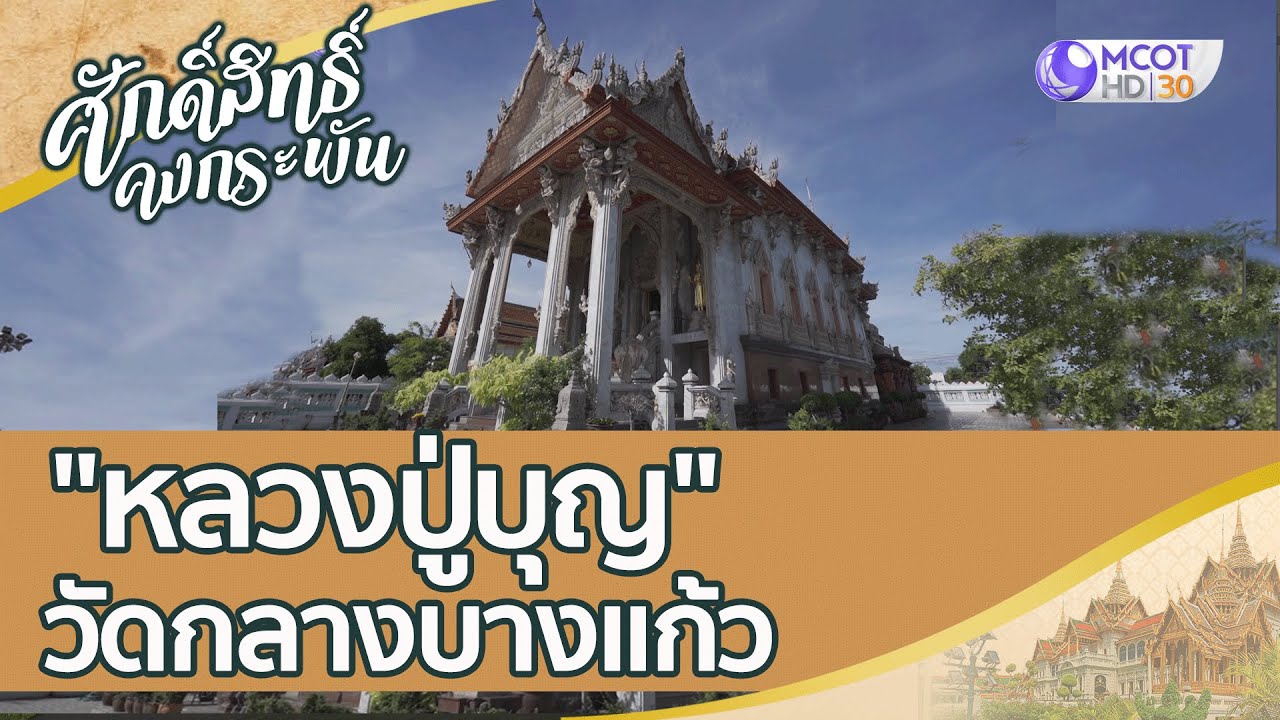
 Click to Access the Navigation Map GPS
Wat Klang Bang Kaeo and Phra Phutthawithi Nayok Museum Map
Recommend

 Art, Culture and Heritage
 Historical Sites and Monuments(6)
 Landmarks and Memorials(4)
 Royal Palace(3)
 Art, Craft Centres, Tradition(5)
 Museums(13)
 Art Gallery(1)
 Educational Places
 Educational Gardens, Farm(2)
Temple(77)
Educational Gardens, Farm(2)
Temple(77)
 Other Sacred Sites(5)
 Research and Development
 Royal Project(1)
 Suburban Living
 Village, Community(3)
 Local Market(3)
 Floating Market(8)
 Nature and Wildlife
 River, Canal(4)
 Other natural attractions(3)
 Entertainment and Agricultural
 Animal camps and shows(1)
 Stadium(1)
 Farms, Parks and Ecotourism(5)
 Theater(1)
 Outdoor and Adventure Activities(2)
 Spas and Wellness
 Spas and Wellness(1)
 Travel Articles, Recipes
 Travel Review, Food Review(1)


