
 Home
Home North(
 Chiang Mai(


Wat Samrong Local Museum
Rating: 4.2/5 (5 votes)
 Search By
  Map
Map 
 Have Map
  No Map
Nakhon Pathom attractions
Attractions in Thailand
Open Days: Sunday - Saturday
Opening Hours: 08:00 AM - 05:00 PM
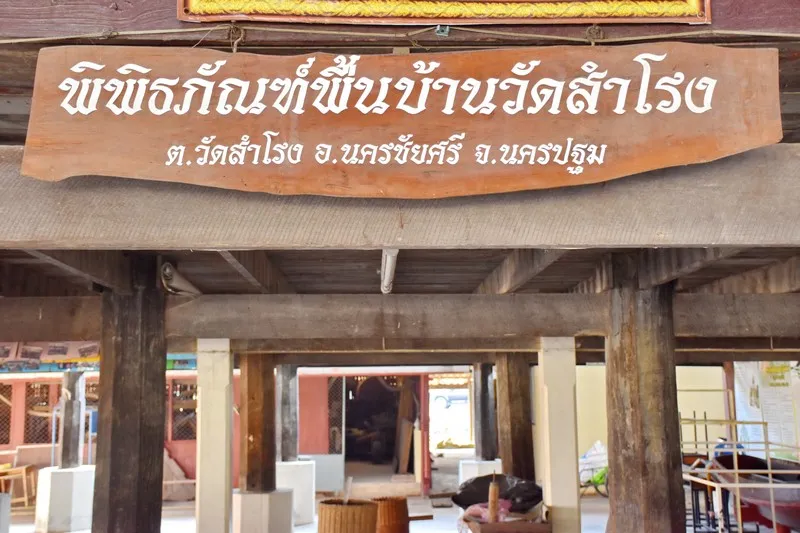
Wat Samrong Local Museum is located within Wat Samrong, Wat Samrong Subdistrict, Nakhon Pathom Province. It serves as a local wisdom learning center that offers a comprehensive reflection of traditional Thai life in the past. The museum was established in 1999 by Phra Khru Siri Punyaphivat, the abbot of Wat Samrong, who wished to collect old household tools and traditional equipment that were gradually disappearing from Thai society and preserve them as a learning resource for future generations.
The founding of the museum was made possible through the cooperation of local villagers, who donated tools, utensils, and various objects once used in their everyday lives. These included farming tools, fishing equipment, and kitchen utensils. As a result, the items displayed here are not merely museum pieces, but real objects connected to the lives, memories, and experiences of the people in the community.
The museum is located on the ground floor of a multipurpose pavilion within the temple grounds. The exhibition area is clearly divided into categories, allowing visitors to explore the displays in a structured and meaningful way. Inside, the museum is organized into 6 main sections, each representing a different aspect of traditional Thai rural life.
The first section is the traditional kitchen. It displays cooking equipment such as clay stoves, earthen pots, different types of clay cookware, clay kettles, and kitchen utensils such as fish-washing baskets, coconut graters, ladles, and water jars. This section reflects a simple lifestyle closely connected to natural resources.
The second section is local handicrafts. It features woven objects made from bamboo and rattan, such as carriers, baskets, trays, winnowing baskets, scoops, and other everyday tools. This section highlights the wisdom of transforming natural materials into practical household items.
The third section is rice measuring equipment, which formed an important part of agricultural life. Items on display include wide-mouthed baskets, scooping baskets, measuring baskets, wooden and metal rice-measuring containers, rice grinding trays, and wooden rice pounders. This section illustrates traditional systems of weighing and measuring rice used by earlier generations.
The fourth section presents farming tools, reflecting Thailand’s agricultural heritage. In the past, rice farming depended heavily on animal labor, especially buffaloes and cows. Tools displayed here include buffalo neck harnesses for plowing, yokes, harrows, plows, shoulder poles for carrying rice, pointed carrying poles, traditional farmer hats, and rice sickles.
The fifth section focuses on fishing and trapping equipment, representing a self-sufficient lifestyle based on local natural resources. This section includes animal traps such as rat traps, snares, and other trapping devices, as well as fishing tools such as fish baskets, hooks, nets, spears, and fish traps.
The sixth section contains miscellaneous household items displayed in 3 cabinets. In the first cabinet, the upper shelf displays brass betel nut sets, traditional oil lamps, and door locks, while the lower shelf contains carpentry tools such as hand planes, grooving planes, back saws, and crosscut saws. Another part of the same cabinet displays brassware such as brass trays and brass pots. The second cabinet displays weighing scales, abacuses, and various other household objects.
In addition to the indoor displays, the surrounding area features jars and glazed pottery of various types. There is also a separate building dedicated to farming life, displaying tools used for plowing, sowing, harvesting, and threshing rice, such as rice winnowing machines, rice mills, and mortars for pounding rice. Visitors can also see water-lifting equipment such as traditional water wheels and engine-powered water wheels, along with displays of traditional boats including rowboats, hired passenger boats, and flat-bottom boats. These displays reflect the strong connection between the community and water-based ways of life.
One of the museum’s most distinctive features is its “living community story.” Every tool and object on display has its own origin, former owner, and story connected to families and daily life in the local area. Walking through the museum feels like reading the history of the community through real objects rather than through written records alone.
Another important dimension of the museum is its potential for “learning-based activities.” These may include demonstrations of how traditional tools were used, learning basic weaving techniques, trying rice pounding, or exploring traditional rice farming practices. Such activities allow visitors not only to observe but also to engage more deeply with Thai local wisdom and gain a richer understanding of rural life in the past.
The overall atmosphere of the museum is simple, peaceful, and deeply rooted in the charm of rural Thailand. Visitors often feel as if they have stepped back into a time when life was closely tied to nature, farming, waterways, and community cooperation.
Today, Wat Samrong Local Museum continues to play an important role in preserving local wisdom and serves as a valuable learning resource for students, researchers, and travelers who want to understand Thai culture beyond the surface. It is a meaningful destination for those interested in community history, traditional tools, and the everyday heritage of Thailand.
Travel Visitors can travel from Nakhon Pathom city to Wat Samrong Subdistrict, or from Bangkok via Nakhon Chai Si district before continuing to Wat Samrong. The museum is most conveniently accessed by private car.
Visitors are advised to dress respectfully, as the museum is located within temple grounds, and to follow the rules and etiquette of the site in order to ensure a proper and respectful visit.
| Place Name | Wat Samrong Local Museum |
| Highlights | A complete collection of traditional Thai tools and rural ways of life displayed across 6 categories |
| History | Established in 1999 by Phra Khru Siri Punyaphivat |
| Address | Wat Samrong, Wat Samrong Subdistrict, Nakhon Pathom Province, Thailand |
| Coordinates | 13.7545, 100.2289 |
| Travel | Accessible via the Nakhon Chai Si route and best reached by private car |
| Nearby Attractions | 1. Lam Phaya Floating Market — 8 km 2. Wat Rai Khing — 10 km 3. Don Wai Floating Market — 18 km 4. Phutthamonthon — 20 km 5. Mahidol University, Salaya — 22 km |
| Nearby Restaurants | 1. Krua Lam Phaya — 8 km — 034-239-000 2. Ruen Nam Restaurant — 10 km — 034-321-222 3. Krua Khun Yai — 9 km — 081-234-5678 4. Suan Ahan Ban Rim Nam — 12 km — 034-555-123 5. Traditional Boat Noodle Shop — 7 km — 089-888-7777 |
| Nearby Accommodations | 1. Chawalun Resort — 15 km — 034-968-346 2. River Hotel Nakhon Pathom — 18 km — 034-250-123 3. Salaya Pavilion Hotel — 22 km — 02-800-1210 4. The September Salaya — 22 km — 02-889-5999 5. RK Riverside Resort — 16 km — 034-111-222 |
Frequently Asked Questions (FAQ)
Q: When was the museum established?
A: The museum was established in 1999 by Phra Khru Siri Punyaphivat.
Q: What can visitors see inside the museum?
A: Visitors can explore 6 exhibition categories, including the traditional kitchen, handicrafts, rice measuring tools, farming equipment, fishing tools, and miscellaneous household items.
Q: What makes this museum special?
A: The museum preserves real community stories through authentic objects donated by local residents, each connected to actual families and ways of life in the area.
Q: Who is this museum suitable for?
A: It is suitable for cultural travelers, students, researchers, and anyone interested in traditional Thai rural life and local wisdom.
Q: What should visitors prepare before visiting?
A: Visitors should dress respectfully and follow temple etiquette, as the museum is located within temple grounds.
 Tel: 034239489
 Mobile: 017058366
 Wat Samrong Local Museum Map
 Category:
  Group:
  Tag: ●Wat Samrong Local Museum●wat samrong folk museum ●nakhon pathom local museum ●thai traditional lifestyle museum ●thai rural tools exhibition ●thai cultural museum thailand ●folk wisdom thailand ●traditional thai farming tools ●thai local heritage museum ●thai village lifestyle museum ●nakhon pathom cultural attraction
Last Update: 8 HourAgo
Tag: ●Wat Samrong Local Museum●wat samrong folk museum ●nakhon pathom local museum ●thai traditional lifestyle museum ●thai rural tools exhibition ●thai cultural museum thailand ●folk wisdom thailand ●traditional thai farming tools ●thai local heritage museum ●thai village lifestyle museum ●nakhon pathom cultural attraction
Last Update: 8 HourAgo
Comment
 Nearby Attractions
| Keyword (Advance) |
 Facebook Fanpage
 Region
 Historical Sites and Monuments(
 Landmarks and Memorials(
 Royal Palace(
 Art, Craft Centres, Tradition(
 Art Gallery(
 Educational Places
 Educational Gardens, Farm(
 University
 Places of Worship
 Temple(
 Other religious and spiritural sites(
 Research and Development
 Royal Project(
 Suburban Living
 Village, Community(
 Local Market(
 Floating Market(
 Nature and Wildlife
 River, Canal(
 Other natural attractions(
 Entertainment and Agricultural
 Animal camps and shows(
 Stadium(
 Farm, Parks, Gardens and Ecotourism(
 Waterpark(
 Theater(
 Outdoor and Adventure Activities(
 Spas and Wellness
 Spas and Wellness(
 Copyright 2012,