
lovethailand home >Central Travel Attractions >Nakhon Pathom Travel Attractions >Sam Phran >Rai Khing > Wat Tha Phut Folk Museum
TL;DR: Wat Tha Phut Folk Museum is located at Wat Tha Phut, Rai Khing, Sam Phran, Nakhon Pathom, Thailand, open Saturday, Sunday, and Public Holidays, hours 09:00–16:00.
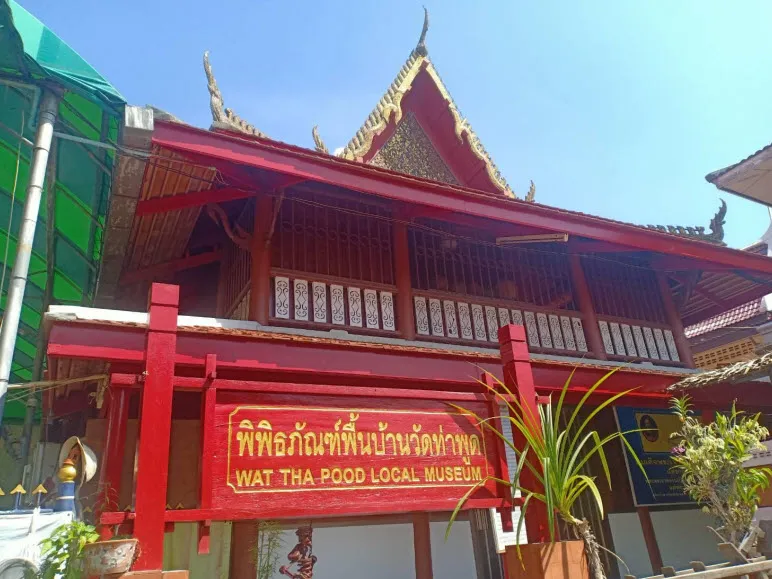
Wat Tha Phut Folk Museum
Open Days: Saturday, Sunday, and Public Holidays
Opening Hours: 09:00–16:00
Wat Tha Phut Folk Museum, Nakhon Pathom is a charming cultural and historical learning center located in Sam Phran District. More than just a small museum inside a temple, it offers a vivid narrative of community life along the Tha Chin River from the late Ayutthaya period to the present day. The museum is situated within Wat Tha Phut in Rai Khing Subdistrict, right by the riverbank. The temple itself is over 200 years old, which gives visitors a completely different experience from modern city museums. Here, you can explore authentic historical buildings, riverside temple scenery, and real artifacts within their original context.
The significance of Wat Tha Phut begins with its long history. Based on inscriptions found on Mon bricks within the ordination hall, the temple is believed to date back to the late Ayutthaya period during the reign of King Borommakot. It is closely associated with groups of people who migrated from Ayutthaya after its fall in 1767, settling along the Tha Chin River. This riverside location was not only a place for building a temple but also a backdrop for migration, settlement, and the restoration of community life during a crucial period in Thai history.
One of the most important figures of the temple is Luang Pho Rod, the first abbot. His story is deeply connected to national history. He was formerly a high-ranking monk from Ayutthaya. During the reign of King Taksin the Great, when efforts were made to restore Buddhism in Thonburi, monks from Ayutthaya were invited to reside in the capital. However, Luang Pho Rod chose to remain at Wat Tha Phut. King Taksin respected his decision and bestowed several royal items upon him. These royal gifts later became key highlights of the museum, serving as tangible evidence linking a local temple to the broader history of the Thai nation.
In the Rattanakosin period, Wat Tha Phut continued to gain recognition. During the reign of King Rama V, the temple was well known among members of the royal family. It also had highly respected abbots such as Luang Pho Kaew and Luang Pho Chuen. Over time, the temple preserved numerous artifacts, documents, and sacred objects. In 1997, an initiative was launched to establish a museum within the temple, aiming to preserve these valuable items and make them accessible for educational purposes.
The museum stands out because its exhibits are distributed across three historically significant buildings rather than being confined to a single space. Each structure contributes to storytelling. The first section is the Tripitaka Hall from the reign of King Rama III. This building houses important historical artifacts, including royal items bestowed by King Taksin and traditional niello ware. The atmosphere here feels solemn and historically rich, as the items are not only ancient but also deeply tied to Thailand’s religious and political heritage.
The second section is the old abbot’s residence built in 1959. This area displays personal belongings of former abbots, monastic utensils, temple treasures, glassware, water filtration tools, and pottery recovered from the river in front of the temple. This section provides insight into daily monastic life. Rather than viewing objects as isolated antiques, visitors can understand how a temple functioned as a living community. Even simple objects gain significance when placed within their original context.
Another memorable highlight in this section is local wisdom, such as “Thon Rod Ploen,” a traditional Thai wooden puzzle game. Exhibits like this emphasize that the museum is not only about religion or artifacts but also about community life, creativity, and traditional ways of thinking.
The third section is the Buddhist studies building from the reigns of King Rama V–VI. This teakwood structure features intricate gingerbread-style carvings, with a gable displaying the emblem of Mahamakut Buddhist University at Wat Bowonniwet. The building itself is architecturally significant. The upper floor contains collections of old newspapers from various eras, as well as books and documents preserved by the temple. The ground level houses a traditional water-lifting device used in rice farming, reflecting agricultural practices along the river.
Exploring all three sections reveals the unique strength of this museum: the seamless integration of grand historical narratives and everyday life. On one hand, there is national history spanning Ayutthaya, Thonburi, and Rattanakosin periods. On the other, there are stories of monks, villagers, traditional games, and riverside lifestyles. Seeing royal artifacts within a local temple reinforces the idea that national history is deeply rooted in local communities.
The atmosphere of Wat Tha Phut itself adds to the experience. Located along the Tha Chin River, the temple offers a peaceful and shaded environment typical of traditional riverside communities. Visiting the museum is not limited to indoor viewing; it includes walking through historical buildings, observing temple grounds, enjoying river breezes, and immersing yourself in a traditional Thai setting. For travelers who prefer slow, meaningful exploration, this destination offers a refreshing contrast to commercial tourist attractions.
Today, the museum plays an important role both as a community learning center and as a cultural attraction in Nakhon Pathom. Visitors interested in Thai history, temple heritage, riverside communities, traditional architecture, and local museums will find this place highly rewarding. It also serves as an excellent example of how temples can preserve and present community heritage for future generations.
Travel to Wat Tha Phut Folk Museum is most convenient by private car. The temple is located in Rai Khing Subdistrict, Sam Phran District, Nakhon Pathom Province. It can easily be included in a day trip along with Wat Rai Khing, Don Wai Floating Market, and other attractions in the Sam Phran area. From Bangkok, the journey takes a relatively short time. Once at the temple, visitors are advised to contact the staff or the temple in advance for smooth access to the museum.
The museum is open on weekends and public holidays from 09:00 to 16:00, with free admission. Visitors are encouraged to contact the temple beforehand. Appropriate attire is recommended, as the museum is located within temple grounds. Allow at least 1–2 hours to explore all three sections thoroughly, as the value of this museum lies in its detailed exhibits and layered storytelling.
Overall, Wat Tha Phut Folk Museum is far more valuable than it may initially appear. What might seem like a small museum inside an old temple turns out to be a rich repository of national history, temple heritage, community life, and local wisdom. For those seeking a deeper travel experience in Sam Phran or Rai Khing beyond popular tourist spots, this museum is a destination worth adding to your itinerary.
| Place Name | Wat Tha Phut Folk Museum |
| Location | Wat Tha Phut, Rai Khing, Sam Phran, Nakhon Pathom, Thailand |
| Highlights | Royal artifacts from King Taksin, Tripitaka Hall, gingerbread-style teak building, traditional water-lifting device |
| Period | Late Ayutthaya period, museum established in 1997 |
| Abbot | Phra Khru Woraditthanuyut (Sangwian Khavesako) |
| Travel | Accessible by private car, near Wat Rai Khing and Don Wai Floating Market |
| Opening Days | Saturday, Sunday, Public Holidays |
| Opening Hours | 09:00–16:00 |
| Fees | Free admission |
| Nearby Attractions | 1. Wat Rai Khing (2 km) 2. Don Wai Floating Market (6 km) 3. Wat Nakhon Chuenchum (5 km) 4. Wat Don Wai (6 km) 5. Sampran Riverside (9 km) |
| Nearby Restaurants | 1. Kai Yang Wat Rai Khing (2 km) Tel: 0-3432-3250 2. Rai Khing Terrace (3 km) Tel: 082-441-5951 3. All in One Rai Khing (3 km) Tel: 098-446-5022 4. Jay On Local Food (4 km) Tel: 093-109-3271 5. Krua Mae Somnuek (4 km) Tel: 089-787-1771 |
| Nearby Accommodation | 1. Sampran Riverside (9 km) Tel: 034-322-544 2. Baan Sampran Resort (8 km) Tel: 094-198-8848 3. Ariya Rai Khing (4 km) Tel: 065-568-3021 4. The Resort Sampran (7 km) Tel: 094-704-7047 5. Bang Toei Riverside Hotel (8 km) Tel: 081-659-5805 |
Frequently Asked Questions (FAQ)
Q: Where is Wat Tha Phut Folk Museum located?
A: It is located within Wat Tha Phut in Rai Khing, Sam Phran District, Nakhon Pathom, along the Tha Chin River.
Q: When is the museum open?
A: The museum is open on weekends and public holidays from 09:00 to 16:00.
Q: Is there an entrance fee?
A: No, admission is free.
Q: What are the highlights of the museum?
A: Highlights include royal artifacts from King Taksin, historical buildings, traditional tools, and local wisdom exhibits.
Q: How old is Wat Tha Phut?
A: The temple is over 200 years old and dates back to the late Ayutthaya period.
Q: Who is the current abbot?
A: The current abbot is Phra Khru Woraditthanuyut (Sangwian Khavesako).
Tel : 034285582
 Tel : 034285582
Mobile : 0819416637, 0897864533
 Mobile : 0819416637, 0897864533
 Category: ●Art, Culture and Heritage
 Group: ●Museums
Last Update : 6 MonthAgo
 Last Update : 6 MonthAgo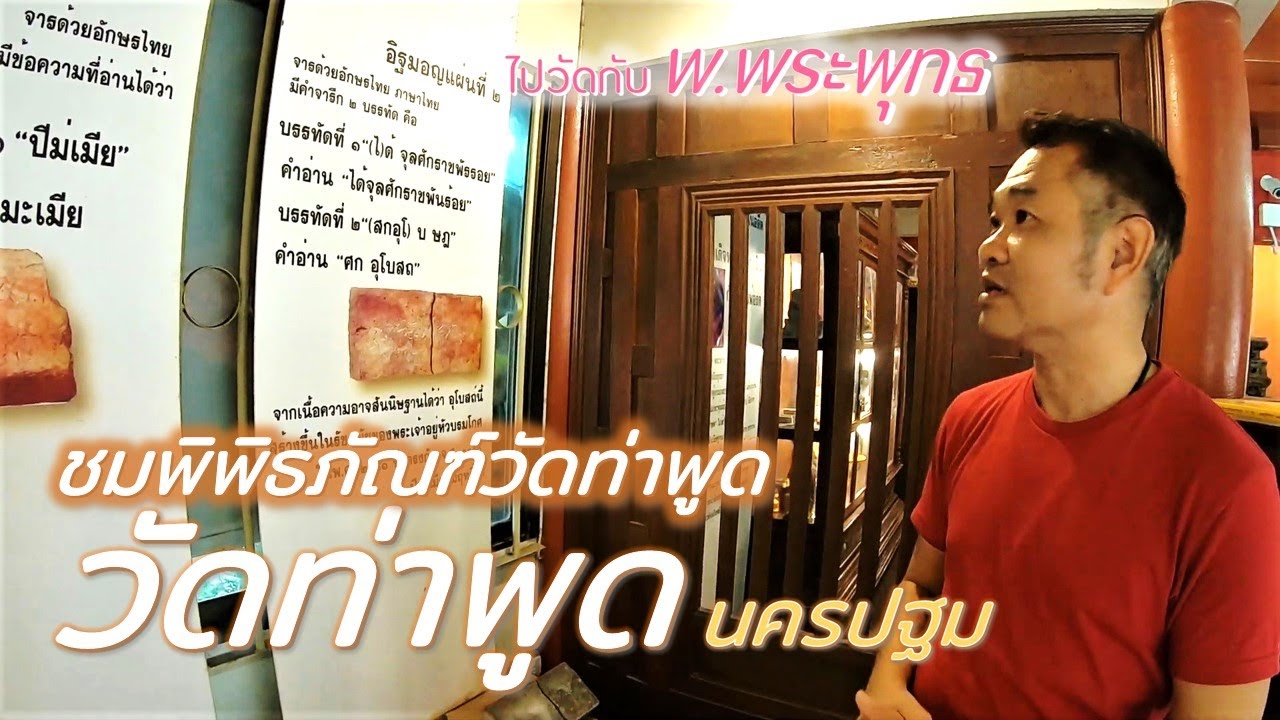
 Click to Access the Navigation Map GPS
Wat Tha Phut Folk Museum Map
Recommend

 Historical Sites and Monuments(6)
 Landmarks and Memorials(4)
 Royal Palace(3)
 Art, Craft Centres, Tradition(5)
Museums(13)
Art, Craft Centres, Tradition(5)
Museums(13)
 Art Gallery(1)
 Educational Places
 Educational Gardens, Farm(2)
 Places of Worship
 Temple(77)
 Other Sacred Sites(4)
 Research and Development
 Royal Project(1)
 Suburban Living
 Village, Community(3)
 Local Market(3)
 Floating Market(8)
 Nature and Wildlife
 River, Canal(4)
 Other natural attractions(3)
 Entertainment and Agricultural
 Animal camps and shows(1)
 Stadium(1)
 Farms, Parks and Ecotourism(5)
 Theater(1)
 Outdoor and Adventure Activities(2)
 Spas and Wellness
 Spas and Wellness(1)


