
 Home
Home North(
 Chiang Mai(


Wat Arunrangsi
Rating: 3.3/5 (16 votes)
 Search By
  Map
Map 
 Have Map
  No Map
Nakhon Nayok attractions
Attractions in Thailand
Open Days: Daily
Opening Hours: 08.00 - 17.00
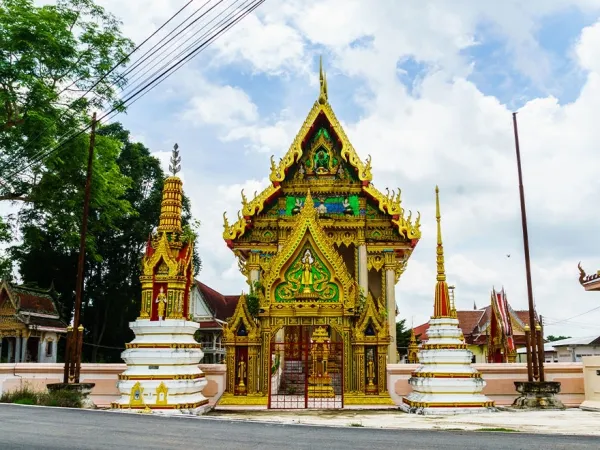
Wat Arunrangsi is a local Buddhist temple under the Maha Nikaya sect in Bang Luk Suea Subdistrict, Ongkharak District, Nakhon Nayok Province. It is an old temple with clear importance to the community. This temple has long been one of the religious places closely connected to local life, both in terms of merit-making, religious ceremonies, and its role as a spiritual center for people in the area. Its distinction does not lie in grand tourism appeal, but in the fact that it continues to play a real role in the everyday life of the community.
Wat Arunrangsi is a temple that is more than 90 years old, and its history extends even further back. Historical records state that the temple was established in 1777 and was originally named Wat Bang Luk Suea before later becoming known as Wat Arunrangsi. The temple’s age gives it considerable weight in terms of local community history, because the fact that a temple has stood alongside its area for so long reflects the close relationship between the temple and local people across many generations.
What makes Wat Arunrangsi particularly interesting is its location in Ban Bang Luk Suea, Moo 7, Bang Luk Suea Subdistrict, an area directly connected to the Nakhon Nayok River. The northern and eastern boundaries of the temple adjoin the Nakhon Nayok River, while the southern side borders a public canal. This setting clearly shows that the temple’s identity as a community temple grew out of riverside life. The temple has never been separate from the community, but has always been part of the landscape and the daily lives of people in the area.
In the religious historical dimension, Wat Arunrangsi received royal Wisungkhamsima in 1857. This is an important marker that reflects the temple’s status and stability as a temple with a long-standing role. Receiving Wisungkhamsima is not only a ritual matter, but also signifies the temple’s readiness as a sacred place fully authorized for formal monastic ceremonies. This shows that Wat Arunrangsi is not merely a small village temple, but a temple with a clear religious status that has long been officially recognized.
Within the temple are elements that clearly reflect the nature of a Thai community temple. The temple grounds cover 10 rai, and there is also one plot of temple land with an area of 773 rai, 1 ngan, and 45 square wah. The main structures recorded include 4 monks’ residences built of reinforced concrete, 2 funeral pavilions, 1 refectory, and other religious buildings that continuously support both religious activities and community functions. These structures indicate that the temple is well equipped to support both the residence of monks and the activities of lay visitors in the area.
In terms of sacred objects, Wat Arunrangsi houses a principal Buddha image in the ubosot in the Phra Chinnarat style. This serves as an important center of faith for the temple. Buddha images in the Phra Chinnarat style are highly revered and carry deep spiritual meaning for Thai Buddhists. Having such a principal image enshrined in the ubosot strengthens Wat Arunrangsi both architecturally and spiritually. Visitors who come to make merit therefore do not only experience the atmosphere of an old temple, but also enter a place with a clearly defined spiritual center.
Another reason why Wat Arunrangsi is important to the community is that it does not exist merely as a place for monks, but also as a center of activities and relationships among local people. In Thai society, temples of this kind commonly serve as places for merit-making, listening to sermons, annual merit events, ordinations, funerals, and other activities connected with community life. The fact that the temple has continued to play this role for so long shows that people in the area remain attached to it as a place of the heart, not merely as a physical location.
The faith that local villagers have in Wat Arunrangsi strongly confirms the temple’s value. Many old temples may remain in a historical sense, but not every one of them continues to hold genuine meaning in the feelings of local people. In the case of Wat Arunrangsi, the belief among villagers that it is an old and highly revered temple shows that it remains present both in memory and in the life of the community. This gives the temple a special charm that differs from larger tourist temples, because it is a charm rooted in a real relationship between place and community.
In terms of atmosphere, Wat Arunrangsi conveys the feeling of a simple and peaceful community temple. The appeal of this kind of temple lies in the authenticity of the place. It has not been overly adapted for tourism, so visitors can clearly feel its natural character through the greenery, the quiet, and the sense of warmth in a living religious space. This atmosphere makes it especially suitable for those seeking calm, merit-making, or a visit to a Thai temple on a deeper level than simply taking photos or checking in.
Wat Arunrangsi is also important as a place of memory and intergenerational continuity. Temples that have stood in an area for a long time often become places where several generations in the community have shared experiences, whether making merit with family, joining ceremonies on important days, or using the temple as a place for social gatherings. Such continuity gives the temple a role beyond that of a historical monument. It becomes a cultural space that still has life and continues to hold real meaning for people today.
For those interested in cultural travel, Wat Arunrangsi is a very appealing destination because it offers a long history, a close connection to the riverside landscape of Bang Luk Suea, and the character of a community temple that remains complete in its original role. Visitors can experience a temple that has not been staged for tourism, but one that still serves a real function in people’s lives. A visit here therefore has value not only for merit-making and quiet reflection, but also for learning about the way Thai community life has long been intertwined with religion.
In terms of present-day importance, Wat Arunrangsi remains clearly a spiritual center for local people. The most recent information relating to the 2024 Kathin ceremony shows that the temple has 9 resident monks and that the abbot is Phra Maha Anek Nisopho. This helps confirm that the temple continues to conduct religious activities and maintains a concrete role within the Thai monastic system. The temple is therefore not merely an old temple in memory, but a living temple that continues to fulfill its role in the community.
For visitors coming from Bangkok, Wat Arunrangsi is best reached by private car. The main route leads into Ongkharak District, Nakhon Nayok Province, and then onward to Bang Luk Suea Subdistrict. The temple is located in Ban Bang Luk Suea, Moo 7, an area close to Wat Arunrangsi School, which makes it easier to reach by using the temple name or local landmarks for navigation. This type of trip is well suited to those who want a flexible one-day merit-making or cultural travel itinerary.
Getting There to Wat Arunrangsi is most suitable by private car. Travelers can head to Ongkharak District and then continue into Bang Luk Suea Subdistrict. The temple is located at No. 10, Ban Bang Luk Suea, Moo 7, Bang Luk Suea Subdistrict, Ongkharak District, Nakhon Nayok Province 26120, and lies in the same area as Wat Arunrangsi School. Visitors can use navigation systems together with local landmarks to reach the temple more conveniently.
What visitors should know before coming is that Wat Arunrangsi is a temple with clear religious value and strong local faith. Visitors should dress respectfully, observe proper manners in a sacred place, speak and behave appropriately, and show respect for the atmosphere of the temple and the local community. Understanding that this temple is more than a tourist site will make the visit more meaningful and allow visitors to appreciate its charm more fully.
In summary, Wat Arunrangsi is an old Maha Nikaya temple in Ongkharak District, Nakhon Nayok Province, with a history of more than 90 years, and historical records state that it was established in 1777 under the original name Wat Bang Luk Suea. This temple holds historical value, religious value, and community value. Its strength lies not in grandeur, but in the authenticity of the place, the peaceful atmosphere, and the long-standing faith people have in it. Wat Arunrangsi is therefore especially suitable for those who want to understand a Thai temple as the living heart of a real community.
| Place Summary | Wat Arunrangsi is a local Buddhist temple under the Maha Nikaya sect in Bang Luk Suea Subdistrict, Ongkharak District, Nakhon Nayok Province. It is an old temple that is important to the community and has long been deeply respected by local residents. |
| Highlights | It is an old temple, formerly named Wat Bang Luk Suea, located beside the Nakhon Nayok River. It houses a principal Buddha image in the Phra Chinnarat style and still preserves the atmosphere of a riverside Thai community temple very clearly. |
| History / Period | The temple is more than 90 years old, and historical records state that it was established in 1777 under the original name Wat Bang Luk Suea. It received royal Wisungkhamsima in 1857. |
| Latest Abbot / Temple Overseer | Phra Maha Anek Nisopho |
| Address | No. 10, Ban Bang Luk Suea, Moo 7, Bang Luk Suea Subdistrict, Ongkharak District, Nakhon Nayok Province 26120 |
| Getting There | Travel by private car from Bangkok into Ongkharak District, then continue to Bang Luk Suea Subdistrict, using the temple name or Wat Arunrangsi School as a landmark for navigation. |
| Facilities | 4 monks’ residences, 2 funeral pavilions, 1 refectory, an ubosot, and ceremonial areas for community religious activities. |
| Zones | Ubosot zone, monks’ residence zone, funeral pavilion zone, refectory zone, and riverside area within the temple grounds. |
| Nearby Attractions with Distance | 1. Wat Boon Khet, approximately 4 km. 2. Wat Khlong Thep Lok, approximately 5 km. 3. Wat Malai Rattanaram, approximately 7 km. 4. Wat Mai Phong Sophon, approximately 8 km. 5. Srinakharinwirot University, Ongkharak Campus, approximately 15 km. |
| Nearby Restaurants with Distance and Phone Numbers | 1. Khrua Lung Dam Ongkharak, approximately 14 km. Tel. 098-547-4465 2. Lung Yang Pla Phao Ongkharak, approximately 15 km. Tel. 081-683-0530, 084-289-6469 3. Sureephon Phochana, approximately 15 km. Tel. 037-322-444, 086-058-5682 4. Khrua Mae Lamyai Ongkharak, approximately 16 km. Tel. 089-458-1101 5. NIYOM is my father Ongkharak, approximately 15 km. Tel. 098-564-4244 |
| Nearby Accommodations with Distance and Phone Numbers | 1. Ruamsap Resort, approximately 10 km. Tel. 089-117-9647 2. Ruenporn Resort, approximately 14 km. Tel. 037-349853, 064-845-8459 3. Imrak Resort, approximately 12 km. Tel. 083-887-7344 4. Tonrak Resort Khlong 15, approximately 18 km. Tel. 088-570-7938, 037-333042-3 5. Nik Nik Town, approximately 19 km. Tel. 089-990-5116 |
Frequently Asked Questions (FAQ)
Q: Where is Wat Arunrangsi located?
A: Wat Arunrangsi is located at No. 10, Ban Bang Luk Suea, Moo 7, Bang Luk Suea Subdistrict, Ongkharak District, Nakhon Nayok Province 26120.
Q: How old is Wat Arunrangsi?
A: Wat Arunrangsi is more than 90 years old, and historical records state that it was established in 1777.
Q: What are the highlights of Wat Arunrangsi?
A: The highlights are its age, the faith local villagers continue to have in it, its riverside community-temple atmosphere, and the principal Buddha image in the Phra Chinnarat style inside the ubosot.
Q: What was the former name of Wat Arunrangsi?
A: Wat Arunrangsi was originally called Wat Bang Luk Suea.
Q: What kind of visit is Wat Arunrangsi suitable for?
A: It is suitable for visitors interested in merit-making, cultural travel, and experiencing the atmosphere of a traditional Thai community temple that still has a real living role today.
Q: How do I get to Wat Arunrangsi?
A: The most convenient way is by private car from Bangkok into Ongkharak District, then onward to Bang Luk Suea Subdistrict, using the temple name or Wat Arunrangsi School as a navigation landmark.
 Wat Arunrangsi Map
 Category:
  Group:
  Tag: ●Wat Arunrangsi●wat arunrangsi ●wat arunrangsi nakhon nayok ●wat bang luk suea ●ongkharak temple ●old temple nakhon nayok ●community temple thailand ●riverside temple thailand ●merit making nakhon nayok ●cultural travel ongkharak ●thai temple nakhon nayok
Last Update: 1 DayAgo
Tag: ●Wat Arunrangsi●wat arunrangsi ●wat arunrangsi nakhon nayok ●wat bang luk suea ●ongkharak temple ●old temple nakhon nayok ●community temple thailand ●riverside temple thailand ●merit making nakhon nayok ●cultural travel ongkharak ●thai temple nakhon nayok
Last Update: 1 DayAgo
Comment
 Nearby Attractions
| Keyword (Advance) |
 Facebook Fanpage
 Region
 Art, Culture and Heritage
 Historical Sites and Monuments(
 Landmarks and Memorials(
 Art, Craft Centres, Tradition(
 Museums(
 Educational Places
 Educational Gardens, Farm(
 University
 Church(
 Mosque(
 Other religious and spiritural sites(
 Suburban Living
 Village, Community(
 Local Market(
 Nature and Wildlife
 Dam, Reservoir, Lake(
 Waterfalls(
 Other natural attractions(
 Entertainment and Agricultural
 Farm, Parks, Gardens and Ecotourism(
 Outdoor and Adventure Activities(
 Copyright 2012,