
 Home
Home North(
 Chiang Mai(


Wat Pho Pak Phli
Rating: 3.6/5 (8 votes)
 Search By
  Map
Map 
 Have Map
  No Map
Nakhon Nayok attractions
Attractions in Thailand
Open Days: Daily
Opening Hours: 08.00 - 17.00
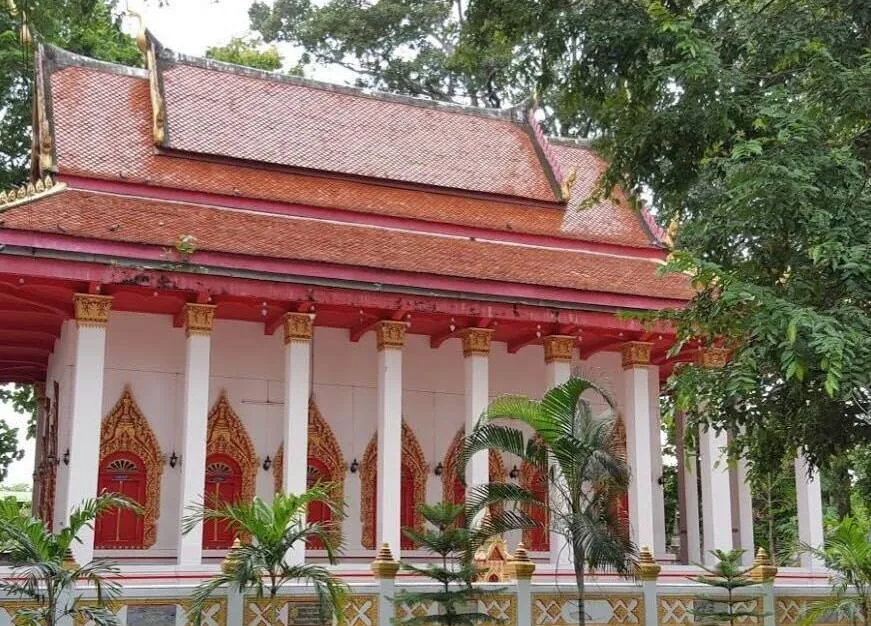
Wat Pho Pak Phli, Nakhon Nayok Province, is an old temple in Pak Phli Subdistrict that has long been known and closely connected to the local community. With a history of more than 100 years, this temple is important not only as a place for religious activities, but also as a place that preserves the memory of the community in a deeply meaningful way. Inside the temple is the “Ban Pak Phli Local Museum,” which houses a large collection of antiquities and cultural evidence. This makes Wat Pho Pak Phli both an old temple and an important center for learning about the local history of Pak Phli District.
The charm of Wat Pho Pak Phli lies in the fact that it is a living community temple. It is not merely an old temple with stories left in the past, but a temple that still plays a real role in the present, in terms of religion, merit-making, local relationships, and the continuation of knowledge about the history of Ban Pak Phli through the museum located directly inside the temple. Visitors therefore experience not only the peaceful atmosphere of a rural temple, but also the layers of history preserved clearly within a single place.
Local information and museum records consistently indicate that Wat Pho Pak Phli is an old temple of the subdistrict, with a history of more than 100 years, located in Ban Pak Phli, Moo 2, Pak Phli Subdistrict, Pak Phli District, Nakhon Nayok Province. The temple is therefore one of the original centers of the community. In the context of Thai society in the past, temples were often more than places for religious ceremonies, as they also served as social centers, places of learning, gathering points, and spaces for passing beliefs from one generation to another.
The old status of Wat Pho Pak Phli carries strong cultural meaning, because the fact that the temple has stood alongside the community for such a long time reflects that this place has long been part of local life. Whether during annual merit-making events, religious ceremonies, or as a point of shared community spirit, the temple has value as a place actively used by local people. Its importance does not come only from its age, but from the fact that it still continues to serve the role of a community temple.
The most distinctive feature of Wat Pho Pak Phli is the presence of the Ban Pak Phli Local Museum within the temple grounds. This museum gives the temple a broader role than that of an ordinary monastery, because from being simply a place for religious practice, it has expanded into a keeper of the historical evidence of Ban Pak Phli as well. The museum was established in 2539 BE and began its exhibitions in 2540 BE, through the cooperation of local residents and scholars who recognized the value of the antiquities found in the area and worked together to create a place to preserve and share this knowledge with the public.
The interest of the Ban Pak Phli Local Museum does not lie only in the number of objects on display, but also in the connection between those objects and the actual landscape of the area. Many of the ancient objects were found through excavations in Pak Phli Subdistrict, especially at the Khok Kradon archaeological site, which is located about 2 kilometers from the temple. These discoveries clearly show that Pak Phli was not merely a modern community, but a place where humans lived and carried out activities for thousands of years.
The antiquities displayed in the museum include stone tools, earthenware vessels, bronze containers, bronze bracelets, glass beads, and other objects that help tell the story of people in the past. Tourism and museum sources state that some of these items date back around 2,700–3,000 years. This gives the Ban Pak Phli Local Museum great importance as a learning center on community development and early human settlement in the lower central region of Thailand.
From a historical perspective, these displayed objects have value far beyond simply being old items, because they are evidence that helps people today understand life in the past more clearly, whether in terms of livelihood, basic technology, beliefs, or contact and exchange with other areas. The presence of stone tools, beads, and metal vessels together in the context of a community museum allows visitors to see a broader picture of the past, rather than only individual objects separated from their original environment.
In another sense, the Ban Pak Phli Local Museum also clearly reflects the role of the temple as a “keeper of community memory.” In Thai society, temples have often been places that people trust to preserve important things, both religious and cultural. The fact that the museum is located within the monk’s quarters and temple grounds is therefore not accidental, but a reflection of the relationship between religious places and communities in a form still visible in many Thai localities.
The atmosphere inside Wat Pho Pak Phli is notably different from that of city temples surrounded by constant urgency. Museum sources describe rows of tall yang na trees standing within the temple grounds, making the area shady and giving it the feeling of being close to nature. This shade and calm make the temple especially suitable for merit-making, paying respect to Buddha images, walking quietly through the grounds, and gradually absorbing the meaning of the place without haste.
In addition to the peace inside the temple, the front area of the temple is lively in a local community way, because the space is sometimes used as a market where local people come to buy and sell goods. This shows that Wat Pho Pak Phli is not merely a sacred place separated from everyday life, but also a place actively used by the community and naturally integrated with daily local activities. This is an important characteristic of Thai community temples that can still be clearly seen here.
Another point that makes Wat Pho Pak Phli interesting is the role of the abbot in maintaining and continuing the cultural dimension of the temple. Local news sources and temple information from 2568 BE identify the current abbot as Phra Maha Sutthisak Aphatharo, who has played a role in taking care of the temple and is also connected with the operation of the museum. Information from museum records also reflects an intention to continue the museum’s work and to improve the exhibition space further. This shows that Wat Pho Pak Phli has not stopped at preserving the past, but is also looking ahead as a community learning center for the future.
For those interested in cultural tourism, Wat Pho Pak Phli is appealing because it offers multiple layers of experience in one place. Visitors can begin by paying respect, making merit, and enjoying the atmosphere of an old temple, then gradually explore the dimension of local history through the museum. This differs from visiting an ordinary temple that may focus only on architecture or paying respect to Buddha images, because here visitors can connect religion, community, and archaeology together.
From an educational perspective, Wat Pho Pak Phli is suitable for school students, university students, those interested in local history, and travelers who want to understand Nakhon Nayok in a deeper way than nature tourism alone. Nakhon Nayok is often remembered for its dams, waterfalls, and natural scenery, but in reality the province also has deeply rooted cultural and community history. Wat Pho Pak Phli and the Ban Pak Phli Local Museum are among the clearest examples of this.
A visit to Wat Pho Pak Phli should therefore not be seen merely as a stop to pay respect at a temple, but as an opening into the story of the Pak Phli community, from archaeological periods thousands of years ago to the lives of modern people who still use the temple as a spiritual and social center. The continuity of such a place makes Wat Pho Pak Phli a meaningful destination for those who enjoy learning-oriented travel rather than simply checking in and moving on quickly.
For visiting purposes, travelers should note that information from the Ban Pak Phli Local Museum states that advance contact is required before entering the museum. This makes it suitable for planned visits, especially for those who want to seriously explore the museum, because the exhibition area is located within the temple grounds and functions more as a specialized learning site than a general commercial attraction. Preparing in advance helps keep the visit orderly and respectful to the place.
Visitors should dress modestly, behave respectfully, and follow temple rules. Especially near the areas displaying antiquities, touching objects unnecessarily should be avoided, and loud noise or disturbance to monks and worshippers should not occur. Beneath the simplicity of this temple lies both sacred value and cultural significance at the same time. A respectful visit is therefore very important.
Getting There Wat Pho Pak Phli is best reached by private car. The temple is located in Pak Phli Subdistrict, Pak Phli District, Nakhon Nayok Province, in Ban Pak Phli, Moo 2. Starting from Nakhon Nayok town, it is not difficult to continue toward Pak Phli District, and the trip can be planned as a combined itinerary of temple, community, and nature tourism in one day, because Pak Phli District and nearby areas are also connected to many important attractions in Nakhon Nayok.
For those who enjoy planning multi-dimensional trips, Wat Pho Pak Phli can serve as an excellent starting point for learning about another side of Nakhon Nayok. After experiencing the atmosphere of the old temple and the museum, travelers can continue onward to natural attractions or other significant places in the province. This makes the trip more than just peaceful and spiritual, but also enriching in terms of local historical understanding of Nakhon Nayok.
Ultimately, Wat Pho Pak Phli is an example of a place that proves Thai temples can serve many functions at once: as a religious center, a place of unity for the local people, and a storehouse of community memory through the museum and antiquities kept within the temple itself. Those who spend time at this place will see more than just an old temple; they will see the image of a community still striving to preserve its roots through religion, culture, and shared learning.
If you are looking for a cultural destination in Nakhon Nayok that is not just a place for paying respect or taking photographs, but a place with real stories, real community dimensions, and clear historical evidence, Wat Pho Pak Phli is one of the destinations truly worth visiting. It reflects just how beautifully community memory can be preserved when a temple serves as the center of faith and the continuation of the past.
| Place Summary | An old temple of the Pak Phli community with a local museum inside the temple grounds |
| Highlights | Ban Pak Phli Local Museum and a large number of antiquities |
| History / Period | Established more than 100 years ago |
| Address | Pak Phli Subdistrict, Pak Phli District, Nakhon Nayok Province |
| Getting There | Travel by car into Pak Phli District and continue into the community area |
| Nearby Tourist Attractions | 1. Khun Dan Prakan Chon Dam (about 18 km) 2. Sarika Waterfall (about 20 km) 3. Nang Rong Waterfall (about 22 km) 4. Sai Thong Reservoir (about 12 km) 5. Luang Pho Pak Daeng Temple (about 25 km) |
| Nearby Restaurants | 1. Krua Lung Kang Nakhon Nayok (about 20 km) Tel: 037-385-088 2. Rim Khuan Dam Restaurant (about 18 km) Tel: 081-863-3273 3. Krua Sarika (about 20 km) Tel: 081-761-5675 4. Daeng Kaeng Pa Nakhon Nayok (about 23 km) Tel: 037-312-124 5. Krua Ton Nam Nakhon Nayok (about 19 km) Tel: 089-098-9996 |
| Nearby Accommodations | 1. Baan Suan Khun Yai Nakhon Nayok (about 18 km) Tel: 081-733-2277 2. Phumontra Resort Nakhon Nayok (about 19 km) Tel: 037-349-440 3. Toffee House Resort (about 20 km) Tel: 089-747-7788 4. At Rice Resort (about 22 km) Tel: 037-385-222 5. Loft Village Resort (about 21 km) Tel: 081-913-5577 |
Frequently Asked Questions (FAQ)
Q: Where is Wat Pho Pak Phli located?
A: Wat Pho Pak Phli is located at 44 Ban Pak Phli, Moo 2, Pak Phli Subdistrict, Pak Phli District, Nakhon Nayok Province 26130. It is an old temple of the Pak Phli community.
Q: What is the main highlight of Wat Pho Pak Phli?
A: The main highlight of the temple is the Ban Pak Phli Local Museum, which houses a large number of antiquities from the Pak Phli area and makes the temple both a religious site and a place for learning about local history.
Q: What is displayed in the Ban Pak Phli Local Museum?
A: The museum displays antiquities found locally, such as stone tools, earthenware, bronze vessels, bronze bracelets, glass beads, and other evidence reflecting human settlement in the area over thousands of years.
Q: Is there an entrance fee?
A: Information from the Ban Pak Phli Local Museum states that there is no admission fee, but visitors should make contact in advance before visiting for the sake of order and convenience.
Q: What kind of visit is Wat Pho Pak Phli suitable for?
A: It is suitable for those interested in old temples, local history, antiquities, and cultural tourism, because visitors can both pay respect and learn about the Pak Phli community in the same place.
Q: Is it convenient to travel to Wat Pho Pak Phli?
A: The most convenient way is by private car, heading into Pak Phli District, Nakhon Nayok Province, and then continuing to Ban Pak Phli, Moo 2, where the temple is located.
 Wat Pho Pak Phli Map
 Category:
  Group:
  Tag: ●Wat Pho Pak Phli●wat pho pak phli ●wat pho pak phli nakhon nayok ●pak phli temple ●ban pak phli local museum ●local museum pak phli ●old temple nakhon nayok ●cultural attraction nakhon nayok ●pak phli heritage site ●archaeology pak phli ●temple with museum thailand
Last Update: 2 DayAgo
Tag: ●Wat Pho Pak Phli●wat pho pak phli ●wat pho pak phli nakhon nayok ●pak phli temple ●ban pak phli local museum ●local museum pak phli ●old temple nakhon nayok ●cultural attraction nakhon nayok ●pak phli heritage site ●archaeology pak phli ●temple with museum thailand
Last Update: 2 DayAgo
Comment
 Nearby Attractions
| Keyword (Advance) |
 Facebook Fanpage
 Region
 Art, Culture and Heritage
 Historical Sites and Monuments(
 Landmarks and Memorials(
 Art, Craft Centres, Tradition(
 Museums(
 Educational Places
 Educational Gardens, Farm(
 University
 Church(
 Mosque(
 Other religious and spiritural sites(
 Suburban Living
 Village, Community(
 Local Market(
 Nature and Wildlife
 Dam, Reservoir, Lake(
 Waterfalls(
 Other natural attractions(
 Entertainment and Agricultural
 Farm, Parks, Gardens and Ecotourism(
 Outdoor and Adventure Activities(
 Copyright 2012,