
lovethailand home >Central Travel Attractions >Nakhon Nayok Travel Attractions >Muang Nakhon Nayok >Hin Tang > King Rama VIII Statue at Wat Nang Rong
TL;DR: King Rama VIII Statue at Wat Nang Rong is located at 84 Moo 3, Hin Tang Subdistrict, Mueang Nakhon Nayok District, Nakhon Nayok Province, hours 08.00 - 16.30.
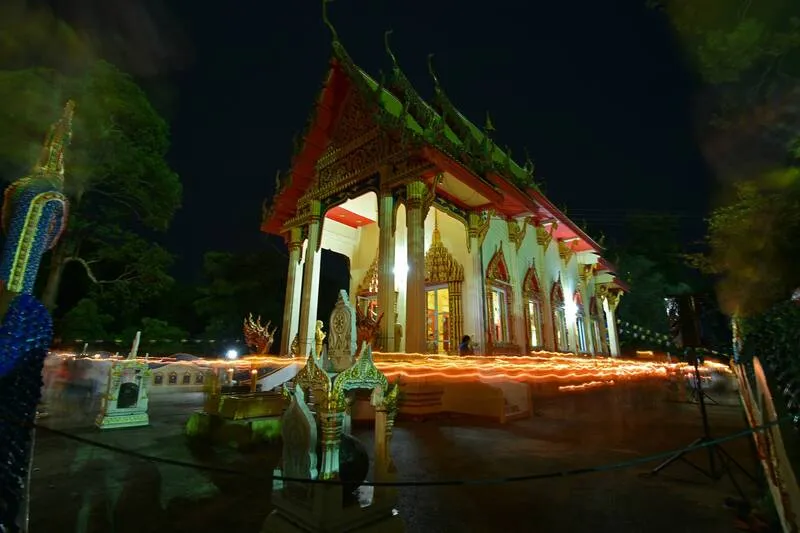
King Rama VIII Statue at Wat Nang Rong
Open Days: Daily
Opening Hours: 08.00 - 16.30
King Rama VIII Statue at Wat Nang Rong in Nakhon Nayok Province is a life-size royal statue of His Majesty King Ananda Mahidol, Rama VIII, and holds significance in terms of history, devotion, and cultural tourism in Nakhon Nayok. The importance of this place lies not only in the beauty of the statue itself, but also in its symbolic meaning as a tribute to a monarch who remains deeply remembered by the Thai people.
As soon as visitors arrive at Wat Nang Rong, they can immediately sense that this place has an atmosphere different from many other temples in the area. The temple is set on a small hill amid peaceful, open, and shady natural surroundings, creating a relaxing feeling even before reaching the area where the royal statue is enshrined. The quietness of the place gives the visit a meaning beyond simply stopping to see a tourist site. It becomes an experience of entering a space that encourages stillness, remembrance, and genuine peace.
This statue is a life-size royal statue of His Majesty King Ananda Mahidol, Rama VIII. It was cast on 6 April 1971, with Somdet Phra Ariyavongsagatanana, the Supreme Patriarch (Chuan Uṭṭhāyī), presiding over the ceremony, while Luang Por Nen Koson Mī Wutthisom, or Phra Khru Phrommasan, took charge of seeking royal permission and pushing the project forward until it was completed. This story gives the statue its value not only as an important royal monument of Rama VIII, but also as a work of devotion carried out with full dignity and reverence.
What makes the King Rama VIII Statue at Wat Nang Rong even more special is that it is a life-size royal statue said to be one of only 4 such statues in Thailand. This fact gives the act of paying respect here a stronger emotional power than viewing a royal portrait or a smaller statue. Visitors are able to experience the dignity of the statue in proportions close to real life, creating a natural sense of reverence and quiet reflection when standing before it.
Wat Nang Rong built a European-style pavilion with an 8-sided roof, measuring 8 meters wide and 8 meters long, to enshrine the royal statue properly. This type of pavilion gives the enshrining area a distinctive architectural presence and makes it appear elegant in a way that differs from an ordinary hall or pavilion. The octagonal design also allows visitors to view the statue from several angles, while making the surrounding atmosphere feel orderly, balanced, and especially suitable for paying respects.
Another feature that gives Wat Nang Rong its unique charm is the bell tower, which rises about 18 meters above the ground and is divided into 5 levels, serving as an outstanding viewpoint over the surrounding scenery. From this elevated spot, visitors can enjoy a broad view of the Nakhon Nayok landscape, and on clear days they can also see Khun Dan Prakarn Chon Dam distinctly. This makes Wat Nang Rong more than just a place of worship, as it also offers a scenic viewpoint that completes the visitor experience beautifully.
Overall, Wat Nang Rong is a place that brings together several dimensions in one location: devotion, history, architecture, and scenery. Some visitors come here specifically to pay respects to the King Rama VIII Statue, some are interested in the pavilion and the temple buildings, some want to enjoy the atmosphere from the bell tower, and others stop by because the temple lies along Nakhon Nayok’s tourist route. Because the place answers several interests at once, Wat Nang Rong is more than just a beautiful temple. It is a destination with its own clear story and meaning.
In historical terms, the King Rama VIII Statue at Wat Nang Rong helps connect national memory to the local landscape in a graceful way. People who may not have the chance to travel to important royal sites in the central part of the country can still come here to reflect on the royal grace of His Majesty King Ananda Mahidol in a setting that is quieter and more intimate. This is what makes the statue more than just an object of worship. It is a symbol of the bond between the monarchy, religion, and the local community.
The role of Luang Por Nen Koson Mī Wutthisom, or Phra Khru Phrommasan, in overseeing the creation of the royal statue is another point that deserves to be clearly mentioned. He was the driving force who made the construction possible through an official process. Having an important monk from the temple initiate and carry out the work means that this royal statue was not simply a commemorative project, but a creation born from genuine devotion, and a confirmation that Wat Nang Rong has played a role in preserving national historical memory at the local level.
The interest of this place also lies in the fact that visitors can experience both the peacefulness of the temple and a dimension of historical learning at the same time. Those who may not know much about the story of His Majesty King Ananda Mahidol will gain a deeper understanding after seeing the life-size royal statue and learning about its origins. They come to realize that paying respects here is not only an act of reverence, but also a way of encountering Thai history through a real place that carries very specific meaning.
The present atmosphere within Wat Nang Rong strongly enhances all of these experiences. The surrounding grounds do not feel rushed or overly crowded. Visitors can take time walking around the statue, observing the details of the pavilion, admiring other temple structures, and gradually making their way up to the bell tower viewpoint without hurrying. This slowness and stillness are the true charm of Wat Nang Rong, and they are what make many people feel that this is a place suited both for worship and for resting the mind.
From an experiential perspective, anyone who intends to visit the King Rama VIII Statue at Wat Nang Rong properly should not rush in, pay respects, and leave immediately. It is better to allow time to explore the temple grounds, because the more time one spends with the place, the more details become visible, whether in the atmosphere, the intention behind the design of the pavilion, or the beauty of the hillside setting. The feeling one receives gradually deepens from external admiration to a more profound appreciation of the place’s meaning.
The latest abbot or caretaker identified for Wat Nang Rong is Phra Khru Sinantan Sophon. This information shows that the temple remains under the ongoing care of the Sangha and reflects that the royal statue and its surrounding grounds continue to be maintained and used as an important place for both the community and Nakhon Nayok Province.
In terms of access, Wat Nang Rong is well suited to travel by private car because it lies within one of Nakhon Nayok’s popular tourist zones and can easily be combined with other destinations. Those traveling along the Nang Rong Waterfall route, Wang Takrai, or nearby attractions can usually stop by Wat Nang Rong in the same trip without difficulty. The strength of this place therefore lies not only in the temple itself, but also in its location, which connects well with the province’s main tourist route.
Getting There To visit the King Rama VIII Statue at Wat Nang Rong, visitors can use the same route that leads to the Nang Rong Waterfall and Wang Takrai tourist zone in Nakhon Nayok. The temple is located on a small hill with access all the way up to the temple grounds. Traveling by private car is the most convenient option. Once you arrive, it is best to allow a reasonable amount of time to walk around the temple so you can fully experience the statue, the pavilion, the viewpoint, and the overall atmosphere of the site.
In terms of conduct, visitors should dress respectfully, keep their voices appropriate, and show respect to the site at all times. Although Wat Nang Rong is a well-known tourist destination, its true essence is still that of a temple and an important place of worship. Those entering the statue area should therefore behave with composure, avoid climbing or using the space inappropriately, and if going up to the bell tower viewpoint, should also keep safety in mind.
What makes the King Rama VIII Statue at Wat Nang Rong worthy of detailed attention is that the place brings together both emotional depth and historical value at the same time. Those who love history can learn about the background of the statue and the role of important individuals in its creation. Those who enjoy temple visits can appreciate the architecture and peaceful atmosphere. Those who enjoy viewpoints can gain an impressive experience from the bell tower. And those who hold devotion toward the monarchy will feel deeply moved when standing before a life-size royal statue.
Ultimately, the King Rama VIII Statue at Wat Nang Rong is not just a stop for tourists in Nakhon Nayok, but a place where national memory, religious devotion, and the atmosphere of cultural travel come together in a harmonious way. Those who arrive here often receive more than just the sight of one location. They also encounter peace, reverence, and the meaning of remembering an important figure in Thai history through a real place that continues to live on in the present.
| Place Name | King Rama VIII Statue at Wat Nang Rong |
| Place Summary | An important place of worship within Wat Nang Rong, enshrining a life-size royal statue of King Rama VIII, together with an octagonal pavilion and a viewpoint on the bell tower. |
| Highlights | Life-size royal statue, 1 of only 4 in Thailand, European-style octagonal pavilion, bell tower about 18 meters high with 5 levels, views of Khun Dan Prakarn Chon Dam, and a hillside temple atmosphere. |
| History / Period | Cast on 6 April 1971, with the Supreme Patriarch (Chuan Uṭṭhāyī) presiding, and Luang Por Nen Koson (Phra Khru Phrommasan) serving as the main organizer. |
| Latest Abbot or Caretaker | Phra Khru Sinantan Sophon |
| Address | 84 Moo 3, Hin Tang Subdistrict, Mueang Nakhon Nayok District, Nakhon Nayok Province |
| Getting There | Located along the Nang Rong Waterfall and Wang Takrai route, easy to reach by car, with the temple situated on a hillside. |
| Open Days / Opening Hours | Daily, 07.00 - 17.00 |
| Facilities | Parking area, worship space, viewpoint, bell tower, pavilion enshrining the royal statue. |
| Zones | Royal statue pavilion, bell tower, teakwood hall, viewpoint, and Guanyin area. |
| Nearby Tourist Attractions | 1. Nang Rong Waterfall (2 km) 2. Wang Takrai (5 km) 3. Khun Dan Prakarn Chon Dam (12 km) 4. Huai Prue Reservoir (10 km) 5. Phumirak Dhamma Center (14 km) |
| Nearby Restaurants | 1. Krua Rim Than Nakhon Nayok (3 km) Tel. 037-385-088 2. Krua Manao (4 km) Tel. 081-944-5199 3. Baan Suan Lung Lek Restaurant (5 km) Tel. 037-385-163 4. Krua Sai Thong (6 km) Tel. 081-761-2049 5. Daeng Kaeng Pa Restaurant (8 km) Tel. 037-385-184 |
| Nearby Accommodations | 1. Phumontra Resort (6 km) Tel. 037-385-222 2. Toffee House Resort (4 km) Tel. 089-747-1737 3. Loft Village Nakhon Nayok (5 km) Tel. 089-893-3131 4. Villa Panalai (7 km) Tel. 089-814-6146 5. Reindeer Park Resort (10 km) Tel. 037-385-086 |
| Main Contact Number | 037-385-054 |
Frequently Asked Questions (FAQ)
Q: What is the King Rama VIII Statue at Wat Nang Rong?
A: It is a life-size royal statue of His Majesty King Ananda Mahidol, Rama VIII, enshrined within Wat Nang Rong in Nakhon Nayok Province, and is one of the province’s important places of worship.
Q: When was the King Rama VIII Statue at Wat Nang Rong created?
A: It was cast on 6 April 1971, with Somdet Phra Ariyavongsagatanana, the Supreme Patriarch (Chuan Uṭṭhāyī), presiding over the ceremony.
Q: Why is the King Rama VIII Statue at Wat Nang Rong important?
A: It is important both historically and devotionally because it is a life-size royal statue of King Rama VIII enshrined in a significant temple in Nakhon Nayok, and it remains a place where people continue to come to pay tribute to his royal grace.
Q: Who is the abbot of Wat Nang Rong?
A: The latest publicly identified name is Phra Khru Sinantan Sophon.
Q: What is interesting at Wat Nang Rong besides the royal statue?
A: The temple also has an octagonal pavilion, a bell tower about 18 meters high that serves as a viewpoint, a Guanyin area, a teakwood hall, and scenic views that in some angles include Khun Dan Prakarn Chon Dam.
Q: How do I get to the King Rama VIII Statue at Wat Nang Rong?
A: It is most convenient to travel by private car because the temple lies along the Nang Rong Waterfall and Wang Takrai tourist route in Nakhon Nayok, and the temple itself is on a hillside that cars can reach.
Q: Who was involved in the creation of this royal statue?
A: Luang Por Nen Koson Mī Wutthisom, also known as Phra Khru Phrommasan, was the main figure overseeing the project and seeking official royal permission before the statue was created.
 Category: ●Art, Culture and Heritage
 Group: ●Landmarks and Memorials
Last Update : 6 MonthAgo
 Last Update : 6 MonthAgo
 Click to Access the Navigation Map GPS
King Rama VIII Statue at Wat Nang Rong Map
Recommend

 Historical Sites and Monuments(1)
Landmarks and Memorials(2)
Historical Sites and Monuments(1)
Landmarks and Memorials(2)
 Art, Craft Centres, Tradition(2)
 Museums(3)
 Educational Places
 Educational Gardens, Farm(1)
 Places of Worship
 Temple(24)
 Church(1)
 Mosque(2)
 Other Sacred Sites(10)
 Suburban Living
 Village, Community(3)
 Local Market(1)
 Nature and Wildlife
 Dam, Reservoir, Lake(7)
 Waterfalls(9)
 Other natural attractions(1)
 Entertainment and Agricultural
 Farms, Parks and Ecotourism(5)
 Outdoor and Adventure Activities(1)


