
lovethailand home >North Travel Attractions >Chiang Rai Travel Attractions >Muang Chiang Rai >Rop Wiang > Oub Kham Museum
TL;DR: Oub Kham Museum is located at 81/1 Na Khai Road, Rop Wiang, Mueang Chiang Rai, Chiang Rai, open Daily, hours 08:00 – 17:00.
Oub Kham Museum
Open Days: Daily
Opening Hours: 08:00 – 17:00
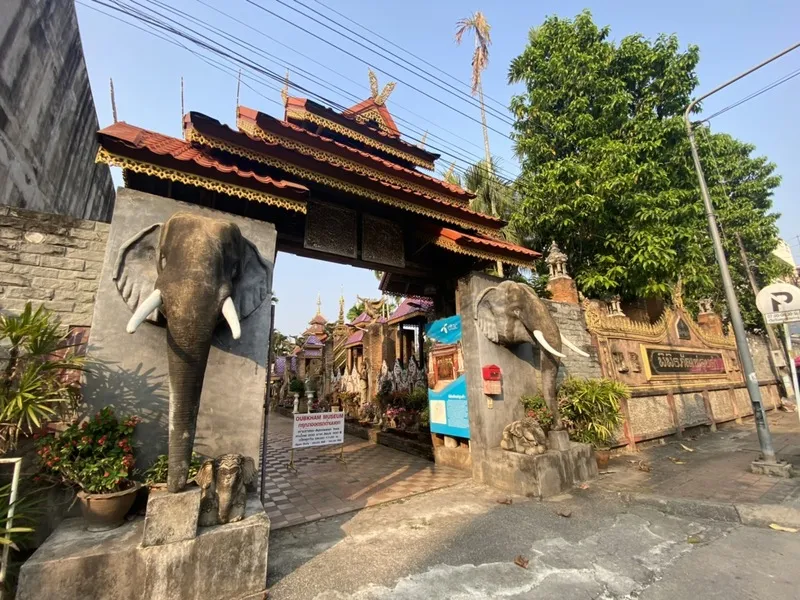
Oub Kham Museum is one of the most distinctive cultural attractions in Chiang Rai for travelers who want to explore the deeper legacy of the ancient Lanna Kingdom. More than just a private museum, it is a heritage center devoted to preserving royal court objects, textiles, ceremonial items, silver ornaments, lacquerware, and rare treasures connected to Lanna and the wider Tai cultural world. Located at 81/1 Na Khai Road in Rop Wiang, right beside Den Ha fresh market, the museum offers a surprisingly rich historical experience in the middle of the city.
What makes Oub Kham Museum so compelling is the way it presents the grandeur of the past through real objects rather than abstract explanation. Visitors can see royal household items from the Lanna court, objects associated with the princely residences of Phrae and Chiang Mai, old textiles, ceremonial attire, silver jewelry, lacquered pieces, and architectural ornaments that once belonged to elite circles. These collections do more than look beautiful. They reveal how power, elegance, ritual, and craftsmanship were expressed in daily and ceremonial life across the old northern kingdoms.
The museum was founded by Ajarn Julsak Suriya Chai, whose long-term effort to gather and preserve precious Lanna heritage gives the place its special significance. His intention was not simply to collect antiques, but to return culturally important Lanna objects to Thai soil whenever possible and keep them accessible for future generations. This purpose gives the museum unusual emotional and historical weight. It feels less like a commercial attraction and more like a deeply personal mission of cultural recovery and preservation.
The museum complex is arranged into 3 main buildings. Khum Oub Kham presents silverware, court textiles, lacquerware, and architectural ornaments. Khum Bua Luean focuses on antique textiles and clothing from various Tai ethnic groups, with some pieces more than 200 years old. Khum Chao Fa is the building many visitors remember most clearly because it houses the famous golden throne from Shan State, one of the museum’s most celebrated masterpieces. Together, the 3 buildings create a layered journey through court life, artistry, and regional heritage.
Among the highlights, the golden royal throne is the most iconic. It immediately conveys the splendor and ceremonial authority of the old Tai and Shan courts. Visitors should also pay attention to the royal garments decorated with real gold, the large collection of silver jewelry, and the old woven skirts and court textiles that reflect both wealth and remarkable technical skill. For anyone interested in fashion history, ceremonial design, or material culture, these pieces are especially rewarding because they preserve details that are rarely seen in ordinary museum collections.
Another strength of Oub Kham Museum is that it expands the idea of Lanna beyond the familiar modern boundaries of northern Thailand. The collections point toward a wider Tai cultural world that includes connections with Shan State, Phrae, Chiang Mai, and neighboring regions. This makes the museum particularly valuable for travelers who want to understand Lanna not only as a place, but as a broader civilizational network shaped by shared aesthetics, courtly customs, textile traditions, and political relationships across borders.
Inside the museum, visitors move through differently themed rooms and display spaces, including areas devoted to textiles, courtly settings, and more atmospheric exhibit zones. This helps the visit feel immersive rather than repetitive. Instead of walking past rows of unlabeled objects, visitors are gradually introduced to different aspects of elite life, ceremonial culture, and artistic tradition. The result is an experience that feels intimate, curated, and deeply rooted in the personality of the founder.
One reason many people enjoy the museum is the presence of knowledgeable guides or staff who explain the significance of the objects. This makes a major difference. Many items at Oub Kham Museum are visually impressive on their own, but their full meaning becomes much clearer when someone explains where they came from, how they were used, and why they matter in the historical world of Lanna and the Tai peoples. For foreign travelers especially, this guided dimension can turn the visit into a much richer cultural encounter.
As a travel experience, Oub Kham Museum suits visitors who want more depth than the usual sightseeing route. It is ideal for travelers interested in art, history, royal culture, costume, and heritage preservation. Because it sits in the city, it is easy to include in a half-day or full-day Chiang Rai itinerary. Yet once inside, the atmosphere feels separated from the street outside, allowing visitors to slow down and focus on the details of the collection.
The museum also says something important about Chiang Rai itself. It shows the province not only as a destination of temples and mountain scenery, but also as a place where the cultural memory of Lanna and the wider Tai world continues to be actively preserved. In that sense, Oub Kham Museum is not just a place to admire old treasures. It is a place to understand why those treasures still matter.
Getting There is straightforward. The museum is located at 81/1 Na Khai Road, Rop Wiang, Mueang Chiang Rai, beside Den Ha fresh market. From the central bus terminal in town, you can hire a car or tuk-tuk to reach the museum easily. Travelers with their own car will also find it convenient, with parking available in front of the museum. From De Hug Hotel and the Den Ha intersection area, the museum is only a short walk away, making it especially practical for travelers staying nearby.
The museum is open daily from 08:00 to 17:00, and it is best visited when you have at least 1 to 2 hours available. That gives enough time to move through all 3 main buildings, appreciate the most important pieces, and listen to the explanations that make the collection come alive. Overall, Oub Kham Museum is one of Chiang Rai’s strongest cultural attractions for anyone who wants a refined, memorable, and historically meaningful experience.
| Name | Oub Kham Museum |
| Location | 81/1 Na Khai Road, Rop Wiang, Mueang Chiang Rai, Chiang Rai |
| Address | 81/1 Na Khai Road, Rop Wiang, Mueang Chiang Rai, Chiang Rai 57000 |
| Coordinates | 19.8977, 99.8168 |
| Highlights | Royal court objects from Lanna, antique textiles, silver jewelry, lacquerware, and the famous golden throne from Shan State |
| History | Founded in 1993 by Ajarn Julsak Suriya Chai to preserve Lanna heritage and Tai cultural treasures |
| Name Origin | The name comes from “Oub,” a traditional lacquered and gilded container for royalty and senior monks, and “Kham,” meaning gold |
| Distinctive Features | Three main buildings: Khum Oub Kham, Khum Bua Luean, and Khum Chao Fa, with guided interpretation |
| Travel Information | Easy to reach from Chiang Rai bus terminal or Den Ha intersection by hired car, tuk-tuk, or private vehicle |
| Current Status | Open to visitors |
| Open Days | Daily |
| Opening Hours | 08:00 – 17:00 |
| Fees | Thai Adult 200 Baht, Thai Child 100 Baht, Foreigner Adult 300 Baht, Foreigner Child 200 Baht |
| Facilities | Restrooms, tourist information, local guide, signage, parking in front of the museum, CCTV |
| Main Areas / Zones | Khum Oub Kham, Khum Bua Luean, Khum Chao Fa, textile room, royal hall zone, golden throne display |
| Caretaker | Ajarn Julsak Suriya Chai |
| Main Contact Number | 053-713349 |
| Official Website / Official Page | www.oubkhammuseum.com, Facebook: Oub Kham Museum |
| Nearby Tourist Attractions | 1) Den Ha Fresh Market 0.1 km 2) Princess Mother Park, Chiang Rai 1.8 km 3) Wat Phra Kaew 3.2 km 4) Chiang Rai Clock Tower 3.9 km 5) Chiang Rai Walking Street 4.1 km |
| Nearby Restaurants | 1) Jungle Cafe Den Ha Market 0.2 km, Tel. 090-916-1840 2) Khaeg Den Ha 0.4 km, Tel. 062-027-1931, 082-258-1999 3) Den Ha Som Tum 0.8 km, Tel. 062-959-3783 4) Pha Malarb Den Ha 1 km, Tel. 062-118-3689 5) Tue Kakho Den Ha 1 km, Tel. 094-805-7879, 091-076-6610 |
| Nearby Accommodations | 1) De Hug Hotel 0.3 km, Tel. 053-711-789, 093-135-5600 2) La Vie En Rose Hotel 0.7 km, Tel. 053-601-331 3) B2 Chiang Rai Phahonyothin Boutique & Budget Hotel 2 km, Tel. 052-020-766 4) Baan Lom Now 2.5 km, Tel. 053-601-128, 091-225-7357 5) Piyaporn Hill Paradise Hotel 3.5 km |
Frequently Asked Questions (FAQ)
Q: Is Oub Kham Museum open every day?
A: Yes. The museum is open daily from 08:00 to 17:00.
Q: How much is the entrance fee?
A: The current admission fees are 200 baht for Thai adults, 100 baht for Thai children, 300 baht for foreign adults, and 200 baht for foreign children.
Q: What is the main highlight of Oub Kham Museum?
A: The most famous highlight is the golden throne from Shan State, along with royal Lanna court objects, antique textiles, silver jewelry, and lacquerware.
Q: How much time should I allow for a visit?
A: It is best to allow at least 1 to 2 hours, especially if you want to explore all 3 main buildings and listen to the guided explanations.
Q: Who would enjoy visiting Oub Kham Museum?
A: It is ideal for travelers interested in Lanna history, royal culture, antique textiles, silverwork, and heritage tourism in Chiang Rai.
Q: Is the museum easy to reach?
A: Yes. It is located in Chiang Rai city beside Den Ha fresh market and can be reached easily by hired car, tuk-tuk, or private vehicle.
 Category: ●Art, Culture and Heritage
 Group: ●Museums
Last Update : 5 MonthAgo
 Last Update : 5 MonthAgo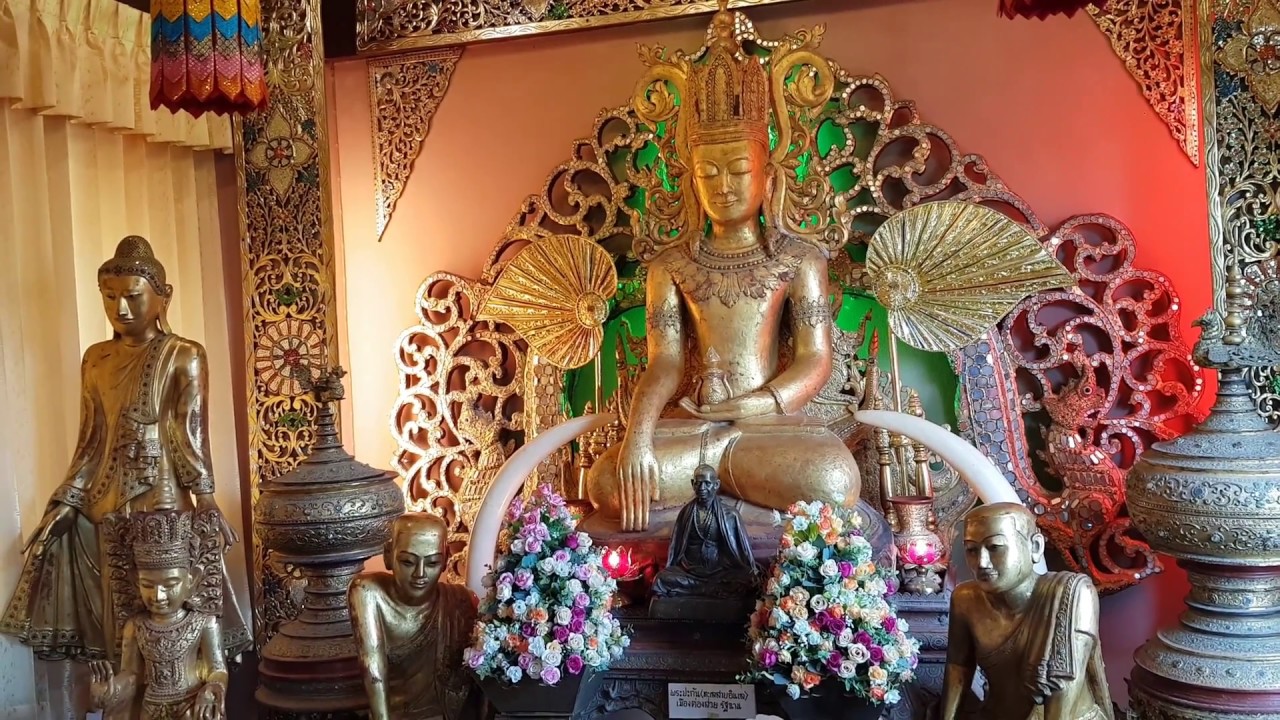
 Click to Access the Navigation Map GPS
Oub Kham Museum Map
Recommend

 Historical Sites and Monuments(3)
 Landmarks and Memorials(7)
 Art, Craft Centres, Tradition(6)
Museums(8)
Art, Craft Centres, Tradition(6)
Museums(8)
 Historic Homes and Cities(1)
 Educational Places
 Museum for Study(1)
 Library(1)
 Educational Gardens, Farm(3)
 Places of Worship
 Temple(38)
 Other Sacred Sites(5)
 Research and Development
 Royal Project(9)
 Suburban Living
 Village, Community(16)
 Local Market(5)
 Nature and Wildlife
 National Parks and Marine Reserves(18)
 Mountain (Doi)(20)
 Dam, Reservoir, Lake(8)
 Waterfalls(16)
 Hot Springs(6)
 Caves(8)
 River, Canal(10)
 Sea, Beach(1)
 Other natural attractions(3)
 Entertainment and Agricultural
 Animal camps and shows(1)
 Farms, Parks and Ecotourism(9)
 Shopping
 Shopping and Night Market(2)
 Call Customer Service in Tourism
 Call Customer Service in Tourism(1)
 Travel Articles, Recipes
 Travel Review, Food Review(1)
 Food Menu, North Recipes(1)


