
lovethailand home >North Travel Attractions >Chiang Rai Travel Attractions >Mae Fa Luang >Mae Salong Nok > Thai-Chinese Memorial in Santikhiri
TL;DR: Thai-Chinese Memorial in Santikhiri is located at Ban Santikhiri, Moo 1, Mae Salong Nok, Mae Fa Luang, Chiang Rai, open Daily, hours 08:00 – 17:00.
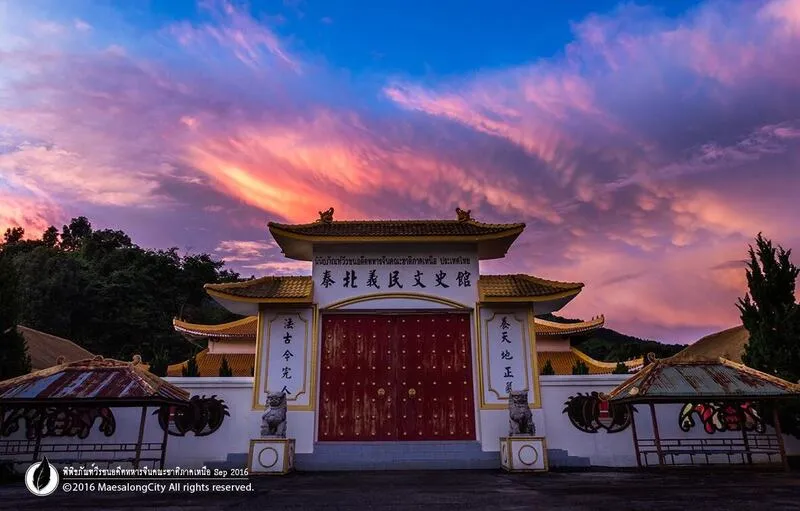
Thai-Chinese Memorial in Santikhiri
Open Days: Daily
Opening Hours: 08:00 – 17:00
The Thai-Chinese Memorial in Santikhiri is one of the most important historical attractions on Doi Mae Salong, Chiang Rai, because it explains the deeper story behind the village better than almost any other place in the area. Many travelers know Mae Salong for its tea plantations, Yunnanese food, cool weather, and mountain scenery, but this memorial reveals why Santikhiri developed such a strong Chinese-Yunnan identity in the first place. It is not simply a photo stop or a museum building. It is a place of memory, gratitude, and community history.
Located in Ban Santikhiri, the memorial was created to honor the history of former Kuomintang soldiers of the 93rd Division who later helped the Thai government fight communist insurgency in northern Thailand. Their role in operations in Doi Luang, Doi Khao, and Doi Pha Mon in Chiang Rai between 1971 and 1985, as well as in Khao Ya in Phetchabun in 1981, became an important part of the historical identity of the Santikhiri community. The memorial exists to preserve that memory and to acknowledge the sacrifice, injuries, and loss that came from those years of conflict.
What makes the site especially meaningful is that it does more than commemorate the past. It also helps visitors understand how a displaced military community eventually became an established Thai community on Doi Mae Salong. The story presented here is not only about war. It is also about migration, settlement, rebuilding life, and becoming part of Thailand. That broader human story gives the memorial a depth that many travelers do not expect before they arrive.
Inside the memorial, visitors can see historical photographs, documentary materials, and curated displays that describe the background of the former Chinese nationalist soldiers, their difficult early years in Thailand, and the development of the Mae Salong community. There is also a library and reference collection related to the history of the area. For travelers who enjoy cultural tourism, this makes the site much more than a symbolic monument. It is also a learning space that connects local memory with national history.
Architecturally, the memorial stands out immediately. The building is designed in an elegant Chinese style, with a formal gateway, symmetrical layout, and details that match the broader visual identity of Santikhiri. That architectural setting is important because it reinforces the atmosphere of the village itself. Instead of feeling separate from the community, the memorial feels like a natural expression of it. The building’s appearance alone already gives visitors a strong sense of place before they even step inside.
One of the strongest reasons to visit this memorial early in a Mae Salong itinerary is that it helps everything else make more sense. After learning the historical background here, travelers can more fully appreciate nearby places such as General Tuan’s Tomb, Phra Borommathat Chedi Srinagarindra Sathit Maha Santi Khiri, local tea plantations, and the village streets of Santikhiri. The memorial provides the historical framework that ties these places together into one coherent story.
Travelers who prefer meaningful destinations over purely scenic ones often find this memorial especially rewarding. It offers real context rather than only atmosphere. By walking through the exhibition areas, visitors begin to understand the political background of the community, the challenges of relocation and settlement, and the long process through which Mae Salong became a stable and well-known mountain destination in northern Thailand. That makes the visit intellectually engaging as well as emotionally resonant.
Another reason the site matters is its relationship to local gratitude and remembrance. This is not simply a historical summary prepared for tourism. It is also a place where the community preserves the memory of sacrifice and acknowledges the opportunities that later allowed former Chinese nationalist soldiers and their families to become Thai citizens and build new lives here. That emotional layer is one of the reasons the memorial feels so grounded and sincere.
The atmosphere around the memorial is also suitable for a slower, more reflective visit. Because it is located in Ban Santikhiri, within the main tourism zone of Mae Salong, it is easy to combine with tea shops, restaurants, viewpoints, and other cultural sites. At the same time, the mood of the memorial itself remains calm and serious. That balance works very well for travelers who want variety in a single trip — history, food, scenery, and local culture all within one destination.
From a photography perspective, the site offers attractive images both outside and inside. Externally, the Chinese-style entrance and building lines create elegant compositions. Internally, the displays and archival photographs offer a more documentary feel that suits travelers interested in storytelling and cultural content rather than only landscape imagery. While the memorial is not a flashy attraction, it is visually distinctive and memorable in a more refined way.
Families, students, history enthusiasts, and international travelers interested in Southeast Asian and Chinese diaspora history will all find value here. It is one of those rare attractions that can deepen a road trip without requiring too much additional time. Even a short visit can change how the rest of Mae Salong is understood. Instead of seeing the village only as a mountain destination, visitors begin to see it as a community shaped by conflict, resilience, adaptation, and gratitude.
The memorial also helps explain why Santikhiri feels different from many other northern Thai mountain villages. Its food, language influences, architectural details, tea culture, and local identity are all tied to the historical process documented here. Once that becomes clear, the village itself turns into a living extension of the memorial. In that sense, the experience continues even after leaving the exhibition building.
For travelers planning a one-day trip to Doi Mae Salong, this attraction works extremely well as either a starting point or a mid-route stop. Visiting it first provides useful context before heading to temples, viewpoints, and tea plantations. Visiting it later can serve as a reflective conclusion after enjoying the scenery. Either way, it adds a sense of completeness to the trip that would otherwise be missing.
Another strength of the site is that it does not take long to visit, yet it leaves a lasting impression. Travelers with limited time can spend around 30 – 45 minutes here, while those who want to read the displays more carefully should allow about an hour or more. This makes it practical for most itineraries without sacrificing value. It is a small adjustment to the day, but a significant improvement to the overall experience of Mae Salong.
In a broader sense, the Thai-Chinese Memorial represents one of the most valuable forms of cultural tourism: a place where architecture, memory, historical evidence, and living community identity all meet. It turns a scenic mountain trip into something richer and more human. For anyone who wants to understand Doi Mae Salong beyond tea and viewpoints, this is one of the most worthwhile stops in the district.
Getting There The Thai-Chinese Memorial is located in Ban Santikhiri, Moo 1, Mae Salong Nok Subdistrict, Mae Fa Luang District, Chiang Rai, within the main tourism area of Doi Mae Salong. From Chiang Rai city, travelers usually take Highway 1089 toward Mae Fa Luang and continue up the mountain road to Mae Salong. The road is winding in some sections but accessible by private car and rental car. Once in Santikhiri, the memorial is easy to include in the same route as General Tuan’s Tomb, tea plantations, local restaurants, and Phra Borommathat Chedi Srinagarindra Sathit Maha Santi Khiri.
| Name | Thai-Chinese Memorial, Ban Santikhiri |
| Location | Ban Santikhiri, Moo 1, Mae Salong Nok, Mae Fa Luang, Chiang Rai |
| Address | Ban Santikhiri, Moo 1, Mae Salong Nok Subdistrict, Mae Fa Luang District, Chiang Rai 57110 |
| Coordinates | 20.1535381, 99.6203092 |
| Highlights | A historical memorial and museum presenting the story of former Chinese nationalist soldiers, Santikhiri settlement history, archival photographs, and a reference library |
| History | Built to commemorate the contribution and sacrifice of former Kuomintang soldiers of the 93rd Division who later helped Thailand in anti-communist operations and became part of the Mae Salong community |
| Name Origin | Named as a memorial to Thai citizens of Chinese descent and the historical role of the former Chinese nationalist community in Santikhiri |
| Distinctive Features | Chinese-style architecture, curated historical displays, archival photographs, and strong cultural significance within the identity of Doi Mae Salong |
| Travel Information | Accessible via Highway 1089 from Chiang Rai to Doi Mae Salong; located in the main tourism zone of Santikhiri and easy to combine with nearby attractions |
| Current Status | Open to visitors |
| Open Days | Daily |
| Opening Hours | 08:00 – 17:00 |
| Fees | 20 THB |
| Facilities | Exhibition building, library/reference area, walking space, front plaza, and nearby parking area |
| Main Areas / Zones | Museum building, memorial zone, historical photo display area, documentary section, community reference library |
| Main Contact Number | 053-765180, Mae Salong Nok SAO 053-765129, Ban Santikhiri 053-765114-9 |
| Official Website / Official Page | Amazing Thailand Chiang Rai-Phayao, CBT Thailand, Mae Salong Nok SAO |
| Nearby Tourist Attractions | 1) General Tuan’s Tomb 1 km 2) 101 Tea Plantation 1 km 3) Doi Mae Salong Viewpoint 2 km 4) Phra Borommathat Chedi Srinagarindra Sathit Maha Santi Khiri 4 km 5) Wang Put Tan Tea Plantation 4 km |
| Nearby Restaurants | 1) Sweet Maesalong Cafe 1 km Tel. 089-874-9656 2) Im Pochana 1 km Tel. 089-637-5290, 053-765297, 080-5000910 3) Mae Salong Villa Restaurant 1 km Tel. 053-765114-5, 095-0534999 4) Yunnan Noodle Shop, Mae Salong 1 km Tel. 084-6641215 5) Tea Shop 101 1 km |
| Nearby Accommodations | 1) Mae Salong Villa 1 km Tel. 053-765114-5, 095-0534999 2) 101 Tea Green View 1 km Tel. 090-7059009 3) Shin Sane Guest House 1 km Tel. 053-765026 4) Doi Mok Dokmai Resort 2 km Tel. 053-765495-7, 091-8506262 5) Mae Salong Resort 2 km Tel. 053-765014-8, 053-765132-4 |
Frequently Asked Questions (FAQ)
Q: Where is the Thai-Chinese Memorial located?
A: It is located in Ban Santikhiri, Moo 1, Mae Salong Nok Subdistrict, Mae Fa Luang District, Chiang Rai, within the main Doi Mae Salong tourism area.
Q: What are the opening hours of the Thai-Chinese Memorial?
A: It is open daily from 08:00 to 17:00.
Q: Is there an entrance fee?
A: Yes. The current admission fee is 20 THB.
Q: What can visitors see inside the memorial?
A: Visitors can see historical photographs, documentary displays, background information on former Chinese nationalist soldiers, settlement history, and a local reference library.
Q: Who should visit this memorial?
A: It is especially suitable for travelers interested in history, community culture, meaningful road trips, family travel, and educational visits.
Q: What nearby places can be visited on the same trip?
A: You can easily continue to General Tuan’s Tomb, tea plantations, Mae Salong viewpoints, and Phra Borommathat Chedi Srinagarindra Sathit Maha Santi Khiri on the same route.
 Category: ●Art, Culture and Heritage
 Group: ●Landmarks and Memorials
Last Update : 6 MonthAgo
 Last Update : 6 MonthAgo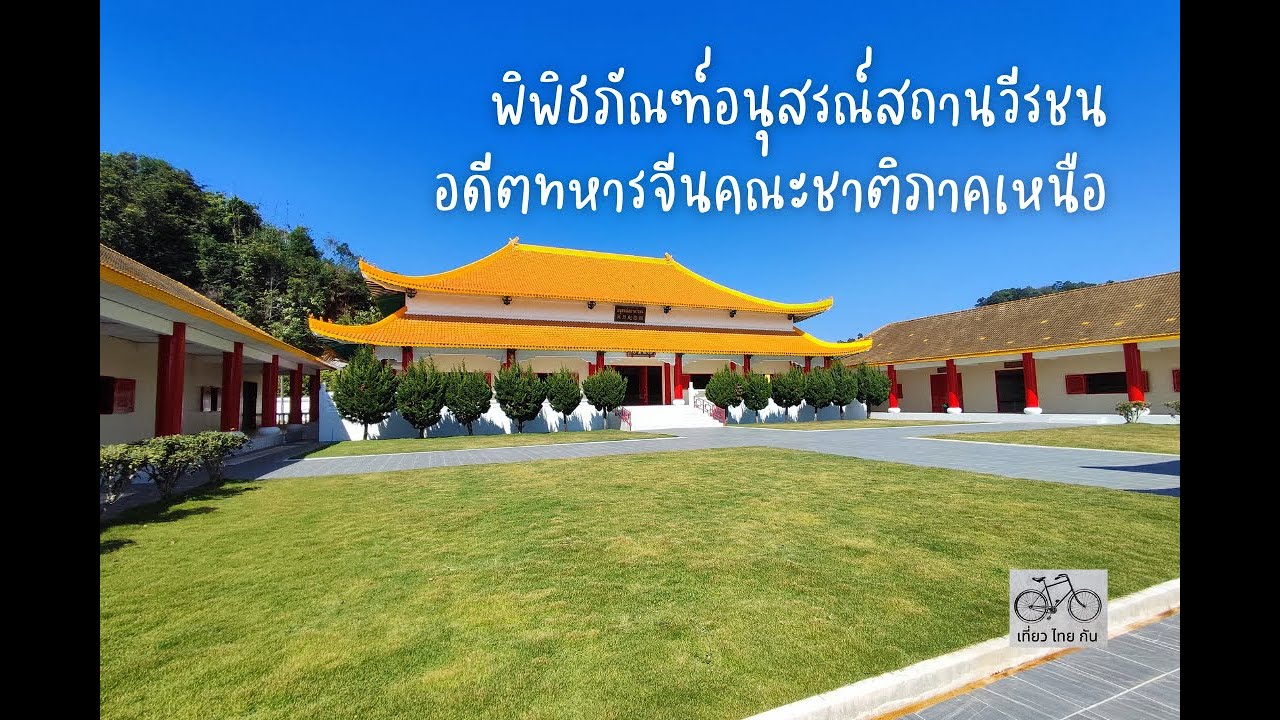
 Click to Access the Navigation Map GPS
Thai-Chinese Memorial in Santikhiri Map
Recommend

 Historical Sites and Monuments(3)
Landmarks and Memorials(7)
Historical Sites and Monuments(3)
Landmarks and Memorials(7)
 Art, Craft Centres, Tradition(6)
 Museums(8)
 Historic Homes and Cities(1)
 Educational Places
 Museum for Study(1)
 Library(1)
 Educational Gardens, Farm(3)
 Places of Worship
 Temple(38)
 Other Sacred Sites(5)
 Research and Development
 Royal Project(9)
 Suburban Living
 Village, Community(16)
 Local Market(5)
 Nature and Wildlife
 National Parks and Marine Reserves(20)
 Mountain (Doi)(20)
 Dam, Reservoir, Lake(8)
 Waterfalls(16)
 Hot Springs(6)
 Caves(8)
 River, Canal(10)
 Sea, Beach(1)
 Other natural attractions(3)
 Entertainment and Agricultural
 Animal camps and shows(1)
 Farms, Parks and Ecotourism(9)
 Shopping
 Shopping and Night Market(2)
 Call Customer Service in Tourism
 Call Customer Service in Tourism(1)
 Travel Articles, Recipes
 Travel Review, Food Review(1)
 Food Menu, North Recipes(1)


