
lovethailand home >North Travel Attractions >Chiang Rai Travel Attractions >Thoeng >Ngao > Phra Chao Song Si
TL;DR: Phra Chao Song Si is located at Wat Bunnak, Ban Bunnak Phatthana, Moo 20, Ngao Subdistrict, Thoeng District, Chiang Rai, open Daily, hours Open all day.
Phra Chao Song Si

Open Days: Daily
Opening Hours: Open all day
Phra Chao Song Si at Wat Bunnak is one of the most interesting cultural stops in Thoeng District, Chiang Rai, especially for travelers heading toward Phu Chi Fa. Although many visitors drive straight to the mountain viewpoint, this sacred site in Ngao Subdistrict offers a quieter and more meaningful experience along the same travel route. It is not only a respected local Buddha image, but also an important symbol of the community, reflecting the history, faith, and identity of the people of Ngao.
One of the most appealing things about visiting Phra Chao Song Si is its location. The site is close enough to the Ban Pi junction and the Phu Chi Fa route to make it an easy detour, yet the atmosphere is completely different from a typical sightseeing stop. Instead of crowds and fast-paced tourism, visitors find a calm temple setting, a sacred image with a long local story, and a village environment that still feels deeply connected to Lanna culture. For travelers who want more than photos from a mountain viewpoint, this stop adds real cultural depth to the journey.
Phra Chao Song Si is enshrined at Wat Bunnak in Ban Bunnak Phatthana, Moo 20, Ngao Subdistrict, Thoeng District, Chiang Rai. The temple sits in an area that connects conveniently with the route toward Ban Pi and Phu Chi Fa, making it ideal for a short stop before or after a mountain trip. Even a brief visit can be rewarding, but those with extra time will appreciate the chance to walk through the temple grounds, observe the local setting, and better understand how important this sacred image remains to the surrounding community.
The name “Phra Chao Song Si” means “the Two-Colored Buddha,” and it comes directly from the appearance of the image itself. The Buddha has a distinct two-tone surface: the main body appears in a copper-gold shade, while the robe and outer folds carry a more bronze-gold tone. This unusual visual contrast is what made local people call it the Two-Colored Buddha, and the name has remained ever since. The image stands out not only for its sacred importance, but also for its artistic uniqueness.
According to local history, Phra Chao Song Si is a Chiang Saen-style Buddha image believed to be more than 500 years old. Community accounts say that Khru Ba Phrommathep, also known as Khru Ba Thip Phala Phonlayano, the first abbot of Wat Bunnak, invited villagers to help recover the sacred Buddha image from beneath the remains of an old ruined chedi behind the ordination hall. After that, the image was brought to an appropriate place within the temple and later enshrined in a dedicated viharn. This story gives the site a strong sense of continuity between sacred memory and community life.
A special viharn was eventually built to house Phra Chao Song Si. Its form, with a dignified structure and a chedi-like upper profile, gives the site an immediately recognizable presence within the temple grounds. The atmosphere around the viharn is quiet and shaded, making it a suitable place not only for paying respect but also for pausing during a longer road trip. Many visitors like to begin their Phu Chi Fa journey here because a temple visit feels like a meaningful and auspicious way to start the day.
The importance of Phra Chao Song Si extends beyond the temple itself. It is deeply woven into the identity of Ngao Subdistrict and is even reflected in the local slogan that highlights the value of the Two-Colored Buddha alongside other important local landmarks. That detail shows how strongly the image is connected to the community’s cultural pride. In other words, this is not simply a roadside temple attraction. It is one of the symbolic hearts of Ngao.
Another reason this place matters is its role in local tradition. The community holds an annual water-pouring merit ceremony for Phra Chao Song Si around the end of December. This tradition reflects the close relationship between religion, seasonal ritual, and village life. For travelers who are interested in living culture rather than static landmarks, that is an important detail. It shows that the image is still actively revered, not merely preserved as a historical object.
For travelers on the way to Phu Chi Fa, this site works extremely well as a cultural stop because it does not require a major detour. Instead of rushing uphill in one stretch, visitors can pause here to pay respect, enjoy the temple atmosphere, gather route information, and experience a more human side of the area. The surrounding community also offers local products and a glimpse into everyday life, making the visit part of a more sustainable and community-connected style of travel.
Ngao is a small subdistrict, but it carries a quiet richness that many travelers overlook. Its appeal lies in the combination of local faith, village life, and simple northern scenery. A stop at Phra Chao Song Si introduces visitors to this atmosphere immediately. Rather than presenting Chiang Rai only through famous mountain viewpoints, the place reveals another dimension of the province — one shaped by temple culture, local memory, and the rhythms of a real community.
This destination is especially suitable for travelers who enjoy cultural journeys, temple visits, and slower road trips. Families can stop here easily, spiritual travelers can come for worship, and anyone interested in regional heritage will appreciate the Chiang Saen artistic character of the Buddha image. Because the temple grounds are peaceful and straightforward to explore, the visit feels accessible rather than demanding.
Many Thai travelers like to begin important journeys by paying respect at a temple, and Phra Chao Song Si fits that role very naturally. Stopping here before heading to Phu Chi Fa can make the trip feel more complete and meaningful. Since the temple is close to the main route, the detour is small, but the emotional value of the visit is much greater. What seems like a quick stop often becomes one of the most memorable parts of the journey.
From an art and heritage perspective, the image is also fascinating. As a Chiang Saen-style bronze Buddha with a clearly visible two-tone surface, it offers something visually distinctive that is difficult to understand fully from photographs alone. Seeing the real image inside the viharn makes the story behind the name immediately clear. The changing light across the bronze surface helps reveal the two-color character that has made this Buddha so well known in the local area.
Travelers who want to explore the route more fully can use this stop as part of a wider Ngao – Ban Pi – Phu Chi Fa itinerary. After visiting the temple, it is easy to continue to places such as Ban Pi overflow weir, Ban Pi reservoir weir, the Ngao River area, or onward to the famous mountain route. Planning the trip this way creates a more complete experience, blending spirituality, local life, and nature in one journey rather than treating the mountain viewpoint as the only destination worth seeing.
One of the most admirable things about the site is how local institutions have helped present it as an important historical attraction of Ngao. That effort keeps the place alive not only in community memory but also in regional tourism. For visitors who value meaningful travel, places like this often leave a stronger impression than more commercial attractions, because the experience feels rooted, sincere, and closely tied to the people who live there.
Although Phra Chao Song Si is not a large-scale tourist attraction, it offers something many travelers are actually looking for: a sense of calm, continuity, and place. The visit can be brief, but it often leaves a lasting feeling. Between the temple setting, the sacred image, and the cultural importance of the site, this small stop can bring surprising depth to a Chiang Rai road trip.
If you have extra time, the surrounding area can also serve as a practical rest point before going up to Phu Chi Fa. Visitors can ask about routes, nearby stays, local food, and community products. In that sense, Phra Chao Song Si is more than a sacred image inside a temple. It is also a gateway to understanding Ngao as a living local destination rather than just a place passed on the way to somewhere else.
For travelers who want to know Chiang Rai beyond its best-known viewpoints, Phra Chao Song Si is a very worthwhile stop. Paying respect here brings a sense of blessing to the journey, but it also opens a window into the relationship between temple, village, and road-travel culture in northern Thailand. It is a small destination, but it adds real value to the route.
Getting There From Thoeng District, follow the road toward Ban Pi and the Phu Chi Fa route. Near the Ban Pi junction, continue into Ngao Subdistrict and head toward Wat Bunnak in Ban Bunnak Phatthana, Moo 20. The route is suitable for private cars and motorcycles. Travelers coming from Chiang Rai city should allow enough time, as the broader Phu Chi Fa route includes winding mountain sections. Many visitors stop here either before going up to Phu Chi Fa or on the return journey, when the peaceful temple setting makes an excellent break in the drive.
| Name | Phra Chao Song Si, Wat Bunnak |
| Location | Wat Bunnak, Ban Bunnak Phatthana, Moo 20, Ngao Subdistrict, Thoeng District, Chiang Rai |
| Address | Ban Bunnak Phatthana, Moo 20, Ngao, Thoeng, Chiang Rai 57160 |
| Highlights | A Chiang Saen-style Buddha image more than 500 years old, known for its distinctive two-tone surface and strong local spiritual significance |
| History | A Chiang Saen-period Buddha image believed to be over 500 years old, later recovered from an old ruined chedi area and enshrined at Wat Bunnak |
| Name Origin | The name means “Two-Colored Buddha,” referring to the contrast between the copper-gold body and the bronze-gold robe |
| Distinctive Features | A meaningful temple stop on the Phu Chi Fa route, combining local faith, cultural identity, and a peaceful village atmosphere |
| Travel Information | Accessible via the Ban Pi – Phu Chi Fa route; suitable for private cars and motorcycles; easy to visit as a stop before or after Phu Chi Fa |
| Current Status | Open for visitors and worship |
| Open Days | Daily |
| Opening Hours | Open all day |
| Facilities | Temple parking area, worship space, viharn area, and a convenient rest stop atmosphere for road travelers |
| Main Areas / Zones | Phra Chao Song Si Viharn, Wat Bunnak ordination hall area, temple grounds, Ban Bunnak Phatthana community zone |
| Abbot / Caretaker | Phra Maha Theerawat Khantasilo (Kanta), Abbot of Wat Bunnak |
| Main Contact Number | Wat Bunnak 083-153-7401, Ngao Town Municipality 053-696333 |
| Official Website / Official Page | Ngao Town Municipality website, Wat Bunnak official Facebook page |
| Nearby Tourist Attractions | 1) Ban Pi Overflow Weir 2 km 2) Ban Pi Reservoir Weir 3 km 3) Ngao River 4 km 4) Phra That Plai Na 8 km 5) Doi Ian 10 km |
| Nearby Restaurants | 1) Suan Sane Jaew Hon & Vietnamese Pork Sausage, Ban Pi 2 km Tel. 065-414-0559, 081-028-6163 2) Wongphan Cafe 14 km Tel. 062-293-0843 3) Cafe180 15 km Tel. 092-817-6461 4) PLANT Cafe 15 km Tel. 063-792-6975 5) Laddawan Restaurant 15 km Tel. 093-138-3468 |
| Nearby Accommodations | 1) Baan Phu Chi Fa Resort 18 km Tel. 081-783-5505 2) Phu Chi Fa at Good View 19 km Tel. 063-565-9465 3) The Season Camp Phu Chi Fa 20 km Tel. 084-894-1749 4) Luck Phu Chi Fa 20 km Tel. 081-673-1216 5) CAMP Phuchifa 21 km Tel. 097-184-6559 |
Frequently Asked Questions (FAQ)
Q: Where is Phra Chao Song Si located?
A: It is enshrined at Wat Bunnak in Ban Bunnak Phatthana, Moo 20, Ngao Subdistrict, Thoeng District, Chiang Rai.
Q: Is Phra Chao Song Si worth visiting on the way to Phu Chi Fa?
A: Yes. It is a meaningful cultural and spiritual stop along the broader Phu Chi Fa route and does not require a major detour.
Q: Why is it called the Two-Colored Buddha?
A: The image has a clearly visible two-tone surface, with the main body in a copper-gold shade and the robe in a bronze-gold tone.
Q: What is the significance of Phra Chao Song Si?
A: It is a Chiang Saen-style Buddha image over 500 years old and one of the most respected sacred symbols of Ngao Subdistrict.
Q: When is it open to visitors?
A: It is currently open for visits throughout the day.
Q: What else can I do after visiting?
A: You can continue to Ban Pi attractions, local river spots, or travel onward to Phu Chi Fa for a broader cultural and nature itinerary.
Tel : 053696333
 Tel : 053696333
 Category: ●Art, Culture and Heritage
 Group: ●Landmarks and Memorials
Last Update : 7 MonthAgo
 Last Update : 7 MonthAgo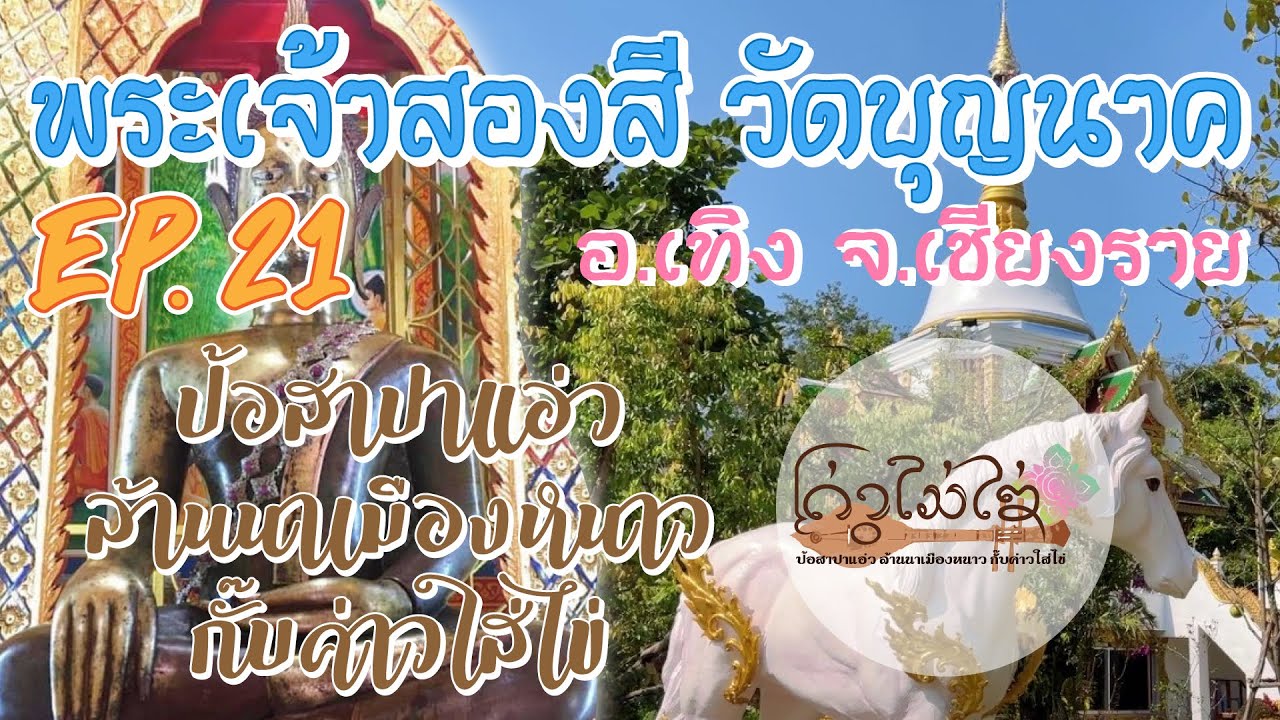
 Click to Access the Navigation Map GPS
Phra Chao Song Si Map
Recommend

 Historical Sites and Monuments(3)
Landmarks and Memorials(7)
Historical Sites and Monuments(3)
Landmarks and Memorials(7)
 Art, Craft Centres, Tradition(6)
 Museums(8)
 Historic Homes and Cities(1)
 Educational Places
 Museum for Study(1)
 Library(1)
 Educational Gardens, Farm(3)
 University
 Autonomous Universities(1)
 Rajamangala University of Technology(1)
 Rajabhat University(1)
 Places of Worship
 Temple(38)
 Other Sacred Sites(5)
 Research and Development
 Royal Project(9)
 Suburban Living
 Village, Community(16)
 Local Market(5)
 Nature and Wildlife
 National Parks and Marine Reserves(20)
 Mountain (Doi)(20)
 Dam, Reservoir, Lake(8)
 Waterfalls(16)
 Hot Springs(6)
 Caves(8)
 River, Canal(10)
 Sea, Beach(1)
 Other natural attractions(3)
 Entertainment and Agricultural
 Animal camps and shows(1)
 Farms, Parks and Ecotourism(9)
 Waterpark(1)
 Shopping
 Shopping and Night Market(2)
 Call Customer Service in Tourism
 Call Customer Service in Tourism(1)
 Travel Articles, Recipes
 Travel Review, Food Review(1)
 Food Menu, North Recipes(1)


