
lovethailand home >North Travel Attractions >Chiang Rai Travel Attractions >Chiang Saen >Yonok > Wiang Nong Lom
TL;DR: Wiang Nong Lom, Chiang Rai attractions : Art, Culture and Heritage, Historical Sites and Monuments.
Wiang Nong Lom
Open Days: No official opening-day notice is published for the outdoor area
Opening Hours: No official opening-hours notice is published for the outdoor area
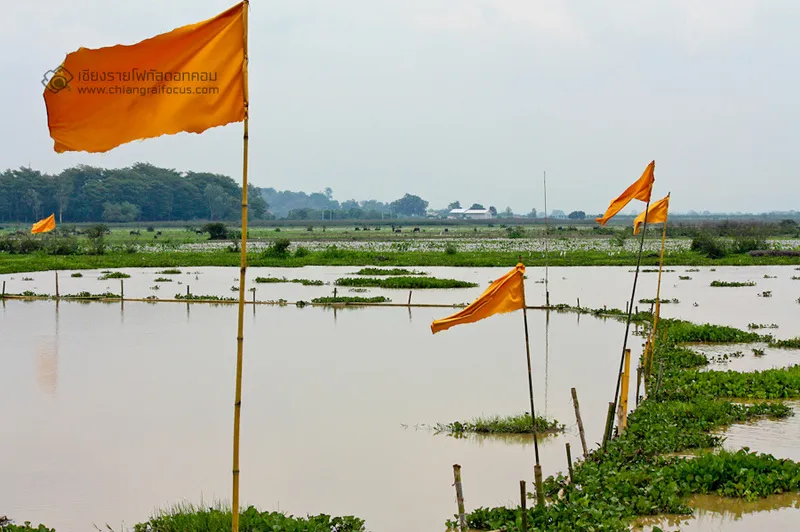
Wiang Nong Lom is one of the most distinctive historical attractions in Chiang Rai because it is far more than a scenic wetland. This is a cultural landscape tied to the legend of Yonok, the memory of a lost ancient city, archaeological traces scattered across a broad lowland area, and the living identity of communities in Mae Chan and Chiang Saen. For travelers who want a Chiang Rai destination with history, folklore, landscape, and local heritage woven together, Wiang Nong Lom offers a far deeper experience than a standard sightseeing stop.
The real appeal of Wiang Nong Lom lies in the fact that it is not a single monument with one gate and one viewpoint. It is a wide historical environment. When you arrive, you are not simply looking at open water, marshland, or rural scenery. You are standing in a place where stories of the ancient Yonok kingdom still shape how the land is remembered. That gives the visit a rare atmosphere. The landscape feels quiet and open, yet every stop is connected to a larger narrative about settlement, collapse, memory, and northern Thai identity.
Archaeological work and cultural documentation show that the Wiang Nong Lom area extends across several subdistricts in both Mae Chan and Chiang Saen districts. Ancient sites, abandoned temples, and kiln locations have been recorded across the wider zone. This means Wiang Nong Lom should be understood as an archaeological and cultural region rather than a single small attraction. The evidence found in the area reflects a long timeline, from prehistoric traces to clear Lanna-period remains, giving the place both legendary depth and historical substance.
The best-known story associated with Wiang Nong Lom is the legend of the city that collapsed in one night. According to local tradition, the people of the city shared a rare white eel among themselves, except for one widow who was left out. That night, an earthquake struck, and the city sank. The surviving place became linked with the name “Ko Mae Mai,” or Widow’s Islet, and the memory of the submerged city evolved into the name Wiang Nong Lom. Even though visitors today will not see a dramatic ruined city rising from the water, the legend still shapes how the landscape is understood and felt.
Another important layer of meaning comes from the stories connected with Ko Don Thaen, also known as Ko Luang. In chronicles and local traditions, this site is associated with Chiang Saen, Lanna rulers, Buddhist history, and sacred images. Stories linked to King Saen Phu, royal funerary rites, the enshrinement of revered Buddha images, and the religious significance of the river landscape all give the wider Wiang Nong Lom area unusual historical weight. This is one reason the destination appeals not only to casual travelers but also to readers, researchers, and people deeply interested in northern Thai heritage.
For present-day travelers, Wiang Nong Lom stands out in several ways. First, it is a Chiang Rai attraction with a strong sense of place rather than commercial spectacle. Second, the wetland scenery and broad open land create a calm atmosphere that suits slow travel, reflective sightseeing, and cultural trips. Third, the local communities around Janjawa and Yonok still keep the memory of the area alive through local interpretation, public events, and community-based heritage activity. The site therefore feels lived in, not frozen.
In practical travel terms, Wiang Nong Lom works best as a half-day or full-day cultural route. The most rewarding way to experience it is to combine the open landscape with a visit to the Wiang Nong Lom Local Museum, then continue onward to Chiang Saen Old Town, Wat Pa Sak, the Chiang Saen National Museum, or the Golden Triangle. That approach turns the visit into a connected historical journey rather than a quick photo stop. The land gives you the setting, and the nearby sites provide the detail that helps everything make sense.
Travelers interested in archaeology will appreciate Wiang Nong Lom as a place that raises bigger questions about early settlement in the upper Mekong region. Visitors interested in culture will find it compelling because local legend still remains central to the identity of the area. Nature-oriented travelers will also enjoy it because the surrounding wetland environment, open skies, and rural scenery create a peaceful northern landscape unlike many other attractions in Chiang Rai. The place becomes especially meaningful when viewed as both a natural space and a memory map of the past.
Wiang Nong Lom is also significant today because it continues to be discussed in relation to heritage conservation, wetland ecology, and community identity. That makes respectful travel especially important. Visitors should treat the area as a living cultural landscape, not as empty land. Staying on accessible routes, avoiding disturbance to agricultural or community zones, and taking time to learn the background of the place all make the visit more rewarding. A stop at the local museum is particularly valuable because it gives context to what might otherwise seem like quiet open countryside.
The easiest way to reach Wiang Nong Lom is by private car. Travelers can start from Chiang Rai city and drive north toward Mae Chan or Chiang Saen, then continue into the Janjawa and Yonok zones depending on the point they want to visit first. The community reference coordinates commonly used for Wiang Nong Lom are in Janjawa, Mae Chan District, and these can be paired with the Wiang Nong Lom Local Museum as a navigation anchor. Public transport is less convenient because the destination is spread across a broad landscape rather than concentrated at one formal entrance.
The most suitable time to visit is from morning to late afternoon, when the light makes the landscape easier to understand and photograph. Morning is especially pleasant for a calm atmosphere, while travelers interested in wetland scenery may want to extend the trip to Chiang Saen Lake and the Nong Bong Kai area. Doing that helps place Wiang Nong Lom within the wider environmental and historical setting of northern Chiang Rai.
In summary, Wiang Nong Lom is one of the most meaningful Chiang Rai destinations for travelers who want more than surface-level sightseeing. It offers legend, archaeological depth, cultural continuity, and a landscape that still carries the memory of an ancient world. When combined with nearby museums, old Chiang Saen, important temples, and the Golden Triangle, it becomes a complete heritage route that feels both intellectually rich and deeply local.
| Name | Wiang Nong Lom |
| Location | Border area between Yonok Subdistrict, Chiang Saen District, and Janjawa with nearby zones in Mae Chan District, Chiang Rai |
| Address | Reference point: Wiang Nong Lom community area, Janjawa, Mae Chan District, Chiang Rai 57270 |
| Coordinates | 20.210404, 99.973137 |
| Highlights | Legendary Yonok landscape, historic wetland, Ko Mae Mai tradition, links to Ko Don Thaen and Chiang Saen history |
| History | The wider area preserves evidence from prehistoric times through the Lanna period and is closely tied to the legend of the Yonok kingdom |
| Name Origin | The name is linked to the legend of the collapsed city and the surviving widow associated with Ko Mae Mai |
| Distinctive Features | Open wetland scenery, archaeological significance, legendary associations, and strong local cultural memory |
| Travel Information | Best reached by private car from Chiang Rai via Mae Chan or Chiang Saen; use the Wiang Nong Lom community coordinates or the local museum as a navigation point |
| Current Status | Still accessible as an important cultural heritage and wetland landscape, with continuing conservation, restoration, and community activity |
| Open Days | No official opening-day notice is published for the outdoor area |
| Opening Hours | No official opening-hours notice is published for the outdoor area |
| Facilities | This is a broad outdoor cultural landscape; facilities are limited and spread across nearby community points, so visitors should plan food, water, and rest stops in advance |
| Main Areas / Zones | Wiang Nong Lom community zone, Ko Mae Mai area, Janjawa–Yonok cultural landscape, Wiang Nong Lom Local Museum, linked historical zone toward Chiang Saen |
| Main Contact Number | Janjawa Municipality: 053-775123, 053-775199 |
| Official Website / Official Page | www.janjawa.go.th, www.yonok.go.th |
| Nearby Tourist Attractions | 1) Wiang Nong Lom Local Museum – about 6 km 2) Chiang Saen Lake / Nong Bong Kai – about 10 km 3) Wat Pa Sak – about 22 km 4) Chiang Saen National Museum – about 23 km 5) Golden Triangle – about 29 km 6) Wat Phra That Pha Ngao – about 31 km |
| Nearby Restaurants | 1) Japanese food by Ryu – about 7 km – Tel. 080-683-8600 2) Flow Chiang Saen – about 24 km – Tel. 087-542-5189 3) Fah-mai Restaurant & Coffee – about 24 km – Tel. 053-650-572 4) Rim Khong Restaurant Chiang Saen – about 30 km – Tel. 053-160-845, 081-993-1061 5) Tum Thad Dum Dim – about 25 km – Tel. 092-369-9154 |
| Nearby Accommodations | 1) One Budget Hotel Chiang Saen – about 22 km – Tel. 080-075-4988, 080-085-3988 2) Siam Triangle Hotel Chiang Saen – about 24 km – Tel. 053-651115-17, 094-641-4447 3) Dview Golden Triangle Hotel – about 29 km – Tel. 082-228-4451 4) Athita The Hidden Court Boutique Hotel – about 24 km – Tel. 063-426-9464 5) Four Seasons Tented Camp Golden Triangle – about 32 km – Tel. 053-910-200 6) Anantara Golden Triangle Elephant Camp & Resort – about 31 km – Tel. 053-784-084 |
Frequently Asked Questions (FAQ)
Q: Where is Wiang Nong Lom?
A: Wiang Nong Lom lies in the border area between Yonok in Chiang Saen District and Janjawa with nearby zones in Mae Chan District, Chiang Rai Province.
Q: Why is Wiang Nong Lom worth visiting?
A: It combines ancient legend, archaeological significance, wetland scenery, and living local heritage in one destination.
Q: Does Wiang Nong Lom have official opening hours?
A: No official opening-hours notice is published for the outdoor landscape, so daytime visits are the most practical and comfortable.
Q: What should I combine with a visit to Wiang Nong Lom?
A: The best route includes the Wiang Nong Lom Local Museum, Chiang Saen Lake, old Chiang Saen, Wat Pa Sak, and the Golden Triangle.
Q: What kind of traveler will enjoy Wiang Nong Lom?
A: It is ideal for travelers interested in history, archaeology, culture, folklore, and quieter forms of northern Thailand travel.
Q: What is the best way to get there?
A: A private car is the easiest option because the destination is spread across a wide cultural landscape rather than a single enclosed site.
 Category: ●Art, Culture and Heritage
 Group: ●Historical Sites and Monuments
Last Update : 6 MonthAgo
 Last Update : 6 MonthAgo
 Click to Access the Navigation Map GPS
Wiang Nong Lom Map
Recommend
 Historical Sites and Monuments(3)
 Landmarks and Memorials(7)
 Art, Craft Centres, Tradition(6)
 Museums(8)
 Historic Homes and Cities(1)
 Educational Places
 Museum for Study(1)
 Library(1)
 Educational Gardens, Farm(3)
 Places of Worship
 Temple(38)
 Other Sacred Sites(5)
 Research and Development
 Royal Project(9)
 Suburban Living
 Village, Community(16)
 Local Market(5)
 Nature and Wildlife
 National Parks and Marine Reserves(18)
 Mountain (Doi)(20)
 Dam, Reservoir, Lake(8)
 Waterfalls(16)
 Hot Springs(6)
 Caves(8)
 River, Canal(10)
 Sea, Beach(1)
 Other natural attractions(3)
 Entertainment and Agricultural
 Animal camps and shows(1)
 Farms, Parks and Ecotourism(9)
 Shopping
 Shopping and Night Market(2)
 Call Customer Service in Tourism
 Call Customer Service in Tourism(1)
 Travel Articles, Recipes
 Travel Review, Food Review(1)
 Food Menu, North Recipes(1)


