
lovethailand home >North Travel Attractions >Chiang Rai Travel Attractions >Muang Chiang Rai >Rop Wiang > Mae Fah Luang Art and Cultural Park
TL;DR: Mae Fah Luang Art and Cultural Park is located at Ban Pa Ngiw, Rop Wiang, Mueang Chiang Rai, Chiang Rai, open Tuesday–Sunday (Closed Monday), hours 10:00–18:00.
Mae Fah Luang Art and Cultural Park
Open Days: Tuesday–Sunday (Closed Monday)
Opening Hours: 10:00–18:00
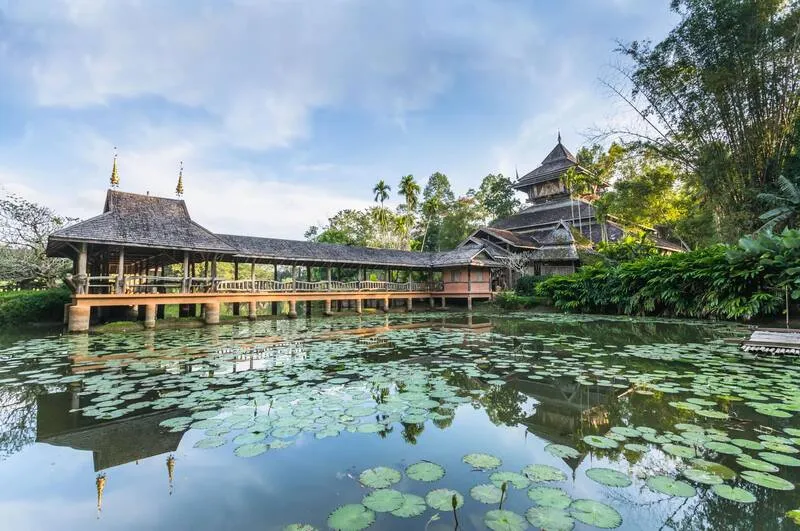
Mae Fah Luang Art and Cultural Park, still widely known as Rai Mae Fah Luang, is one of Chiang Rai’s most quietly beautiful places to visit. It is not the kind of attraction that overwhelms visitors with crowds or dramatic spectacle. Instead, it draws people in through atmosphere: mature trees, open lawns, elegant Lanna-style wooden buildings, still water, and a deep sense of calm. For travelers looking for a Chiang Rai destination that combines art, culture, architecture, and a peaceful natural setting, this is one of the city’s most rewarding places to explore.
The first impression of Rai Mae Fah Luang is often its serenity. Although it is located within Mueang Chiang Rai District and is easy to reach from the city center, the mood inside feels entirely different from the outside world. The park slows everything down. The pathways, gardens, and architectural spaces create a gentle rhythm that encourages visitors to walk slowly, look carefully, and spend time rather than rush from one photo spot to another. This quality is one of the main reasons the park stands out among Chiang Rai attractions. It is a place that offers not only visual beauty, but also emotional stillness.
The history of the site gives it even more meaning. Before becoming the art and cultural park seen today, the area was closely connected to youth development work in northern Thailand. Under the patronage of the Princess Mother, it served as a training and educational center for hill tribe youths from remote villages. The aim was not simply to provide shelter or schooling, but to nurture capable, ethical, community-minded young people who could later return home and improve life in their own villages. In that sense, “Rai Mae Fah Luang” was not a plantation of crops, but a place for cultivating people.
As educational access expanded into more remote areas, the original youth development role of the compound gradually changed. The site was later transformed into a center for preserving and presenting Lanna art and culture, eventually becoming the Mae Fah Luang Art and Cultural Park. This transition is a major part of the park’s identity today. It is not simply a beautiful park with old buildings. It is a place where social history, cultural preservation, and artistic heritage meet in one landscape.
One of the park’s greatest strengths is its ability to present Lanna culture through space rather than through objects alone. Visitors do not experience the site as a conventional enclosed museum. Instead, the architecture, gardens, lawns, water features, and display areas work together to create a broader atmosphere of northern Thai heritage. Important architectural components include Hor Kham Luang, Hor Kham Noi, Sala Kaew, and Hor Kaew. These structures help define the visual and cultural identity of the park and give the entire site a dignified, graceful, and contemplative mood.
The park covers roughly 150 rai, which gives it a spacious character rarely found in central-city attractions. This scale allows the landscape to breathe. Buildings are not pressed tightly together, and visitors can move through open garden areas between cultural spaces. This balance between architecture and greenery is part of what makes the site so memorable. Even travelers who arrive mainly out of curiosity often find themselves lingering much longer than expected, simply because the environment feels so calm and carefully composed.
For art lovers, the park offers a meaningful introduction to Lanna aesthetics. For architecture enthusiasts, it presents refined wooden structures and design principles rooted in the culture of northern Thailand. For photographers, it provides a combination of natural light, textured wood, ornamental details, still water, and shaded garden scenes. For general travelers, it offers something increasingly rare: a cultural attraction that invites slow appreciation rather than constant stimulation. That versatility is one of the reasons the park appeals to such a wide range of visitors.
The cultural significance of the park is also important. It functions as a place where Lanna heritage is preserved, interpreted, and made accessible to the public. The value of the site lies not only in the age or beauty of the objects and structures, but in the larger worldview they reflect. Lanna artistic traditions often emphasize refinement, harmony, craftsmanship, and a balanced relationship between built form and natural surroundings. At Rai Mae Fah Luang, those ideas are visible everywhere, from the placement of buildings to the quiet transitions between open and enclosed spaces.
Another reason the park remains relevant is its role as a venue for cultural activity. The grounds have been used for exhibitions, art events, performances, and ceremonial functions. Yet even with that capacity, the essence of the place remains peaceful. It never feels reduced to a simple event venue. The landscape retains a sense of dignity and stillness that supports both public cultural programming and private contemplation. This balance is difficult to achieve, and it is one of the park’s most distinctive qualities.
From a travel-planning perspective, Mae Fah Luang Art and Cultural Park is very easy to include in a Chiang Rai city itinerary. It is close enough to central Chiang Rai to pair naturally with places such as Oub Kham Museum, Wat Phra Kaew, the Chiang Rai Clock Tower, and the old town area. Many travelers choose to visit the park during the late morning or early afternoon, then continue on to museums, cafés, or historic temples nearby. Because the park offers a different pace and atmosphere from busier city sights, it works especially well as a calm counterpoint in a full-day itinerary.
Getting There is straightforward. The park is located about 4 km from Chiang Rai Clock Tower and the city center, which usually means around 10 minutes by car depending on traffic. Most visitors arrive by private car, taxi, or local hired transport. This convenient location is another advantage of Rai Mae Fah Luang. It feels hidden and tranquil once you enter, but it is not remote or difficult to access. That combination makes it suitable for both independent travelers and visitors with limited time in Chiang Rai.
Current visiting arrangements make the experience practical as well as enjoyable. The park is open from Tuesday to Sunday and closed on Mondays. The present admission structure is reasonable for the quality of the grounds and the cultural value of the visit, especially for travelers interested in heritage, architecture, and garden landscapes. Since the venue can occasionally close on specific dates for special events or site management, it is always wise to check the official page shortly before visiting, but there is no indication that the park is permanently closed.
Facilities and the overall atmosphere are suited to visitors who appreciate cultural tourism in a refined setting. This is not an amusement-style attraction, and that is precisely its appeal. The experience is about walking, observing, absorbing, and letting the environment shape the pace of the visit. The more time you give it, the more the park reveals itself through detail: the framing of doorways, the contrast between wood and greenery, the stillness of the grounds, and the elegant restraint of Lanna design.
Rai Mae Fah Luang is especially worth visiting for travelers who want to see another side of Chiang Rai. The province is famous for mountains, tea, coffee, and iconic temples, but this park reveals a quieter layer of northern culture. It is a place of heritage and atmosphere rather than spectacle, and that is exactly what makes it memorable. If you are looking for a Chiang Rai attraction that offers inspiration, calm, and a meaningful connection to Lanna culture, Mae Fah Luang Art and Cultural Park deserves a place on your itinerary.
| Name | Mae Fah Luang Art and Cultural Park (Rai Mae Fah Luang) |
| Location | Ban Pa Ngiw, Rop Wiang, Mueang Chiang Rai, Chiang Rai |
| Address | 313 Moo 7, Ban Pa Ngiw, Rop Wiang, Mueang Chiang Rai, Chiang Rai 57000 |
| Coordinates | 19.9056, 99.7942 |
| Highlights | 150-rai cultural park, Lanna wooden architecture, Hor Kham Luang, Hor Kham Noi, Sala Kaew, Hor Kaew, peaceful landscaped gardens |
| History | Originally developed as a youth training compound connected to hill tribe development work before becoming a major center for Lanna art and cultural preservation |
| Name Origin | The name “Rai Mae Fah Luang” reflects the idea of nurturing people, not only land, during its earlier development phase |
| Distinctive Features | Quiet garden setting, Lanna cultural atmosphere, architectural elegance, heritage displays, and a refined space for exhibitions and cultural events |
| Travel Information | About 4 km from Chiang Rai Clock Tower, or around 10 minutes by car; easiest access is by private car, taxi, or local hired transport |
| Current Status | Open to visitors, with occasional date-specific closures for events or site operations |
| Open Days | Tuesday–Sunday |
| Opening Hours | 10:00–18:00 |
| Fees | Thai visitors 150 THB, foreign visitors 200 THB |
| Facilities | Garden walkways, cultural display areas, heritage buildings, exhibition spaces, and event grounds |
| Main Areas / Zones | Hor Kham Luang, Hor Kham Noi, Sala Kaew, Hor Kaew, landscaped gardens and open cultural grounds |
| Main Contact Number | 0 5371 6605-7 |
| Official Website / Official Page | Mae Fah Luang Foundation website, Facebook: Mae Fah Luang Art and Cultural Park |
| Nearby Tourist Attractions | 1) Oub Kham Museum about 1 km 2) Wat Phra Kaew Chiang Rai about 4 km 3) Chiang Rai Clock Tower about 4 km 4) Hilltribe Museum Chiang Rai about 5 km 5) Wat Rong Suea Ten about 7 km |
| Nearby Restaurants | 1) Something Journey about 3 km, Tel. 099 465 5362 2) Suklon Cafe about 3 km, Tel. 063 232 6553 3) Zona Café about 4 km, Tel. 094 895 9735 4) Phrim Cafe’ about 5 km, Tel. 094 851 5899 5) Lung Song Restaurant about 5 km, Tel. 086 912 9513 |
| Nearby Accommodations | 1) MORA Boutique Hotel about 4 km, Tel. 053 717 702, 053 717 703, 094 640 3366 2) Nak Nakara Hotel about 4 km, Tel. 053 717 700 3) Sann Hotel about 4 km, Tel. 053 727 360 4) The Riverie by Katathani about 5 km, Tel. 053 607 999 5) The Legend Chiang Rai Boutique River Resort & Spa about 6 km, Tel. 053 910 400 |
Frequently Asked Questions (FAQ)
Q: Is Rai Mae Fah Luang the same place as Mae Fah Luang Art and Cultural Park?
A: Yes. Rai Mae Fah Luang is the older and more familiar name, while Mae Fah Luang Art and Cultural Park is the official name used today.
Q: What kind of place is Mae Fah Luang Art and Cultural Park?
A: It is a cultural park in Chiang Rai that combines Lanna architecture, heritage collections, landscaped gardens, and a peaceful environment for art and cultural appreciation.
Q: How far is the park from Chiang Rai city center?
A: It is about 4 km from Chiang Rai Clock Tower and usually takes around 10 minutes by car.
Q: What are the main highlights inside the park?
A: Key highlights include Hor Kham Luang, Hor Kham Noi, Sala Kaew, Hor Kaew, the landscaped garden grounds, and the overall atmosphere of Lanna cultural elegance.
Q: When is the park open?
A: It is currently open from Tuesday to Sunday and closed on Mondays.
Q: How much is the entrance fee?
A: The current fee is 150 THB for Thai visitors and 200 THB for foreign visitors.
Website : www.maefahluang.org
 Website :
  Category: ●Nature and Wildlife
 Group: ●National Parks and Marine Reserves
Last Update : 6 MonthAgo
 Last Update : 6 MonthAgo
 Click to Access the Navigation Map GPS
Mae Fah Luang Art and Cultural Park Map
Recommend

 Art, Culture and Heritage
 Historical Sites and Monuments(3)
 Landmarks and Memorials(7)
 Art, Craft Centres, Tradition(6)
 Museums(8)
 Historic Homes and Cities(1)
 Educational Places
 Museum for Study(1)
 Library(1)
 Educational Gardens, Farm(3)
 Places of Worship
 Temple(38)
 Other Sacred Sites(5)
 Research and Development
 Royal Project(9)
 Suburban Living
 Village, Community(16)
 Local Market(5)
National Parks and Marine Reserves(18)
Local Market(5)
National Parks and Marine Reserves(18)
 Mountain (Doi)(20)
 Dam, Reservoir, Lake(8)
 Waterfalls(16)
 Hot Springs(6)
 Caves(8)
 River, Canal(10)
 Sea, Beach(1)
 Other natural attractions(3)
 Entertainment and Agricultural
 Animal camps and shows(1)
 Farms, Parks and Ecotourism(9)
 Shopping
 Shopping and Night Market(2)
 Call Customer Service in Tourism
 Call Customer Service in Tourism(1)
 Travel Articles, Recipes
 Travel Review, Food Review(1)
 Food Menu, North Recipes(1)


