

 Home
Home Chiang Mai(




Dong Khon Archaeological Site
Rating: 4/5 (4 votes)
 Search By
  Map
Map 
 Have Map
  No Map
Chai Nat attractions
Attractions in Thailand
Open Days: Open daily
Opening Hours: The outdoor area can be visited at any time
Dong Khon Archaeological Site is located in Moo 4, Dong Khon Subdistrict, Sankhaburi District, Chainat Province. It is one of the most important archaeological sites in the upper Chao Phraya basin, reflecting continuous human settlement in the central region of Thailand over a long period of time. Archaeological evidence found in this area includes religious art, artifacts made of stone, pottery, and metal, as well as traces of habitation that clearly connect Dong Khon to the development of ancient communities in central Thailand. Dong Khon is therefore not merely the name of a village in Chainat, but a place that reveals the picture of an ancient community that once flourished and played a role in the important urban network of the Chao Phraya basin in the past.
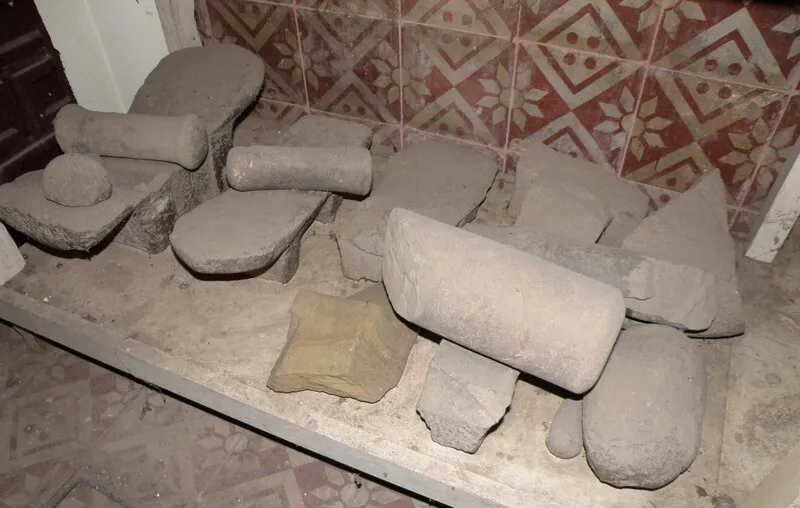
Dong Khon is an important archaeological site in Dong Khon Subdistrict, Sankhaburi District, Chainat Province. Numerous finds have been discovered here, including a stone relief of a meditating Buddha flanked by a Dharmachakra and a stupa, a lotus-shaped stone pedestal for a Buddha image, a terracotta doll head, pottery vessels, an earthenware oil lamp, a stone grinding slab for medicine, a stone bell, bracelets, small bells, spearheads, axes, and a silver coin inscribed with Pallava script. These discoveries reflect that Dong Khon was a community closely connected with Dvaravati culture, receiving religious and artistic influences as well as trade-network connections from the outside world, especially India, through the river systems of the Chao Phraya basin, which served as the principal transport routes of the region in ancient times.
When considering the geography of Dong Khon Subdistrict, it becomes clear that this area lies within the fertile floodplains of the Chao Phraya and Noi Rivers. Living in such a river basin enabled ancient communities to sustain themselves through agriculture, fishing, river transport, and exchange with nearby settlements. Many ancient towns in central Thailand grew under these geographic conditions, because rivers were not only sources of water but also the main highways of the ancient world. Dong Khon should therefore be viewed as one of the ancient communities that used its geographic advantages to grow into a local center and to connect itself with a wider network of contemporary settlements in nearby areas.
The distinctiveness of Dong Khon lies not only in the wide range of artifacts found there, but also in the way the evidence reveals the development of the community from prehistoric times through the Dvaravati period and into later periods of continued habitation. This ancient town preserves traces of an urban layout and surrounding moats similar to those found at several ancient cities in central Thailand. This allows it to be compared with contemporary sites such as Chansen, Khu Mueang, and other ancient settlements in the Chao Phraya network. Such a clearly organized urban form suggests that this place was not simply a small village, but rather a community with spatial planning, central activities, and social-cultural importance at a certain level.
One of the most important pieces of evidence most often mentioned when discussing Dong Khon is the low-relief stone carving depicting a meditating Buddha flanked by a Dharmachakra, with a stupa appearing on the right side. This composition clearly shows that Dong Khon was not merely an agricultural settlement, but a community that had seriously embraced Buddhism. The meditating Buddha image conveys tranquility and inner contemplation, which lie at the heart of Buddhist practice. The Dharmachakra symbolizes the proclamation of the teachings and the turning of the Wheel of Dharma, while the stupa represents Buddhist devotion in the form of sacred architecture. When all of these elements appear together on a single stone slab, they demonstrate an organized belief system rather than a simple local folk belief.
This stone relief is also highly valuable in the history of art, because it firmly links Dong Khon with Dvaravati art. Dvaravati art in central Thailand is characterized by the adoption of Indian forms and their adaptation to the tastes and understanding of local communities. Many works emphasize the symbolic expression of Buddhism, such as the Dharmachakra, crouching deer, stupas, clay votive tablets, and Buddha images that retain simplicity while embodying strong religious ideals. Dong Khon therefore helps confirm that Dvaravati influence was not limited only to Nakhon Pathom or the major urban centers of lower central Thailand, but also extended into the upper Chao Phraya basin.
The large stone pedestal for a Buddha image, shaped like a blooming lotus, is another piece of evidence that deserves special attention. In Buddhist art, the lotus base is not merely decorative; it symbolizes purity, awakening, and rising above the worldly realm into the spiritual realm. The discovery of such a large lotus-shaped Buddha pedestal at Dong Khon suggests that the site once housed an important Buddhist monument or sacred religious space, whether in the form of a ritual building or a sacred precinct within the community. This artifact therefore elevates our understanding of Dong Khon from that of “an ancient community where people lived” to “a community with religious institutions and a distinct cultural identity.”
The terracotta doll head and the many types of pottery fragments discovered at the site are equally important, because ceramic artifacts often reflect daily life most clearly. Pottery vessels reveal cooking practices, storage of produce, water use, and household activities. Terracotta dolls may have carried several meanings, functioning as toys, ritual objects, devotional items, or symbolic representations of people and beliefs. The diversity of these objects indicates that the community of Dong Khon was not only religious in character, but also had a full everyday life, craftsmanship, and a developed culture of production.
The earthenware oil lamp, stone grinding slab for medicine, and stone bell found at Dong Khon add further detail to the picture of this ancient community. The oil lamp points to the use of lighting and nighttime activity. The stone grinding slab suggests knowledge of herbal medicine and health care, something often found in long-settled ancient communities. The stone bell may have been connected with ritual practice, signaling, or communal activities. Together, these finds show that Dong Khon was not merely a source of religious artifacts, but a place that reveals the full spectrum of ancient human life, including subsistence, healing, belief, and social organization.
In terms of metallurgy, Dong Khon has yielded various metal objects such as bracelets, small bells, spearheads, and axes. These reflect either the local production of metal technology or at least access to such technology within the community. Bracelets and bells may have been associated with dress, social status, or ritual, while spearheads and axes may have been used for hunting, defense, or labor in daily life. The presence of these objects alongside religious artifacts and household wares confirms that the community of Dong Khon was multifaceted and developed in many aspects simultaneously.
However, the most significant evidence for interpreting Dong Khon at a regional level is the silver coin bearing Pallava script. Such a silver coin is not merely a precious object, but a clear indicator of connections with the outside world. Pallava script originated in southern India and spread into Southeast Asia together with currents of belief, language, literature, symbolic systems, and certain forms of political culture. The discovery of a silver coin bearing Pallava script at Dong Khon therefore means that this community was not isolated, but took part in a much wider network of cultural exchange extending beyond Chainat or upper central Thailand alone.
Pallava script is of great importance in the history of Southeast Asia, because it was one of the South Indian scripts adapted for use across many regions, appearing on religious inscriptions, clay tablets, coins, and sacred objects. When such script is found in a Dvaravati context, scholars often interpret it as evidence of Indian influence transmitted through maritime trade and interregional networks, rather than through migration alone. In other words, Dong Khon may not have been in direct contact with India as a major port city, but it was highly likely to have received such influence through the network of inland cities in the Chao Phraya basin that linked the coastal world with settlements deeper in the interior.
When viewed more broadly, Dong Khon should be placed within the context of the ancient urban network of the Chao Phraya basin rather than studied in isolation. Ancient cities along this river system were interconnected both geographically and culturally. Many were located near major rivers or tributaries to serve as routes for transportation and the movement of goods. Some functioned as religious centers, some as political centers, and some as intermediary nodes linking lowlands with uplands. Dong Khon was very likely one of the connecting communities in this network, especially when considered alongside nearby archaeological sites such as Ban Don Krabuang, the Mae Nam Noi kiln sites, and the ancient city of Sankhaburi.
Sankhaburi itself is highly significant for understanding Dong Khon, because both places lie within the same district and are closely related historically. Sankhaburi, formerly known as Mueang Phraek, was an important ancient town in the upper Chao Phraya basin. It developed from the Dvaravati period and continued through Khmer, Sukhothai, and Ayutthaya influences. Within Sankhaburi are many important monuments, such as Wat Mahathat, Wat Phra Kaeo, Wat Song Phi Nong, Wat Tanot Lai, and Wat Wihan Thong. The density of religious monuments and art historical remains in the area shows that this region once served as a prominent urban center with political and religious importance. Dong Khon, located not far away, may therefore be seen as a community whose development was closely tied to the long-term formation of Sankhaburi.
The relationship between Dong Khon and Sankhaburi is especially interesting in chronological terms. In many cases, small or medium-sized ancient communities emerged before major urban centers fully expanded their roles. Dong Khon, as a community with evidence dating from prehistory and the Dvaravati period, may represent one of the original settlement bases of the people in this region, before political and religious structures became more centralized in Sankhaburi at a later stage. This perspective allows an article about Dong Khon to move beyond merely describing artifacts and instead explain the broader development of towns and states in the upper Chao Phraya basin.
When discussing Dvaravati art in depth, it is important to understand that Dvaravati refers not only to a chronological period, but to a complex of culture and artistic expression that spread across central Thailand with Buddhism at its core. Dvaravati art often emphasizes religious symbols, depictions of the Buddha in meditative calm, the use of the Dharmachakra, stupas, lotus bases, and the construction of moated towns. These features are not accidental; they reveal communities with organized belief systems, transmitters of religious knowledge, and ruling groups or patrons capable of supporting artistic production. Dong Khon is therefore highly valuable, because the evidence found there fits the explanatory framework of Dvaravati art in several important ways.
Dvaravati art at Dong Khon does not appear only in monumental architecture of the kind people often associate with major ancient cities. It also appears in the form of meaningful “traces,” such as stone reliefs, Buddha pedestals, religious artifacts, and a moated town layout. This kind of evidence is extremely important for scholarship, because it helps demonstrate how Dvaravati culture spread from major centers to surrounding communities and confirms that Dvaravati was not the exclusive culture of only a few large cities, but a living tradition present at many levels of settlement throughout the river basin.
At the same time, Dong Khon also shows the close relationship among art, religion, and economy in a concrete way. For a community to possess religious artworks, metal objects, silver coins, and networks of cultural exchange, it must have had resources, labor, organization, and people regularly connected to the wider world. Put more clearly, Dong Khon was not merely a community that passively “received” influence from a cultural center; it was a community with enough capacity to select, absorb, adapt, and reinterpret these influences in its own way.
Returning to the issue of trade with India through Pallava script, it is important to understand that the ancient world was not divided into isolated islands. There were constant networks of movement involving people, beliefs, languages, and objects. South India played a major role in Southeast Asia from approximately the 6th to the 9th centuries CE, particularly in Buddhism, Brahmanism-Hinduism, language, and systems of writing. Pallava script is therefore not merely evidence of writing, but a trace of ancient globalization that helped shape communities in the Chao Phraya basin. Dong Khon, where a silver coin with this script has been found, stands as one of the important proofs that inland communities also participated in this wider regional exchange.
The discovery of a silver coin also opens up several questions about the economy of Dong Khon. The coin may have functioned as a symbol of authority, a ritual object, a symbolic medium, or even a medium of exchange. While it is not possible to make a definitive conclusion from a single artifact alone, the appearance of a silver coin alongside other categories of objects at the same site suggests that this community was not closed off, but was involved in the movement of people, objects, and ideas on a continuing basis. Dong Khon may therefore have served as one of the nodes through which goods or cultural influences from the wider world moved into the network of inland towns.
Another point that gives Dong Khon high academic value is that the evidence found here can be connected both to the local history of Chainat and to the broader history of central Thailand. To the general public, Chainat may seem like a transit province or an agricultural area along the Chao Phraya River. In archaeology, however, this region is a crucial point for studying the formation of ancient communities and towns in the upper Chao Phraya basin. Dong Khon therefore stands as evidence that Chainat has a much deeper history than many people realize, with cultural roots closely connected to the Dvaravati network.
Today, the remains of the ancient city of Dong Khon may not appear as spectacular as those of a large historical park. Many sections of the moats and embankments have faded or merged into the agricultural landscape and the modern community. Yet the charm of this place lies precisely in the authenticity of its landscape. Visitors do not encounter only “ruins,” but a living community with temples, a local museum, and shared memories preserved by local people. Dong Khon is therefore a learning site with dimensions beyond simple sightseeing or photography, because it is a place well suited to understanding how history continues to overlap with present-day life.
Those interested in studying Dong Khon should also visit Wat Khok Dok Mai and the Ban Dong Khon Local Museum together, because the temple and museum serve as centers for preserving the community’s knowledge. Some artifacts are cared for there, and many local stories are still kept alive through the voices of the people in the area. Visiting Dong Khon should therefore not be limited to seeing a single point of interest, but should involve reading the whole landscape continuously, from its geography, traces of moats, temples, museum, and routes leading onward to Sankhaburi, in order to understand the continuity of history in a complete way.
Getting There to Dong Khon Archaeological Site is most convenient by private car. From Chainat town, visitors can follow the route toward Sankhaburi District and then continue into Dong Khon Subdistrict with ease. Those planning a historical travel route can combine the visit with Sankhaburi Ancient Town, Wat Phra Kaeo, Wat Mahathat, Wat Wihan Thong, and Wat Khositaram in a single day. This means that a trip to Dong Khon is not merely a visit to one archaeological site, but an opportunity to read the history of the upper Chao Phraya basin through a network of real places that still survive today.
Ultimately, Dong Khon is of great importance to archaeology, art history, and cultural tourism in Chainat Province. The evidence found at this site shows that ancient communities in the Chao Phraya basin were not merely silent recipients of outside influences, but active participants in networks of religion, art, technology, and trade. Dong Khon is therefore both a window into the Dvaravati world and a key to understanding how central Thailand took shape as one of the most important mainland regions of Southeast Asia.
| Name | Dong Khon Archaeological Site |
| Area | Moo 4, Dong Khon Subdistrict, Sankhaburi District, Chainat Province |
| Address | Dong Khon Subdistrict, Sankhaburi District, Chainat Province 17140 |
| Place Summary | An important ancient community in the upper Chao Phraya basin, with traces of moats and numerous artifacts reflecting continuous habitation from prehistory to the Dvaravati period, as well as connections with Sankhaburi. |
| Highlights | Stone relief of a meditating Buddha flanked by a Dharmachakra and stupa, lotus-shaped stone Buddha pedestal, terracotta and metal artifacts, silver coin with Pallava script, and links to Dvaravati art and cultural exchange networks in the Chao Phraya basin. |
| Period | Shows development from prehistoric times, with strong continuity in the Dvaravati cultural period and later habitation thereafter. |
| Key Evidence | Buddha stone relief, Dharmachakra, stupa, lotus stone pedestal, terracotta doll head, pottery fragments, earthenware oil lamp, stone grinding slab, stone bell, bracelets, bells, spearheads, axes, silver coin with Pallava script. |
| Art And Culture | Strongly associated with Dvaravati art, including Buddhist symbolism, lotus-base forms, and the reception of Indian influence through Pallava script. |
| Zone | Dong Khon Community Zone / Upper Chao Phraya Historical Zone |
| Open Days | Open daily |
| Opening Hours | The outdoor area can be visited at any time / If you would like to visit the Ban Dong Khon Local Museum at Wat Khok Dok Mai, advance contact is recommended. |
| Admission Fee | No admission fee for the outdoor area / The Ban Dong Khon Local Museum states that there is no admission fee. |
| Travel | Best reached by private car. From Chainat town, head toward Sankhaburi District, then continue to Dong Khon Subdistrict. It can be included in a one-day historical route with Sankhaburi Ancient Town, Wat Phra Kaeo, Wat Mahathat, Wat Wihan Thong, and Wat Khositaram. |
| Current Status | The area remains a living community with traces of the ancient city still visible, while the local museum helps preserve important artifacts from Ban Dong Khon. |
| Facilities | Community area, nearby temple, parking areas around the temple or community, local museum (advance contact recommended) |
| Contact Number | Dong Khon Subdistrict Municipality 056-410-839 Ban Dong Khon Local Museum, Wat Khok Dok Mai 09-9373-0166 Wat Khok Dok Mai 056-481-398 |
| Nearby Tourist Attractions With Distance | 1. Wat Khok Dok Mai — about 1 km — Dong Khon Zone 2. Ban Dong Khon Local Museum, Wat Khok Dok Mai — about 1 km — Dong Khon Zone 3. Wat Wihan Thong — about 11 km — Mueang San Zone 4. Wat Khositaram (Luang Pho Kuey) — about 13 km — Bang Khut Zone 5. Wat Phra Kaeo, Sankhaburi — about 14 km — Mueang San Zone 6. Wat Mahathat, Sankhaburi — about 14 km — Mueang San Zone 7. Chainatmuni National Museum — about 23 km — Chainat Town Zone |
| Popular Restaurants Nearby | 1. Home Roi Sam — about 14 km — Bang Khut Zone — Tel. 083-015-5798 2. Bow Ping Tiew Sing Made-To-Order Food — about 14 km — Bang Khut Zone — Tel. 098-387-7034 3. Riverside Mae Nam Noi Chicken Noodle Buffet Garden — about 15 km — Bang Khut Zone — Tel. 082-894-3492 4. DNA Cafe & Restaurant — about 15 km — Sankhaburi Zone — Tel. 081-267-0453 5. Krua Chef Pong Thai-Chinese Food — about 15 km — Sankhaburi Zone — Tel. 082-167-4189 6. UMB Fram Cafe Chainat — about 17 km — Don Kam Zone — Tel. 081-455-0575 7. Friend Cafe — about 19 km — Huai Krot Zone — Tel. 087-839-4511 |
| Popular Accommodations Nearby | 1. 111 Resort And Spa — about 14 km — Phraek Si Racha Zone — Tel. 056-482-113 2. 88/8 Resort Chainat — about 18 km — Sankhaburi Zone — Tel. 098-238-3888, 098-628-3888 3. Pornpana & Fasai Resort — about 19 km — Sankhaburi Zone — Tel. 095-331-1112 4. Resort Pleuak Mai — about 19 km — Sankhaburi Zone — Tel. 097-479-7935 5. Khun Yai Home — about 22 km — Pho Ngam Zone — Tel. 086-928-1718 6. Chainat Resort — about 24 km — Chainat Town Zone — Tel. 056-415-599 7. Natchanon Resort — about 25 km — Chainat Town Zone — Tel. 056-405-769 |
Frequently Asked Questions (FAQ)
Q: Where is Dong Khon Archaeological Site located?
A: Dong Khon Archaeological Site is located in Moo 4, Dong Khon Subdistrict, Sankhaburi District, Chainat Province, in the upper Chao Phraya basin, and can be reached conveniently by private car from Chainat town.
Q: Why is Dong Khon historically important?
A: Dong Khon is an important piece of evidence for ancient settlement in Chainat Province, with traces of habitation continuing from prehistory through the Dvaravati period, along with many artifacts that help explain the relationship between communities in the Chao Phraya basin and the wider world.
Q: What artifacts have been found at Dong Khon?
A: Important finds include a stone relief of a meditating Buddha, a Dharmachakra, a stupa image, a lotus-shaped Buddha pedestal, a terracotta doll head, pottery fragments, an earthenware oil lamp, a stone grinding slab for medicine, a stone bell, bracelets, small bells, spearheads, axes, and a silver coin bearing Pallava script.
Q: How is Dong Khon connected to Dvaravati art?
A: The art historical evidence and artifacts found at Dong Khon, such as the meditating Buddha, Dharmachakra, stupa, and lotus pedestal, all reflect key characteristics of Dvaravati art, making Dong Khon an important site for studying the spread of Dvaravati culture in the upper Chao Phraya basin.
Q: What does the silver coin with Pallava script found at Dong Khon reveal?
A: The silver coin bearing Pallava script is important evidence showing the reception of language, culture, and ideas from southern India through trade and cultural exchange networks in ancient Southeast Asia, indicating that Dong Khon was more connected to the outside world than an ordinary local settlement.
Q: How is Dong Khon linked to Sankhaburi?
A: Dong Khon lies in the same district as the ancient town of Sankhaburi and was likely part of the same network of communities developing together in the upper Chao Phraya basin. Dong Khon may reflect an early settlement base connected to the later growth of Sankhaburi.
Q: Can Dong Khon be visited today?
A: Yes. Visitors can explore the outdoor community area and the archaeological surroundings, but if you wish to visit the Ban Dong Khon Local Museum at Wat Khok Dok Mai, advance contact is recommended, as community museums operate differently from commercial tourist attractions.
 Dong Khon Archaeological Site Map
 Category:
  Group:
  Tag: ●Dong Khon Archaeological Site●dong khon archaeological site ●dong khon ancient city ●chainat archaeology ●sankhaburi ancient city ●dvaravati art thailand ●pallava inscription thailand ●upper chao phraya ancient town ●chainat historical attractions ●sankhaburi travel ●ancient sites in chainat Last Update: 12 HourAgo
Comment
 Nearby Attractions
| Keyword (Advance) |
 Region
|
 Muang Chai Nat(
 Copyright 2012,