

 Home
Home Chiang Mai(














Royal Turf Club of Thailand (Nang Loeng Racecourse)
Rating: 2.9/5 (7 votes)
 Search By
  Map
Map 
 Have Map
  No Map
Bangkok attractions
Attractions in Thailand
Open Days: closed permanently (the racecourse is no longer in operation)
Opening Hours: none (the racecourse is no longer in operation)
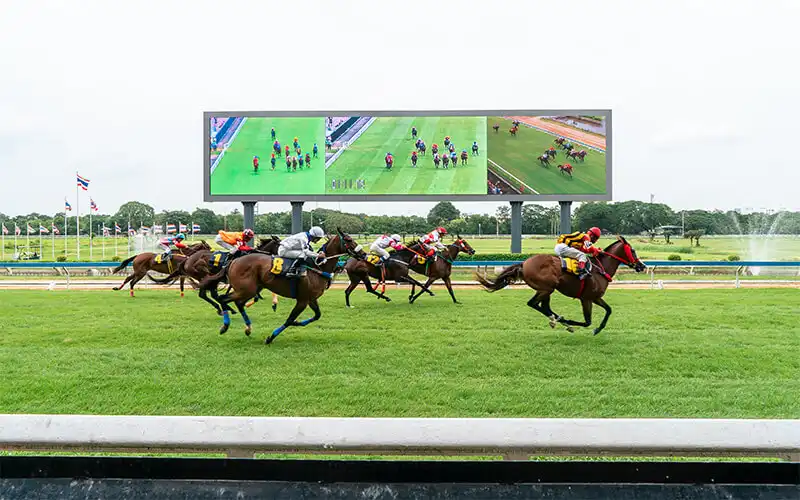
Royal Turf Club of Thailand (Nang Loeng Racecourse) used to be one of those Bangkok places that felt like it had its own soundtrack—hoofbeats on turf, the hush before a finish, the crowd exhaling all at once, and the city changing around it in real time. Today, that sound has become memory. The racecourse closed permanently after its final race on 16 September 2018 and was demolished from March 2019 onward. What remains isn’t a grandstand or a track, but layers of stories still embedded in the Nang Loeng–Dusit neighborhood.
For many Bangkokians, “Nang Loeng Racecourse” was never just a sports venue. It was a snapshot of a certain Bangkok era—an era when race days (traditionally held on alternating Sundays in rotation with the Royal Bangkok Sports Club) shaped routines for people who followed the sport, and when the club atmosphere brought a particular kind of order and bustle. The venue managed races, maintained registration records for horses, owners, and related parties, and also offered amenities such as tennis courts, a swimming pool, dining facilities, and banquet functions—like a small world reflecting Siam’s transition into modernity.
The story of horse racing in Thailand reaches further back than any permanent track. After King Chulalongkorn (Rama V) returned from Europe in 1897, groups of officials and students with European experience joined horse stable owners to stage carriage-horse races as a ceremonial welcome and a declaration of loyalty. The Royal Field (Sanam Luang) was adapted into a temporary racecourse, and this is often remembered as one of Thailand’s earliest moments of Western-style horse racing. Not long after, in 1901, the Royal Bangkok Sports Club was established—known in that period as the “foreigner’s course” due to its restricted social circle and expatriate association.
In the reign of King Vajiravudh (Rama VI), the idea of a “Thai course” gained momentum. Phraya Pradipatphubaan and Phraya Attakan Prasit submitted a petition seeking royal permission to establish a racing club intended to better serve Thai participants and audiences, with a stated goal of using revenue to support horse breeding and improvement, including bloodlines associated with Australia and England. On 18 December 1916, the club received the royal name “Royal Turf Club of Siam,” was taken under royal patronage, and the King also entered horses from his own stables into competition. That elevated the racecourse beyond sport—into a social institution with long-lasting weight in the city’s memory.
What kept Nang Loeng in the public conversation for so long wasn’t only race results, but its role as “urban space”—a large, central venue that many kinds of people passed through, worked within, and attached parts of their lives to. Its name appeared repeatedly in modern Thai history as a recognizable city backdrop. Some periods are remembered with gravity, others with tenderness, but in every tone, Nang Loeng remained a scene that suggested Bangkok grew through entertainment, social order, and the tremors of changing eras.
After the lease with the Crown Property Bureau ended, the Royal Turf Club held its final race on 16 September 2018 and returned the site as scheduled. Demolition began in March 2019. The loss wasn’t merely architectural—it felt like a page of the city being turned for good, even though many had re-read it for generations.
Today, the former site has been transformed into a commemorative public park honoring King Bhumibol Adulyadej (Rama IX). The landscape includes memorial elements and green infrastructure in the language of a modern city: a royal statue monument, public garden areas, and retention-water features (“monkey cheek” water management), with landscape design influenced by principles associated with royal initiative projects. If you stand there and imagine where the grandstands once rose, you can feel how Bangkok didn’t just change the shape of the place—it changed the meaning of what the place is for.
Getting There If you want to visit in a reflective, city-walking mood—to understand the story more than to chase an activity—start by pinning the Phitsanulok Road–Dusit area and choose the simplest way to reach the neighborhood, such as a taxi or ride-hailing app, since this is inner Bangkok and traffic depends heavily on time of day. If you’re coming by BTS or MRT, use the practical approach of getting off at a convenient interchange area and transferring a short distance by taxi or bus to save energy, especially under strong sun. If you drive, allow extra time for peak hours and check realistic parking access before you set out.
Visiting the former Nang Loeng Racecourse today isn’t about attending a sporting venue. It’s closer to listening to the city’s “quiet sound.” Walk slowly and ask yourself: if this place once held a running track and the roar of a crowd, what does Bangkok ask it to do now? Questions like that often carry you further than a quick photo stop, because they remind you that memory doesn’t live in buildings—it lives in how we see the city, and in our willingness to accept that some places can disappear from the old map and still remain at the heart of Bangkok’s story.
| Place Summary | Former royal-patronage horse racing venue known as “Nang Loeng Racecourse” (official opening on 18 December 1916). The final race took place on 16 September 2018, demolition began in March 2019, and the site was later developed into a commemorative park. |
| Former Address | 183 Phitsanulok Road, Suan Chitlada Subdistrict, Dusit District, Bangkok |
| Highlights | A historically significant urban site that reflects Bangkok’s transition from an early modern sporting club to a contemporary commemorative public space—best experienced as a reflective city walk through Nang Loeng–Dusit memories. |
| Current Status | Closed permanently as a racecourse (the former site has been transformed into a commemorative park). |
| Fees | No verified fee information (if there are special events, check the latest conditions and announcements). |
| Nearby Attractions (Approx. Road Distance) | Nang Loeng Market (1 km) Wat Benchamabophit (The Marble Temple) (3 km) Ananta Samakhom Throne Hall / Dusit Palace area (3 km) Government House (2 km) Democracy Monument (3 km) |
| Popular Restaurants Nearby (Approx. Road Distance + Phone) | S. Rungroj (1 km) Tel. 02-629-9800 Jip Kee (1 km) Tel. 02-282-0608 Hua Hin Phochana (1 km) Tel. 02-282-3918 Khao Chae Phetchaburi (Nang Loeng Market) (1 km) Tel. 094-545-2946 Khanom Tuai Talai Monta (1 km) Tel. 02-282-2003 |
| Popular Accommodations Nearby (Approx. Road Distance + Phone) | The Raweekanlaya Bangkok Wellness Cuisine Resort (3 km) Tel. 02-628-5999 The Siam Hotel (4 km) Tel. 02-206-6999 De Prime Rangnam Hotel (4 km) Tel. 02-118-2853 Centara Watergate Pavilion Hotel Bangkok (5 km) Tel. 02-625-1234 The Berkeley Hotel Pratunam (5 km) Tel. 02-309-9999 |
Frequently Asked Questions (FAQ)
Q: Is there still horse racing at Nang Loeng Racecourse?
A: No. The final race was held on 16 September 2018, and demolition began in March 2019.
Q: What is the site now, and what can you do there?
A: The former site has been transformed into a commemorative park. As a travel experience, it suits reflective walking and learning the city’s historical narrative more than activity-focused visits.
Q: Why was it known as the “Thai course”?
A: It was established to better serve Thai participants and audiences in an era when the Royal Bangkok Sports Club carried the image of a more foreign-associated club, reflecting the social context of the time.
Q: If I want to visit in a commemorative mood, where should I begin?
A: Start with the site’s timeline, then walk the area with the idea of “past layered over present,” and continue to Nang Loeng Market and the neighborhood’s long-standing eateries to keep the story flowing.
Q: What should I eat around Nang Loeng?
A: Nang Loeng Market is the easiest starting point, with several classic shops within walking distance—ideal for tasting a few things in one trip.
 Tel: 022800020-9, 026281810-5
 Royal Turf Club of Thailand (Nang Loeng Racecourse) Map
 Category:
  Group:
  Tag: ●Royal Turf Club of Thailand (Nang Loeng Racecourse)●nang loeng racecourse ●royal turf club thailand ●nang loeng racecourse history ●nang loeng racecourse closed ●nang loeng demolition ●king bhumibol memorial park dusit ●things to do in dusit ●nang loeng neighborhood ●phitsanulok road bangkok ●bangkok historical places Last Update: 2 MonthAgo
Comment
 Nearby Attractions
| Keyword (Advance) |
 Region
|
 Phra Nakhon(
 Copyright 2012,