
 Home
Home North(
 Chiang Mai(


Wat Ratcha Orasaram Ratchaworawihan
Rating: 3.3/5 (7 votes)
 Search By
  Map
Map 
 Have Map
  No Map
Bangkok attractions
Attractions in Thailand
Open Days: Daily
Opening Hours: Generally 08:00 – 17:00 (hours may vary depending on areas within the temple and specific activities)
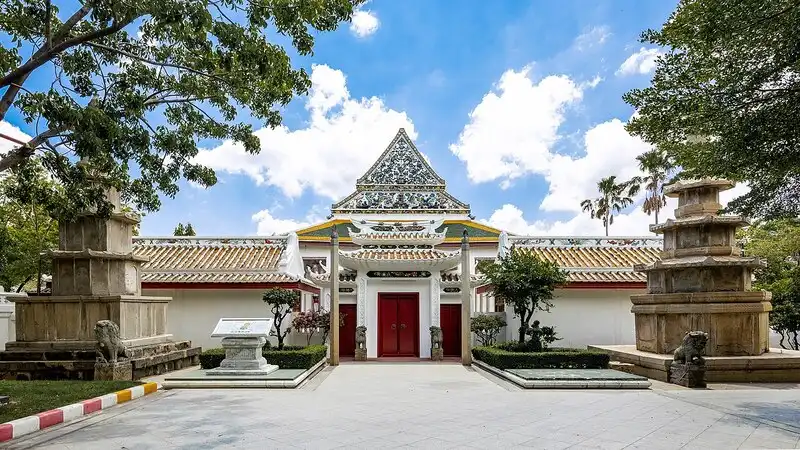
Wat Ratcha Orasaram Ratchaworawihan is an old temple on the Thonburi side of Bangkok with a history that predates the founding of Bangkok itself. It was formerly known as “Wat Chom Thong.” This temple is not simply a place for worship; it is a reflection of the city’s early transformation — politically, socially, and artistically — in the early Rattanakosin period. In particular, it is closely associated with Prince Jessadabodin, later King Rama III (King Nangklao), who restored and re-established the temple on a grand scale, effectively rebuilding the entire monastic complex and giving it the standing of a royal temple admired by both temple lovers and architecture enthusiasts.
A story frequently told about this temple centers on an event in 2363 BE (1820 CE), when Prince Jessadabodin led a military expedition to counter a potential Burmese force at the Three Pagodas Pass in Kanchanaburi. As the royal flotilla reached Wat Chom Thong on the Thonburi side, the Prince is said to have stopped to rest and performed the ritual known as “opening the khlon thawan” (a ceremonial rite described in traditional military manuals), while making a vow for success in the campaign. Although it later turned out that no Burmese army advanced as expected, upon returning from the expedition the Prince carried out a major restoration of Wat Chom Thong and dedicated it as a royal temple. The temple subsequently received the new royal name “Wat Ratcha Oras,” a title connected to the royal prince who undertook its restoration.
In the wider context of Thai temple history, “re-establishing the entire monastic complex” is far more than a minor repair. It represents a deliberate act of placing the temple in a position worthy of a royal institution, transforming the grounds into a living space where people can “read the era” through the layout, craftsmanship, and overall atmosphere. What makes Wat Ratcha Orasaram especially appealing is that it invites visitors to slow down and observe details. Its beauty is not only in what stands prominently, but also in the smaller architectural and artistic elements designed to “coexist with lived devotion,” sustained by generations of worshippers.
For visitors who enjoy temple trips with both cultural depth and a calm mood, Wat Ratcha Orasaram is best visited in the morning or early afternoon, when you have time to walk and absorb the atmosphere without rushing. You can begin by paying respects and making merit, then gradually explore important structures and the craftsmanship that reflects the tastes of King Rama III’s era — a time when Bangkok was growing in commerce, international trade, and urban identity. Many temples from this period carry subtle “voices of that day’s modernity” within their decorative and design choices.
One reason a visit here feels different from a typical temple stop is the sense that you are not only “bowing before sacred images,” but standing inside a page of history — where stories of military journeys, ritual practices from traditional strategy texts, vows before major missions, and the act of repaying faith through restoration all intersect. Combined with the earlier roots of Wat Chom Thong, the temple holds both layers of time and layers of meaning with unusual density.
Getting There If you travel by BTS, you can get off at Wutthakat Station and then continue by taxi or local transport into the Ekachai–Chom Thong area. Another option is taking buses 43, 120, or 167, which are commonly recommended for reaching the area near the temple. If you drive, you can access the temple via Ekachai Road and other key connecting roads on the Thonburi side, but it is wise to allow extra time during rush hours as traffic can become heavy in this part of the city.
The charm of visiting Wat Ratcha Orasaram is that you can easily “continue a Thonburi itinerary” afterward. Nearby, there are several important temples, riverside areas for walking, and older communities with distinctive local character. If you plan a half-day trip, you might begin with worship and a slow walk through the temple, then move on to nearby temples or a floating market to experience community life. This turns the visit into more than tourism — it becomes a way of “reading the city” through sacred spaces and people.
| Name | Wat Ratcha Orasaram Ratchaworawihan |
| Location | 258 Soi Ekachai 4, Ekachai Road, Bang Kho Subdistrict, Chom Thong District, Bangkok 10150 |
| Type | First-Class Royal Temple (Ratchaworawihan) |
| Former Name | Wat Chom Thong |
| Key Patron / Major Restoration | Prince Jessadabodin (later King Rama III) re-established the temple by restoring the entire monastic complex |
| Key Event (B.E.) | 2363 BE: Expedition toward the Three Pagodas Pass and the “bek khlon thawan” ritual at the temple, followed by a major restoration after returning |
| Current Abbot | Phra Phromwachirapanyachan (Thongdee Suratecho) |
| Contact | 02-893-7273, 0-2415-3327 |
| Travel | BTS Wutthakat then taxi/local transport; buses 43, 120, 167 |
| Current Status | Open for worship and cultural visits |
| Nearby Attractions (Approx. Route Distance) | Wat Nang Ratchaworawihan – 0.65 km – 02-468-7984 Wat Nak Prok – 1.5 km – 02-467-2380 Wat Paknam Phasi Charoen – 2.0 km – 02-467-0811 Riverside Plaza – 2.4 km – 02-431-9200 Khlong Bang Luang Floating Market – 3.4 km – 02-413-0565 |
| Nearby Restaurants (Approx. Route Distance) | Pa Nee Mango Sticky Rice (Wat Ratcha Oras) – 0.1 km – 090-991-0651 Café Amazon - SD3564 Wutthakat 49/2 – 0.3 km – 084-237-1582 Kua Gai Ai Khrao (Wutthakat 55) – 0.5 km – 095-536-4285 Yang Noey (Ekachai) – 0.5 km – 063-992-0926 Jae Muay Beef Soup (Wat Nang area) – 0.5 km – 097-038-1700 |
| Nearby Accommodations (Approx. Route Distance) | Tree Place – 1.1 km – 081-345-7665 Laike Hotel Bangkok – 1.98 km – 02-409-2345 Ekachai Mansion (44 Mansion) – 2.09 km – 02-415-2255 14 Place – 2.15 km – 02-416-3355 14 Avenue Hotel – 2.25 km – 02-877-1188 |
Frequently Asked Questions (FAQ)
Q: What was Wat Ratcha Orasaram Ratchaworawihan formerly called?
A: It was formerly known as Wat Chom Thong. The temple predates the founding of Bangkok and was later re-established on a grand scale and given the name “Wat Ratcha Oras.”
Q: Why is this temple associated with King Rama III?
A: Because Prince Jessadabodin (later King Rama III) carried out a major restoration and re-established the entire monastic complex, shaping the temple into a royal institution with a clear imprint of its era.
Q: What is the story of the “bek khlon thawan” ritual at Wat Ratcha Oras?
A: It is a ritual described in traditional military manuals, said to have been performed in 2363 BE (1820 CE) before the expedition toward the Three Pagodas Pass. The story is often linked to the major restoration that followed after the campaign.
Q: Which BTS station is most convenient for visiting Wat Ratcha Orasaram?
A: BTS Wutthakat is a common choice. From there, you can continue by taxi or local transport into the Ekachai–Chom Thong area.
Q: Where should I go after visiting Wat Ratcha Orasaram?
A: You can continue to Wat Nang, Wat Nak Prok, Wat Paknam Phasi Charoen, stop by Riverside Plaza, or stroll around Khlong Bang Luang Floating Market. All are nearby and easy to connect in one route.
 Wat Ratcha Orasaram Ratchaworawihan Map
 Category:
  Group:
  Tag: ●Wat Ratcha Orasaram Ratchaworawihan●wat ratcha orasaram ●wat ratchaorotsaram ●wat chom thong ●temple in bangkok ●thonburi temples ●rama iii temple ●thai temple architecture ●bangkok cultural trip ●chom thong bangkok ●things to do in thonburi
Last Update: 2 MonthAgo
Tag: ●Wat Ratcha Orasaram Ratchaworawihan●wat ratcha orasaram ●wat ratchaorotsaram ●wat chom thong ●temple in bangkok ●thonburi temples ●rama iii temple ●thai temple architecture ●bangkok cultural trip ●chom thong bangkok ●things to do in thonburi
Last Update: 2 MonthAgo
Comment
 Nearby Attractions
| Keyword (Advance) |
 Region
|
 Phra Nakhon(
 Copyright 2012,