
 Home
Home Chiang Mai(












Wat Phra Si Rattana Satsadaram (Wat Phra Kaew)
Rating: 3.5/5 (4 votes)
 Search By
  Map
Map 
 Have Map
  No Map
Bangkok attractions
Attractions in Thailand
Open Days: Daily (except on days with royal ceremonies or special closure announcements)
Opening Hours: 08:30 – 16:30 (ticket sales until 15:30)
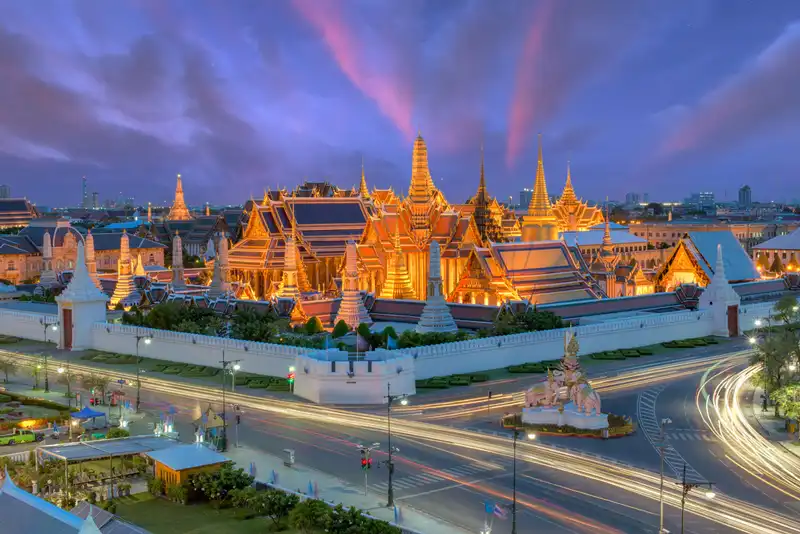
Wat Phra Si Rattana Satsadaram (Wat Phra Kaew) If you think of Bangkok attractions that are both a national symbol and a place where you can truly “read history” by walking through it, Wat Phra Si Rattana Satsadaram (Wat Phra Kaew) is usually one of the first names people mention. What makes this place different from other temples is not only its beauty or the sheer grandeur of its architecture, but its special status: it is located within the Grand Palace complex and functions as the kingdom’s royal temple. For generations, Wat Phra Kaew has supported royal ceremonies and major state rituals. So this is not simply a temple you “visit to pay respects,” but a space where faith, art, and state power have been interwoven in a way you can feel through the real place itself.
Wat Phra Si Rattana Satsadaram was built during the reign of King Rama I alongside the establishment of Rattanakosin. The concept followed the model of Wat Phra Si Sanphet in Ayutthaya: a principal temple within the royal palace used for royal rites and as a spiritual center of the realm rather than a typical community temple. Another key distinction is that Wat Phra Kaew has no monastic quarters, which means there are no monks residing here permanently. The atmosphere you experience is therefore closer to a ceremonial precinct—highly ordered, formal, and rich in symbolic meaning.
The heart of Wat Phra Kaew is the ordination hall (Ubosot), which enshrines the Phra Phuttha Maha Mani Rattana Patimakorn, commonly known as the Emerald Buddha. Revered as Thailand’s most important Buddha image, it is seen as a spiritual anchor and a symbol of the stability of Rattanakosin. What makes the visit especially rewarding is seeing Wat Phra Kaew as a “system of visual storytelling,” not just a single photo spot. Around the Ubosot are many supporting structures, pavilions, bell towers, and decorative features, all arranged to convey meaning through both artistry and belief.
If you enjoy craftsmanship, Wat Phra Kaew is the kind of place where “the more you look, the more you see.” From the intricately layered roofs of the Ubosot to the gilded and mirrored surfaces that catch the morning light, the details are dense and deliberate. It helps not to walk too fast, because the beauty here isn’t a one-point highlight—it’s the cumulative weight of countless details layered across the complex. You start to understand why the temple has been continuously restored through successive reigns, and why many visitors say, “I never see it all, no matter how many times I come back.”
Beyond the Ubosot area, the Phra Mondop terrace (the elevated platform zone) and other key buildings create another world within Wat Phra Kaew—one that can feel like a “miniature cosmology” shaped by traditional Thai concepts. Structures such as the Phra Mondop, Prasat Phra Thep Bidon, and Phra Si Rattana Chedi, along with many ornamental elements, add both visual richness and symbolic depth. If you visit with a good guide or someone who loves telling stories, the walk becomes even more fun, because each building is not placed randomly—each has its own role, position, and meaning.
Another highlight that many people happily loop around more than once is the mural paintings along the cloister (Phra Rabiang), depicting episodes of the Ramakien (Thailand’s version of the Ramayana). A good way to enjoy them is to pick a few scenes and look closely at character gestures, city and forest settings, and how the composition guides the narrative smoothly from panel to panel. As you walk, it can feel like reading a classic epic through images—one reason Wat Phra Kaew is not only a sacred place, but also a concentrated collection of national, master-level artistic heritage in a single setting.
Because Wat Phra Kaew is within the royal precinct and is a site of national importance, there are clear expectations for respectful conduct—especially regarding dress code. This is a point many visitors accidentally get wrong. If you want to avoid wasting time on-site, it’s best to dress properly before you arrive. Tops should have sleeves and should not expose the shoulders; trousers or skirts should be of appropriate length; and clothing that appears too casual for a ceremonial area should be avoided. If your outfit does not meet the requirements, you may need to change or borrow clothing under the site’s conditions, which can easily slow down your entry.
If you want the visit to feel worthwhile without rushing, morning is strongly recommended. The sun is softer, the temperature is more comfortable, and crowds are generally lighter than late morning through afternoon—making it easier to walk and photograph architecture without constant congestion. One more thing to keep in mind: on certain days, access may be restricted or suspended due to royal ceremonies or internal management. If your schedule is tight, checking the latest updates before you go can save you a lot of trouble.
Getting There Wat Phra Si Rattana Satsadaram is located within the Grand Palace complex in Bangkok’s historic district. The most convenient approach is usually public transport followed by a short walk, such as taking the MRT to Sanam Chai Station and then walking or continuing a short distance to the Grand Palace area. You can also use the Chao Phraya Express Boat and get off at Tha Chang or Tha Tien Pier, then walk in (depending on where you start). Driving is possible, but you should plan for heavy traffic and limited parking, as this is one of Bangkok’s busiest tourist zones.
Emerald Buddha
| Official Name | Phra Phuttha Maha Mani Rattana Patimakorn (Emerald Buddha) |
| Enshrined At | Ordination Hall (Ubosot), Wat Phra Si Rattana Satsadaram (Wat Phra Kaew), within the Grand Palace precinct |
| Posture | Meditation posture |
| Material | A single piece of green gemstone (commonly referred to as “jade”), fully carved |
| Dimensions | Lap width approx. 48.3 cm Height from base to top approx. 66 cm |
| Busabok Throne | Enshrined in a golden Busabok; carved wood covered with gold and inlaid with precious stones, created in the reign of King Rama I |
| Significance | Thailand’s most revered Buddha image; a national icon and a symbol of the stability of Rattanakosin |
| Enshrinement in Bangkok | King Rama I ordered the Emerald Buddha to be enshrined at Wat Phra Si Rattana Satsadaram upon the establishment of Rattanakosin |
| Hot Season Attire | Royal regalia set, including crown and ornaments; gold with enamel work, decorated with gemstones |
| Rainy Season Attire | Gold covering garment with carved “Khao Bin” motif; hair curls in deep blue enamel |
| Cool Season Attire | Created in the reign of King Rama III; gold tube-like pieces with enamel, threaded with twisted gold wire, draping over both shoulders |
| Seasonal Attire Ceremony | The King or a royal representative performs the ceremony of changing the attire three times a year |
| Place Name | Wat Phra Si Rattana Satsadaram (Wat Phra Kaew) |
| Location | Grand Palace precinct, Phra Borom Maha Ratchawang Subdistrict, Phra Nakhon District, Bangkok |
| Key Characteristics | Royal temple inside the Grand Palace; no resident monks; enshrines the Emerald Buddha; master-level Thai architecture and arts; cloister murals of the Ramakien |
| Period | Early Rattanakosin (built in the reign of King Rama I) |
| Key Evidence / Significance | Built alongside the founding of Rattanakosin; located in the Outer Royal Court and used for important royal ceremonies; enshrines the Emerald Buddha |
| Name Origin | “Phra Si Rattana Satsadaram” refers to the temple where the Precious Jewel Buddha (the Teacher) is enshrined; commonly known as “Wat Phra Kaew” |
| Abbot (Latest) | No resident abbot (no permanent monastic residence) |
| Travel | MRT Sanam Chai then walk/short transfer; Chao Phraya Express Boat via Tha Chang or Tha Tien then walk; private car possible but expect traffic and limited parking |
| Current Status | Open for visits during scheduled hours (may close or restrict access on royal ceremony days) |
| Admission Fee | Foreign visitors: 500 THB; Thai nationals: free (subject to official conditions and required identification) |
| Facilities | Staffed service points; organized internal pathways; visitor information support (allow extra time during peak crowds) |
| Nearby Attractions (Distance) | The Grand Palace (same complex) Sanam Luang (approx. 0.8 km) Wat Pho (approx. 1.0 km) Bangkok National Museum (approx. 1.6 km) Museum Siam (approx. 1.8 km) Wat Arun (approx. 2.6 km) |
| Nearby Restaurants (Distance + Phone) | The Sixth (Tha Tien) (approx. 1.6 km) – 087-922-1964 Supanniga Eating Room (Tha Tien) (approx. 1.7 km) – 092-253-9251 RONGROS (Tha Tien) (approx. 1.8 km) – 096-946-1785 sala rattanakosin eatery and bar (approx. 2.1 km) – 02-622-1388 The Deck by Arun Residence (approx. 2.7 km) – 02-221-9158 |
| Nearby Accommodations (Distance + Phone) | sala rattanakosin bangkok (approx. 2.1 km) – 02-622-1388 Riva Arun Bangkok (approx. 2.5 km) – 02-221-1859 Arun Residence (approx. 2.7 km) – 02-221-9158 Chakrabongse Villas (approx. 2.9 km) – 02-212-7090 Royal Rattanakosin Hotel (approx. 1.7 km) – 02-222-8822 |
Frequently Asked Questions (FAQ)
Q: What time does Wat Phra Kaew open and close?
A: Typically, it is open from 08:30 – 16:30, with ticket sales until 15:30. However, some days may have closures or restricted access due to royal ceremonies, so it is best to check the latest announcements before visiting.
Q: Do Thai nationals need to buy a ticket to enter Wat Phra Kaew?
A: Generally, foreign visitors pay 500 THB. Thai nationals are typically free of charge under official conditions and required identification (it is recommended to confirm the latest policy before traveling).
Q: Why doesn’t Wat Phra Kaew have a resident abbot?
A: Because Wat Phra Kaew is a royal temple within the Grand Palace precinct and has no monastic quarters, there are no monks residing here permanently. As a result, it does not have a resident abbot in the way typical temples do.
Q: What dress code is required to enter Wat Phra Kaew?
A: Visitors should dress respectfully: tops with sleeves and no exposed shoulders, and trousers/skirts of appropriate length. Avoid outfits that are too short or overly revealing, as this is a royal precinct and a site of national importance. If attire is not acceptable, you may need to change or borrow clothing according to the venue’s rules.
Q: How much time should I plan for visiting Wat Phra Kaew?
A: For a standard visit that covers the main highlights, plan at least 1.5 – 2.5 hours. If you want to explore the artistic details and the Ramakien cloister murals more deeply, 3 – 4 hours will feel far less rushed.
Q: What is the best time to visit to avoid crowds?
A: Go early, close to opening time. The weather is more comfortable and crowds are usually lighter than late morning through afternoon, making the visit and photography smoother.
 Wat Phra Si Rattana Satsadaram (Wat Phra Kaew) Map
 Category:
  Group:
  Tag: ●Wat Phra Si Rattana Satsadaram (Wat Phra Kaew)●wat phra kaew ●wat phra si rattana satsadaram ●emerald buddha temple ●grand palace bangkok ●bangkok temples ●rattanakosin island ●things to do in bangkok old town ●ramakien mural ●thailand royal temple ●bangkok cultural landmark Last Update: 2 MonthAgo
Comment

Photo Gellery(30) 
 Thank you photo(3) from: Joseph