
 Home
Home North(
 Chiang Mai(


Wat Sangkrajai
Rating: 2.6/5 (13 votes)
 Search By
  Map
Map 
 Have Map
  No Map
Bangkok attractions
Attractions in Thailand
Open Days: Daily
Opening Hours: 06:00 – 18:00
Wat Sangkrajai is a long-established temple in the Khlong Bangkok Yai area on the Thonburi side of Bangkok, and it still functions, very visibly, as a living “community center.” Local residents use the temple as a place to make merit, pay respects, take part in traditional events, and meet one another in the rhythm of canal-side neighborhood life. In that sense, the temple is not an isolated sacred site. It is a cultural structure that continues to support the shared memory of old Thonburi with steady, everyday presence.
The temple’s history is recorded in the legend of royal monasteries associated with Vajirañana Library traditions, describing it as an ancient temple on the northern side of Khlong Bangkok Yai. During the reign of King Rama I (Phra Phutthayotfa Chulalok), it was re-established and granted to Chao Chom Waen (also known in some accounts as Khun Suea) as patronage. Later, in the reign of King Rama III (Phra Nangklao), the temple underwent restoration. Movements like these reveal a city-temple as a place sustained by the state, the royal court, and the community together. The temple did not exist as a one-time construction. It has been adjusted across eras while preserving the core of faith and communal way of life.
What makes Wat Sangkrajai particularly distinguished is its role in Thai literature. The temple is remembered as a “scholarly workshop” that gave rise to one of the most moving and beautifully composed sections of the Maha Vessantara Jataka—the Chuchok Kanda. A key story tells that Somdet Krom Phra Paramanuchitchinorot, Thailand’s eminent poet, composed many sections anew for the long-chant version of the Maha Vessantara Jataka, yet did not rewrite the Chuchok Kanda. Instead, he ordered that the older version composed by the Wat Sangkrajai circle be used, saying that even a new composition would not surpass the original. This is more than praise: it reflects how temples in earlier times functioned as schools, scriptoria, and training grounds for language and performance all at once—spaces where “knowledge” and “sacredness” moved along the same path.
One intriguing point is that the celebrated Chuchok Kanda does not clearly preserve the author’s name. Records mention only that it was composed by the Wat Sangkrajai circle, leaving the true writer unidentified. This has kept the question alive among students of Thai literary history and those who study the composition traditions of the Maha Chat long chant. The temple therefore carries the depth of a “source of an era’s voice”: even without a named author, the style and craftsmanship continued to influence later generations.
The name Wat Sangkrajai also appears in the well-known literary work Nirat Narin, composed by Narinthibet (In). It was written during a journey accompanying His Royal Highness the Vice King (Krom Phra Ratchawang Bowon Maha Senanurak) in a campaign to defend against Burmese forces at Thalang. As the boat passed Wat Sangkrajai, the poet composed verses of longing and the desire to return to his beloved. The temple drifting by on the water was not simply scenery; it became an emotional marker of travel in premodern Thai society, suggesting how long this temple has occupied a place on the routes of memory.
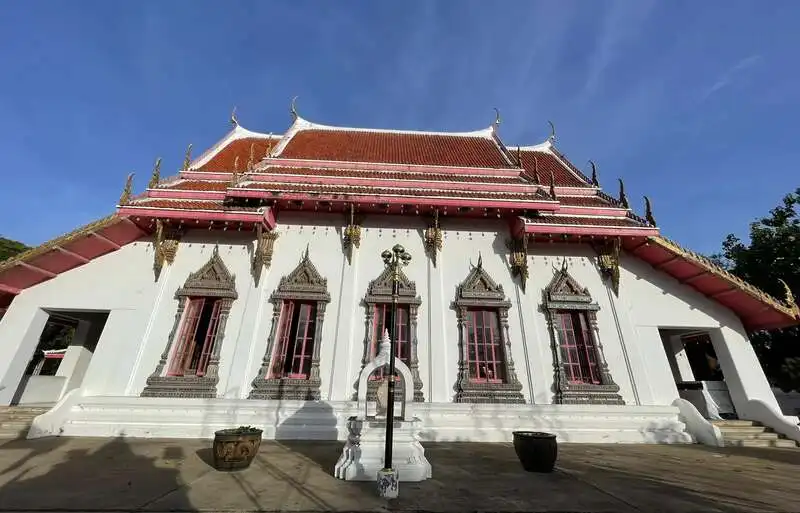
From an architectural perspective, visiting Wat Sangkrajai becomes more rewarding when you approach it as a practice of “reading a temple.” Begin by observing the overall layout and how major buildings are placed to match the functions of an urban temple. Temples in this area often show a clear rhythm between the sacred precincts used for important rites and the spaces that support the community’s everyday religious life. Walking slowly from wider open areas into finer details helps you see how the temple accommodates large gatherings on merit-making days, while still preserving calm for those who come to pray quietly.
The restoration in the reign of King Rama III is a key layer that often leaves traces in the craft language of Bangkok temples—building proportions, orderly walkways, and decorative choices designed to look dignified in a capital city monastery. This was a period when many temples were “reframed” to suit early-Rattanakosin ideals: neatness, strength, and formality. As you walk, noticing elements such as gables, gateways, and boundary markers can reveal the logic of restoration: not merely making things new, but ensuring the temple remains usable and enduring in a city that changes quickly.
Another charm of Wat Sangkrajai is that it is a temple filled with “stories”—not only historical accounts of re-establishment and restoration, but also cultural narratives tied to the voices of Maha Chat recitation, chanting, drums during merit festivals, and the canal-side community atmosphere. This is what makes a visit feel like more than a photo stop. It is standing in a place where composition, discussion, language practice, and the passing on of belief have happened across many generations.
Getting There If you begin with public transport, a practical route is to take the MRT to Itsaraphap Station and then continue by a short local ride depending on your preference (or walk part of the way if the weather is pleasant and you want to take in the old Thonburi neighborhood). If you drive, it is wise to allow extra time, because traffic in Bangkok Yai can become dense at certain hours, especially on weekends and during temple events.
Before entering key buildings, dress modestly, keep your voice low, respect ceremonial areas, and avoid touching fragile decorative surfaces. If you want a comfortable walk and better visual detail, mornings or late afternoons are ideal, because the light brings out textures and the heat is usually less intense.
| Name | Wat Sangkrajai |
| Type | Royal monastery (Ratchaworawihan category) |
| Location | No. 504, Soi Phetkasem 4, Wat Tha Phra Subdistrict, Bangkok Yai, Bangkok 10600 |
| Period | An ancient temple; re-established in the reign of King Rama I and restored in the reign of King Rama III |
| Cultural Highlights | Associated with the Wat Sangkrajai circle’s renowned composition tradition for the Chuchok Kanda (Maha Vessantara Jataka); the temple’s name is also referenced in Nirat Narin |
| Current Status | Open for visits and merit-making |
| Temple Contact | 02-466-9020, 02-465-3602 |
| Nearby Attractions (Approx. Real-Route Distance) | Wat Arun Ratchawararam Ratchaworamahawihan – 5.0 km Wat Hong Rattanaram Ratchaworawihan – 4.6 km Wat Rakhang Khositaram Woramahawihan – 6.5 km Wat Kanlayanamit Woramahawihan – 6.0 km Wat Paknam Phasi Charoen – 4.0 km |
| Nearby Restaurants (Approx. Real-Route Distance) | Achcha cafe – 3.2 km DAYTON Cafe & Bakery Bangkok-Yai – 3.0 km Sourdough Stars Cafe – 4.6 km Gunsbake – 4.7 km Ebisu Ramen (Itsaraphap) – 4.2 km |
| Nearby Accommodations (Approx. Real-Route Distance) | Season Place Hotel – 2.8 km Poonsuk Place Hotel – 5.2 km iCheck inn Thapra – 3.5 km Aim House Bangkok – 7.5 km Bann Aim Apartment – 7.8 km |
| Facilities | Merit-making areas, worship points, ceremonial courtyard (details may vary depending on temple activities) |
Frequently Asked Questions (FAQ)
Q: How old is Wat Sangkrajai?
A: It is described as an ancient temple, later re-established in the reign of King Rama I and restored in the reign of King Rama III.
Q: Why is Wat Sangkrajai important in Thai literary tradition?
A: The temple is associated with the famous Chuchok Kanda of the Maha Vessantara Jataka. A long-told account says the older composition by the Wat Sangkrajai circle was considered outstanding and was therefore kept in use rather than rewritten.
Q: In which classic work does the name Wat Sangkrajai appear?
A: It is referenced in Nirat Narin, where the temple becomes an emotional marker along a water-route journey and a reminder of longing and return.
Q: Can I reach Wat Sangkrajai by metro?
A: Yes. A practical approach is to take the MRT to Itsaraphap Station and continue by a short local ride, or walk part of the way if you prefer.
Q: What etiquette should visitors follow at the temple?
A: Dress modestly, keep your voice low, respect ceremonial areas, avoid touching fragile decorative surfaces, and keep the temple grounds clean.
 Wat Sangkrajai Map
 Category:
  Group:
  Tag: ●Wat Sangkrajai●wat sangkrajai ●wat sangkrajai worawihan ●temples in thonburi ●bangkok yai temple ●luang pho katchai ●chuchok kanda ●maha vessantara jataka ●thai temple literature ●how to go to wat sangkrajai ●old temples in bangkok Last Update: 2 MonthAgo
Comment
 Nearby Attractions
| Keyword (Advance) |
 Region
|
 Phra Nakhon(
 Copyright 2012,