
 Home
Home North(
 Chiang Mai(


Wat Anongkharam Worawihan
Rating: 3.6/5 (8 votes)
 Search By
  Map
Map 
 Have Map
  No Map
Bangkok attractions
Attractions in Thailand
Open Days: Generally open daily (recommended to call and confirm before visiting, especially during merit-making events/ceremonies)
Opening Hours: Generally 08:00 – 17:00
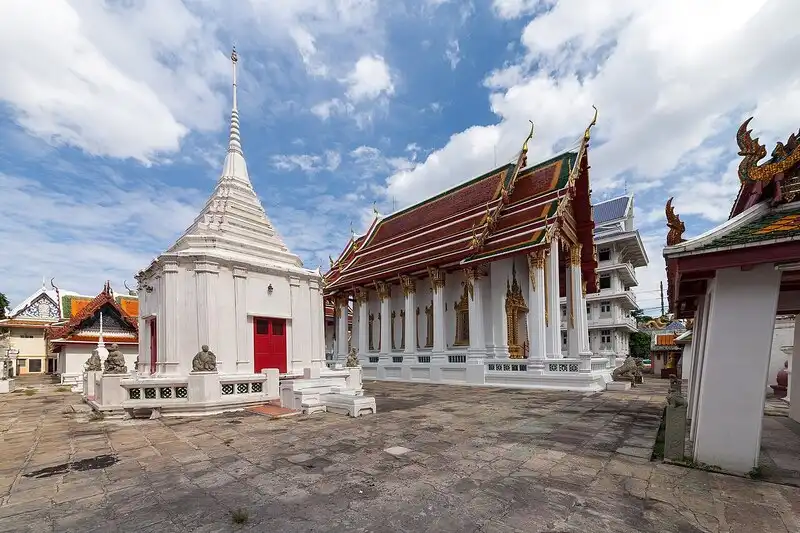
Wat Anongkharam Worawihan is a royal temple on the Thonburi side with a charm that feels “calm, yet truly alive.” It is not just a place to stop by for a quick prayer and move on, but a long-standing center of the Khlong San community. If you like exploring Bangkok through old-neighborhood atmosphere, refined craftsmanship, and local stories you can actually feel on-site, this temple is well worth your time. It’s especially perfect for an unhurried half-day route around the Memorial Bridge – Khlong San area.
The temple was formerly known as “Wat Noi Kham Thaem.” The word “Noi” is commonly said to refer to Than Ying Noi, the wife of Somdet Chao Phraya Borom Maha Phichaiyat (That Bunnag), who was involved in establishing this temple as a counterpart to Wat Phitchaya Yatikaram and presenting it as a royal monastery during the reign of King Rama III. The phrase “Kham Thaem” is associated with later restoration work, and in the reign of King Rama IV the temple received its current royal name, “Wat Anongkharam.” The change of name is therefore more than a signboard update — it reflects how this Thonburi neighborhood has grown alongside Bangkok across time.
The architectural centerpiece of the temple is its ubosot (ordination hall), built in the reign of King Rama III. The structure is Thai in form, built of brick and mortar, with glazed roof tiles and craftsmanship details that naturally slow your steps. From the chofa and bai raka decorated in lacquer and glass mosaic, to the gables, doorways, and window frames featuring intricate lacquer-and-gilded motifs, everything signals a royal-temple character that feels “quietly meticulous.” It doesn’t need oversized grandeur — its beauty is smooth, balanced, and unmistakably of its era.
Inside the viharn (assembly hall) is an important Buddha image known as “Phra Phuttha Chunlanak,” a Sukhothai-period Buddha in the Maravijaya posture (subduing Mara), revered as the principal image in the viharn. The worship atmosphere here tends to feel focused and serene, helped by the classic Sukhothai aesthetics that can calm the mind almost instantly. On the left and right stand gilded metal images of the Buddha’s disciples, adding a sense of symmetry and dignity to the worship space.
Another image many visitors notice and often ask about is “Phra Phuttha Mangkholo,” a crowned Buddha image in a meditation posture, placed in front of the principal image. This arrangement creates a natural rhythm for worship — settle the mind, pay respects at key points, and then continue to appreciate the architectural details without feeling rushed or out of place.
Near the viharn are two mondops (square shrines) built to flank the area, adding another layer to the walking experience. The eastern mondop enshrines a reclining Buddha image modeled after Wat Ratchathiwat, while the western mondop enshrines a replica Buddha footprint. If you take your time, you’ll sense that the temple layout encourages a “slow reading” of space — not a single photo spot, but a sequence of meaningful points.
What sets Wat Anongkharam apart from many other Bangkok temples is that the second floor of a temple building houses a public library and also the “Khlong San District Local Museum.” The museum presents the history of Khlong San through local life, everyday culture, and how the community has changed from the past to the present. It’s an excellent stop for anyone who wants Thonburi context, because it shows clearly that a temple here isn’t separate from the neighborhood — it is part of how people live.
Overall, Wat Anongkharam functions as a place of faith, a place of learning, and a community space all at once. You can come to pray and reset your mind, walk slowly through refined craftsmanship, and then step into the museum to bring Khlong San’s story home with you. Planned well, it’s a Bangkok visit that gives you both calm and substance without needing to go far from the inner city.
Getting There The temple is in Khlong San, near the Memorial Bridge area and Somdet Chao Phraya Road. The easiest option if you want to avoid parking stress is to use rail transit and then take a taxi or motorbike taxi into the temple. Another option is taking a bus along Somdet Chao Phraya Road or Prajadhipok Road and walking a short distance. If you drive, it’s best to allow extra time for traffic, especially during weekday mornings and evenings.
| Name | Wat Anongkharam Worawihan |
| Zone/Area | Khlong San (Thonburi side), Bangkok |
| Location | Somdet Chao Phraya Road, Somdet Chao Phraya Subdistrict, Khlong San District, Bangkok |
| Key Characteristics | Royal temple from the Rama III era, fine lacquer-and-gilded craftsmanship in the ubosot, public library and local museum within the temple |
| Period | King Rama III (presented as a royal monastery) and renamed in King Rama IV |
| Key Highlights | Phra Phuttha Chunlanak (Sukhothai, Maravijaya), Phra Phuttha Mangkholo (crowned Buddha, meditation posture), twin mondops (reclining Buddha model/replica Buddha footprint), Khlong San District Local Museum |
| Name Origin | Formerly known as Wat Noi Kham Thaem, later granted the name Wat Anongkharam in the reign of King Rama IV |
| Travel Summary | Rail transit + taxi/motorbike taxi is convenient; buses run along Somdet Chao Phraya / Prajadhipok Roads; driving requires extra time for traffic and parking |
| Current Status | Open for worship/visiting as usual (hours may change due to ceremonies/activities; recommended to call ahead) |
| Contact Number | 02-437-6037 |
| Nearby Attractions With Distance (by road, approx.) | Wat Phitchaya Yatikaram Worawihan (Wat Pichaiyat) (approx. 3.5 km) Tel. 02-438-1738 Wat Prayurawongsawat Worawihan (approx. 4.0 km) Tel. 02-465-5592 Wat Kalayanamitr Woramahawihan (approx. 4.5 km) Tel. 02-466-4594 ICONSIAM (approx. 5.5 km) Tel. 02-495-7000 Museum Siam (approx. 6.5 km) Tel. 02-225-2777 |
| Popular Restaurants Nearby With Distance (by road, approx.) | Kuay Kai Wongwian Yai (approx. 2.8 km) Tel. 086-052-5221 The Never Ending Summer (approx. 6.0 km) Tel. 02-861-0953 The Jam Factory (approx. 6.2 km) Tel. 02-861-0950 Hong Sieng Kong (approx. 6.5 km) Tel. 095-998-9895 Sirimahannop (Asiatique) (approx. 9.5 km) Tel. 02-059-5999 |
| Popular Accommodations Nearby With Distance (by road, approx.) | Millennium Hilton Bangkok (approx. 6.0 km) Tel. 02-442-2000 ibis Bangkok Riverside (approx. 7.0 km) Tel. 02-659-2888 The Peninsula Bangkok (approx. 7.5 km) Tel. 02-861-2888 Shangri-La Bangkok (approx. 8.5 km) Tel. 02-236-7777 Avani+ Riverside Bangkok Hotel (approx. 10.5 km) Tel. 02-431-9100 |
Frequently Asked Questions (FAQ)
Q: Which part of Bangkok is Wat Anongkharam Worawihan located in?
A: It is in Khlong San District on the Thonburi side, near the Memorial Bridge area and Somdet Chao Phraya Road, with convenient connections to riverside old-town neighborhoods.
Q: What was the temple’s former name, and when did it change?
A: It was formerly known as Wat Noi Kham Thaem, and it later received the royal name Wat Anongkharam during the reign of King Rama IV.
Q: What are the key highlights to see when I arrive?
A: The ubosot with refined lacquer-and-gilded details, the viharn enshrining Phra Phuttha Chunlanak, and the twin mondops with the modeled reclining Buddha image and the replica Buddha footprint.
Q: What kind of Buddha image is Phra Phuttha Chunlanak?
A: It is an important Sukhothai-period Buddha in the Maravijaya posture, enshrined as the principal image in the temple’s viharn.
Q: Is there really a local museum inside the temple, and how much time should I plan?
A: Yes. The “Khlong San District Local Museum” is located on the second floor in the library area. If you want to explore the temple and visit the museum, plan at least 60 – 90 minutes.
Q: What number should I call to confirm information before visiting?
A: 02-437-6037
 Tel: 024383156
 Wat Anongkharam Worawihan Map
 Category:
  Group:
  Tag: ●Wat Anongkharam Worawihan●wat anongkharam worawihan ●wat anongkharam bangkok ●khlong san temple ●thonburi temples ●old temples in bangkok ●phra phuttha chunlanak ●bangkok local museum khlong san ●riverside temples bangkok ●cultural attractions khlong san ●temple near memorial bridge Last Update: 2 MonthAgo
Comment
 Nearby Attractions
| Keyword (Advance) |
 Region
|
 Phra Nakhon(
 Copyright 2012,