
 Home
Home North(
 Chiang Mai(


Wat Ratchasittharam Ratchaworawihan (Wat Ratchasit)
Rating: 3.8/5 (6 votes)
 Search By
  Map
Map 
 Have Map
  No Map
Bangkok attractions
Attractions in Thailand
Open Days: Daily
Opening Hours: 06:00 – 21:00
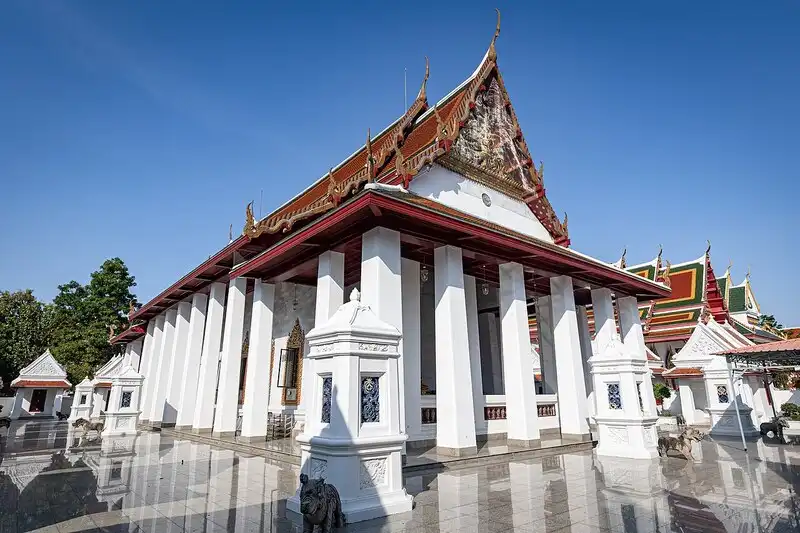
Wat Ratchasittharam Ratchaworawihan (Wat Ratchasit) also known locally as “Wat Ratchasit,” is a royal monastery on the Thonburi side of Bangkok, located near Charoen Phat Bridge on Itsaraphap Road. The surrounding neighborhood still carries the atmosphere of an old community and historic routes along the Chao Phraya River. Although the temple is firmly within modern Bangkok today, its roots reach back to the Ayutthaya period, when it was originally an old temple called “Wat Phlap” before being elevated in status and becoming closely connected with the royal court in the early Rattanakosin era.
Seen through the eyes of a history reader, this temple is not “grand” only because of its size, but because of layered stories and meanings that overlap within the same space. During the reign of King Rama I, a new temple was commissioned on land adjacent to the original Wat Phlap, and the two were merged and still called Wat Phlap for a time. Later, an important restoration took place in 1808 (B.E. 2351). This kind of movement reflects how sacred spaces were reorganized in the new capital—“merging” did not mean erasing the past, but re-situating it within a new structure of statehood and faith.
A key turning point that made Wat Ratchasittharam stand out even more was its association with King Rama III. When he was ordained, he came to reside here for the rains retreat (vassa). After ascending the throne, he ordered a full-scale renovation. The restoration in the reign of Rama III was like “rewriting the temple” in the architectural and artistic language of its time—not merely repairing, but defining the temple’s image to match its royal-monastery status and the realm’s collective memory.
A major structure that adds depth to the visit is the “Phra Tamnak Chan” (Chan Residence), tied to the relationship between Kings Rama II and Rama III. King Rama II built this residence and granted it to Rama III for use during his ordination. It is a compact royal dwelling with clearly defined functional spaces, consisting of two rooms. The ground floor is brick-and-mortar for stability, while the upper floor was built of wood (originally entirely chan wood) and adorned with Thai-style roof finials such as chofa and bai raka, with glass mosaic decoration that catches the light.
Later, in the reign of Rama III, the residence was relocated to stand beside a Chinese-style pavilion residence, and deteriorated wooden parts were replaced with other durable hardwoods such as teng-rang and teak. As a result, only some portions of the original chan wood remain. Details like this matter, because they reveal the “logic of restoration” in the past—preserving certain original forms while choosing tougher materials so the building could survive longer. This temple is not a museum frozen in time; it is a living place where time keeps working.
Another area worth careful observation is the ordination hall (ubosot), rebuilt during Rama III as part of the major renovation. Inside are mural paintings that once depicted the royal procession by land (“Khabuan Phra Yuhayattra Thang Sathonlamak”). Although the paintings are now heavily worn and faded, they still invite reflection on the role of temple murals as a “record of state ritual” and as a display of royal order. A procession image is not only beauty; it is a political language that uses art to express institutional grandeur and the sacredness of ceremony.
Walking through Wat Ratchasittharam can feel like reading a book with multiple chapters: one chapter speaks of Ayutthaya through the former name “Wat Phlap,” another tells of building a new capital under Rama I, and the central chapter is the great renovation under Rama III that left enduring traces in both buildings and memory. A city temple like this has its own special charm—because the moment you step beyond the boundary stones of the consecrated space, everyday community life is right there again. Small eateries, cafes, and walkable routes connect you to other key neighborhoods without much difficulty.
Getting There The temple is on Itsaraphap Road, Thonburi side. A convenient option without a car is to take the MRT to Itsaraphap Station, then walk or use a short taxi/motorbike ride as appropriate. If you drive, it’s best to allow extra time because traffic in the old-city area can become dense at certain hours, and you should watch for the entrance near Charoen Phat Bridge to turn in correctly.
Before entering key areas, dress modestly, keep your voice low, and avoid touching walls, murals, or fragile decorative elements. If you’re coming to appreciate architecture and atmosphere, morning light or late afternoon tends to reveal material textures and surface details more clearly, and it’s generally more comfortable than the harsh midday heat.
| Name | Wat Ratchasittharam Ratchaworawihan (Wat Ratchasit) |
| Location | Itsaraphap Road, near Charoen Phat Bridge, Bangkok Yai District, Bangkok |
| Type | Royal temple (Second Class), Ratchaworawihan category |
| Period | Ayutthaya origins (formerly Wat Phlap); major renovation in early Rattanakosin (notably under King Rama III) |
| Highlights | Phra Tamnak Chan (Chan Residence), the Rama III-era ubosot, and mural paintings (royal land procession theme) |
| Current Status | Open to visitors |
| Temple Contact | 02-465-0670, 02-465-2552 |
| Current Abbot | Phra Ratchawisutthisophon (Chaiwat Chayawattho, P.Th. 9) |
| Nearby Attractions (Approx. real-route distance) | Wat Arun Ratchawararam Ratchaworamahawihan – 0.9 km – 02-465-2187 Wat Rakhang Khositaram Woramahawihan – 1.7 km – 02-472-2701 Wat Paknam Phasi Charoen – 2.2 km – 02-467-0811 Wat Mangkon Kamalawat (Wat Leng Noei Yi) – 2.8 km – 02-222-3975 San Chao Pho Suea (Tiger God Shrine) – 2.4 km – 02-224-2110 |
| Nearby Restaurants (Approx. real-route distance) | Achcha cafe – 0.1 km – 095-395-4644 Rung Rueang Photchana – 0.2 km – 091-725-8628 DAYTON Cafe & Bakery Bangkok-Yai – 0.3 km – 083-541-4194 Sourdough Stars Cafe – 0.4 km – 086-448-2830 Ebisu Ramen (Itsaraphap branch) – 0.2 km – 082-926-0045 |
| Nearby Accommodations (Approx. real-route distance) | Arun Residence Hotel – 1.1 km – 02-221-9158 Sala Rattanakosin – 1.2 km – 02-622-1388 Amdaeng Bangkok Riverside – 2.3 km – 02-162-0138 HOP INN Bangkok Krung Thonburi Station – 2.7 km – 02-080-2222 CHANN | Bangkok Noi – 2.7 km – 02-435-5997 |
Frequently Asked Questions (FAQ)
Q: What was Wat Ratchasittharam Ratchaworawihan (Wat Ratchasit) originally called?
A: It was originally an Ayutthaya-period temple known as “Wat Phlap,” before later construction and the merging of adjacent temple areas in the early Rattanakosin era led to the present Wat Ratchasittharam.
Q: What are the must-see highlights inside the temple?
A: Key highlights include Phra Tamnak Chan (Chan Residence) and the Rama III-era ordination hall (ubosot), along with mural paintings that once depicted a royal land procession theme.
Q: Can I get to Wat Ratchasit by metro?
A: Yes. You can take the MRT to Itsaraphap Station, then walk or use a short local ride depending on your preference.
Q: What kind of visit is this temple best for?
A: It works well for a quiet merit-making visit and for travelers who enjoy architecture and history, because the Rama III restoration can still be read directly from the surviving buildings.
Q: Are there restaurants or cafes near the temple?
A: Yes. There are several options within easy walking distance, especially around Itsaraphap Road and the surrounding neighborhood, such as Achcha cafe, DAYTON Cafe & Bakery, and Sourdough Stars Cafe.
 Wat Ratchasittharam Ratchaworawihan (Wat Ratchasit) Map
 Category:
  Group:
  Tag: ●Wat Ratchasittharam Ratchaworawihan (Wat Ratchasit)●wat ratchasittharam ●wat ratchasit ●wat phlap ●phra tamnak chan ●royal temple thonburi ●itsaraphap road temple ●temple near mrt itsaraphap ●rama iii renovation temple ●thai temple murals ●bangkok temple thonburi Last Update: 2 MonthAgo
Comment
 Nearby Attractions
| Keyword (Advance) |
 Region
|
 Phra Nakhon(
 Copyright 2012,