
 Home
Home North(
 Chiang Mai(


Wat Suwan Chedi
Rating: 2.7/5 (11 votes)
 Search By
  Map
Map 
 Have Map
  No Map
Phranakhon Si Ayutthaya attractions
Attractions in Thailand
Open Days: Daily
Opening Hours: Approximately 08:00 – 17:00
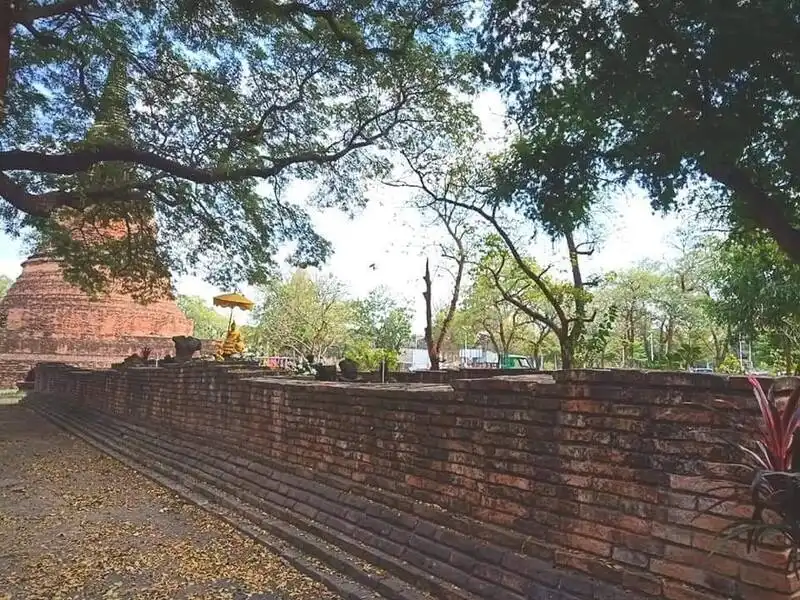
Wat Suwan Chedi in Phra Nakhon Si Ayutthaya is a community temple in Sena District that offers a clear view of “another side of Ayutthaya” – a side defined by lived, everyday faith. It is not a crowded tourist zone like the island city area or the most popular historic sites. Instead, it is a temple woven into local routines: merit-making on Buddhist holy days, offering alms and monk supplies, participating in ceremonies aligned with the Buddhist calendar, and serving as a meeting point for laypeople in and around Huawieng Subdistrict. When you first step into the temple grounds, the immediate impression is often one of simplicity, calm, and the approachable warmth of a district temple that has not been staged for tourism. That simplicity is precisely why many visitors feel that “coming here truly rests the mind” – there is no pressure from queues, no overwhelming noise from crowds, and enough space to focus privately and sincerely at your own pace.
Looking at Ayutthaya as a whole, the province is not only the story of a former capital and magnificent ruins. It is also home to rural communities beside farmland, waterways, and local market neighborhoods that move at a gentle rhythm – and Sena is one of the areas that reflects this way of life particularly well. Wat Suwan Chedi functions like a doorway into seeing “the value of everyday normalcy” in Ayutthaya: a faith that does not need grand spectacle, but remains steady and continuous. Visiting a temple like this is not merely about viewing structures or collecting check-in photos. It is about spending time in a place the community actually uses – seeing elders drop by to make merit, hearing quiet and respectful conversations among relatives, noticing children who know the temple as a shared community space, and realizing that “Thai temples outside the city center” still serve as tangible hubs of social and cultural connection.
As a community temple, Wat Suwan Chedi often supports life’s key moments: ordinations, annual merit-making events, funerals, memorial offerings, and even occasions when neighbors help one another in times of need. The temple is not a place people visit only on major holidays; it is a place many locals feel is part of their lives. The familiarity between the community and the temple creates a warmth that visitors can sense immediately. Especially when you arrive with a respectful attitude – dressing modestly, speaking softly, and honoring the rhythm of religious practice – you may feel as though you have been welcomed into a real, lived space, rather than standing outside the story as a mere observer.
The heart of a faith-focused visit to Wat Suwan Chedi is the temple’s revered sacred image as described within the community – most notably “Luang Pho Sut Jai,” also referred to by some with an auspicious name such as “Phra Suwan Ketiya Ram.” Local residents pay respects with deep sincerity. The veneration attached to a sacred image in a community temple does not only point to miracle stories; it also reflects the bond between people and temple in terms of comfort, safety, and emotional grounding in times when life needs reassurance. Worshippers commonly make polite, heartfelt wishes for a smooth life path, peace in the family, safe travel, orderly work, or strength to pass through a difficult season. This is a familiar “language of the heart” in Thai temple culture – a balanced, sincere faith that does not depend on spectacle.
The charm of a community temple like Wat Suwan Chedi is an atmosphere that supports mindful focus. You can walk quietly, pay respects without rushing, and notice small details: the neatness of the space, the way offerings are arranged with moderation, locals who stop by to make merit in the morning or on holy days, and even the natural sounds around the temple that calm the mind without effort. Worship in a place that is not crowded often brings what many people seek: “merit and a rested mind.” Without time pressure, it becomes easier to focus on intention, to express wishes with respectful clarity, and to make merit in ways that suit you – whether through offering monk supplies, donating according to your means, or joining activities the temple organizes at certain times of the year.
For first-time visitors, a suitable approach is to begin at the main worship area or the principal Buddha image inside the primary worship hall, and then proceed to pay respects to Luang Pho Sut Jai. Make your wish in polite words appropriate to the setting. If you would like to make additional merit, you may bring flowers, incense, and candles as appropriate, and follow the temple’s guidance regarding incense and candles. Many temples promote reduced smoke, fire safety, and consideration for visitors who are sensitive to smoke – especially in enclosed areas. In the context of a community temple, merit-making is not about doing “as much as possible,” but about doing what is “appropriate,” without disturbing others and without causing any harm to the religious site.
Basic etiquette at Wat Suwan Chedi follows standard Thai temple norms: dress modestly with shoulders and knees covered, avoid overly tight or overly sheer clothing, keep voices low in sacred areas, respect worship spaces, and do not climb on structures or approach sacred points inappropriately. Avoid leaning against Buddha images or their bases. If you bring elderly family members or children, watch for uneven surfaces, thresholds, and slippery areas in the rainy season – especially in the early morning after rainfall, when tiled or concrete floors near worship buildings can be slick. Wearing stable footwear and walking slowly will help keep the visit safe and comfortable.
In terms of Thai traditions, community temples in Central Thailand like Wat Suwan Chedi typically support activities aligned with the Buddhist calendar and local practice. During Buddhist Lent (Khao Phansa), it is common to see the offering of Lent candles and merit-making alms, reflecting support for the monks’ retreat and practice. Around the end of Lent (Ok Phansa), the community often gathers for larger merit-making, and after Lent, Kathin and Pha Pa ceremonies commonly take place. These moments reveal community faith especially clearly, because they require shared effort: preparing the venue, cooking, caring for guests, and coordinating activities. Even if the scale is not as large as province-wide festivals, the continuity and sincerity of local participation creates a warm atmosphere that often lets visitors feel the genuine spirit of “community.”
If you plan to attend a merit-making event, visiting during an active temple occasion can show the community’s cooperation more vividly – such as setting up a communal food offering, preparing local dishes together, cleaning the grounds, and welcoming relatives and laypeople from nearby areas. This kind of scene highlights the temple not only as a religious site but also as a space that shapes relationships and shared harmony. However, schedules may change each year depending on circumstances. If you intend to attend a specific ceremony, it is best to call ahead before traveling so you do not miss the key part of the event.
Another reason a community temple like Wat Suwan Chedi works well for faith-based travel content is that it is a “living place” rather than a staged attraction, so it offers life-centered detail beyond architecture. Writers can capture the calm mood, the orderliness of the space, the gentle movement of people, and the temple’s relationship with its community in an organic way. Photography should still follow respectful etiquette: avoid photographing worshippers’ faces without permission, do not use flash in enclosed spaces, and do not extend cameras too close to Buddha images or offerings in ways that risk contact. It is also wise to avoid filming during important rituals if it could disrupt others’ concentration.
For visitors who want a simple, organized way to make merit without anything complicated, a “modest but complete” approach works well. Begin with appropriate offerings such as flowers or a garland, contribute drinking water or useful supplies if the temple has a donation point, and then make your wish to Luang Pho Sut Jai in clear and polite terms: safe travels, peace at home, smoother work, or stronger health. There is no need for lengthy words; prioritize sincerity and clarity. You may then donate further according to your means – such as supporting utilities or contributing to a clearly stated maintenance project. This style of merit-making aligns with Thai temple culture, which values appropriateness and respect.
Getting There From the Huawieng municipal area, enter via Wat Bandai Chang. Cross the bridge, come down, then turn right and continue along the road, passing Wat Bang Kathing. Continue straight to the junction with the entrance to Wat Suwan Chedi, which will be on your right. The route is best suited to private transportation, and it is recommended to keep an online map open, as local roads in the area include multiple turns. Morning to late morning is generally the best time to visit, as the weather is cooler and the atmosphere is quieter. If traveling during the rainy season, allow extra time and drive carefully on sections where water may collect or surfaces may be slippery.
Planning a visit to Wat Suwan Chedi can easily become more than a quick stop to pay respects and leave. If you see Sena District as a community-style travel zone to absorb slowly, the temple can serve as a starting point for a local temple route in the Huawieng area and nearby communities. You can then continue to the market area or community zone in Sena to try local food, or choose to stay overnight to avoid rushing. This pacing suits both visitors looking for a mental reset and those seeking everyday-life travel content, because Ayutthaya in community zones feels notably different from the crowded old-city circuit – and often offers a “quiet that feels genuinely real.”
If you want a visit that feels complete and unhurried, consider allowing at least 45–90 minutes so you have time to pay respects, set intentions, make merit, and walk around the grounds without pressure. Morning is also a good time for capturing the atmosphere without disturbing others, and it remains convenient for continuing your trip to restaurants or other points in Sena afterward. If traveling with elderly family members, building in time for slow walking, short rests, and suitable seating will help make the merit-making experience comfortable for everyone.
In summary, Wat Suwan Chedi is well suited to visitors who want to pay respects to a revered sacred image in a calm, simple, and sincere community-temple setting. It offers both merit-making and a gentle mental reset in a quieter Ayutthaya that does not demand speed. If you plan to attend seasonal merit-making events or want details about the year’s traditional activities, it is best to call the temple in advance to confirm the latest information before you travel. Doing so helps ensure that the visit delivers “merit, peace of mind, and confidence in your information” all in one trip.
| Place Name | Wat Suwan Chedi (Wat Suwan Chedi) |
| Address | Moo 3, Huawieng Subdistrict, Sena District, Phra Nakhon Si Ayutthaya 13110 |
| Summary | A calm community temple in Sena District, ideal for paying respects, making merit, and enjoying a quiet reset with a local Huawieng atmosphere. |
| Highlights | Luang Pho Sut Jai (a revered sacred image in local devotion), a peaceful district-temple atmosphere, and an unhurried worship experience. |
| Abbot / Current Overseer | Phra Khru Palat Thong Piyadhammo |
| Contact Number | 035-396-124 |
| Current Status | Open for worship (calling ahead is recommended, especially if you plan to attend a merit-making event). |
| Nearby Tourist Attractions | 1) Wat Bang Kathing – Approximately 2 km. 2) Wat Bandai Chang – Approximately 3 km. 3) Wat Pradu Lok Chet – Approximately 4 km. 4) Sena Market / Community Zone – Approximately 10 km. 5) Wat Bang Nom Kho (Luang Pho Pan) – Approximately 12 km. |
| Popular Restaurants Nearby | 1) Ban Ton Mai (Ban Ton Mai) – Approximately 10 km – Tel. 035-216-353 2) Joong Borikan 1 (Hia Koong) – Approximately 10 km – Tel. 086-758-7264 3) Joong Borikan 2 (Ban Paen Grilled River Prawns) – Approximately 10 km – Tel. 086-812-8474 4) PAMA Cafe – Approximately 12 km – Tel. 084-997-9282 5) Baan Khun Ying Restaurant – Approximately 10 km – Tel. 081-250-5099 |
| Popular Accommodations Nearby | 1) Meena Resort Ayutthaya (Meena Resort) – Approximately 10 km – Tel. 082-235-3563 2) Ploypailin Place (Ploypailin Place) – Approximately 12 km – Tel. 080-233-5666 3) Sukai Riverview (Sukai Riverview) – Approximately 14 km – Tel. 084-122-2680 4) Ruan Rim Nam Homestay Sena (Ruan Rim Nam Homestay Sena) – Approximately 15 km – Tel. 090-971-9268 5) Athithara Homestay (Athithara Homestay) – Approximately 25 km – Tel. 061-654-1927 |
Frequently Asked Questions (FAQ)
Q: Where is Wat Suwan Chedi located?
A: The temple is located in Huawieng Subdistrict, Sena District, Phra Nakhon Si Ayutthaya. It is a community temple that is convenient to visit by private car and is ideal for an unhurried worship experience.
Q: What is Luang Pho Sut Jai (or Phra Suwan Ketiya Ram) known for?
A: Local residents revere the image as the temple’s sacred centerpiece. Worshippers commonly pray for safety, protection, peace within the family, good health, and a smoother path in daily life.
Q: What time is best to visit?
A: Morning to late morning is generally best because the weather is cooler and the atmosphere is calm. If you plan to attend a merit-making event, it is recommended to call the temple in advance to confirm the schedule.
Q: What important traditions are associated with the temple?
A: Community temples in Central Thailand commonly hold activities aligned with the Buddhist calendar, such as Buddhist Lent (Khao Phansa), the end of Lent (Ok Phansa), Kathin, and Pha Pa ceremonies. The exact schedule may vary each year, so it is best to check with the temple before traveling.
Q: How should visitors dress and behave at Wat Suwan Chedi?
A: Dress modestly with shoulders and knees covered, keep voices low, respect worship areas, avoid climbing on structures, and follow the temple’s incense-and-candle guidance for safety and appropriateness.
 Wat Suwan Chedi Map
 Category:
  Group:
  Tag: ●Wat Suwan Chedi●wat suwan chedi ●wat suwan chedi sena ●temples in sena ayutthaya ●ayutthaya local temple ●worship in ayutthaya ●quiet temples in ayutthaya ●merit making in thailand ●thai community temple ●sena ayutthaya travel ●spiritual trip ayutthaya Last Update: 2 MonthAgo
Comment
 Nearby Attractions
| Keyword (Advance) |
 Facebook Fanpage
 Region
 Art, Culture and Heritage
 Historical Sites and Monuments(
 Landmarks and Memorials(
 Royal Palace(
 Art, Craft Centres, Tradition(
 Museums(
 Educational Places
 Museum for Study(
 Educational Gardens, Farm(
 Training Center(
 University
 Church(
 Mosque(
 Other religious and spiritural sites(
 Research and Development
 Royal Project(
 Suburban Living
 Village, Community(
 Local Market(
 Floating Market(
 Nature and Wildlife
 Dam, Reservoir, Lake(
 River, Canal(
 Islands(
 Other natural attractions(
 Entertainment and Agricultural
 Animal camps and shows(
 Farm, Parks, Gardens and Ecotourism(
 Travel Articles, Recipes
 Travel Review, Food Review(
 Copyright 2012,