

 Home
Home Chiang Mai(




Wat Sakae
Rating: 4.4/5 (5 votes)
 Search By
  Map
Map 
 Have Map
  No Map
Phranakhon Si Ayutthaya attractions
Attractions in Thailand
Open Days: Daily
Opening Hours: 08:00 – 17:00
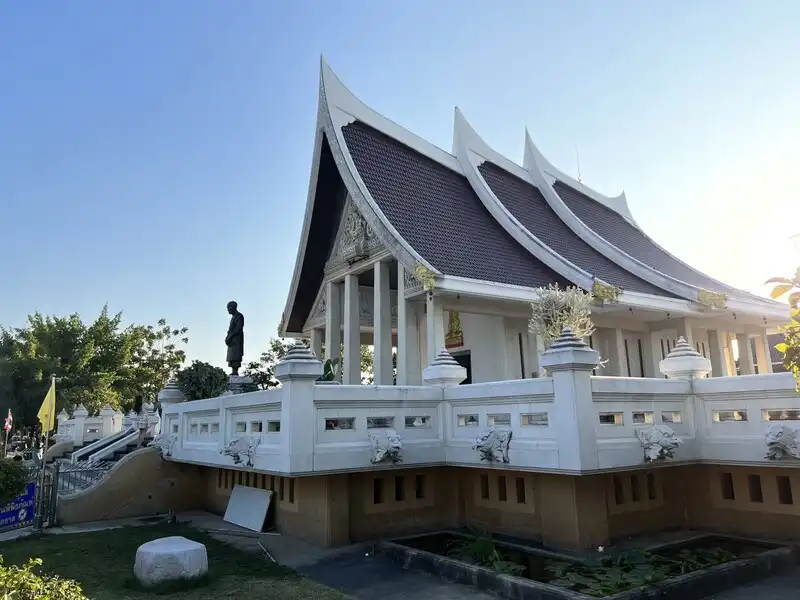
Wat Sakae is located at No. 29, Ban Sakae, Moo 7, Thanu Subdistrict, Uthai District, Phra Nakhon Si Ayutthaya Province, and belongs to the Maha Nikaya order. The temple sits on low-lying flatland typical of Ayutthaya’s river-basin terrain, which gives the area a calm, open, and unhurried atmosphere. Rather than being a quick photo stop, Wat Sakae feels like a genuine community temple where locals come for everyday merit-making and religious life. Its appeal lies in simplicity, orderliness, and a long continuity of local faith built up over generations.
According to recorded information, Wat Sakae has been established as a temple since around 1767 (B.E. 2310) and received its boundary consecration (wisungkhamsima) around 1782 (B.E. 2325). These dates matter for understanding the temple’s historical context, because they fall in the transitional period from the late Ayutthaya era into the Thonburi period and onward to the early Rattanakosin era. It was a time when many communities rebuilt their way of life, re-established spiritual anchors, and strengthened the administrative structure of the Sangha. In that sense, Wat Sakae functioned as more than a place for rituals; it became a local hub for spiritual support, community gathering, information exchange, and civic life for residents in the area.
One clear sign of a temple that grew alongside its community is its development in both religious buildings and education. The information states that the ordination hall (ubosot) measures approximately 10 meters wide and 18 meters long, built in 1930 (B.E. 2473). The temple also has 17 monastic residences (kuti), comprising 12 larger buildings and 5 smaller ones. These details suggest Wat Sakae did not remain a static historical site; it expanded to support monastic activities, accommodate monks and novices, and provide ongoing services to the community in a practical, everyday sense. The construction of the ubosot in 1930 also reflects the broader modernization of Thai religious administration and education during that period.
In terms of learning, Wat Sakae is noted for having opened instruction in Buddhist studies (phra pariyatti dhamma) since 1930 (B.E. 2473), starting in the period when Phra Khru Yan Uthai served as abbot. This point is central to the temple’s social role. Establishing pariyatti education means the temple functioned as a learning center for Buddhist doctrine and scriptural study, helping develop monastic scholarship and elevating religious literacy in the local area. When a temple serves both as a ritual center and an educational institution, it becomes a true knowledge base for the community.
From a cultural-travel perspective, Wat Sakae’s strength is not monumental grandeur like major archaeological complexes, but the chance to experience the temple’s living rhythm as part of a working community. Visitors may observe everyday temple life such as morning merit-making, offering alms, presenting sangkathan, coming to pray for peace of mind, and the gentle social interactions of neighbors who use the temple as a shared space. This makes it well-suited for travelers seeking quiet, families who want a calm place to make merit together, or anyone who wants to recharge in an environment that is modest yet deeply grounded.
The ubosot built in 1930 often reflects craftsmanship from a period that blended traditional Thai temple forms with a more orderly, modern sense of proportion. The structure tends to have clearer architectural ratios and greater symmetry while still preserving key temple elements such as the consecrated boundary area for monastic ceremonies, a layout that places the ubosot at the heart of ritual life, and surrounding space arranged for religious functions. For visitors interested in cultural details, a slow walk through the temple while paying attention to the “building scale–number of residences–spatial organization” can reveal the relationship between Wat Sakae and its community more clearly than photo-taking alone.
For worshippers, the most meaningful visit begins with a clear intention. If you want quiet, mornings are ideal: the air is cooler, the atmosphere is calm, and it is easier to walk slowly, pay respects in the ubosot, and spend a few minutes in stillness before heading out to try local food nearby. If you are traveling with elderly family members or children, late morning before noon is often comfortable – not too hot, and with enough time for making merit, offering sangkathan, or joining small temple activities depending on the day.
Wat Sakae also works well as part of a “temple + community” day plan: make merit at the temple, continue with local meals, and then add nearby attractions in Uthai District or Ayutthaya’s inner sightseeing zone. The advantage is simple logistics. The route is straightforward, and you can plan it as a half-day or full-day trip. For travelers coming from Bangkok, Ayutthaya is a practical option because travel time is manageable and there are multiple route choices, both main roads and alternative bypasses.
Getting There is most convenient by private car or local hired transport, because it lets you control your schedule and comfortably combine several stops in one day. A common starting point is Bangkok – drive toward Ayutthaya, continue toward Uthai District, and then use local roads into Thanu Subdistrict and Ban Sakae. If you use public transport, you can arrive at Ayutthaya’s main transport areas and then continue by taxi or local vehicles as appropriate. A helpful approach is to plan extra time for nearby local eateries or cafés, since the area has options that let you finish your trip comfortably without repeatedly detouring back into the city center.
When you arrive, basic etiquette makes the visit smoother: dress modestly, keep your voice low, and be especially respectful around the ubosot and ceremonial areas. If you plan to offer sangkathan or make donations, keep items organized and ask for the appropriate drop-off point from staff or caretakers so the process remains orderly and does not interrupt monastic duties. Merit-making is not about the size of the offering, but the sincerity of intention and respectful conduct within the temple grounds.
For photography, Wat Sakae offers a peaceful, natural “village temple” ambiance. The light is often best in the morning and late afternoon when it is softer. If you want images that tell a story, focus on documentary details such as angles of the ubosot that reflect its era, the arrangement of residences and walkways that show everyday use, and signs or community activity points that appear on certain days. Avoid close-up shots of individuals during rituals without permission, and do not use flash where it may be inappropriate.
Wat Sakae can also be a starting point for learning about Ayutthaya from a different angle. Many visitors know Ayutthaya mainly through famous historical sites, but visiting a community temple in Uthai District shows another layer – a contemporary community that continues everyday Buddhist practice and merit-making traditions. In this sense, the temple becomes a “quiet classroom” where you can observe the relationship between people and religion in the present through small things such as morning chanting, simple offerings of flowers and incense, and shared community use of the space.
If your goal is to create complete, competitive travel content, the strength of a Wat Sakae article lies in explaining clearly what visitors gain from coming here. The answer is not only “to pray” but also to understand local context: the temple’s location in Thanu Subdistrict, Uthai District; its lowland setting that reflects the region’s geography and community lifestyle; the ubosot built in 1930 as a tangible marker of development; and the temple’s role in pariyatti education beginning in the same year. These points give Wat Sakae enough substance for readers who want more than the simple labels of “beautiful” or “peaceful.”
Another layer of value is connecting the temple to practical experiences around it. Many travelers want a plan that is easy to execute in one day. Local restaurants and cafés in Thanu and nearby areas help complete the trip, especially places close enough to visit without long detours. Likewise, accommodations in Uthai District and in convenient parts of Ayutthaya allow visitors to stay overnight, enjoy a slower pace, and continue to Ayutthaya’s major attractions the next day.
In terms of timing, a comfortable plan is to start at Wat Sakae in the morning, spend about 45–90 minutes making merit and walking the grounds, then have a simple local lunch nearby, followed by a relaxed café stop within Thanu. If you still have time in the afternoon, you can continue to inner-zone Ayutthaya attractions such as Wat Yai Chai Mongkhon or suitable museums and learning sites for families. This makes Wat Sakae a gentle “trip opener” for anyone who wants an unhurried Ayutthaya itinerary.
For merit-focused visitors, a small preparation that helps is choosing sangkathan items that are genuinely useful: essential supplies, basic medicines, and items with suitable shelf life. Avoid items that quickly become waste or are unlikely to be used. Thoughtful offerings support the temple’s practical needs and reflect considerate intention.
As a community temple, Wat Sakae is naturally connected to local ceremonies such as kathin and pha pa offerings, funerals, and community education-related activities. The record of pariyatti teaching since 1930 reinforces the temple’s role as a local institution that preserves and transmits knowledge. Even if visitors do not see formal classes at every visit, knowing this educational role adds meaning and depth to the experience.
From the perspective of local history, the establishment around 1767 and the granting of wisungkhamsima around 1782 suggest that Ban Sakae and Thanu had the capacity to organize community life and maintain a religious institution during a time of major historical transition. For history-minded travelers, viewing Wat Sakae as evidence of community recovery and continuity can add perspective. You may notice the modest character of local religious construction, the more systematic development visible by 1930, and the uninterrupted everyday use that continues today – a combination that gives village temples their distinctive charm.
For overnight stays, choosing accommodation in Uthai District or the convenient Rojana Road area can make travel efficient for both Wat Sakae and other major Ayutthaya sites the next day. Staying one night helps you avoid rushing, return in the morning for a quieter atmosphere, and explore more local restaurants and cafés without time pressure.
If Wat Sakae is approached as a travel search query, ranking strength comes not only from length but from fully answering user intent: where it is, how to get there, open days and hours, a verifiable history, practical highlights, and nearby restaurants and accommodations that visitors can actually contact. The information below is organized to be easy to read and directly usable for itinerary planning.
Finally, Wat Sakae is best visited with respect for both the place and the community. The charm of a village temple lies in being a shared space for local life. When visitors observe etiquette, follow on-site guidance, and support local businesses appropriately, the community becomes stronger and the temple can continue sustaining its spiritual role. This is one of the most grounded and sustainable forms of cultural travel in Thailand.
| Place Name | Wat Sakae (วัดสะแก) (Ban Sakae, Moo 7) |
| Address | No. 29, Ban Sakae, Moo 7, Thanu Subdistrict, Uthai District, Phra Nakhon Si Ayutthaya Province, Thailand |
| Place Summary | A community Buddhist temple on Ayutthaya’s low-lying plain, with an ubosot built in 1930 (B.E. 2473) and a recorded role in pariyatti Buddhist education in the local area. |
| Key Highlights | Peaceful village-temple atmosphere suited for merit-making – Ubosot approx. 10 x 18 meters (built in 1930) – 17 monastic residences (12 large, 5 small) – Recorded pariyatti teaching since 1930. |
| History (From Available Records) | Established as a temple around 1767 (B.E. 2310) – Received wisungkhamsima around 1782 (B.E. 2325) – Ubosot built in 1930 (B.E. 2473) – Pariyatti education opened since 1930 (during the abbacy of Phra Khru Yan Uthai). |
| Abbot (Current) | Phra Khru Palat Phothiworawat (Phairat Sirijanto) (พระครูปลัดโพธิวรวัฒน์ (ไพรัชช์ สิริจนฺโท)) |
| Travel | Best by private car or local hired transport – Search the pin: “Wat Sakae, Thanu, Uthai District, Ayutthaya” – From Ayutthaya city/transport hubs, continue by taxi or local vehicles as convenient. |
| Current Status | Open for visits and merit-making (community temple). |
| Fees | No mandatory entrance fee information found (visits are generally based on merit-making and donations). |
| Facilities | Parking area – internal walkways – religious activity spaces (typical community-temple setup). |
| Nearby Tourist Attractions (Approx. Distance) | 1) Wat Yai Chai Mongkhon (approx. 13 km) 2) Wat Phanan Choeng Worawihan (approx. 12 km) 3) Japanese Village (approx. 11 km) 4) Wat Mahathat (approx. 18 km) 5) Wat Kasattrathirat Worawihan (approx. 19 km) |
| Popular Restaurants Nearby (Approx. Distance + Phone) | 1) Pae Sangkasri (Boat Noodles & Khanom Jeen) (approx. 0.5 km) Tel. 087-564-5475 2) Treeriva Cafe Ayutthaya (approx. 1.2 km) Tel. 081-622-4475 3) Ja Chai Restaurant / Ja Chai 2 (Uthai Area) (approx. 6 km) Tel. 092-651-5198 4) Khun Lada Fried Mussel Omelet (approx. 15 km) Tel. 087-115-5993 5) The Beloved Cafe & Restaurant (Thanu Area) (approx. 4 km) Tel. 080-426-5926 |
| Popular Accommodations Nearby (Approx. Distance + Phone) | 1) Ampo Residence Hotel (Thanu/Rojana Area) (approx. 7 km) Tel. 035-335-577 2) Green Residence Hotel Ayutthaya (Khan Ham/Rojana Area) (approx. 12 km) Tel. 086-399-9716 3) The Cavalli Casa Resort Ayutthaya (approx. 16 km) Tel. 035-881-222 4) Pludhaya Resort and Spa (Khlong Suan Phlu Area) (approx. 15 km) Tel. 035-707-565 5) Smile Mansion 1 (Khan Ham/Rojana Area) (approx. 12 km) Tel. 035-706-356 |
Frequently Asked Questions (FAQ)
Q: Where is Wat Sakae (วัดสะแก) located?
A: It is located at No. 29, Ban Sakae, Moo 7, Thanu Subdistrict, Uthai District, Phra Nakhon Si Ayutthaya Province.
Q: What are the open days and opening hours for Wat Sakae?
A: It is generally open daily from 08:00 – 17:00. If there is a special ceremony or community event, hours may vary, so checking shortly before visiting is recommended.
Q: What is the historical background of Wat Sakae?
A: Available records note the temple was established around 1767 (B.E. 2310), received wisungkhamsima around 1782 (B.E. 2325), and the ubosot was built in 1930 (B.E. 2473). Pariyatti Buddhist education is also recorded as having been opened since 1930.
Q: Who is the current abbot of Wat Sakae?
A: The current abbot is Phra Khru Palat Phothiworawat (Phairat Sirijanto) (พระครูปลัดโพธิวรวัฒน์ (ไพรัชช์ สิริจนฺโท)).
Q: What should I prepare before visiting Wat Sakae for merit-making?
A: Dress modestly, keep voices low, prepare practical offering items if you plan to present sangkathan, and follow the temple’s guidance and on-site etiquette, especially around the ubosot and ceremonial areas.
Q: Are there any recommended local restaurants or cafés near Wat Sakae?
A: Yes. There are several local options in Thanu and nearby areas, such as Pae Sangkasri (boat noodles/khanom jeen), Treeriva Cafe Ayutthaya, and The Beloved Cafe & Restaurant. Approximate distances and phone numbers are listed in the Summary Table.
 Wat Sakae Map
 Category:
  Group:
  Tag: ●Wat Sakae●wat sakae ayutthaya ●wat sakae uthai district ●thanu ayutthaya temple ●wat sakae history ●ayutthaya local temple ●merit making in ayutthaya ●temple visit near bangkok ●restaurants near wat sakae ●hotels near wat sakae ●things to do in uthai ayutthaya Last Update: 1 MonthAgo
Comment
 Nearby Attractions
| Keyword (Advance) |
 Facebook Fanpage
 Region
 Art, Culture and Heritage
 Historical Sites and Monuments(
 Landmarks and Memorials(
 Royal Palace(
 Art, Craft Centres, Tradition(
 Museums(
 Educational Places
 Museum for Study(
 Educational Gardens, Farm(
 Training Center(
 University
 Church(
 Mosque(
 Other religious and spiritural sites(
 Research and Development
 Royal Project(
 Suburban Living
 Village, Community(
 Local Market(
 Floating Market(
 Nature and Wildlife
 Dam, Reservoir, Lake(
 River, Canal(
 Islands(
 Other natural attractions(
 Entertainment and Agricultural
 Animal camps and shows(
 Farm, Parks, Gardens and Ecotourism(
 Travel Articles, Recipes
 Travel Review, Food Review(
 Copyright 2012,