
 Home
Home North(
 Chiang Mai(


Wat Uthai
Rating: 3.5/5 (4 votes)
 Search By
  Map
Map 
 Have Map
  No Map
Phranakhon Si Ayutthaya attractions
Attractions in Thailand
Open Days: Daily
Opening Hours: 08.00 – 17.00 (generally)
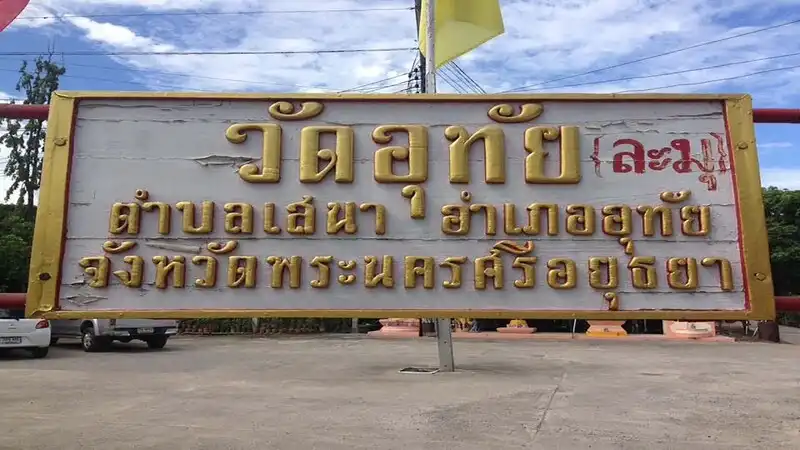
Wat Uthai (Wat Lamu) is located in Village No. 2, Sena Subdistrict, Uthai District, Phra Nakhon Si Ayutthaya Province. It is a community temple under the Mahanikaya order, long known among local residents. The temple was formerly called “Wat Lamu,” and the paired name “Wat Uthai (Lamu)” is still commonly used in the local context. Visiting this temple feels different from touring Ayutthaya’s main heritage zone on the island, which is often lively and crowded, because Wat Uthai is an active place of faith for the community rather than a landmark designed primarily for tourists. Visitors therefore have the chance to experience the calm atmosphere of a central-Thai village temple, see the simple rhythm of local life, and return to the core meaning of temple-going as an intentional act of merit-making rather than a rushed checklist of attractions.
The temple’s setting in Sena Subdistrict, Uthai District adds an appealing “Ayutthaya beyond the island” perspective to a trip. The area around the temple is made up of local neighborhoods and small roads that still preserve the feel of central Thailand. Entering the temple is like stepping out of time-pressured sightseeing and naturally slowing down. The quiet, the shade, and the orderly simplicity typical of community temples give visitors more mental space. Whether you come to sit peacefully, chant, make a wish, or simply stop by to make merit along the way, you can do so without worrying too much about crowds.
In Thai culture, a community temple is not only a religious site but also a shared civic space that helps sustain relationships among people. Merit-making festivals, Kathina and Pha Pa ceremonies, observance-day offerings, and major life rituals such as ordinations, memorial merit-making, or rites that help families cope with loss all weave the temple into everyday life. When a temple is close to home, it becomes even more accessible and encourages a shared sense of stewardship. Wat Uthai therefore carries meaning as a spiritual center grounded in real connections between people and place, not simply in tourism-driven recognition.
Historically, Wat Uthai has information that helps outline its timeline with reasonable clarity. It has been described as an established temple in Uthai District and is closely associated with its former name, Wat Lamu, which locals still remember. There are also temple-register references that identify key milestones such as the year the temple was founded and the year it received royal consecration of its boundary for the ordination hall. This consecrated boundary, known as “wisungkhamasima,” is an officially granted sacred demarcation for the ubosot area, enabling the temple to conduct essential monastic rites properly, especially ordinations and Vinaya-related procedures that require a formally designated space. When these formal details are viewed together with local recognition, they reinforce the picture of Wat Uthai as a temple that has grown and remained rooted in the community over time, rather than a site created to serve modern tourism.
Looking at what visitors can pay respect to within the temple grounds, Wat Uthai includes places and sacred figures that local residents venerate and that often make visitors feel they can “pay respects thoroughly” in one visit, across both Buddhist practice and community faith. One key area is the ordination hall (ubosot), the ritual heart of the temple. It is the proper venue for important sangha rites, requiring both appropriate form and observance. On an experiential level, the ubosot often serves as a place where visitors can steady themselves mentally, pause the noise of daily life, and return to a quiet focus through prostration, chanting, and prayer in a structured way.
Another element that many people mention at Wat Uthai is the chance to pay respects to “Phra Sangkajjai.” In Thai popular religious culture, Phra Sangkajjai is often associated with abundance, well-being, and a lightness of heart. Paying respects here is not merely a superficial act of wishing for luck, but can be understood as setting an intention for a life with balance, ease, and the inner strength to move forward steadily. Visitors may find the experience more meaningful when they keep their mind calm, make modest and sincere wishes, and follow temple etiquette, aligning the visit with the spirit of community temples that emphasize sincerity and moderation.
In addition, Wat Uthai has a devotional area related to “Guan Yin” (Kuan Im), which offers an interesting glimpse into the diversity of faith in central Thailand. In many Thai communities, devotion to Guan Yin is associated with compassion, protection, and prayers for a smoother life, especially regarding family, health, and emotional comfort. The presence of such a shrine does not reduce the temple’s identity as a Buddhist place; rather, it reflects how different forms of devotion can coexist in everyday life within a framework of respect and good intention. If visitors wish to pay respects to Guan Yin here, it is best to dress modestly, keep voices low, and act with consideration for local feelings, because this is a living devotional space for the community, not merely a backdrop for photographs.
When these elements come together, a visit to Wat Uthai can naturally follow a simple, unhurried order. Many visitors begin at the ubosot to pay respects and settle the mind, then continue to Phra Sangkajjai, and finally pay respects to Guan Yin according to personal faith. On days when more people are making merit, it is appropriate to walk quietly, avoid cutting across others, and keep noise to a minimum. The charm of a community temple lies in the calm and order that local people help preserve together.
In terms of atmosphere, Wat Uthai is especially pleasant in the morning, when the weather is cooler and the grounds are usually quieter. Chanting and praying when the temple is still calm can help visitors focus and be more intentional. The afternoon can suit those passing through Uthai District who want to stop by to make merit before returning, while still enjoying a simple, low-key setting. At any time of day, the key is to respect a space that locals actively use: dress modestly, avoid overly short or tight clothing, keep voices low, and if taking photos, do so discreetly, avoiding flash and avoiding disturbing other worshippers.
Another angle that adds depth to writing about community temples is seeing the temple as part of a wider social structure. Many community temples in central Thailand naturally connect “religion–education–community” through shared activities. Children and younger generations learn manners, discipline, and civic-minded participation through temple events and merit-making, while adults and elders use the temple as a meeting point to sustain social bonds. When a temple remains actively used on a regular basis, it is not reduced to a mere point on a map; it becomes a living space that helps preserve a sense of community in an increasingly fast-moving world.
Getting There Wat Uthai is located in Village No. 2, Sena Subdistrict, Uthai District, Phra Nakhon Si Ayutthaya Province. The most convenient way to visit is by private car or hired transport. You can search in navigation apps using “Wat Uthai (Lamu), Uthai District, Ayutthaya” or search “Wat Uthai” together with “Sena Subdistrict” to improve pin accuracy. From Bangkok, many travelers take Highway 32 (Asian Highway) toward Ayutthaya, then follow navigation directions to Uthai District. The final stretch is on local community roads, so it is advisable to slow down in residential areas, watch for intersections, and allow extra time in the morning and late afternoon to avoid heavier traffic on main roads.
For those who want a well-balanced one-day itinerary with both calmness and completeness, you can begin with merit-making at Wat Uthai to set a peaceful tone, then continue to major temples and heritage sites in the Ayutthaya island zone based on your interests. Starting with a community temple helps the day feel less like a simple check-in trip and more like an effort to understand Ayutthaya through the lens of local life that still moves alongside everyday faith, adding cultural depth without increasing the pace or pressure of the journey.
In summary, Wat Uthai (Wat Lamu) is a community temple in Uthai District, Phra Nakhon Si Ayutthaya Province, well suited to visitors who want a calm merit-making experience. It offers places of devotion such as the ordination hall, Phra Sangkajjai, and Guan Yin, and it invites travelers to experience Ayutthaya beyond the island in a quieter, more local setting. If you are looking for a temple where you can genuinely slow down, make merit with intention, and still connect easily to other attractions, Wat Uthai is a strong option.
| Place Summary | A Mahanikaya community temple in Village No. 2, Sena Subdistrict, Uthai District, Phra Nakhon Si Ayutthaya Province. Formerly known as “Wat Lamu,” and locally referenced as “Wat Uthai (Lamu).” |
| Highlights | A calm community-temple atmosphere with respected devotional points such as the ordination hall, Phra Sangkajjai, and a Guan Yin area. |
| Address | Village No. 2, Sena Subdistrict, Uthai District, Phra Nakhon Si Ayutthaya Province, Thailand |
| Affiliation | Mahanikaya |
| Brief History | An established temple in Uthai District, formerly called Wat Lamu. Temple-register information notes key milestones such as the year of establishment and the year it received the official consecration boundary for the ordination hall (B.E. 2440), reflecting readiness for essential monastic rites. |
| Abbot (Latest) | Phra Khru Uthai Thammabhivat |
| Nearby Attractions (Approx. Distance) | 1) Wat Yai Chai Mongkhon – 24 km 2) Wat Phanan Choeng Worawihan – 23 km 3) Phra Thinang Pheniat (Elephant Kraal Pavilion) – 26 km 4) Ayutthaya Historical Park (Wat Phra Si Sanphet / Wihan Phra Mongkhon Bophit Zone) – 30 km 5) Bang Pa-In Palace – 18 km |
| Nearby Restaurants (Approx. Distance + Phone) | 1) Ruen Thai Kung Pao – 24 km – 089-764-5119 2) De Riva Ayothaya – 28 km – 035-242-556 3) Baan Mai Rim Nam – 26 km – 035-245-393 4) The Summer House Ayutthaya – 27 km – 065-716-9466 5) sala ayutthaya eatery – 29 km – 035-242-588 |
| Nearby Accommodations (Approx. Distance + Phone) | 1) Kantary Hotel Ayutthaya – 24 km – 035-337-177 2) Classic Kameo Hotel Ayutthaya – 26 km – 035-212-535 3) Krungsri River Hotel – 28 km – 035-244-333 4) Centara Ayutthaya – 25 km – 035-243-555 5) Baan Thai House – 22 km – 035-241-144 |
Frequently Asked Questions (FAQ)
Q: Where is Wat Uthai (Wat Lamu) located?
A: It is located in Village No. 2, Sena Subdistrict, Uthai District, Phra Nakhon Si Ayutthaya Province.
Q: What are the opening days and hours of Wat Uthai?
A: Generally, it is open daily from 08.00 – 17.00. For ceremonies or special days, it is best to check announcements or contact the temple before visiting.
Q: What are the key devotional highlights at Wat Uthai?
A: The main highlights include the ordination hall, Phra Sangkajjai, and a Guan Yin devotion area.
Q: What was the former name of Wat Uthai?
A: It was formerly known as “Wat Lamu,” and the paired name “Wat Uthai (Lamu)” is still used locally.
Q: What is the most convenient way to get to Wat Uthai?
A: The easiest way is by private car or hired transport, using navigation apps to search “Wat Uthai (Lamu), Uthai District, Ayutthaya” and following directions into Village No. 2, Sena Subdistrict.
 Wat Uthai Map
 Category:
  Group:
  Tag: ●Wat Uthai●wat uthai ●wat lamu ●wat uthai (lamu) ●temples in ayutthaya ●uthai district ayutthaya temple ●sena subdistrict temple ●buddhist temple ayutthaya ●guanyin shrine ayutthaya ●phra sangkajjai ayutthaya ●local community temple thailand Last Update: 2 MonthAgo
Comment
 Nearby Attractions
| Keyword (Advance) |
 Region
|
 Phranakhon Si Ayutthaya(
 Copyright 2012,